


If you feel wired on coffee but still struggle to focus, you are not alone.
Many people try to boost attention with more stimulation, yet calm, steady focus actually depends on the brain’s braking system working well.
That braking system is built largely on one neurotransmitter, GABA, and on how it shapes activity in key brain areas like the prefrontal cortex.
Reishi, a deeply studied medicinal mushroom from traditional Asian medicine, is emerging as a gentle tool that may support this GABAergic tone and, through that route, more stable attention and emotional control.
In this article, we will look at what GABAergic tone is, how it relates to focus, what modern science says about Reishi and GABA, and how a high quality, fruiting body Reishi extract can fit into a broader focus routine.
This piece is part of our ongoing Mushroom Benefit Deep Dives series, where we translate technical mechanisms into practical, everyday language for you.
Calm focus starts with your brain’s braking system
Most people think of focus as a “gas pedal” problem, as if they just need more energy or stimulation.
In reality, attention control depends at least as much on the brakes, the ability of your brain to quiet background noise so that important signals stand out.
The prefrontal cortex, the area behind your forehead, is central for this kind of control. It helps you hold goals in mind, resist distractions, and switch tasks when needed.
A key part of how the prefrontal cortex does that job is through inhibitory signaling, based on the neurotransmitter GABA, gamma aminobutyric acid.
Think of GABA as noise cancelling for your brain.
Excitatory transmitters like glutamate turn neurons on. GABA helps turn them down again. When GABAergic tone is balanced, your brain can stay alert but not overloaded.
Human imaging studies suggest that people with healthier GABA levels in frontal areas tend to show better performance on attention tasks and less “attentional blink,” the brief loss of awareness that occurs when too many stimuli compete at once.
When GABA signaling is disrupted, researchers see problems in working memory, inhibitory control, and other executive functions that are essential for sustained focus.
Reishi 101, from stress mushroom to focus ally
Reishi, or Ganoderma lucidum, has been used for centuries in Chinese and Japanese herbal traditions as a “shen” tonic, often associated with calm, resilience, and long life. Modern analysis shows that Reishi fruiting bodies are rich in beta glucans, triterpenes, and other compounds with immune, antioxidant, and neuroactive properties.
At Longevity Botanicals, Red Reishi is provided as a concentrated 10 to 1 extract, standardized to 30 percent beta D glucans, in a 100 gram powder format.
These extracts are made from 100 percent fruiting bodies, not mycelium grown on grain. Fruiting bodies naturally carry higher levels of key actives like beta glucans and triterpenes, and they avoid the starch dilution that comes from grain based mycelium.
Extraction also matters. Bio enhanced hot water extraction is used to break down the tough chitin cell walls of the mushroom and pull out the water soluble polysaccharides, while preserving their structure and improving bioavailability.
The result is a potent, clean, and repeatable extract that provides consistent doses of Reishi’s core compounds from one serving to the next.
How GABAergic tone shapes attention and emotional noise
To understand where Reishi might fit, it helps to zoom in a little more on what GABAergic tone actually means.
GABAergic tone is the background level of inhibitory “braking” in your nervous system.
If that tone is too low, neurons fire too easily. You may feel keyed up, anxious, or easily distracted, even when you are tired.
If tone is too high, you can feel sedated, flat, or mentally slow.
Balanced GABAergic tone supports what many people describe as “calm alertness,” a state where your prefrontal cortex still has enough energy to hold a task in mind, but incoming noise does not constantly hijack your attention.
Research in humans links GABA levels in frontal regions to performance in tasks that require sustained attention, working memory, and flexible response to changing rules, all core aspects of executive function.
Reishi does not act like a heavy sedative used in hospitals. Instead, most studies and traditional reports describe it as a modulator, something that may nudge the nervous system toward balance, especially when stress and poor sleep have pushed it off center.
What the science says about Reishi, GABA, and cognition
Several lines of research, mostly in animals but increasingly in humans, suggest that Reishi can influence GABAergic pathways and, through them, sleep quality, mood, and cognitive function.
Sleep and GABA.
In rodent models, Reishi extracts can prolong sleep time and appear to interact with GABAA receptors, the same receptor family targeted by many conventional sleep medications, although in a milder way.
A 2024 study in a rat model of Alzheimer related sleep disturbance found that a Reishi spore lipid preparation improved sleep and normalized activity in specific GABAergic neurons in the brainstem. The authors concluded that GABA dependent mechanisms were likely involved in Reishi’s sleep promoting effects. Read the study here.
Cognitive support.
In mouse models of Alzheimer like disease, polysaccharides isolated from Ganoderma lucidum have been shown to improve performance on learning and memory tasks, while also stimulating neural progenitor cells in the brain. You can see an example of this work here.
Other studies report that Reishi triterpenoids help protect hippocampal neurons from oxidative stress and can reduce markers of cognitive impairment in animal models.
Human data on mood, fatigue, and sleep.
In a pilot trial, Reishi supplementation in breast cancer patients undergoing endocrine therapy reduced fatigue and improved sleep related measures over four weeks compared to placebo.
Reviews of the broader Reishi literature note consistent signals for reduced fatigue, better quality of life, and less anxiety or depressive symptoms in several small clinical trials, although dosing, extract types, and populations differ.
Putting this together with what we know about GABA in the prefrontal cortex creates a plausible picture.
By smoothing excessive arousal and improving sleep architecture through GABAergic and related pathways, Reishi may indirectly support the brain circuits that govern attention, impulse control, and working memory.
One human study even used brain GABA measurements to relate prefrontal GABA levels to performance in attention tasks, highlighting how tight this link can be. See an example here.
To be clear, we are still early in connecting all the dots between Reishi, GABAergic tone, and attention control in healthy humans. Most data today come from animal models, specific patient groups, or proxy outcomes like sleep and fatigue. Reishi should not be used to diagnose, treat, or cure any disease, and it is not a replacement for medical care.
What calm, steady focus feels like in real life
When GABAergic tone is better balanced, the subjective experience often shifts in recognisable ways.
People describe fewer “mental spikes,” those sudden surges of anxiety or irritability that can derail a work session.
They report that it feels easier to sit down, start a task, and stay with it long enough to make meaningful progress.
Background worries are still there, but they feel a little further away, less able to constantly pull attention off the task at hand.
Because many of Reishi’s studied effects relate to sleep quality and fatigue, some of the focus benefit is likely indirect. If you sleep more deeply and wake feeling more rested, prefrontal circuits will generally perform better throughout the day.
This is especially relevant for people who feel “tired and wired,” a pattern where poor sleep and high stress combine to create both brain fog and jittery overthinking.
Using Reishi strategically for attention support
There is no single clinically established dose of Reishi for attention in healthy adults, but most human trials use the equivalent of roughly 1 to 3 grams per day of a concentrated extract, sometimes more in specific patient groups.
Always talk to your health care provider before introducing any new supplement, especially if you have a medical condition, are pregnant or breastfeeding, or take prescription medications.
Here are some practical principles that align with the science so far.
1. Choose a high quality, fruiting body extract.
Look for products that clearly state “100 percent fruiting body” and give a beta glucan percentage, along with an extraction ratio and method.
For example, Longevity Botanicals Red Reishi Powder is a 10 to 1 extract from certified organic fruiting bodies, standardized to 30 percent beta D glucans. You can explore our Reishi range on the Reishi mushroom supplements collection or see the full details on the Red Reishi Powder product page.
2. Time it to support sleep and next day focus.
Because much of Reishi’s benefit seems to run through sleep, many people take it in the late afternoon or evening, often in a warm drink.
If you are curious about different timing strategies, our article on the best time to take Reishi walks through several options based on your goals.
3. Use a consistent daily protocol, not “as needed.”
Most studies administer Reishi daily for several weeks, not as a one time boost.
A simple pattern is to mix the powder into a nightly tea or non caffeinated latte, as described in our guide on how to use Reishi mushroom powder.
4. Consider synergistic pairings.
Some people combine Reishi with adaptogens like ashwagandha for additional stress support, a combination we discuss in more depth in our article on Reishi mushroom with ashwagandha.
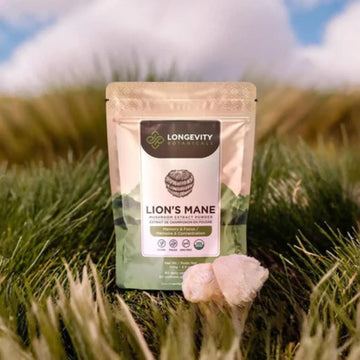
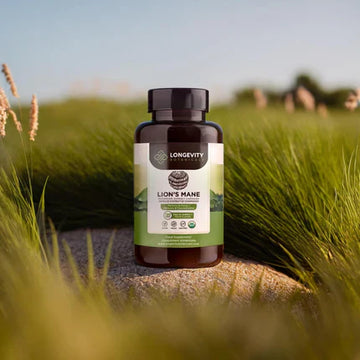
Others pair Reishi with more directly stimulating cognitive supports, such as lion’s mane, but usually at different times of day to avoid blunting the desired effect.
Quality, extraction, and why they matter for brain outcomes
When we talk about subtle targets like GABAergic tone and attention control, product quality is not a small detail, it is central.
Fruiting bodies vs mycelium.
As noted earlier, fruiting bodies carry higher concentrations of beta glucans, triterpenes, and other actives compared to mycelium grown on grain. Mycelium products may legally be labeled as “mushroom,” even when a large portion of the powder is actually residual grain, which dilutes potency.
Bio enhanced water extraction.
Reishi’s cell walls are rich in chitin, a tough fiber that human digestion struggles to break down. Bio enhanced hot water extraction uses optimized temperature, pressure, and sometimes supportive steps like enzymatic treatment to release more beta glucans and polysaccharides from those walls, improving both potency and bioavailability.
In practical terms, that means more active compounds reach your bloodstream from each gram of powder you take.
Testing and transparency.
Because mushroom products come from nature, batch testing is essential. At Longevity Botanicals, extracts are tested for heavy metals, pesticides, microbes, and beta glucan content, so that the Reishi you put in your evening drink is as clean and consistent as possible.


