

Mushroom Dosage Explained: Finding Your Optimal Amount
Choosing the right mushroom supplement dose can feel confusing when every product claims unique benefits for brain power or immune health. With so many options across Lion’s Mane, Reishi, and Cordyceps, finding a safe, effective amount starts with understanding both species and personal factors. Bioactive compounds and dosage consistency play a pivotal role in tailoring results, helping you confidently match your wellness goals to the right mushroom form, serving size, and daily routine.
Table of Contents
- What Determines Proper Mushroom Dosage
- Comparing Dosages By Mushroom Type
- Personalizing Dosage For Health Goals
- Safety Risks And When To Adjust
Key Takeaways
| Point | Details |
|---|---|
| Mushroom Dosage Varies | Dosage is influenced by mushroom form, species, and individual factors like body weight and health goals. |
| Goal-Oriented Dosaging | Tailor dosages to specific health goals for optimal results, such as immune support or cognitive function. |
| Start Low, Adjust Gradually | Begin with the lowest recommended dose, tracking reactions for two weeks before making adjustments. |
| Monitor for Side Effects | Be aware of potential side effects and adjust or discontinue use based on your body’s responses. |
What Determines Proper Mushroom Dosage
Mushroom dosage isn’t one-size-fits-all. Multiple factors influence the amount that works best for your body and health goals.
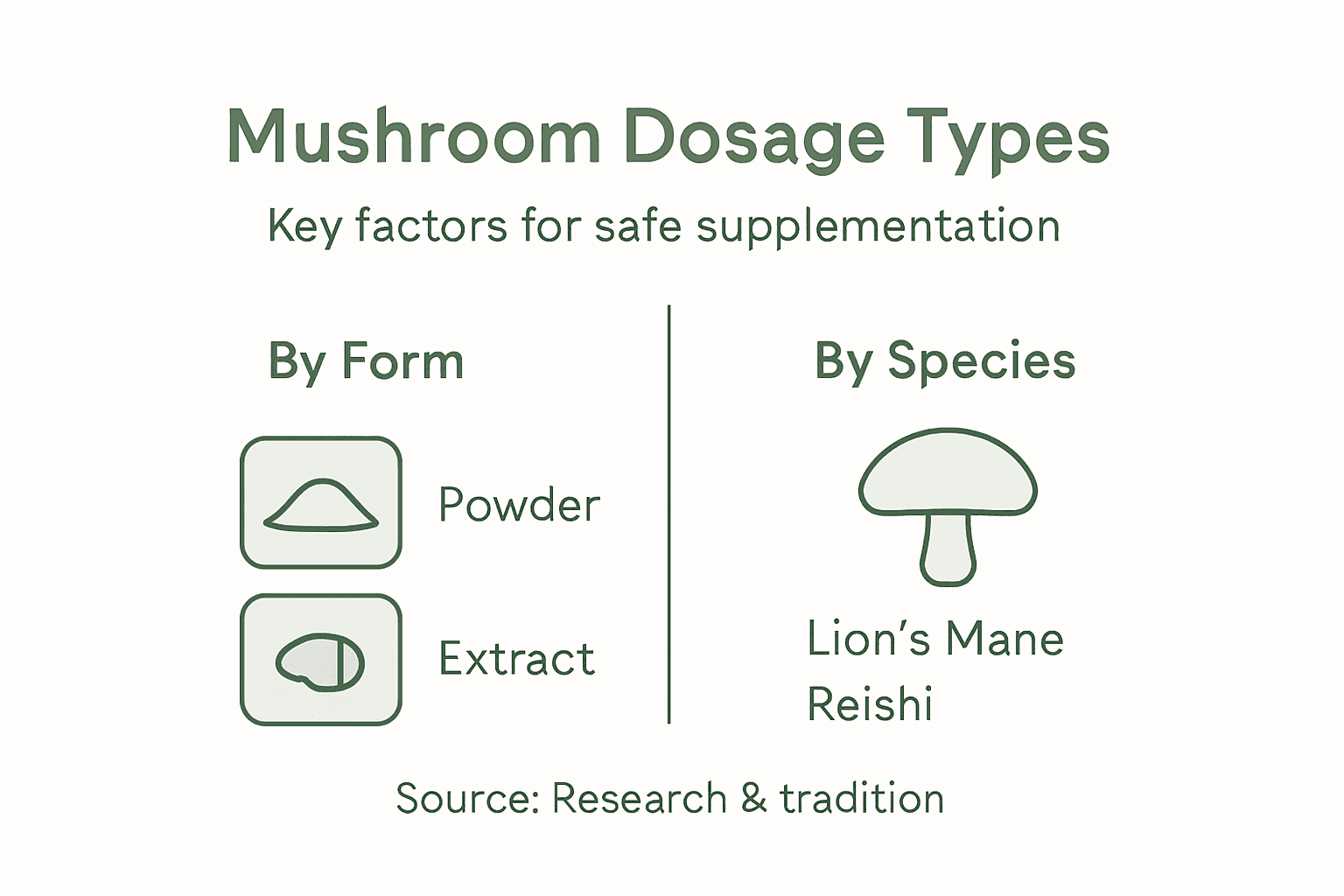
Mushroom form shapes dosage requirements significantly. Powders, whole fruiting bodies, and extracts contain different concentrations of bioactive compounds. A 1,000 mg powder dose differs fundamentally from a 500 mg extract dose because extraction processes concentrate active ingredients. Standardization and consistency in dosage research determine how scientists establish reliable study amounts, which often serve as reference points for consumer use.
Species-specific bioactive content matters more than you might think. Lion’s Mane contains different compounds than Reishi or Cordyceps, so their optimal doses vary. A compound abundant in one species may be minimal in another, changing the effective dose significantly.
Individual factors also play a critical role:
- Body weight and metabolism influence how quickly your body processes mushroom compounds
- Age affects nutrient absorption and utilization rates
- Overall health status and existing supplements create individual variations
- Specific health goals (cognitive support versus immune support) may require different dosages
- Dietary patterns and gut health impact bioavailability
Study duration reveals another key principle. Researchers design dosages to maintain consistency over specific timeframes—sometimes days, sometimes months—because effects accumulate differently depending on duration. A dose effective over 8 weeks may not apply to short-term use.
This table summarizes how specific personal factors influence optimal mushroom dosage:
| Factor | Typical Impact on Dose | Practical Example |
|---|---|---|
| Body weight | Higher weight, higher dose | 200 lb person may use upper range |
| Age | Absorption slows with age | Seniors may need slower titration |
| Health status | Illness or stress increases need | Immunocompromised: higher support |
| Medication use | May limit usable dose or species | Blood thinners: avoid Reishi |
Your optimal dose depends on the specific mushroom species, its form, your body composition, and what you’re trying to achieve—not a universal number.
Quality and processing methods affect dosage requirements too. Fruiting bodies contain different active compound ratios than mycelium. Extraction ratios (how much raw material creates the final product) directly influence how much you need to consume.
Your consumption timeline matters. Some compounds build in your system over time, while others provide more acute effects. Understanding whether you need loading doses or maintenance doses changes your personal dosage strategy.
Pro tip: Start with the lowest recommended dose for your chosen mushroom form, then track how you feel after two weeks—this personal observation reveals whether you need adjustment rather than guessing based on generic recommendations.
Comparing Dosages By Mushroom Type
Different mushroom species require different dosages because their active compounds vary significantly. Lion’s Mane, Reishi, Cordyceps, and Turkey Tail each have distinct chemical profiles that influence how much you need.
Lion’s Mane supports cognitive function and contains specific compounds that encourage brain health. Typical dosages range from 500-2,000 mg daily of fruiting body powder, or 250-750 mg of extract. Research suggests consistency matters more than hitting a precise ceiling dose for this species.

Reishi works differently, supporting relaxation and immune response through polysaccharides and triterpenes. Effective doses typically fall between 1,500-3,000 mg of dried fruiting body daily, or 300-500 mg of standardized extract. Reishi builds in your system, so regular dosing over weeks produces better results than sporadic use.
Cordyceps targets energy and athletic performance with unique adenosine and polysaccharide content. Dosages generally range from 1,000-2,000 mg of whole mushroom powder, or 200-500 mg of extract daily. This species shows effects relatively quickly, sometimes within days of starting.
Turkey Tail specializes in immune support and gut health through beta-glucans. Doses typically range from 2,000-3,500 mg of powder daily, or 300-600 mg of concentrated extract. Its immune benefits require consistent use over several weeks.
Bioactive compounds and chemical makeup directly determine therapeutic dosage, making species-specific guidance essential rather than generic recommendations.
These ranges reflect typical research and traditional use patterns. Individual response varies based on body weight, metabolism, and health status.
Here’s a quick reference comparing typical dosages, main benefits, and onset timing for major medicinal mushrooms:
| Mushroom | Typical Daily Dose (Powder/Extract) | Main Health Target | Effect Timeline |
|---|---|---|---|
| Lion’s Mane | 500–2,000 mg / 250–750 mg | Cognitive function | Weeks for full effect |
| Reishi | 1,500–3,000 mg / 300–500 mg | Immune, stress, sleep | Weeks to months |
| Cordyceps | 1,000–2,000 mg / 200–500 mg | Energy, athletic performance | Days to one week |
| Turkey Tail | 2,000–3,500 mg / 300–600 mg | Immune and gut support | Several weeks |
Key comparison points:
- Extract doses run 3-5x more concentrated than whole powder
- Fruiting body powders contain different ratios than mycelium-based products
- Standardized extracts allow more precise dosing than whole material
- Some species require loading phases before benefits appear
When choosing a mushroom, match its dosage recommendation to your actual health goal. Using Lion’s Mane at Reishi doses won’t optimize cognitive support. Comparing extract versus powder formats helps clarify which form fits your preferred dosing strategy.
Pro tip: If you’re new to a particular mushroom species, start at the lower end of the dose range for two weeks, then increase gradually—this reveals your individual response threshold without overwhelming your system.
Personalizing Dosage For Health Goals
Your health goal should drive your mushroom dosage strategy. Immune support, cognitive enhancement, stress management, and athletic performance each require different approaches and compound concentrations.
Immune support typically needs consistent, moderate-to-high doses over extended periods. Turkey Tail and Reishi work best when taken daily at therapeutic amounts because their beta-glucans and polysaccharides accumulate in your system. Plan for 8-12 weeks of consistent use before expecting noticeable immune resilience improvements.
Cognitive function benefits from Lion’s Mane at mid-range doses with regular consistency. Hericium erinaceus compounds support neuroplasticity, but results emerge gradually over 4-6 weeks. Some people feel sharper thinking within days; others need two months for meaningful changes.
Stress and sleep respond well to Reishi at higher end dosing, particularly in evening hours. The triterpenes in Reishi work synergistically when accumulated in your body, making nightly consistency crucial for relaxation benefits.
Athletic performance calls for Cordyceps at moderate-to-high doses, ideally 30-60 minutes before activity. This species shows more acute effects than others, sometimes noticeable within the first week of use.
Bioactive compounds targeting specific biological pathways guide dosage personalization toward your actual therapeutic goal. Different mushrooms contain unique ergothioneine, beta-glucans, and polysaccharide profiles that address distinct health needs.
Dosage adjustments by goal:
- Immune support: Start at 2,000+ mg daily, maintain 8-12 weeks minimum
- Cognitive function: 500-1,500 mg daily, consistent for 4-6 weeks
- Stress management: 1,500-3,000 mg daily, especially evening doses
- Athletic performance: 1,000-2,000 mg pre-activity or daily
Your body weight influences dosing too. Heavier individuals may need dosages at the higher end of ranges to achieve therapeutic blood concentrations.
Match your dosage to your specific goal—using cognitive doses for immune support wastes money and delays results you actually want.
Timing matters as much as amount. Morning mushrooms suit cognitive work; evening doses support sleep; pre-workout timing maximizes athletic benefits.
Pro tip: Write down your specific health goal before choosing a mushroom, then cross-reference both the species and the dosage range that targets that outcome—this prevents guessing and ensures you’re taking the right mushroom at the right amount.
Safety Risks And When To Adjust
Mushroom supplements are generally safe when dosed appropriately, but individual responses vary. Recognizing warning signs helps you adjust dosage before complications develop.
Digestive upset ranks among the most common reactions to mushroom supplements. Starting too high too fast overwhelms your digestive system, causing nausea, bloating, or loose stools. Reduce your dose by 25-50% if this occurs, then increase more gradually over several weeks.
Allergic reactions happen rarely but require immediate attention. Symptoms include itching, swelling, difficulty breathing, or hives. Stop use completely and consult a healthcare provider if these develop.
Medication interactions deserve serious consideration before starting any mushroom supplement. Reishi and Turkey Tail may interact with blood thinners, immunosuppressants, or diabetes medications. Check with your doctor if you take prescription medications regularly.
Sleep disruption can occur with stimulating mushrooms like Cordyceps taken late in the day. Shift your dosing to morning or early afternoon to avoid sleep interference.
Headaches or mild dizziness sometimes appear during the first week of use as your body adjusts. These typically resolve within 3-5 days without intervention. Stay hydrated and consider reducing dose slightly if symptoms persist.
Personalized evaluation and dose modification become essential when adverse effects appear, particularly for individuals taking concurrent medications or managing existing health conditions.
When to lower your dose:
- Persistent digestive discomfort beyond day three
- Any allergic response (stop immediately)
- Sleep problems from stimulating species
- Dizziness or headaches lasting more than one week
- Unusual mood changes or anxiety
When to pause completely:
- Severe allergic symptoms
- Unexplained rash or skin reactions
- Chest discomfort or difficulty breathing
- Severe gastrointestinal distress
Pregnant and breastfeeding individuals should consult healthcare providers before starting mushroom supplements. Similarly, people with autoimmune conditions need professional guidance because immune-stimulating mushrooms might complicate their condition.
Stop supplementation and seek medical advice if unusual symptoms appear—your body knows its limits better than any dosage chart.
Quality matters for safety too. Poor-quality mushroom products may contain contaminants like heavy metals or mold. Choose suppliers that provide third-party testing and transparent sourcing information.
Pro tip: Keep a simple journal tracking your dose, timing, and how you feel each day—this creates a safety record that helps identify problem patterns early and guides smarter adjustments without guesswork.
Find Your Perfect Mushroom Dosage with Confidence
Choosing the right mushroom dosage can feel overwhelming due to the many variables like species differences, individual health goals, and product forms discussed in the article. If you want to optimize benefits for immune support, cognitive enhancement, or stress relief without guesswork, it is essential to start with high-quality, well-formulated supplements designed for your specific needs.
At Longevity Botanicals, we offer carefully selected mushroom products such as our Mushroom Blend Extract Supplements that combine potent species at research-backed dosages. For those focused on reducing inflammation, our curated Best Mushrooms for Inflammation collection provides targeted options. Every product is crafted to support your health goals with natural, plant-based ingredients you can trust.
Take control of your wellness journey by visiting Longevity Botanicals today. Start at the right dose for your body and purpose, track your progress, and experience the benefits that come with personalized mushroom supplementation.
Frequently Asked Questions
What factors influence the proper dosage of mushrooms?
Multiple factors, including mushroom form, species-specific bioactive content, individual body weight, age, health status, and health goals, determine the proper dosage.
How do different mushroom species affect dosage recommendations?
Different species contain varying concentrations of active compounds, leading to distinct dosage recommendations. For example, Lion’s Mane typically requires 500-2,000 mg daily, while Reishi may need 1,500-3,000 mg depending on individual health goals.
How should I adjust my mushroom dosage based on my health goals?
Your health goal should guide your dosage. Immune support usually requires 2,000+ mg daily, while cognitive function benefits from lower doses of Lion’s Mane around 500-1,500 mg.
Are there any safety risks associated with mushroom supplementation?
Yes, potential risks include digestive upset, allergic reactions, medication interactions, and sleep disruption. It’s essential to monitor your body’s response and consult a healthcare provider if any unusual symptoms occur.
Recommended
- Comprehensive Guide to Mushroom Extract Usage for Wellness – LongevityBotanicals
- Mushroom Extract vs Powder: Choosing for Optimal Health – LongevityBotanicals
- Master the Mushroom Blending Process for Optimal Wellness – LongevityBotanicals
- 7 Essential Tips for Choosing Mushroom Extracts – LongevityBotanicals
Related Posts


