

Mushroom Extract vs Powder: Choosing for Optimal Health
Navigating the world of natural supplements often brings up the question of which form is truly best for your body. With mushroom extracts and powders gaining global attention for their unique benefits, choosing between these options can feel confusing for anyone looking to boost cognitive function or immune health. Understanding the critical difference in concentration and bioavailability between extracts and powders can guide you toward a smarter, more effective wellness routine.
Table of Contents
- Defining Mushroom Extract and Powder
- How Each Form Is Made and Used
- Potency and Bioactive Compounds Compared
- When to Choose Extract or Powder
- Safety, Quality, and Sourcing Concerns
Key Takeaways
| Point | Details |
|---|---|
| Mushroom Powder vs. Extract | Mushroom powders maintain a complete nutritional profile, while extracts concentrate specific bioactive compounds for targeted health benefits. |
| Processing Methods | Powders are made by drying and grinding whole mushrooms, whereas extracts involve sophisticated solvent-based techniques for isolation. |
| Potency and Bioavailability | Extracts offer higher potency and bioavailability, enabling faster absorption of therapeutic compounds compared to powders. |
| Choosing the Right Form | Selecting between powder and extract should be based on specific health goals, with powders suited for general nutrition and extracts for targeted health support. |
Defining Mushroom Extract and Powder
MushroomS represent complex botanical ingredients with profound nutritional potential. Mushroom extracts and mushroom powders represent two distinct processing approaches that offer unique health benefits, each with specific characteristics that impact their effectiveness and bioavailability.
Mushroom powders are created through a straightforward process of drying and grinding whole mushrooms, preserving the complete nutritional profile. Edible mushrooms contain comprehensive nutrient compositions including:
- Carbohydrates
- Proteins
- Dietary fibers
- Essential minerals
- Vitamins
- Secondary metabolites like alkaloids and phenolics
In contrast, mushroom extracts involve more sophisticated processing techniques designed to concentrate specific bioactive compounds. Extraction methods utilize food-grade solvents including:
- Aqueous extraction
- Ethanol extraction
- Alkaline extraction
These methods target isolating potent compounds such as beta-glucans, polysaccharides, and triterpenes, which can provide more targeted health benefits compared to whole powder preparations.
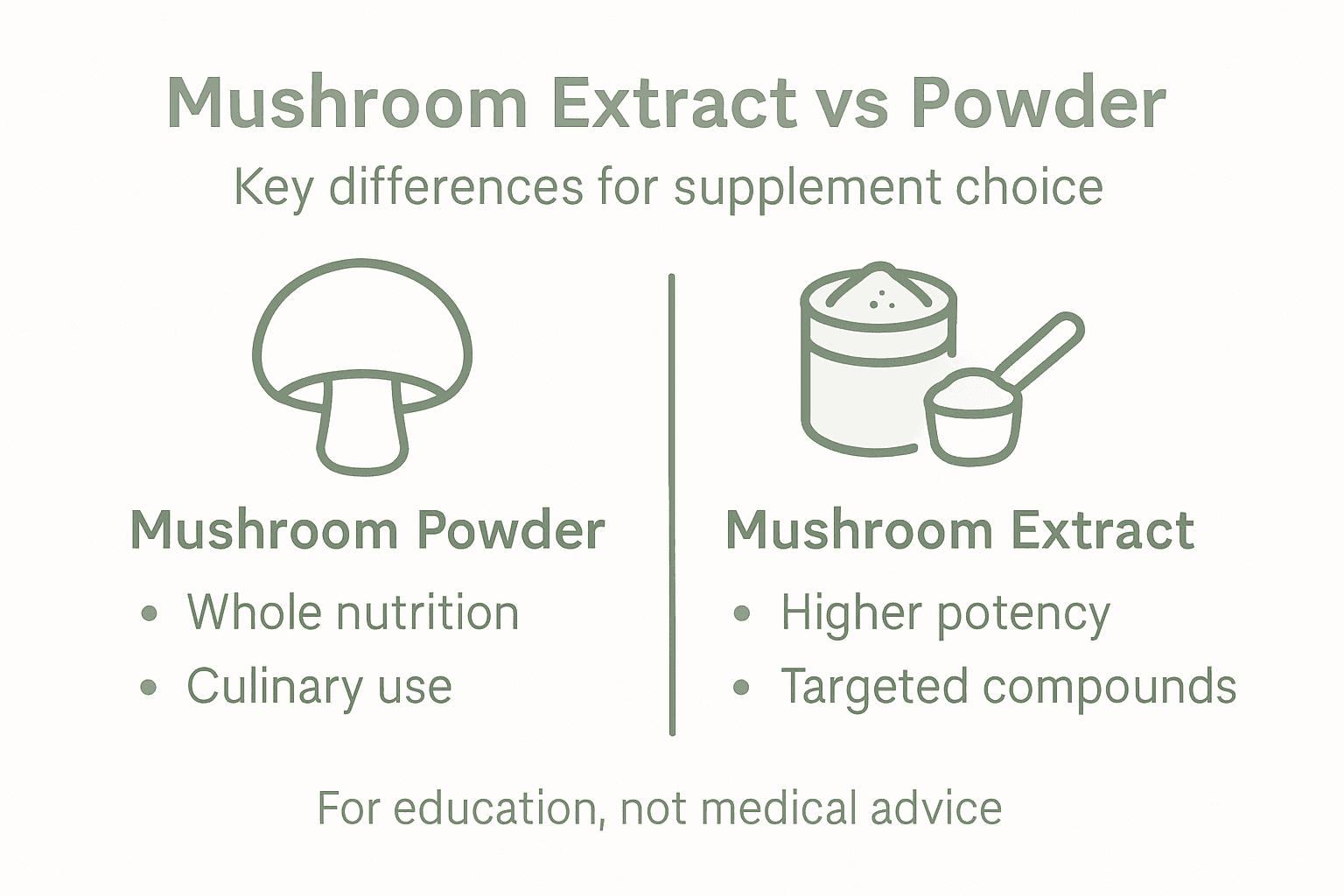
Concentration differences represent the primary distinguishing factor between extracts and powders. While powders maintain the mushroom’s complete nutritional matrix, extracts strategically concentrate specific beneficial molecules, potentially enhancing their therapeutic potential.
Here’s a quick reference comparing mushroom powder and extract characteristics:
| Characteristic | Mushroom Powder | Mushroom Extract |
|---|---|---|
| Processing | Dried and ground whole mushrooms | Solvent-based extraction and concentration |
| Nutritional Content | Full spectrum of nutrients | Targeted bioactive molecules |
| Potency | Lower, gradual effect | High, rapid effect |
| Typical Use | Daily wellness, food ingredient | Specific health support, supplementation |
| Cost | Generally lower | Often higher |
| Digestibility | Requires more digestion | Enhanced bioavailability |
Pro tip: When selecting mushroom supplements, consider your specific health goals to determine whether a whole powder or concentrated extract best suits your wellness needs.
How Each Form Is Made and Used
Mushroom processing represents a sophisticated journey from whole fungus to concentrated health supplement, with distinct methodologies for powders and extracts. Mushroom extracts utilize sequential solvent extraction techniques designed to isolate specific bioactive compounds with precision and purpose.
Mushroom Powder Production involves several critical steps:
- Harvesting mature mushroom fruiting bodies
- Cleaning and preparing mushroom specimens
- Drying using methods like:
- Air drying
- Freeze-drying
- Dehydration
- Grinding into fine, uniform powder
Mushroom Extract Production requires more complex processing:
- Selecting high-quality mushroom specimens
- Choosing appropriate extraction solvents
- Implementing extraction techniques such as:
- Aqueous extraction (for beta-glucans)
- Ethanol extraction (for phenolic compounds)
- Alkaline extraction (for polysaccharides)
- Concentrating and standardizing bioactive compounds
The primary difference lies in the level of processing and compound concentration. Powders retain the whole mushroom’s nutritional profile, while extracts strategically isolate and concentrate specific therapeutic molecules.

Pro tip: Consider your health objectives and consult nutrition experts to determine whether a whole mushroom powder or targeted extract best matches your wellness strategy.
Potency and Bioactive Compounds Compared
Bioactive compounds in mushrooms represent a complex ecosystem of therapeutic molecules that differ dramatically between powder and extract forms. Double extraction techniques break down tough cell walls to release potent medicinal components with varying levels of concentration and bioavailability.
Key bioactive compounds found in mushrooms include:
- Beta-glucans
- Triterpenoids
- Phenolic compounds
- Polysaccharides
- Alkaloids
- Antioxidant molecules
Extraction methods significantly impact compound concentration:
- Powders maintain all mushroom components but at lower potency
- Extracts concentrate specific medicinal compounds
- Extraction ratios determine final product strength
- Solvent selection influences compound release
Concentrated extracts can provide up to 10-15 times more bioactive compounds compared to whole mushroom powders.
The critical difference lies in bioavailability - extracts break down cellular barriers, allowing more efficient absorption of therapeutic molecules. Powders require additional digestive processing to release their nutritional potential.
Pro tip: Consult product labels for extraction ratios and standardized compounds to understand the true potency of your mushroom supplement.
When to Choose Extract or Powder
Choosing between mushroom powders and extracts requires understanding your specific health objectives and nutritional needs. Specific health conditions influence supplement selection with each form offering unique advantages for different wellness goals.
Scenarios favoring mushroom powders:
- General nutritional support
- Digestive health improvement
- Gradual, consistent nutrient intake
- Budget-conscious supplementation
- Whole food nutrition preference
- Culinary ingredient applications
Scenarios favoring mushroom extracts:
- Targeted immune system support
- Acute health condition management
- Concentrated medicinal compound requirements
- Performance and recovery optimization
- Specific therapeutic compound needs
Extracts deliver more concentrated medicinal compounds, while powders provide comprehensive nutritional support.
The critical decision depends on individual health priorities. Powders offer holistic nutrition, whereas extracts provide precise, potent therapeutic interventions. Consulting healthcare professionals can help determine the most appropriate mushroom supplement strategy for your unique wellness journey.
Review these typical scenarios to help determine the best supplement form:
| Wellness Goal | Best Choice | Reason |
|---|---|---|
| Broad nutritional boost | Mushroom powder | Provides complete food matrix |
| Acute immune support | Mushroom extract | Delivers targeted compounds |
| Culinary use | Mushroom powder | Integrates easily with recipes |
| Fast therapeutic effect | Mushroom extract | Highly concentrated actives |
| Budget-friendly option | Mushroom powder | Cost-effective for daily use |
Pro tip: Start with lower dosages and observe your body’s response when introducing new mushroom supplements, regardless of powder or extract form.
Safety, Quality, and Sourcing Concerns
Mushroom supplement safety demands rigorous evaluation across multiple dimensions. Comprehensive quality control ensures consumer protection through meticulous testing and standardization processes.
Key safety considerations include:
- Species identification accuracy
- Cultivation methodology
- Extraction process transparency
- Contaminant screening
- Heavy metal testing
- Microbial contamination checks
Critical sourcing factors to evaluate:
- Organic certification
- Sustainable farming practices
- Third-party laboratory testing
- Detailed processing documentation
- Traceability of mushroom origin
High-quality mushroom supplements require comprehensive testing from spore to supplement.
Consumers should prioritize supplements from reputable manufacturers who provide transparent documentation about their sourcing, cultivation, and processing methods. Understanding the nuanced differences between powder and extract production can help make more informed purchasing decisions.
Pro tip: Request and review detailed lab testing certificates before purchasing any mushroom supplement to ensure maximum safety and quality.
Discover the Best Mushroom Supplements for Your Health Goals
Choosing between mushroom powder and extract can be confusing when you want to optimize your wellness routine. This article highlights the challenge of selecting the right form based on your specific needs like immune support, cognitive enhancement, or overall nutrition. Whether you seek targeted potency with concentrated medicinal compounds or prefer the complete nutritional benefits of whole mushrooms, understanding these differences is vital.
At Longevity Botanicals, we provide a wide range of premium mushroom supplements tailored to your unique health objectives. Explore our Mushroom Blend Extract Supplements for a powerful combination of concentrated benefits or choose single mushroom options like our Maitake Mushroom Extract Supplements and Chaga Mushroom Extract Supplements to support targeted wellness goals. Every product is designed with quality, safety, and bioavailability in mind to help you experience rapid results or steady nutritional support.
Take control of your health journey today by visiting Longevity Botanicals. Find the perfect mushroom powder or extract to match your wellness plan and feel the difference with natural, trusted supplements crafted for your optimal health.
Frequently Asked Questions
What is the difference between mushroom extract and mushroom powder?
Mushroom extract involves sophisticated processing that concentrates specific bioactive compounds, while mushroom powder is made by drying and grinding whole mushrooms, preserving their complete nutritional profile.
When should I choose mushroom powder over mushroom extract?
Mushroom powder is ideal for general nutritional support, gradual nutrient intake, culinary uses, and budget-friendly supplementation.
What are the key bioactive compounds found in mushroom extracts?
Mushroom extracts typically contain concentrated bioactive compounds such as beta-glucans, triterpenoids, phenolic compounds, and polysaccharides, offering targeted health benefits.
How can I ensure the safety and quality of mushroom supplements?
To ensure safety and quality, look for third-party laboratory testing, organic certification, and transparency in sourcing and processing methods from reputable manufacturers.
Recommended
- Recipes for Smoothies Step by Step Guide – LongevityBotanicals
- What is the best Mushroom powder for me? – LongevityBotanicals
- Mushroom Powder For Coffee: Benefits And How To Use It – LongevityBotanicals
- Organic Maitake Mushroom Powder Extract 100g – LongevityBotanicals
- Liquid vs Powder Collagen: Real Benefits for UK Women
Related Posts

Why Water-Soluble Mushroom Compounds Drive Real Results

What Is Mushroom Sustainability? Benefits and Practices

The Role of Organic Farming in Mushrooms Explained

What Is a Fruiting Body? Mushroom Science Explained

Mushroom Allergenicity Explained: Symptoms and Safe Use

Top 5 naturesrise.com Mushroom Supplement Alternatives 2026

Top 6 Hemplucid.com Alternatives for 2026


