

Superfood Mushroom Benefits: Immune and Brain Impact
Choosing natural solutions for immune support and sharper thinking often means wading through confusing information and common myths. Mushrooms stand out as true superfoods, packed with a rare combination of bioactive compounds that deliver benefits few other foods offer. Scientific findings show these functional foods help strengthen the immune system and enhance brain health, outpacing ordinary produce. Discover what sets superfood mushrooms apart and how to select the right type for your wellness needs.
Table of Contents
- Superfood Mushrooms Defined and Misconceptions
- Major Types of Superfood Mushrooms Used
- Unique Nutrients and Health Benefits Explained
- Common Forms: Powders, Extracts, and Blends
- Safe Usage, Interactions, and Quality Considerations
Key Takeaways
| Point | Details |
|---|---|
| Superfoods Defined | Mushrooms are considered superfoods due to their unique combination of bioactive compounds that support immune and cognitive functions. |
| Myth Busting | Common misconceptions about mushrooms, such as their nutritional equivalence to vegetables or the need for only tiny amounts, are debunked; they contain functional compounds that require consistent intake for benefits. |
| Types of Mushrooms | Key varieties like Lion’s Mane, Reishi, and Cordyceps offer distinct health benefits, from cognitive support to immune modulation. |
| Form Selection | The effectiveness of mushroom supplements varies by form—powders, extracts, and blends—depending on personal health goals and convenience. |
Superfood Mushrooms Defined and Misconceptions
Mushrooms earn the “superfood” label because they deliver nutrient density far above typical foods. Unlike most produce, mushrooms contain a rare combination of compounds absent or scarce in other sources, including bioactive molecules supporting immune and neurological function.
A superfood mushroom is defined by three core characteristics:
- Rich bioactive profiles: Contains vitamin D2, B vitamins, terpenes, sterols, and beta-glucans
- Functional food status: Delivers disease prevention and health-supporting benefits beyond basic nutrition
- Documented health impacts: Supported by peer-reviewed research demonstrating measurable immune and cognitive effects
What Makes Mushrooms Different from Other Superfoods
Mushrooms occupy a unique nutritional category. Most plant foods excel in one area—berries for antioxidants, leafy greens for minerals, legumes for protein. Mushrooms do something different: they deliver antiviral, anti-inflammatory, and disease-fighting properties in a single source.
This happens because mushrooms have a fundamentally different biology than plants. They’re fungi, which means their cell walls contain compounds (like beta-glucans) that plants cannot produce.
Common Misconceptions About Superfood Mushrooms
Misunderstanding has kept mushrooms sidelined for years. Here are the biggest myths:
Myth 1: Mushrooms are just food, like any vegetable.
Reality: Mushrooms function as nutraceuticals—they’re foods with active medicinal compounds. The difference matters. Eating a carrot provides calories and fiber. Consuming medicinal mushrooms provides specific immune-modulating compounds that trigger measurable biological responses.
Myth 2: You need only tiny amounts for health benefits.
Reality: Effective dosing varies by mushroom type and desired outcome. Some benefits require consistent, meaningful intake over weeks or months. A single spoonful of powder won’t activate immune changes; your body needs sustained exposure to bioactive compounds.
Myth 3: All mushrooms provide the same benefits.
Reality: A button mushroom from the grocery store differs dramatically from a medicinal Lion’s Mane or Reishi mushroom. Bioactive compound concentrations vary significantly between species and growing conditions.
Myth 4: Mushroom supplements are too new or unproven.
Reality: Traditional medicine systems have used medicinal mushrooms for thousands of years. Modern research now validates what practitioners observed long ago—these compounds work. The evidence base continues expanding annually.
Mushrooms function as functional foods with proven immune-boosting and neuroprotective properties, not merely as vegetables.
Pro tip: Look for mushroom products specifying “fruiting body” extracts rather than mycelium-based supplements—fruiting bodies contain significantly higher concentrations of active biocompounds.
Major Types of Superfood Mushrooms Used
Five mushroom species dominate the superfood category worldwide. Each delivers distinct bioactive profiles and health targets, making them valuable for different wellness goals. Understanding their unique properties helps you choose the right mushroom for your specific needs.
Lion’s Mane (Hericium erinaceus)
Lion’s Mane stands out for brain health support. This mushroom contains compounds called hericenones and erinacines that cross the blood-brain barrier and trigger nerve growth factor (NGF) production. NGF supports neuron development and cognitive function.
Research shows Lion’s Mane may support:
- Memory and focus clarity
- Learning capacity and mental processing speed
- Mood stability and neurological resilience
- Recovery from age-related cognitive decline
This mushroom works best with consistent use over 6-12 weeks, as brain adaptations take time.

Reishi (Ganoderma lucidum)
Reishi, called the “mushroom of immortality” in traditional medicine, excels at immune modulation and stress response. Its polysaccharides and triterpenes calm the nervous system while activating immune defenses.
Reishi users typically report:
- Better sleep quality and deeper rest
- Reduced cortisol and stress reactivity
- Enhanced immune cell activation
- Improved recovery between workouts
Reishi works gradually—benefits often emerge after 3-4 weeks of daily use.
Cordyceps (Cordyceps militaris)
Cordyceps powers cellular energy production. Its adenosine content boosts ATP (adenosine triphosphate) synthesis, the body’s primary energy currency. Athletes and active individuals use Cordyceps for sustained endurance.
Key benefits include:
- Increased stamina during physical activity
- Faster post-exercise recovery
- Enhanced oxygen utilization
- Mental clarity during demanding work
Cordyceps shows effects within 2-3 weeks of consistent use.
Shiitake and Maitake
Shiitake and Maitake function as immune powerhouses. Both contain beta-glucans that activate immune cells, including natural killer cells and macrophages.
These mushrooms support:
- Seasonal immune resilience
- Intestinal barrier health and gut immunity
- Anti-inflammatory responses
- Antioxidant defense systems
Both work best as part of year-round immune protocols rather than short-term interventions.
Here’s a quick comparison of the major superfood mushroom types and their main health targets:
| Mushroom Species | Core Bioactive Compounds | Primary Health Target | Typical Onset of Benefits |
|---|---|---|---|
| Lion’s Mane | Hericenones, erinacines | Cognitive support | 6-12 weeks |
| Reishi | Polysaccharides, triterpenes | Immune modulation, stress | 3-4 weeks |
| Cordyceps | Adenosine, polysaccharides | Energy, endurance | 2-3 weeks |
| Shiitake | Beta-glucans, ergothioneine | Immune resilience | Ongoing/seasonal |
| Maitake | Beta-glucans, polysaccharides | Gut/immune health | Ongoing/seasonal |
Choosing the Right Mushroom
Your health goals determine which mushroom serves you best. Cognitive support points toward Lion’s Mane. Sleep and stress recovery suggest Reishi. Athletic performance or energy demands mean Cordyceps. General immune strengthening favors Shiitake or Maitake.
Most people benefit from stacking multiple mushrooms targeting different systems. Mushroom blends combine species strategically to address multiple health areas simultaneously.
Different mushroom species target specific health outcomes—choosing the right one depends on your primary wellness goal.
Pro tip: Start with one mushroom type for 4-6 weeks before adding another, allowing you to identify which species produces the most noticeable effects for your body.
Unique Nutrients and Health Benefits Explained
Mushrooms deliver a nutrient profile unlike any other food source. Their unique compounds don’t exist in significant quantities in plants or animals, making them genuinely distinct superfoods. Understanding what makes them work helps you use them effectively.
The Core Bioactive Compounds
Mushrooms contain four primary categories of health-promoting substances. These work together to produce the immune and cognitive benefits researchers document.
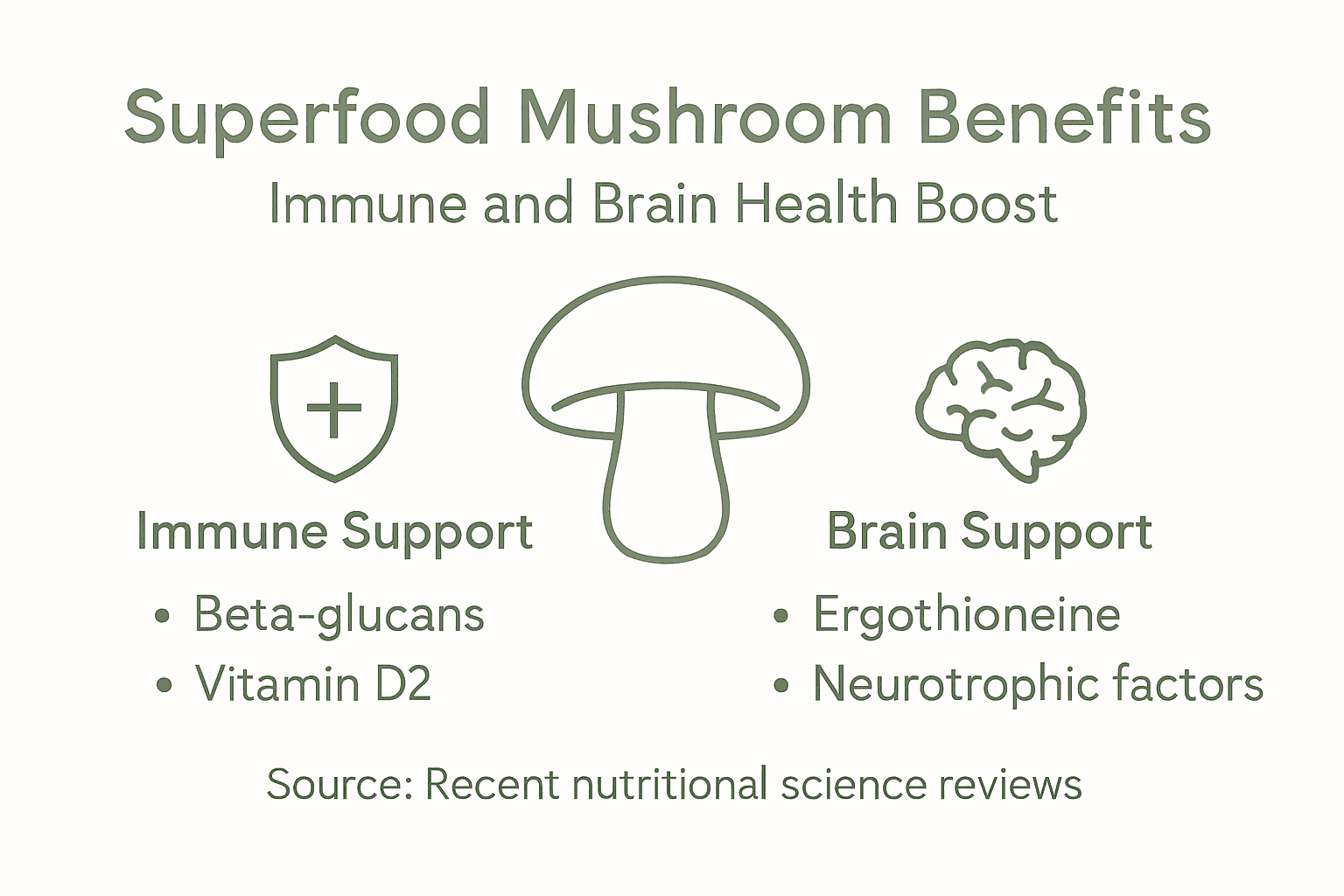
Beta-glucans form the foundation of mushroom benefits. These are long-chain sugars that activate immune cells like macrophages and natural killer cells. Unlike regular dietary fiber, beta-glucans directly signal your immune system to heighten defense responses.
Ergothioneine serves as a master antioxidant unique to mushrooms. Your body cannot manufacture this compound, making dietary sources essential. Ergothioneine accumulates in cells throughout your brain and body, protecting against oxidative stress that drives aging and cognitive decline.
Polysaccharides beyond beta-glucans provide additional immune modulation. These compounds regulate inflammatory responses, preventing excessive inflammation while maintaining necessary immune activation.
Vitamin D2 (ergocalciferol) exists naturally in mushroom flesh, especially after sunlight exposure. This vitamin regulates calcium absorption, bone health, and immune function—three systems critical to aging well.
How These Nutrients Support Your Immune System
Mushroom bioactives communicate with your immune cells in specific ways. Beta-glucans bind to immune cell receptors, triggering recognition of threats and coordinating defense responses. This activation strengthens both immediate (innate) and learned (adaptive) immune responses.
The immune-boosting pathway works like this:
- Beta-glucans enter your digestive system
- Specialized intestinal cells absorb these compounds
- Immune cells recognize and respond to them
- Your body increases production of protective antibodies and immune signaling molecules
- Defense capacity improves over weeks of consistent use
Brain Health and Cognitive Support
Mushroom compounds cross the blood-brain barrier, a selective barrier protecting your brain. Once inside, ergothioneine and polysaccharides reduce neuroinflammation and support nerve growth factor production.
This creates benefits including:
- Enhanced memory formation and recall
- Improved focus during complex mental tasks
- Better emotional resilience under stress
- Reduced age-related cognitive decline
- Neuroprotection against degenerative changes
Additional Health Benefits
Mushroom nutrients address multiple body systems simultaneously. High-quality protein content supports muscle maintenance, while polysaccharides feed beneficial gut bacteria. Antioxidants reduce systemic inflammation, lowering disease risk across multiple conditions.
Mushrooms demonstrate benefits for:
- Cardiovascular health through cholesterol modulation
- Metabolic function and blood sugar regulation
- Gut barrier integrity and microbiota diversity
- Inflammatory response normalization
- Cellular recovery and repair processes
Mushroom bioactives work through multiple simultaneous pathways—they don’t target one system but support whole-body resilience.
Pro tip: Combine mushroom intake with adequate sleep and stress management to maximize immune and cognitive benefits, since these systems work together synergistically.
Common Forms: Powders, Extracts, and Blends
Mushroom supplements come in three primary formats, each with distinct advantages. Your choice depends on convenience, potency needs, and specific health goals. Understanding these differences helps you select the right form for your routine.
Mushroom Powders
Mushroom powders contain the entire dried mushroom ground into fine particles. This whole-food approach preserves all bioactive compounds in their natural ratios. Powders work well for daily use since they’re easy to mix into beverages or food.
Powders offer several advantages:
- Affordable per serving
- Full spectrum of compounds in natural proportions
- Easy to adjust doses based on personal response
- Versatile for cooking, smoothies, or hot beverages
- Minimal processing preserves delicate compounds
The trade-off: you need larger quantities to match extract potency. A typical serving is 1-2 teaspoons daily.
Mushroom Extracts
Extracts concentrate bioactive compounds by removing unnecessary plant material. Hot water or alcohol extraction isolates beta-glucans, polysaccharides, and other active molecules. The result is more potent per serving than powder.
Mushroom extract processing creates concentrated doses suitable for targeted health outcomes. Extract servings are typically 500-1000 mg daily, roughly one-quarter the volume of powder.
Extract benefits include:
- Higher bioactive concentration per dose
- Smaller serving sizes
- Faster absorption
- Standardized dosing consistency
- Better for travel or convenience
Extracts cost more per serving but deliver measurable results faster. They work best when you want reliable, potent supplementation.
Mushroom Blends
Mushroom blends combine multiple species in single products. A blend might contain Lion’s Mane for cognition, Reishi for stress, and Cordyceps for energy. This approach targets multiple body systems simultaneously.
Blends address multiple health goals:
- Immune support plus cognitive enhancement
- Stress relief combined with physical performance
- Comprehensive wellness in one product
- Simplified daily routine with fewer pills or servings
Quality matters significantly with blends. The best formulations use standardized extract ratios optimized for ingredient synergy, ensuring each component delivers adequate bioactive compounds.
Comparing the Three Forms
| Form | Potency | Serving Size | Cost | Best For |
|---|---|---|---|---|
| Powder | Standard | 1-2 tsp | Low | Budget-conscious, whole food approach |
| Extract | High | 500-1000 mg | Medium-High | Targeted results, convenience |
| Blend | High | Varies | Medium-High | Multiple health goals |
Choosing Your Form
Start with your lifestyle reality. If you have 30 seconds for morning routine, extract or blend makes sense. If you enjoy cooking with functional foods, powder fits better. Consider your primary goal too. Acute cognitive support suggests extract. General wellness maintenance suits powder.
Many people use multiple forms. They might take an extract daily for consistency and add powder to weekend smoothies for variety.
The best mushroom form is the one you’ll use consistently—potency matters only if you maintain regular intake.
Pro tip: Begin with mushroom powder to assess how your body responds, then upgrade to extracts or blends once you identify which mushrooms deliver the most noticeable benefits for you.
Safe Usage, Interactions, and Quality Considerations
Mushroom supplements are generally safe, but responsible use requires understanding dosage, medication interactions, and product quality. Your individual health situation determines what precautions matter most. This section walks you through what you need to know.
Dosage and Safety Profiles
Mushroom supplements have wide safety margins compared to many interventions. Most people tolerate daily intake well without adverse effects. However, optimal dosing varies by mushroom type, product format, and individual response.
General dosage guidelines include:
- Powders: 1-2 teaspoons daily (3-6 grams)
- Extracts: 500-1500 mg daily depending on concentration
- Blends: Follow product labels, typically 1-2 servings daily
- Timeline: 4-6 weeks minimum to assess effects
Start with lower doses and increase gradually. Your body’s response matters more than following standard recommendations exactly. Some people feel effects at half the typical dose.
Medication Interactions
Mushroom bioactives can interact with certain medications, particularly blood thinners and immunosuppressants. Dosage considerations and potential interactions with drugs require careful evaluation if you take prescription medications.
Notify your healthcare provider if you take:
- Blood thinners like warfarin or aspirin
- Immunosuppressant medications after organ transplant
- Diabetes medications that lower blood sugar
- Blood pressure medications
- Medications metabolized by the liver
Mushroom supplements may enhance or reduce medication effectiveness. Your doctor can review specific products and dosages for safety.
Population-Specific Cautions
Certain groups should exercise extra caution or avoid mushroom supplements entirely. Pregnancy and nursing require medical guidance before starting supplements. People with mushroom allergies must obviously avoid all varieties.
Special considerations apply to:
- Pregnant or nursing individuals
- Children under age 12
- People with severe allergies to fungi
- Those with autoimmune conditions requiring medication management
- Individuals with bleeding disorders
If you fall into these categories, discuss mushroom supplementation with your healthcare provider before starting.
Quality and Safety Standards
Not all mushroom products contain what the label claims. Poor-quality supplements may contain fillers, contaminants, or inadequate active compounds. Product standardization and species authentication separate trustworthy brands from unreliable ones.
Evaluate product quality by checking for:
- Third-party testing certificates (NSF, USP, ConsumerLab)
- Fruiting body sources rather than mycelium on grain
- Transparent ingredient lists with specific mushroom species
- Extraction ratios clearly labeled
- Company transparency about sourcing and processing
- No claims of treating or curing diseases
Reputable manufacturers test for heavy metals, pesticides, and microbial contamination. This transparency matters because mushrooms accumulate environmental toxins from soil and water.
To help you select quality mushroom supplements, here’s a reference for essential quality checks:
| Quality Indicator | Why It Matters | What to Look For |
|---|---|---|
| Third-party testing | Ensures purity and potency | Certificates from NSF or USP |
| Fruiting body source | Higher bioactive content | Clearly labeled on packaging |
| Extraction ratio | Reliable dosing | Specific numbers like 10:1 |
| Transparent sourcing | Avoids contamination | Detailed ingredient lists |
Storage and Shelf Life
Proper storage preserves bioactive potency. Keep mushroom supplements in cool, dry locations away from direct sunlight. Powders remain viable for 6-12 months; extracts typically last 1-2 years when stored correctly.
Quality mushroom supplements require third-party testing and transparent sourcing—this protects both your health and ensures you receive actual bioactive compounds.
Pro tip: Before starting any mushroom supplement, send your current medication list to your pharmacist or doctor and ask specifically about mushroom interactions—they can flag potential conflicts in minutes.
Unlock the Full Power of Superfood Mushrooms for Immune Support and Brain Health
If you are looking to boost your immune system and sharpen your cognitive abilities naturally you understand the challenge of finding effective and trustworthy mushroom supplements. This article highlights key points about mushroom bioactive compounds like beta-glucans and hericenones that require consistent and potent sourcing to truly impact immune modulation and neurological support. The variety of mushrooms matters because each species targets different health goals from Reishi reducing stress and supporting sleep to Lion’s Mane fostering nerve growth and mental clarity.
At Longevity Botanicals we specialize in delivering premium, carefully formulated mushroom supplements designed to meet these exact needs. Explore our Best Mushrooms for Brain Health & Cognitive Support – LongevityBotanicals collection to find proven Lion’s Mane and cognitive-enhancing extracts. For those seeking combined benefits across immune, energy, and stress pathways check out our Mushroom Blend Extract Supplements – LongevityBotanicals featuring expertly stacked formulas.
Don’t wait to support your immune resilience and brain function with natural mushroom power. Visit Longevity Botanicals today and choose high-quality supplements that deliver consistent, researched results. Take control of your health with the right mushroom supplements and feel the difference with every dose.
Frequently Asked Questions
What are the primary health benefits of superfood mushrooms?
Superfood mushrooms provide numerous health benefits, particularly in enhancing immune function, reducing inflammation, and supporting cognitive performance. Specific species like Lion’s Mane are known for brain health, while Reishi boosts the immune system.
How do I incorporate superfood mushrooms into my diet?
You can incorporate superfood mushrooms into your diet through powders, extracts, or blends. Powders can be added to smoothies or dishes, while extracts can be taken as capsules or mixed into drinks for concentrated benefits.
How long does it take to notice the effects of superfood mushrooms?
The time it takes to notice effects varies by mushroom type. For example, Lion’s Mane may require 6-12 weeks for cognitive benefits, whereas Cordyceps can show energy-enhancing effects within 2-3 weeks.
Are there any side effects or interactions associated with superfood mushrooms?
While most people tolerate mushroom supplements well, individuals on blood thinners or immunosuppressants should consult their healthcare provider to discuss potential interactions and ensure safe usage.
Recommended
Related Posts

Why Water-Soluble Mushroom Compounds Drive Real Results

What Is Mushroom Sustainability? Benefits and Practices

The Role of Organic Farming in Mushrooms Explained

What Is a Fruiting Body? Mushroom Science Explained

Mushroom Allergenicity Explained: Symptoms and Safe Use

Top 5 naturesrise.com Mushroom Supplement Alternatives 2026

Top 6 Hemplucid.com Alternatives for 2026


