

How Mushrooms Support Immunity Naturally
Sorting through the endless options for immunity support can feel confusing when you want reliable, natural results. Many health-conscious Americans are turning to mushrooms, valued not just in traditional remedies but now backed by research highlighting their immune-regulating bioactive compounds. Here you will find clear explanations of how top mushroom varieties interact with your immune system, why processing and bioavailability are game changers, and what makes quality supplements truly effective for supporting your daily wellness.
Table of Contents
- Mushrooms And Immunity: Scientific Foundations
- Top Immunity-Boosting Mushroom Varieties
- Bioactive Compounds And Immune Response
- Safe Supplementation And Usage Guidelines
- Debunking Myths And Understanding Risks
Key Takeaways
| Point | Details |
|---|---|
| Mushroom Compounds Enhance Immunity | Specific compounds in mushrooms, like beta-glucans, communicate with immune cells to boost both innate and adaptive immunity. |
| Extraction Methods Impact Efficacy | The way mushrooms are processed significantly affects the availability of beneficial compounds. Hot water extraction is particularly effective. |
| Dosing And Consistency Are Key | Consistent daily dosages of 500-1500mg are generally required for noticeable immune support, taken over a duration of 4-8 weeks. |
| Research Limitations Exist | While benefits are documented, the variability in human responses based on individual health and lifestyle factors means results may differ. |
Mushrooms and Immunity: Scientific Foundations
Your immune system works like a multi-layered security system for your body. It needs constant support to recognize threats, respond quickly, and recover properly. Mushrooms contain compounds that communicate directly with your immune cells, strengthening this defense network through established biological mechanisms.
How Mushrooms Communicate with Immune Cells
Mushrooms contain specific molecules that your immune cells recognize and respond to. When you consume mushroom extracts, these compounds reach your gut and bloodstream, where they activate specialized immune cells including macrophages, dendritic cells, T cells, and NK cells.
The primary active compounds responsible for these effects are beta-glucans and specific proteins. These molecules act as signals that tell your immune system to increase surveillance and response capacity. Bioactive compounds in mushrooms trigger measurable biochemical changes in immune cells through well-documented pathways.
Your body recognizes these mushroom compounds as important helpers, not threats. This is why mushroom extracts support immunity without causing the inflammation that sometimes occurs with other immune stimulants.
The Two Immunity Branches Mushrooms Support
Mushrooms strengthen both major immunity systems:
- Innate immunity: Your body’s first-response defense that activates immediately when threats appear
- Adaptive immunity: Your longer-term defense that remembers past threats and responds more effectively over time
This dual support matters because your immunity works best when both branches function optimally.
Why Extraction Methods Matter
Not all mushroom preparations deliver the same benefits. The way mushrooms are processed dramatically affects which compounds become available to your body.
Hot water extraction (the traditional method) breaks down cell walls and releases beta-glucans effectively. Alcohol extraction captures different compounds. Immunomodulatory effects vary significantly based on which extraction method producers use.
This is why mushroom quality and processing matter more than simply the type of mushroom. A poorly extracted mushroom powder delivers minimal immune support, while a well-processed extract from the same mushroom species provides substantial benefits.
Understanding Bioavailability
Bioavailability means how much of the active compound your body actually absorbs and uses. Mushroom compounds have limited bioavailability on their own because your digestive system cannot easily break down the chitin in mushroom cell walls.
Extraction processes solve this problem by pre-breaking cell walls, allowing your body to absorb up to 25 times more active compounds compared to raw mushroom powder.
Dosage also influences results. Research shows that meaningful immune support typically requires 500-1500mg daily of standardized extracts, taken consistently for at least 4-8 weeks.
Extraction method, processing quality, and consistent dosing determine whether you receive measurable immune benefits from mushroom supplements.
Current Research Limitations
Most mushroom immunity research occurs in laboratory settings with isolated immune cells. While these studies show clear mechanisms, they do not always predict real-world human results.
Human studies exist but remain limited compared to lab research. Variables like individual genetics, overall diet quality, stress levels, and sleep all influence how effectively mushroom compounds support your specific immunity. Research also shows variability based on mushroom strain and growing conditions.
This means mushroom benefits are real and documented, but your personal experience may differ based on your individual biology and lifestyle context.
Pro tip: Combine mushroom supplements with consistent sleep, regular physical activity, and a nutrient-dense diet for optimal immunity support—mushrooms work best as part of a comprehensive wellness approach, not as a standalone solution.
Top Immunity-Boosting Mushroom Varieties
Not all mushrooms deliver the same immune benefits. Certain varieties contain higher concentrations of active compounds and have stronger research support for immunity. Understanding which mushrooms offer the most effective support helps you choose the right supplement for your needs.
Turkey Tail: The Immune System Trainer
Turkey tail earned its reputation through decades of research showing its ability to strengthen immune response. This mushroom contains polysaccharopeptides that activate multiple immune pathways simultaneously without overactivating your system.
Turkey tail works by priming your immune cells to respond faster and more effectively to challenges. The compounds stimulate both macrophage activity and T-cell production, creating a more prepared defense network. Immune balance without overstimulation defines how turkey tail supports your immunity without causing inflammatory reactions.
Research shows consistent dosing of 500-1000mg daily for 8-12 weeks produces measurable improvements in immune markers.
Reishi: The Stress-Immunity Connection
Reishi stands apart because it addresses immunity through stress reduction. Chronic stress directly suppresses immune function, which is why Reishi’s calming properties indirectly strengthen your defense system.

This mushroom contains beta-glucans and triterpenes that activate immune cells while simultaneously lowering cortisol levels. This dual action makes Reishi especially valuable for individuals managing high stress or poor sleep quality.
Reishi works best taken consistently before bed, with effects typically appearing after 4-6 weeks.
Chaga: The Antioxidant Powerhouse
Chaga contains more antioxidants per gram than almost any food source. While antioxidants do not directly activate immune cells, they reduce the oxidative stress that damages immune function over time.
This mushroom supports immunity by protecting your existing immune cells from damage caused by free radicals and inflammation. Chaga extracts show particular strength in supporting white blood cell production.
Lion’s Mane: Immunity Through Brain-Gut Connection
Lion’s Mane strengthens immunity through an unexpected pathway: gut health. Your gut contains 70% of your immune system, and this mushroom’s compounds support the bacteria that train immune cells.
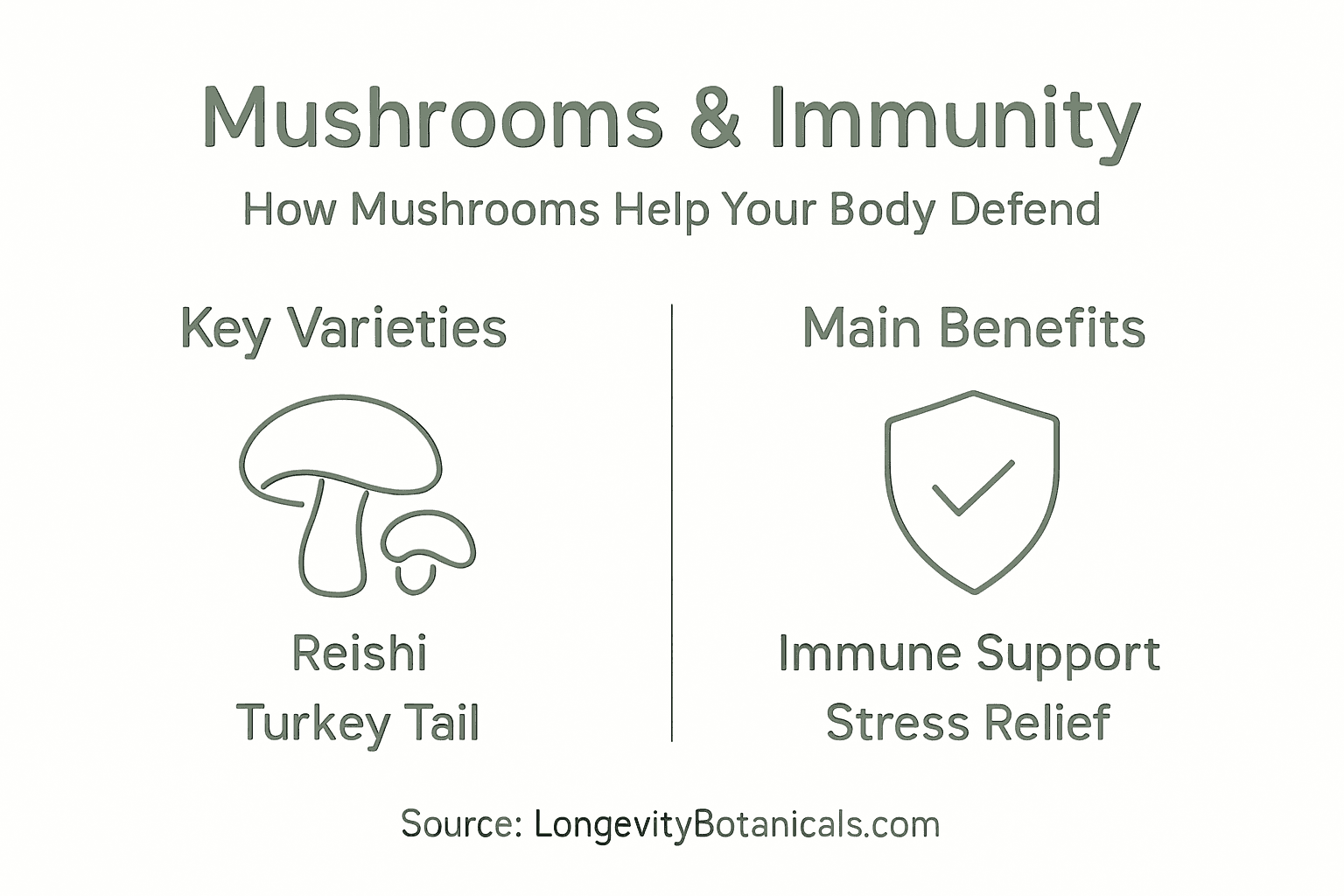
Lion’s Mane also stimulates nerve growth factor, which improves communication between your nervous system and immune system. This integrated approach makes it valuable for comprehensive immunity support.
Other Effective Varieties
Oyster, paddy straw, and white button mushrooms all contribute meaningful immune support through various bioactive compounds:
- Oyster mushrooms: Strong antiviral properties through beta-glucan content
- Paddy straw mushrooms: Immunostimulatory effects with anti-inflammatory action
- White button mushrooms: Antiviral and anti-inflammatory benefits accessible through common food sources
Different mushroom varieties support immunity through distinct mechanisms—combining multiple types creates a more comprehensive defense strategy than any single variety alone.
Choosing Your Mushroom
Your ideal choice depends on your specific immunity needs and lifestyle. Someone managing high stress benefits most from Reishi, while an individual seeking broad immune activation might prefer Turkey Tail or a blend containing multiple varieties.
Consider your current health priorities and choose accordingly. Most people benefit from rotating mushroom varieties seasonally to stimulate different immune pathways.
Here is a summary of how top immunity-boosting mushrooms differ in their mechanisms and best use cases:
| Mushroom Variety | Key Immunity Mechanism | Best For | Typical Dosage |
|---|---|---|---|
| Turkey Tail | Polysaccharopeptides activate cells | General immune activation | 500-1000mg daily |
| Reishi | Reduces stress, lowers cortisol | Stress-related immunity | 500-1500mg daily, PM |
| Chaga | Antioxidant protection | Defending immune cells | 500-1000mg daily |
| Lion’s Mane | Supports gut-immune connection | Immune & brain-gut link | 500-1000mg daily |
| Oyster/Other | Antiviral and anti-inflammatory | Broad, food-based support | 500-1500mg daily |
Pro tip: Start with a single mushroom variety for 8-12 weeks before adding others, allowing you to assess how your body responds and identify which varieties provide the most noticeable benefits for your individual immunity needs.
Bioactive Compounds and Immune Response
Mushrooms contain dozens of compounds that trigger specific immune responses. These bioactive molecules are the actual reason mushrooms strengthen immunity—understanding how they work explains why quality and processing matter so much.
The Main Immune-Activating Compounds
Mushrooms concentrate several compound families that your immune system recognizes and responds to. Each type triggers different immune pathways, creating multiple layers of support.
The primary compounds include:
- Beta-glucans: Long-chain sugars that bind to immune receptors and activate macrophages and NK cells
- Polysaccharides: Complex carbohydrates that stimulate both innate and adaptive immunity
- Proteins and peptides: Fungal immunomodulatory proteins that directly signal immune cells
- Terpenes: Volatile compounds with anti-inflammatory and immune-supporting properties
- Lectins: Proteins that enhance immune cell recognition and communication
Immunoregulatory compounds work through distinct molecular mechanisms, meaning mushroom extracts provide more comprehensive immune support than isolated compounds alone.
How Beta-Glucans Activate Your Immune System
Beta-glucans are the most researched compounds because they produce reliable, measurable immune activation. Your immune cells have specific receptors designed to recognize beta-glucans, triggering immediate response.
When beta-glucans reach your gut and bloodstream, they bind to receptors on macrophages and dendritic cells. This binding activates a cascade of immune signaling that increases white blood cell production and enhances their ability to recognize threats.
Unlike pharmaceutical immune stimulants, beta-glucans activate immunity without causing overproduction or excessive inflammation. Your immune system responds proportionally to the stimulus provided.
The Bioavailability Challenge
Having potent compounds means nothing if your body cannot absorb them. Bioavailability determines how much active compound your system actually uses after consumption.
Mushroom cell walls are made of chitin, the same material in insect exoskeletons. Your digestive system cannot break down chitin effectively, which is why raw mushroom powder delivers minimal immune benefits.
Extraction processes solve this by breaking cell walls before consumption. Hot water extraction, for example, destroys chitin and releases beta-glucans so your intestines can absorb them.
This explains why a quality extract can be 10-25 times more effective than raw powder from the same mushroom.
Multiple Pathways Create Stronger Support
Different compounds activate different immune pathways. Polysaccharides work through one mechanism, terpenes through another, and proteins through yet another.
When you consume a whole mushroom extract, all these compounds work together, creating synergistic effects that single compounds cannot match. This is why whole mushroom extracts typically outperform isolated beta-glucan supplements in research studies.
The combination of multiple bioactive compounds working through different pathways creates immune support that is more effective and more balanced than any single isolated compound.
Compound Concentration Varies Dramatically
Not all mushroom extracts contain equal amounts of active compounds. Factors affecting concentration include:
- Growing conditions and substrate quality
- Harvest timing during the fruiting cycle
- Extraction method and solvent used
- Processing temperature and duration
- Storage conditions before consumption
A premium extract standardized to 30% beta-glucans delivers dramatically more immune support than a basic powder containing only 2-3% beta-glucans from the same mushroom species.
Pro tip: When selecting mushroom supplements, look for extracts standardized to specific beta-glucan or polysaccharide percentages rather than basic powders—standardization guarantees you receive consistent, measurable amounts of active immune-supporting compounds.
Here is a quick comparison of mushroom extract quality factors to consider when choosing a supplement:
| Factor | Impact on Benefit | How to Check |
|---|---|---|
| Extraction Method | Influences absorption | Look for hot water/alcohol |
| Beta-Glucan Standardization | Ensures potency | Check for 20-30% or higher |
| Third-Party Testing | Confirms safety | Certificates on label/website |
| Storage & Packaging | Maintains compound quality | Sealed, cool, dry storage |
Safe Supplementation and Usage Guidelines
Mushroom supplements are safe when used appropriately, but like any supplement, they require thoughtful dosing and awareness of your individual health situation. Understanding proper usage prevents wasting money on ineffective doses and minimizes the risk of adverse effects.
Starting Dosage and Timing
Begin with lower doses and increase gradually over 1-2 weeks. This approach allows your body to adjust and helps you identify any sensitivities before reaching full therapeutic doses.
Standard effective dosages for mushroom extracts range from 500-1500mg daily, depending on the mushroom variety and standardization level. Quality matters more than quantity—a 30% beta-glucan extract at 500mg delivers more benefit than a basic powder at 2000mg.
Take mushroom supplements with food to improve absorption and reduce the chance of digestive upset. Consistency matters significantly; daily supplementation produces better results than sporadic use.
Understanding Immune Balance
Your immunity requires balance, not constant maximum activation. Over-stimulating your immune system can lead to unnecessary inflammation and autoimmune responses.
Mushroom extracts should be used in moderation to maintain immune balance rather than pushing toward constant activation. This is why taking excessively high doses does not produce proportionally better results.
If you have autoimmune conditions, consult your healthcare provider before starting mushroom supplements. Certain varieties like reishi work well for autoimmune support, while others may require medical supervision.
Who Should Avoid Mushroom Supplements
Most people tolerate mushroom supplements well, but specific populations should exercise caution:
- Pregnant or nursing individuals: Research on safety during pregnancy remains limited
- People taking immunosuppressants: Mushrooms may reduce medication effectiveness
- Those with mushroom allergies: Test with small doses first if mushroom sensitivity exists
- Individuals with severe autoimmune conditions: Medical clearance is advisable
- People taking blood thinners: Some mushrooms have mild anticoagulant properties
If you take prescription medications, discuss mushroom supplements with your doctor before starting. Drug interactions are rare but possible with certain medications.
Recognizing Quality and Safety
Not all mushroom products undergo safety testing. Select supplements that provide:
- Third-party testing verification for contaminants
- Standardization to specific bioactive compound percentages
- Clear sourcing information and extraction methods
- Proper storage in cool, dry conditions
- Manufacturing in facilities following good manufacturing practices
Standardized extraction methods and rigorous validation ensure consistent safety and efficacy across batches.
Potential Mild Side Effects
Most people experience no adverse effects. Minor reactions can include digestive upset, mild headaches, or allergic responses in sensitive individuals.
These effects typically subside within 3-7 days as your body adjusts. If they persist, reduce your dose or discontinue use and consult your healthcare provider.
Safe mushroom supplementation means starting low, using quality products, maintaining consistency, and listening to your body’s individual responses.
When to Stop or Reduce Dosage
Cease supplementation if you experience allergic reactions such as rash, swelling, or difficulty breathing. Also stop if digestive symptoms persist beyond one week or if you develop unusual fatigue or joint pain.
After 8-12 weeks of consistent use, consider taking a 2-4 week break. This allows your body to reset and prevents your immune system from adapting to constant stimulation.
Pro tip: Track how you feel during the first 4-6 weeks of supplementation—noting energy levels, immune resilience, and any side effects helps you identify your ideal dose and determine which mushroom varieties work best for your unique physiology.
Debunking Myths and Understanding Risks
Mushroom supplements attract both enthusiastic supporters and skeptics. Separating fact from marketing hype requires understanding what research actually shows and recognizing claims that exceed the evidence.
The Iodine Test Myth
You may encounter online videos claiming iodine tests reveal mushroom quality. These tests supposedly show beta-glucan content by turning mushroom powder blue or black.
This is fundamentally misleading. Iodine-starch assays are non-scientific tests that do not measure bioactive compounds or extract quality. They measure starch content, which has nothing to do with immune benefits.
Legitimate quality assessment requires laboratory analysis testing for specific beta-glucan percentages and contamination levels. Ignore any seller claiming iodine tests prove their product’s superiority.
“Cure-All” Claims Should Raise Red Flags
Beware of marketing claiming mushrooms cure cancer, reverse aging, or replace medical treatment. These statements violate regulatory guidelines and lack proper clinical evidence.
Mushrooms support immunity and offer various wellness benefits, but they are not substitutes for medical care. They work best as part of a comprehensive health strategy, not as standalone solutions.
Legitimate companies make modest, evidence-based claims. If a marketing message sounds too good to be true, it probably is.
Understanding Research Limitations
Most mushroom research occurs in laboratory settings using isolated immune cells. This shows biological mechanisms but does not guarantee identical effects in living humans.
Preclinical studies form the foundation of knowledge, but human clinical trials provide the strongest evidence. Limited human studies exist compared to laboratory research, which means some benefits remain promising but not definitively proven.
This does not mean mushroom benefits are fake. Rather, it means realistic expectations matter—benefits are real but may not be as dramatic as early-stage research suggests.
The Standardization Problem
One major issue undermining mushroom research is inconsistent standardization. Different products contain vastly different amounts of active compounds, making study results hard to compare.
A study using a 40% beta-glucan extract cannot be directly compared to one using a 5% powder. When research seems contradictory, often the difference lies in which product was tested, not whether mushrooms actually work.
This is why selecting standardized extracts matters—you know exactly what you are consuming.
Common Misconceptions
These myths circulate frequently but lack scientific support:
- “All mushrooms have identical benefits”: Different varieties have distinct bioactive profiles and effects
- “More is always better”: Excessive doses do not produce proportional benefits and may cause inflammation
- “Mushrooms work instantly”: Meaningful immune support requires 4-12 weeks of consistent use
- “Mycelium and fruiting body are equivalent”: Fruiting bodies contain higher bioactive compound concentrations
- “All extracts are the same”: Extraction methods dramatically affect compound availability
What Research Actually Supports
Reliable benefits supported by clinical evidence include immune cell activation, improved immune response timing, and stress reduction through specific mushroom varieties.
Promising but emerging evidence suggests benefits for certain cancers, respiratory health, and cognitive function. More human studies are needed before making definitive claims about these areas.
Mushroom benefits are real and research-backed, but they work as part of a healthy lifestyle—not as replacements for medical care or magic solutions.
Red Flags When Evaluating Products
Avoid products making these claims:
- “Guaranteed to boost immunity by X percent”
- “Clinically proven cure” (without citing specific clinical trials)
- “Ancient secret formula” (unsubstantiated traditional use)
- “Comparable to pharmaceutical drugs”
- No third-party testing or standardization information
Pro tip: When evaluating mushroom claims, ask three questions: Is this supported by peer-reviewed research? Does the company cite specific studies? Are they making modest claims based on evidence or exaggerated promises?—These questions quickly separate legitimate products from marketing hype.
Strengthen Your Immunity Naturally With Premium Mushroom Extracts
Supporting your immune system effectively requires more than guesswork. This article highlights how specific compounds like beta-glucans and polysaccharides work together to activate both innate and adaptive immunity through scientifically validated pathways. You deserve mushroom supplements that deliver results—well-extracted, standardized, and backed by real research rather than myths or inconsistent powders.
Explore our specially curated collection at Best Mushrooms for Immune Health Support – LongevityBotanicals to find potent Reishi, Turkey Tail, and Lion’s Mane extracts designed for optimal bioavailability. These natural products can complement your wellness routine by enhancing immune balance, reducing stress, and supporting gut-immune communication.
Don’t wait to give your immune system the precise support it needs. Visit https://longevitybotanicals.com today, browse our high-quality supplements, and take control of your health with nature’s most powerful fungi.
Frequently Asked Questions
How do mushrooms communicate with the immune system?
Mushrooms contain specific compounds like beta-glucans and proteins that interact with immune cells in the body. When consumed, these compounds activate immune cells such as macrophages and T cells, enhancing the body’s immune response.
What are the best types of mushrooms for immunity support?
Top mushrooms known for their immune-boosting properties include Turkey Tail, Reishi, Chaga, and Lion’s Mane. Each offers unique benefits, such as stress reduction or antioxidant protection, and may serve different immunity needs.
Why is the extraction method important for mushroom supplements?
The extraction method significantly affects the bioavailability of active compounds. Hot water extraction effectively releases beta-glucans, while other methods might capture different beneficial compounds. Quality extracts provide better immune support compared to poorly processed powders.
What dosage of mushroom supplements is recommended for immune support?
For meaningful immune support, standardized mushroom extracts are typically recommended at dosages ranging from 500 to 1500 mg daily, consistently taken for at least 4 to 8 weeks to observe benefits.
Recommended
Related Posts

Why Water-Soluble Mushroom Compounds Drive Real Results

What Is Mushroom Sustainability? Benefits and Practices

The Role of Organic Farming in Mushrooms Explained

What Is a Fruiting Body? Mushroom Science Explained

Mushroom Allergenicity Explained: Symptoms and Safe Use

Top 5 naturesrise.com Mushroom Supplement Alternatives 2026

Top 6 Hemplucid.com Alternatives for 2026


