

The Role of Organic Farming in Mushrooms Explained
TL;DR:
- Organic mushroom farming uses natural, chemical-free methods to produce food that benefits soil health and the environment. It relies on selecting suitable substrates like peanut shells and water hyacinth, which influence yield, sustainability, and profitability. Strict sterile techniques and contamination control are essential to achieving successful, resilient organic mushroom cultivation.
Organic mushroom farming is defined as the cultivation of fungi using natural, chemical-free substrates and techniques that support soil health, minimize environmental impact, and produce food without synthetic pesticides or fertilizers. The role of organic farming in mushrooms extends well beyond avoiding chemicals. It shapes substrate selection, yield efficiency, environmental outcomes, and long-term economic viability. Fresh retail sales of organic mushrooms grew 14.8% in 2024, with the U.S. market projected to approach $3 billion by 2030. That growth reflects a shift in how growers, researchers, and consumers think about fungi as both food and ecosystem contributors.
What is the role of organic farming in mushrooms?
Organic mushroom cultivation, the recognized industry term for this practice, centers on using natural inputs at every stage of production. Growers select substrates derived from agricultural byproducts, apply no synthetic nitrogen or pesticide treatments, and manage the growing environment through physical and biological controls rather than chemical ones. This approach directly shapes the nutritional profile, yield, and ecological footprint of the final crop.
Mushrooms are uniquely suited to organic systems because they do not photosynthesize. They feed entirely on the substrate they grow in, which means substrate quality determines everything. A substrate free from synthetic residues produces a cleaner fruiting body, and that matters both for consumer health and for certification under USDA Organic standards. The nutritional advantages of organically farmed mushrooms are well documented, particularly for species like Reishi, Lion’s Mane, Turkey Tail, Chaga, and Cordyceps.
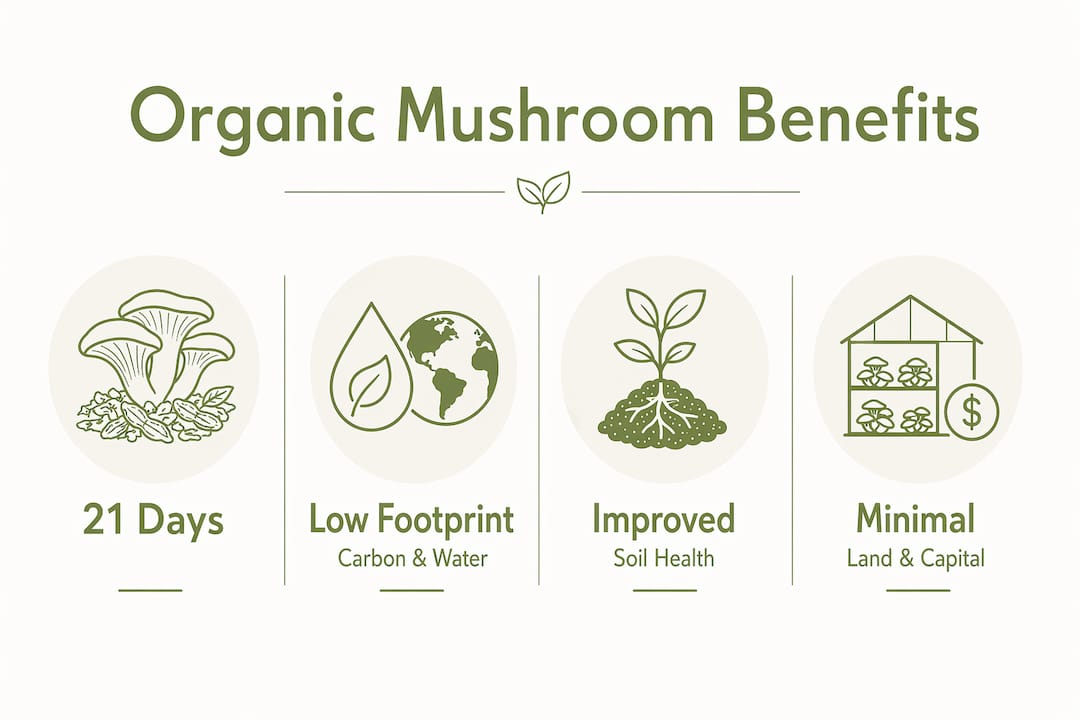
Organic methods also align with UN Sustainable Development Goals. Fungal systems carry a low carbon and water footprint, making organic mushroom cultivation a practical tool for climate-smart food production. This dual function as food source and ecological actor is what separates mushroom farming from most other organic crop systems.
What substrates and organic materials are used in organic mushroom cultivation?
Substrate selection is the most consequential decision in organic mushroom farming. The substrate provides all carbon, nitrogen, and moisture the fungus needs to colonize and fruit. Common organic options include sawdust, straw, water hyacinth, peanut shells, equine dung, and compost blends enriched with organic nitrogen supplements like mustard oil cake.
Each substrate performs differently depending on the mushroom species and regional availability. Peanut shells supported the fastest colonization period at 21 days, while sawdust produced the slowest at 36 days. Water hyacinth, an invasive aquatic weed in many regions, achieved biological efficiencies up to 25.01% in resource-limited settings. That figure means for every 100 grams of dry substrate, growers recovered up to 25 grams of fresh mushroom. For smallholders, turning a local nuisance plant into a productive substrate is a practical and low-cost entry point.
Nitrogen balance is equally critical. Compost enriched with equine dung and mustard oil cake achieves biological efficiencies of 18.20% for white button mushrooms, with optimal nitrogen levels between 1.48% and 1.79%. Too little nitrogen slows mycelial growth; too much creates conditions favorable to contamination. Getting this ratio right is the difference between a profitable harvest and a failed batch.
| Substrate | Colonization time | Biological efficiency | Best suited for |
|---|---|---|---|
| Peanut shells | 21 days | High | Oyster mushrooms |
| Water hyacinth | Moderate | Up to 25.01% | Oyster mushrooms |
| Sawdust | 36 days | Moderate | Shiitake, Oyster |
| Equine dung compost | Variable | 18.20% | White button mushrooms |
Pro Tip: Match your substrate to what is locally abundant and inexpensive. Growers in regions with rice straw, coffee husks, or invasive aquatic plants can often source substrate at near-zero cost, which directly improves return on investment.
How does organic mushroom farming benefit the environment and soil health?
The environmental case for organic mushroom cultivation is grounded in measurable outcomes, not theory. Avoiding synthetic chemicals removes a direct source of water pollution from agricultural runoff. Organic systems also generate a byproduct that most conventional crops cannot match: spent mushroom substrate, a partially decomposed material that functions as a high-value soil amendment.
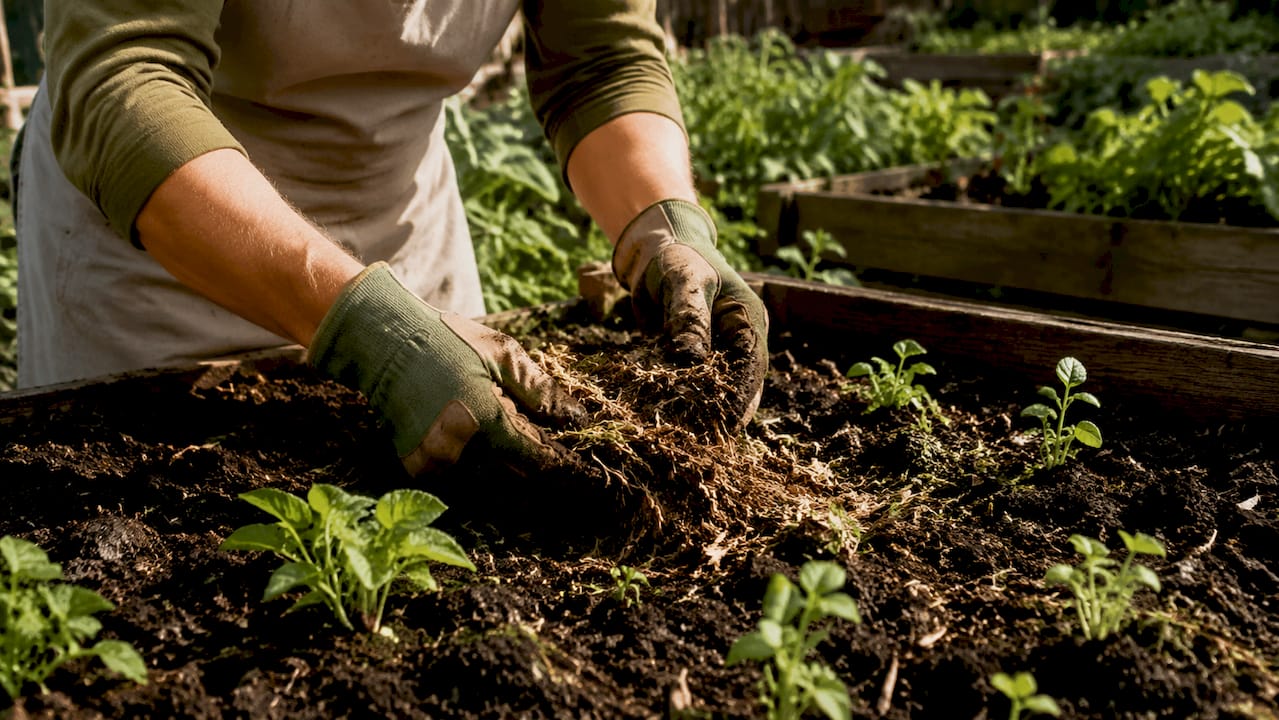
Spent mushroom substrate increases soil microbial abundance, activates key soil enzymes, improves moisture retention by 6 to 17%, and accelerates nutrient cycling. Applied correctly, it rebuilds degraded soils faster than most compost alternatives. This is not a minor side benefit. It means a mushroom operation produces two outputs: food and a soil-building resource.
Mushrooms also function as circular economy actors by converting agricultural waste into food and soil amendments. This ecological role surpasses that of traditional crops in sustainability impact. A wheat farmer produces grain and straw. An organic mushroom farmer produces food, reduces waste volume, and returns enriched organic matter to the soil.
The broader environmental benefits of organic mushroom cultivation include:
- Reduced synthetic chemical inputs, lowering soil and groundwater contamination risk
- Carbon sequestration through fungal mycelium networks in soil
- Support for soil biodiversity and microbial communities
- Integration into permaculture systems where mushrooms cycle nutrients between plant beds
- Moisture retention improvements that reduce irrigation demand in adjacent crops
“Mushrooms uniquely repurpose agricultural and food waste in ways that promote soil health and biodiversity, serving a dual role as food and ecosystem service providers.” — NCAT Mushroom Cultivation Guide
The role of sustainability in mushroom farming is not incidental. Organic systems are structurally designed to close nutrient loops, and mushrooms are one of the few crops where the waste product is more valuable than the substrate it replaced.
What are the economic and practical advantages of organic mushroom cultivation?
Organic mushroom cultivation offers a viable livelihoods pathway with minimal land, capital, and water requirements. This makes it accessible to small-scale growers, youth farmers, and households in both rural and urban settings. A single room or shipping container can support a productive operation. Production cycles run 6 to 12 weeks from substrate preparation to first harvest, which is fast compared to most food crops.
The economics are driven by three factors: substrate cost, biological efficiency, and market price. Organic varieties command a premium over conventionally grown mushrooms, and supply gaps remain significant. The U.S. market shows strong demand for locally produced organic mushrooms that current domestic production cannot meet. That gap represents a direct opportunity for new entrants.
Scaling an organic mushroom operation follows a logical progression:
- Start with fresh gourmet production using a single species, such as oyster or shiitake mushrooms, to master sterile technique and substrate management before adding complexity.
- Optimize substrate sourcing by identifying local agricultural byproducts that reduce input costs and improve biological efficiency.
- Add value-added processing, such as dried mushrooms, powders, or extracts, once fresh production is stable and consistent.
- Explore substrate manufacturing as a third revenue stream once production volume justifies the capital investment.
The primary practical challenge is contamination control. Contamination above 15 to 20% can make a mushroom farming business economically unviable. This is not a minor operational risk. It is the single most common reason new growers fail in their first year. Rigorous sterile technique, proper pasteurization, and clean facility design are non-negotiable from day one.
Pro Tip: Keep detailed records of every batch, including substrate formula, sterilization time, inoculation date, and contamination rate. Patterns in your data will reveal where losses occur and how to fix them systematically rather than by guesswork.
How to implement organic mushroom farming techniques effectively?
Effective organic mushroom cultivation depends on disciplined process management at each stage. The biology is forgiving within a narrow range of conditions. Outside that range, contamination takes over quickly. The following practices form the operational foundation of any successful organic system.
- Substrate pasteurization vs. sterilization: Pasteurization at 65 to 82°C for 1 to 2 hours suits straw-based substrates and oyster mushrooms. Sterilization at 121°C under pressure is required for supplemented sawdust or grain-based substrates where contamination risk is higher. Choosing the wrong method for your substrate is a common and costly mistake.
- Organic supplementation: Adding nitrogen-rich organic materials like wheat bran, rice bran, or soybean hulls to sawdust substrates increases yield but also raises contamination risk. Supplement at 10 to 20% by dry weight and sterilize thoroughly.
- Inoculation hygiene: Work in a still-air box or laminar flow hood. Wipe all surfaces with isopropyl alcohol before and after inoculation. Wear gloves. These steps are not optional in organic systems where no chemical fungicides are used to suppress contamination after the fact.
- Harvest timing: Harvest oyster mushrooms just before the cap edges begin to flatten and curl upward. Harvesting at this stage maximizes weight and shelf life. Delayed harvesting reduces yield quality and accelerates substrate exhaustion.
- Spent substrate management: Composting spent substrate until it is stable and odor-free before soil application prevents nutrient imbalances and overheating in garden beds. Fresh spent substrate can tie up available nitrogen temporarily, which harms rather than helps plant growth.
The learning curve in mushroom cultivation is steep due to microbiological risks. Growers who treat it as simple gardening consistently underestimate contamination risk and overestimate early yields. Approaching it as applied microbiology, with the discipline that implies, produces consistently better outcomes.
Key takeaways
Organic mushroom farming delivers measurable benefits across yield efficiency, soil health, and economic viability when growers apply disciplined substrate management and sterile technique from the start.
| Point | Details |
|---|---|
| Substrate drives yield | Peanut shells colonize in 21 days; water hyacinth reaches 25.01% biological efficiency in organic systems. |
| Soil health improves | Spent mushroom substrate raises soil moisture by 6 to 17% and boosts microbial activity. |
| Market demand is strong | U.S. organic mushroom retail sales grew 14.8% in 2024, with supply gaps creating entry opportunities. |
| Contamination is the key risk | Contamination above 15 to 20% makes operations economically unviable; sterile technique is non-negotiable. |
| Circular economy value | Mushrooms convert agricultural waste into food and soil amendments, closing nutrient loops other crops cannot. |
Why organic mushroom farming deserves more serious attention
Most discussions of sustainable agriculture focus on soil crops: cover cropping, no-till systems, composting. Mushrooms rarely get the same attention, and that is a significant oversight. After years of studying and writing about functional food systems, the evidence is clear that organic mushroom cultivation is one of the most resource-efficient food production methods available at any scale.
What strikes me most is the systems-thinking required to do it well. You are not just growing food. You are managing a microbiological process, closing a waste loop, building soil, and producing a crop with documented health benefits, all simultaneously. The wellness benefits of mushrooms cultivated through organic methods are well supported by research, and the production side is equally compelling.
The practical barrier is not capital or land. It is the discipline to master sterile technique before scaling. Growers who skip that step pay for it in contamination losses. Those who invest the time to understand the microbiology first build operations that are genuinely resilient and profitable. The supplement trends for 2026 reflect growing consumer awareness of sourcing and cultivation methods, which creates real market pressure for organic producers to meet.
The opportunity for small-scale growers is real and underutilized. Organic mushroom systems can be built incrementally, tested at low cost, and scaled with confidence once the fundamentals are solid. That is a rare combination in sustainable agriculture.
— Recontour,
Organic mushroom supplements from Longevitybotanicals
For those who want the benefits of organically cultivated mushrooms without running a farm, Longevitybotanicals offers a curated range of organic mushroom capsule supplements and mushroom powder supplements sourced from sustainably cultivated species including Reishi, Lion’s Mane, Turkey Tail, Chaga, and Cordyceps. Each product reflects the same organic sourcing principles covered in this article. Longevitybotanicals prioritizes fruiting body quality and clean extraction methods to deliver consistent, research-backed nutritional support. Explore the full range for natural immune support, cognitive health, and overall wellness grounded in organic cultivation practices.
FAQ
What is organic mushroom farming?
Organic mushroom farming is the cultivation of fungi using natural, chemical-free substrates and techniques that exclude synthetic pesticides, fertilizers, and fungicides. It follows USDA Organic standards and emphasizes sustainable inputs like straw, sawdust, and agricultural byproducts.
What substrates work best for organic mushroom cultivation?
Peanut shells, water hyacinth, sawdust, straw, and equine dung compost are all effective organic substrates. Peanut shells achieve the fastest colonization at 21 days, while water hyacinth reaches biological efficiencies up to 25.01% in resource-limited settings.
How does organic mushroom farming support soil health?
Spent mushroom substrate applied to soil increases microbial abundance, activates key soil enzymes, and improves moisture retention by 6 to 17%. Composting the substrate before application prevents nutrient imbalances and supports stable soil structure over time.
Is organic mushroom farming profitable for small-scale growers?
Organic mushroom cultivation requires minimal land, capital, and water, making it accessible to smallholders and youth farmers. U.S. retail sales of organic mushrooms grew 14.8% in 2024, and significant supply gaps remain for locally produced organic varieties.
What is the biggest challenge in organic mushroom cultivation?
Contamination control is the primary operational challenge. Contamination rates above 15 to 20% can make a mushroom farming operation economically unviable. Rigorous sterile technique, proper substrate pasteurization, and clean facility management are the most effective controls available in organic systems.
Recommended
- Mushroom Fruiting Body vs Mycelium: The Clear Potency Gap Explained – LongevityBotanicals
- Top 4 organicmushrooms.ca Alternatives 2026 – LongevityBotanicals
- Why Choose Pure Mushroom Sources for Better Health – LongevityBotanicals
- Mushroom extraction explained: unlock wellness from nature – LongevityBotanicals
Related Posts

Why Water-Soluble Mushroom Compounds Drive Real Results

What Is Mushroom Sustainability? Benefits and Practices

What Is a Fruiting Body? Mushroom Science Explained

Mushroom Allergenicity Explained: Symptoms and Safe Use

Top 5 naturesrise.com Mushroom Supplement Alternatives 2026

Top 6 Hemplucid.com Alternatives for 2026


