

Why Water-Soluble Mushroom Compounds Drive Real Results
TL;DR:
- Water-soluble mushroom compounds like beta-glucans are essential for immune modulation and wellness benefits. Proper extraction, especially hot water or dual methods, ensures these bioactives are bioavailable and effective. Labels that disclose beta-glucan percentages from fruiting body sources provide the most reliable indicator of supplement quality.
Water-soluble mushroom compounds are the primary bioactive molecules responsible for the documented immune and wellness effects of medicinal mushrooms. These compounds, mainly beta-glucans and polysaccharides, are extracted from species like Turkey Tail, Lion’s Mane, Reishi, and Chaga using hot water or advanced methods. Their water solubility is not a minor detail. It determines whether your body can actually absorb and use them. Understanding why water-soluble mushroom compounds matter is the first step toward choosing supplements that deliver what the science supports.
Why water-soluble mushroom compounds are the active core
Beta-glucans are long-chain polysaccharides found inside mushroom cell walls. Their molecular structure features a beta-(1→3) and beta-(1→6) glucan backbone that human immune cells recognize directly. This recognition happens through a receptor called Dectin-1, found on macrophages and dendritic cells. When beta-glucans bind to Dectin-1, they activate innate immune signaling pathways, preparing the immune system to respond more efficiently. This is immune modulation, not immune boosting. The distinction matters because modulation means calibration, not overstimulation.
Water solubility is what makes this interaction possible in the human body. Compounds that cannot dissolve in water cannot enter the bloodstream through the gut lining. Raw mushroom powder, for example, contains beta-glucans locked inside chitin cell walls. Chitin is indigestible. Hot water extraction breaks down chitin, freeing beta-glucans so they remain intact and bioavailable after digestion.
Here is what separates beta-glucans from total polysaccharides on a supplement label:
- Beta-glucans: The specific immune-active fraction. Clinically studied. Receptor-binding. The number you want on a label.
- Total polysaccharides: A broader category that includes beta-glucans but also starches, glycogen, and other carbohydrates with no documented immune activity.
- Alpha-glucans: Starch-based polysaccharides. Common in grain-grown mycelium products. No meaningful immune function.
Pro Tip: When reading a mushroom supplement label, look for a disclosed beta-glucan percentage, not just “polysaccharides.” A product listing only total polysaccharides may contain mostly grain starch with minimal active beta-glucans.
How extraction methods shape compound quality
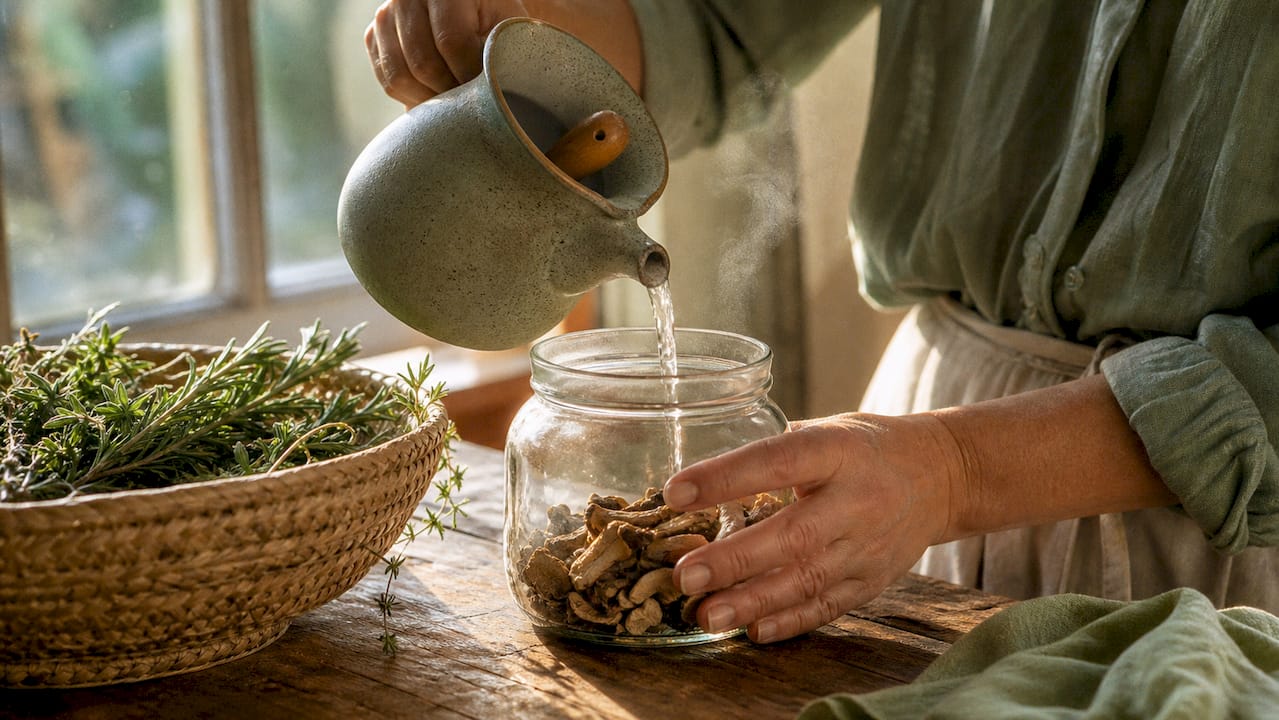
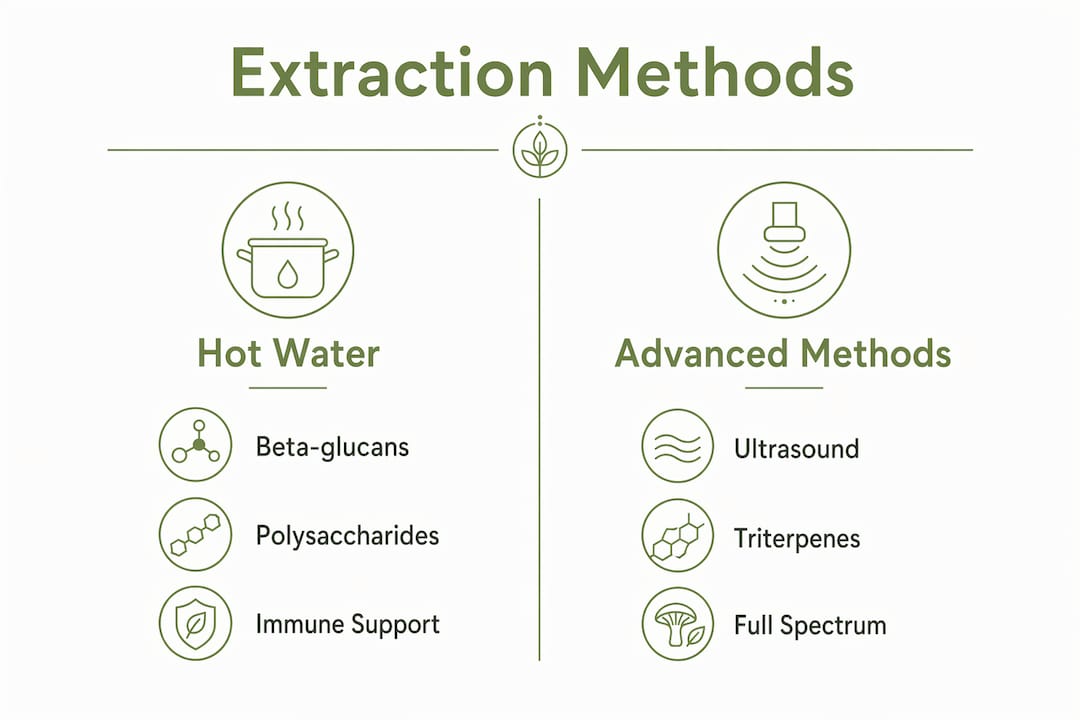
Hot water extraction is the traditional and clinically validated method for releasing water-soluble compounds from medicinal mushrooms. It works by applying sustained heat to mushroom material in water, breaking down chitin walls and dissolving beta-glucans and polysaccharides into solution. Every major clinical trial on Turkey Tail and Chinese PSP mushrooms used hot water extracted materials. That alignment between research and product is why hot water extraction remains the benchmark.
Hot water extraction does have one significant limitation. It does not extract fat-soluble compounds like triterpenes. For species like Reishi, triterpenes contribute to adaptogenic and anti-inflammatory properties that hot water alone cannot capture.
Advanced extraction technologies are now improving on traditional methods. Ultrasound-assisted extraction and intense pulsed light (IPL) methods can improve polysaccharide yields by up to 92.7% while preserving molecular integrity and antioxidant capacity. That yield improvement means more active compound per gram of mushroom material, with less degradation from prolonged heat exposure.
| Extraction Method | Compounds Extracted | Key Benefit | Limitation |
|---|---|---|---|
| Hot water | Beta-glucans, polysaccharides | Clinically validated; breaks chitin | Does not extract triterpenes |
| Alcohol (ethanol) | Triterpenes, sterols | Captures fat-soluble actives | Does not extract beta-glucans |
| Dual extraction | Beta-glucans + triterpenes | Full compound profile | More complex; higher cost |
| Ultrasound-assisted | Water-soluble polysaccharides | Higher yield; preserves structure | Emerging; less clinical data |
| Intense pulsed light | Water-soluble polysaccharides | Up to 92.7% yield improvement | Emerging technology |
Pro Tip: A supplement label that says “dual extract” signals the product was processed with both water and alcohol, capturing both beta-glucans and triterpenes. This matters most for Reishi and Chaga, less so for Turkey Tail.
What health benefits do water-soluble compounds actually support?
The strongest evidence for water-soluble mushroom benefits sits in immune modulation. Turkey Tail’s polysaccharide-K (PSK) and polysaccharide-peptide (PSP) fractions are among the most studied mushroom compounds in clinical settings. Both are water-soluble. Both are used as adjunct therapies in oncology settings in Japan and China, where they are prescribed alongside standard treatments.
Cognitive support from Lion’s Mane is another area with solid clinical backing. Studies from 2009 and 2023 confirm that consistent Lion’s Mane extract at approximately 1g daily over 16 weeks produced significant improvements in standardized cognitive scores in healthy adults. The active compounds here are hericenones and erinacines. Hericenones are water-soluble; erinacines require fat-soluble extraction. For full cognitive benefit from Lion’s Mane, a dual extract or combination product is more complete than a water-only extract.
Reishi contributes antioxidant and general wellness support through its polysaccharide fraction. The antioxidant activity of Reishi beta-glucans is documented, though the evidence base is less extensive than for Turkey Tail’s immune effects.
Medicinal mushrooms are adjuncts for immune support and wellness, not replacements for medical treatments. Compounds like beta-glucans have immunomodulatory effects, meaning they help regulate immune readiness rather than simply amplifying immune activity.
A clear summary of evidence strength by benefit:
- Established evidence: Immune modulation via beta-glucans (Turkey Tail, Reishi); cognitive support from Lion’s Mane fruiting body extract
- Emerging research: Antioxidant effects of Chaga polysaccharides; adaptogenic properties of Cordyceps
- Hypothesis stage: Direct anti-tumor effects from mushroom compounds as standalone treatments
Water-soluble vs. fat-soluble mushroom compounds: what is the difference?
Not every beneficial compound in medicinal mushrooms dissolves in water. Fat-soluble compounds, primarily triterpenes and sterols, require alcohol extraction to become accessible. Reishi is the clearest example. Its ganoderic acids are triterpenes that require alcohol extraction to yield the adaptogenic and liver-protective effects associated with the species. A hot water only Reishi extract misses this fraction entirely.
| Mushroom | Key Water-Soluble Compounds | Key Fat-Soluble Compounds | Recommended Extraction |
|---|---|---|---|
| Turkey Tail | Beta-glucans, PSK, PSP | Minimal | Hot water |
| Lion’s Mane | Polysaccharides, hericenones | Erinacines | Dual extraction |
| Reishi | Beta-glucans | Ganoderic acids (triterpenes) | Dual extraction |
| Chaga | Polysaccharides | Betulinic acid, sterols | Dual extraction |
| Cordyceps | Polysaccharides | Cordycepin (partially) | Hot water or dual |
Turkey Tail is an exception. Its primary bioactives are water-soluble, so hot water extraction alone captures the clinically relevant compounds. For Reishi and Chaga, a dual extract is the more complete choice. Knowing which species you are supplementing with, and what extraction method was used, determines whether you are getting the full compound profile or only part of it.
The practical takeaway is straightforward. Match your extraction method to your health goal and the species you are using. For immune support centered on beta-glucans, hot water extraction is sufficient and clinically supported. For Reishi’s broader adaptogenic profile, dual extraction is necessary. You can learn more about fruiting body vs. mycelium potency differences, which compound this extraction question further.
How to choose a mushroom supplement with effective compounds
Selecting a quality mushroom extract requires reading labels with specific criteria in mind. Most products on the US market fall short on at least one of these points.
- Check the source material. Look for “fruiting body” on the label. Most clinical research uses fruiting body extracts. Mycelium-on-grain products often contain 5–10% actual beta-glucans, with the remainder being grain starch. The polysaccharide count looks high, but the active fraction is low.
- Find the beta-glucan percentage. A quality extract discloses beta-glucan content separately from total polysaccharides. A fruiting body extract standardized to 20–40% beta-glucans is a meaningful benchmark. A product listing only “30% polysaccharides” without specifying beta-glucans is not giving you the information you need.
- Look for extraction ratios. A 10:1 extract means 10kg of raw mushroom material was concentrated into 1kg of extract. Higher ratios indicate greater concentration of bioactives, though the beta-glucan percentage is a more reliable indicator than the ratio alone.
- Avoid undisclosed fillers. Grain-based mycelium products often contain maltodextrin, rice flour, or oat bran as carriers. These dilute the bioactive content without adding any therapeutic value.
- Match dose to clinical evidence. Lion’s Mane studies used approximately 1g of fruiting body extract daily. Turkey Tail PSK trials used 1–3g daily. Supplements dosed far below these levels are unlikely to replicate the studied effects.
Pro Tip: If a product does not disclose its beta-glucan percentage and extraction method on the label, contact the manufacturer directly. Reputable brands have this data available. If they cannot provide it, that tells you something important about the product.
For a practical walkthrough of how to integrate these compounds into a wellness routine, the mushroom extract guide from Longevitybotanicals covers dosing, timing, and adjunctive use in detail.
Key takeaways
Water-soluble beta-glucans are the primary bioactive compounds in medicinal mushrooms, and their clinical value depends entirely on extraction quality and label transparency.
| Point | Details |
|---|---|
| Beta-glucans drive immune effects | Beta-glucans bind Dectin-1 receptors to modulate immune readiness, not simply boost it. |
| Hot water extraction is the clinical standard | All major Turkey Tail and PSP trials used hot water extracts, validating this method for beta-glucan delivery. |
| Dual extraction is needed for Reishi and Chaga | Fat-soluble triterpenes require alcohol extraction; hot water alone misses ganoderic acids and betulinic acid. |
| Label transparency is non-negotiable | Disclosed beta-glucan percentages from fruiting body sources are the key quality indicator. |
| Advanced methods improve yield | IPL and ultrasound-assisted extraction can increase polysaccharide yields by up to 92.7% while preserving bioactivity. |
The part most supplement buyers miss
I have spent considerable time reviewing mushroom supplement labels and the research behind them, and one pattern stands out consistently. Most buyers focus on the mushroom species and ignore the extraction details. That is exactly backwards.
The species matters, but the extraction method and source material determine whether the bioactive compounds are actually present in the product. A Reishi capsule made from mycelium grown on oats, extracted only with water, and labeled “30% polysaccharides” is not the same product used in clinical research. It shares a name with the studied material, but not the compound profile.
The good news is that the information needed to make a sound choice is available on quality labels. Fruiting body source, beta-glucan percentage, and extraction method are three data points that separate evidence-backed products from marketing-driven ones. Emerging extraction technologies like ultrasound-assisted and IPL methods are also worth watching. Early data showing yield improvements of up to 92.7% suggests the next generation of extracts may deliver even more consistent bioactive content than current hot water methods.
Realistic expectations also matter here. Beta-glucans modulate immune function. They do not cure disease, replace prescribed treatments, or produce dramatic short-term effects. The benefits are cumulative and subtle, which is consistent with how immune modulation actually works. Anyone promising rapid immune transformation from a mushroom supplement is overstating what the science supports.
— Recontour,
Longevitybotanicals: mushroom extracts built on extraction science
Longevitybotanicals sources and formulates mushroom supplements with extraction transparency as a core standard. Products in the organic mushroom capsule range are made from fruiting body material with disclosed beta-glucan content, not mycelium-on-grain powders. The mushroom blend extracts combine species like Turkey Tail, Lion’s Mane, and Reishi using extraction methods matched to each species’ compound profile. For those focused on cognitive support, the brain health mushroom collection includes Lion’s Mane extracts standardized to clinically relevant doses. Every product reflects the same principle: the compound profile on the label should match what the research actually studied.
FAQ
What are water-soluble mushroom compounds?
Water-soluble mushroom compounds are bioactive molecules, primarily beta-glucans and polysaccharides, that dissolve in water and can be absorbed by the body after extraction from medicinal mushrooms like Turkey Tail, Reishi, and Lion’s Mane.
How do beta-glucans support immune health?
Beta-glucans bind to Dectin-1 receptors on immune cells, activating innate immune signaling pathways. This modulates immune readiness rather than simply increasing immune activity.
Is hot water extraction enough for all mushroom species?
Hot water extraction is sufficient for Turkey Tail, which is primarily active through water-soluble beta-glucans. Reishi and Chaga require dual extraction to also capture fat-soluble triterpenes and sterols.
How do i know if a mushroom supplement has real beta-glucans?
Look for a disclosed beta-glucan percentage on the label, not just total polysaccharides. Quality fruiting body extracts typically list 20–40% beta-glucans. Products without this disclosure may contain mostly grain starch.
What is the difference between fruiting body and mycelium supplements?
Fruiting body extracts contain higher concentrations of beta-glucans and are the source material used in clinical research. Mycelium-on-grain products often have inflated polysaccharide counts due to residual grain starch, with actual beta-glucan content as low as 5–10%.
Recommended
- Mushroom bioavailability: How to get real wellness results – LongevityBotanicals
- Mushroom Fruiting Body vs Mycelium: The Clear Potency Gap Explained – LongevityBotanicals
- Why Choose Pure Mushroom Sources for Better Health – LongevityBotanicals
- Mushroom extraction explained: unlock wellness from nature – LongevityBotanicals
Related Posts

What Is Mushroom Sustainability? Benefits and Practices

The Role of Organic Farming in Mushrooms Explained

What Is a Fruiting Body? Mushroom Science Explained

Mushroom Allergenicity Explained: Symptoms and Safe Use

Top 5 naturesrise.com Mushroom Supplement Alternatives 2026

Top 6 Hemplucid.com Alternatives for 2026


