

What Is Mushroom Sustainability? Benefits and Practices
TL;DR:
- Mushroom sustainability involves growing fungi using minimal resources, recycling agricultural waste, and enriching soils with byproducts. It offers a resource-efficient alternative to conventional proteins, reducing water, land, and greenhouse gas emissions substantially. Implementing such practices at any scale supports circular food systems, improves soil health, and demonstrates significant economic and environmental benefits.
Mushroom sustainability is defined as the practice of growing fungi in ways that minimize environmental impact, recycle agricultural waste, and support circular food systems. Compared to beef, chicken, or even many plant proteins, mushroom cultivation uses 85–90% less water and generates 80% fewer greenhouse gases. That single fact positions mushrooms as one of the most resource-efficient protein sources available today. This article explains how sustainable mushroom farming works biologically, what spent mushroom substrate does for soil health, and how individuals and farms can apply these principles practically.
What is mushroom sustainability and why does it matter?
Mushroom sustainability refers to cultivation methods that align with circular economy principles: using waste as inputs, returning byproducts to the soil, and producing food with minimal resource draw. The formal term used in agricultural science is sustainable mushroom production, and it sits within the broader field of sustainable agriculture. Researchers at MDPI and NCAT have documented that mushrooms convert lignocellulosic agricultural residues, such as straw, sawdust, and peanut shells, into edible protein while generating a nutrient-rich byproduct called spent mushroom substrate (SMS).
The importance of mushroom sustainability extends beyond individual farms. Global food systems account for roughly one-third of total greenhouse gas emissions, and protein production is a major driver. Mushrooms offer a scientifically documented alternative that requires less land, less water, and less energy than conventional protein sources. For health-conscious consumers, the ecological footprint of functional mushrooms is a growing factor in purchasing decisions, with 68% of consumers in 2023 preferring plant-based supplements over synthetics. That preference signals a real market shift, not just a trend.
What environmental advantages do mushrooms offer compared to other proteins?
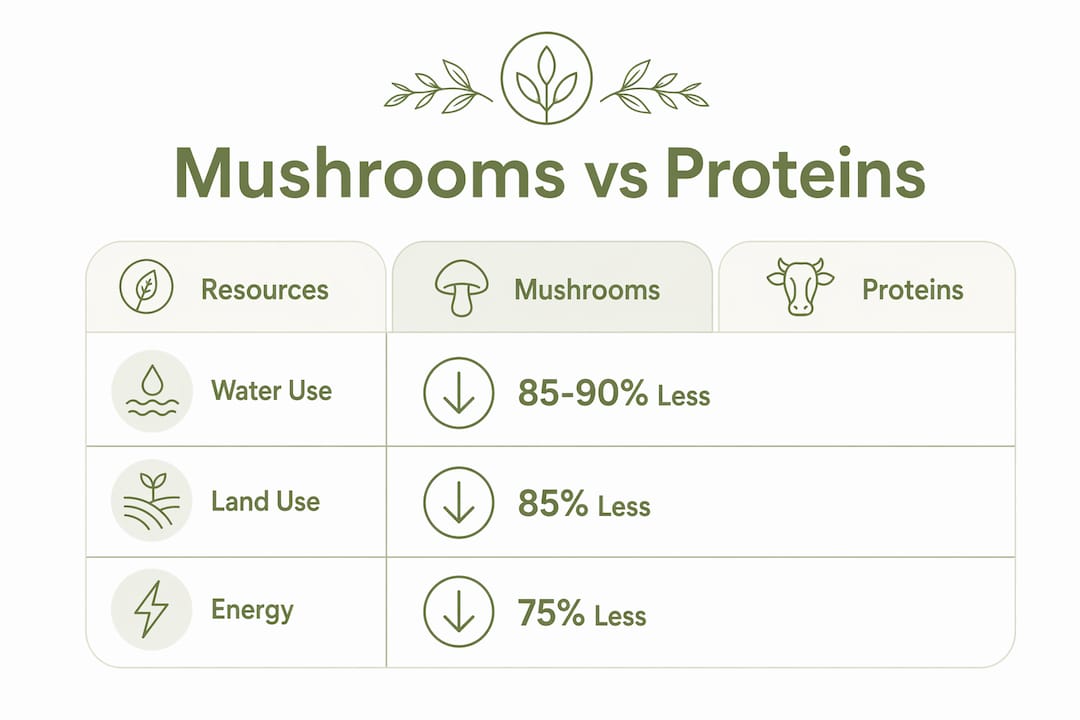
Mushroom protein production uses 85% less land and 75% less energy than beef or chicken production. These are not marginal differences. They represent a structural advantage rooted in how fungi feed: mushrooms digest their substrate externally and absorb nutrients directly, skipping the metabolic inefficiencies that make animal agriculture so resource-intensive.
The table below compares resource use across three protein categories:
| Resource | Beef | Chicken | Mushrooms |
|---|---|---|---|
| Water use | Very high | High | 85–90% less than beef |
| Land use | Very high | Moderate | 85% less than beef |
| Energy use | High | Moderate | 75% less than beef |
| Greenhouse gas emissions | Very high | Moderate | 80% less than beef |
Mushrooms also deliver meaningful nutritional value alongside their low environmental cost. Species like Lion’s Mane, Reishi, Turkey Tail, Oyster, and Shiitake provide protein, B vitamins, beta-glucans, and antioxidants. This nutritional profile supports the case for mushrooms as a sustainable protein alternative, not just an environmental choice. For a detailed breakdown of how mushroom nutrition compares to animal protein, the mushrooms and protein guide from Longevitybotanicals covers the nutritional science clearly.
Pro Tip: Replacing one weekly serving of beef with Oyster or Shiitake mushrooms reduces your personal dietary carbon footprint in a measurable way. Small substitutions at scale produce significant environmental outcomes.
How do sustainable mushroom cultivation practices work?
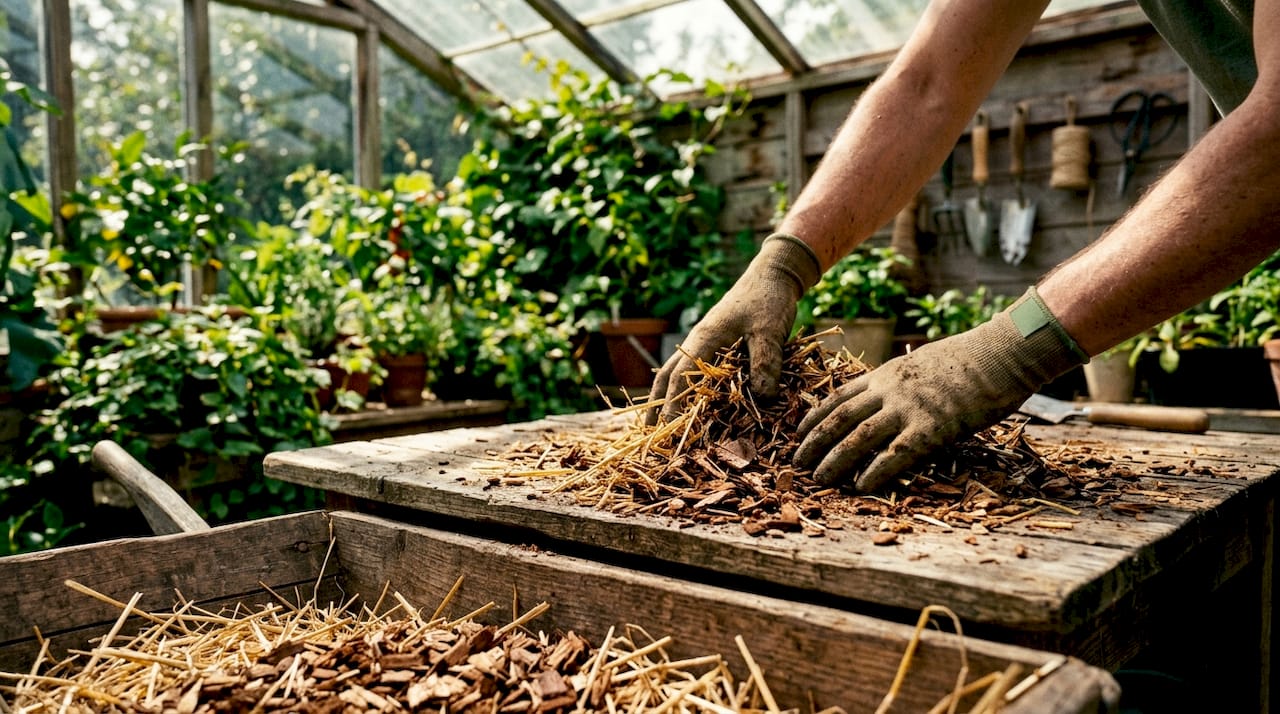
Sustainable mushroom farming follows a circular economy model that converts agricultural waste into food. The substrate, which is the material mushrooms grow on, is sourced from residues like wheat straw, rice husks, sawdust, coffee grounds, or peanut shells. These materials would otherwise go to landfill or be burned. Oyster mushrooms grown on peanut shells, for example, complete a growth cycle in 30 days with a return on investment of up to 267%, demonstrating that ecological and economic benefits can align.
Four universal environmental controls govern successful and sustainable cultivation:
- Humidity (85–95%): Maintains the moisture fungi need to fruit without triggering bacterial contamination.
- Fresh air exchange: Removes CO2 buildup that stunts growth and promotes healthy fruiting bodies.
- Light: Acts as a directional cue rather than an energy source. Mushrooms do not photosynthesize; they use light to orient growth.
- Temperature control: Each species has an optimal fruiting range. Oyster mushrooms fruit between 55–75°F; Shiitake prefers 45–65°F.
These four cultivation principles directly affect yield, quality, and contamination risk. Managing them well reduces waste and energy use simultaneously.
Substrate preparation also carries sustainability implications. Sterilization at 250°F and 15 PSI for 90–120 minutes is required for nitrogen-rich substrates and controls over 80% of contamination. Pasteurization at 160–175°F for 60–90 minutes works for low-nitrogen substrates and uses significantly less energy. Choosing the right method for the substrate type is a practical way to reduce energy consumption without sacrificing crop safety.
Matching mushroom species to substrate type also matters. Primary decomposers like Oyster mushrooms handle fresh wood and straw efficiently. Secondary decomposers like Agaricus bisporus (the common button mushroom) thrive on composted material. Aligning species with substrate maximizes biological efficiency and reduces the need for additional inputs.
Pro Tip: For small-scale growers, starting with Oyster mushrooms on pasteurized straw is the most resource-efficient entry point. The low contamination risk, short cycle, and minimal equipment requirements make it the most practical first step in eco-friendly mushroom production.
What is spent mushroom substrate and how does it support sustainability?
Spent mushroom substrate is the material remaining after mushrooms have completed their fruiting cycles. It is not waste. SMS retains significant biological and chemical value: nitrogen content of 1–3%, phosphorus at 0.5–1%, and potassium at 1–2%, alongside active microbial communities and residual fungal enzymes. These properties make SMS a functional soil amendment that supports nutrient cycling in ways synthetic fertilizers cannot replicate.
Field studies show that SMS application improves soil moisture by 6–17% and increases microbial enzyme activity, which directly supports long-term soil health. Synthetic fertilizers deliver nutrients but do not build soil structure or microbial diversity. SMS does both, which is why researchers describe it as a tool for soil building rather than just nutrient delivery.
The table below compares SMS applications against synthetic fertilizer inputs:
| Application | SMS | Synthetic fertilizer |
|---|---|---|
| Soil moisture retention | Improves by 6–17% | No direct effect |
| Microbial diversity | Increases enzyme activity | Can reduce over time |
| Nutrient delivery | Slow-release N, P, K | Fast-release, leaching risk |
| Bioremediation potential | Yes, documented | No |
| Cost | Low to zero (farm byproduct) | Ongoing purchase required |
SMS also shows documented potential for bioremediation, meaning it can help break down certain contaminants in degraded soils. The mycoremediation applications of mushroom byproducts represent an emerging area of research with real-world implications for contaminated farmland.
A major barrier to scaling SMS use is the lack of standardized processing protocols. Inconsistent moisture levels, variable nutrient content, and species-specific differences make it difficult to apply uniform guidelines across farms. Emerging biotechnological approaches aim to address this, but the field is still developing.
Pro Tip: Apply SMS gradually and keep records of application rates and soil responses. Excessive application can cause soil heating and weed pressure. Starting with 1–2 inches worked into the top 6 inches of soil per season is a documented best practice from NCAT research.
How can individuals and farms implement mushroom sustainability practically?
Small-scale mushroom cultivation is accessible without significant infrastructure. The most common entry points include grow kits, inoculated logs, and substrate bags. Each method supports sustainable mushroom farming at different scales.
Key implementation options include:
- Grow kits: Pre-inoculated blocks using Oyster, Lion’s Mane, or Shiitake species. Minimal setup, short cycles, and suitable for home or small garden use.
- Inoculated logs: Shiitake and Reishi grow well on oak or maple logs. Logs produce for 3–5 years, making them a long-term, low-input option.
- Substrate bags: Used by small commercial growers. Bags allow precise substrate formulation and are scalable without large capital investment.
Integrating mushrooms into diversified farm systems creates circular resource loops. Crop residues from corn, wheat, or rice become mushroom substrate. SMS from that substrate goes back to the soil as amendment. The farm produces food, reduces waste, and builds soil fertility in a single connected cycle. Researchers describe this as designing cultivation around fungi’s natural abilities to recycle agricultural residues.
Economic returns support the sustainability case. Oyster mushrooms on peanut shells demonstrate ROI of 267%, and value-added products like dried mushrooms, powders, and extracts extend the revenue potential of each cultivation cycle. Longevitybotanicals tracks mushroom supplement trends that reflect growing consumer demand for sustainably sourced functional mushroom products, which creates a direct market for small and mid-scale growers.
Monitoring substrate moisture, fruiting conditions, and SMS application rates over time produces the data needed to improve efficiency each cycle. Contamination losses are expected early in the learning curve but decrease significantly with consistent hygiene protocols and substrate preparation practices.
Key takeaways
Mushroom sustainability works because fungi convert agricultural waste into food and return nutrient-rich byproducts to the soil, completing a resource loop that synthetic food systems cannot replicate.
| Point | Details |
|---|---|
| Resource efficiency | Mushrooms use 85–90% less water and 75% less energy than beef production. |
| Circular substrate use | Agricultural waste like straw and sawdust becomes mushroom substrate, then soil amendment. |
| SMS soil benefits | Spent mushroom substrate improves soil moisture by 6–17% and increases microbial activity. |
| Small-scale accessibility | Grow kits, logs, and substrate bags make sustainable cultivation practical at any scale. |
| Economic viability | Oyster mushrooms on organic waste can deliver ROI of up to 267% per cycle. |
Why mushroom sustainability deserves more serious attention
Most sustainability conversations focus on reducing harm: fewer emissions, less plastic, lower water use. Mushroom cultivation does all of that, but it also adds something. It builds soil. It converts waste into food. It creates a biological loop that improves the system it operates within. That is rare in food production, and it is why I think mushroom sustainability is underrepresented in mainstream environmental discussions.
The research is solid. MDPI, NCAT, and Springer have all published peer-reviewed work confirming the resource efficiency, soil benefits, and circular economy potential of mushroom farming. The challenge is not scientific credibility. It is scaling and standardization. SMS processing lacks uniform protocols. Small growers often lack access to technical guidance. And the supplement market, while growing, does not always reward sustainable sourcing over price competition.
What gives me confidence is the economics. A 267% ROI on Oyster mushrooms grown on peanut shells is not a marginal case. It is a documented outcome that makes the sustainability argument financially practical, not just ideologically appealing. When ecological benefit and economic return align, adoption accelerates.
The most important thing individuals can do right now is support producers who source transparently and grow with documented sustainable practices. That market signal matters more than most people realize.
— Recontour,
Sustainably sourced mushroom supplements from Longevitybotanicals
For those who want to support sustainable mushroom production through their supplement choices, Longevitybotanicals offers a range of organically sourced mushroom products. The mushroom powder collection includes species like Reishi, Lion’s Mane, Turkey Tail, Chaga, and Cordyceps, all sourced with attention to quality and eco-conscious production. For a convenient daily format, organic mushroom capsules deliver the same functional benefits in a standardized dose. Choosing products from producers who prioritize sustainable sourcing connects personal wellness decisions to broader environmental outcomes.
FAQ
What is mushroom sustainability in simple terms?
Mushroom sustainability is the practice of growing fungi using minimal resources, recycling agricultural waste as substrate, and returning byproducts like spent mushroom substrate to the soil. It supports circular food systems by producing food with significantly lower water, land, and energy inputs than animal agriculture.
Why is sustainable mushroom cultivation better for the environment?
Mushroom cultivation produces 80% fewer greenhouse gases and uses 85–90% less water than beef production. Mushrooms also grow on agricultural waste materials, diverting residues from landfill and converting them into food and soil amendments.
What is spent mushroom substrate used for?
Spent mushroom substrate is used as a soil amendment, bioremediation agent, and organic fertilizer. It contains nitrogen, phosphorus, and potassium, and field studies show it improves soil moisture retention by 6–17% while increasing microbial activity.
Can individuals grow mushrooms sustainably at home?
Yes. Grow kits using Oyster or Lion’s Mane species are the most accessible starting point. They require minimal equipment, use pasteurized substrate, and complete a fruiting cycle in approximately 30 days with low contamination risk.
How does mushroom farming support a circular economy?
Mushroom farming converts lignocellulosic agricultural waste into food, then returns the spent substrate to the soil as a nutrient-rich amendment. This closed-loop process addresses waste reduction, resource conservation, and soil health within a single production system.
Recommended
- Mushroom extraction explained: unlock wellness from nature – LongevityBotanicals
- Mushroom bioavailability: How to get real wellness results – LongevityBotanicals
- The Benefits and Risks of Mushroom Mycelium – LongevityBotanicals
- Mushroom enhanced nutrition: what the science shows – LongevityBotanicals
Related Posts

Why Water-Soluble Mushroom Compounds Drive Real Results

The Role of Organic Farming in Mushrooms Explained

What Is a Fruiting Body? Mushroom Science Explained

Mushroom Allergenicity Explained: Symptoms and Safe Use

Top 5 naturesrise.com Mushroom Supplement Alternatives 2026

Top 6 Hemplucid.com Alternatives for 2026


