


Natural immunity supplements aren’t magic pills that kill pathogens like antibiotics do. Instead, they work by training and activating your own immune cells to respond more effectively. Turkey tail mushroom stands out among natural immunity supporters because it contains unique compounds called PSK and PSP that directly engage immune receptors and reshape gut bacteria. This guide reveals the evidence behind turkey tail’s immune benefits and how to use it safely.
Table of Contents
- What Is Turkey Tail Mushroom And Its Key Immune Compounds?
- How Turkey Tail Enhances Immunity: Mechanisms And Scientific Findings
- Clinical Evidence And Safe Usage Guidelines For Turkey Tail Supplements
- How To Choose And Use Turkey Tail Supplements Effectively
- Explore High-Quality Turkey Tail Supplements At Longevity Botanicals
- Frequently Asked Questions
Key takeaways
| Point | Details |
|---|---|
| Active compounds | Turkey tail contains PSK and PSP, which modulate immune cells and gut microbiota. |
| Mechanism | It enhances innate and adaptive immunity by activating specific immune receptors like dectin-1 and TLR2/4. |
| Clinical use | Strongest evidence supports its use as an adjunct in cancer therapy in Japan, with doses of 500 to 3,000 mg daily. |
| Safety profile | Generally safe but should be used cautiously with immunosuppressants or anticoagulants. |
What is turkey tail mushroom and its key immune compounds?
Turkey tail (Trametes versicolor) is a medicinal mushroom that’s been used for centuries in traditional Asian medicine. What makes it special for immunity is not just folklore, but specific biochemical compounds isolated by researchers.
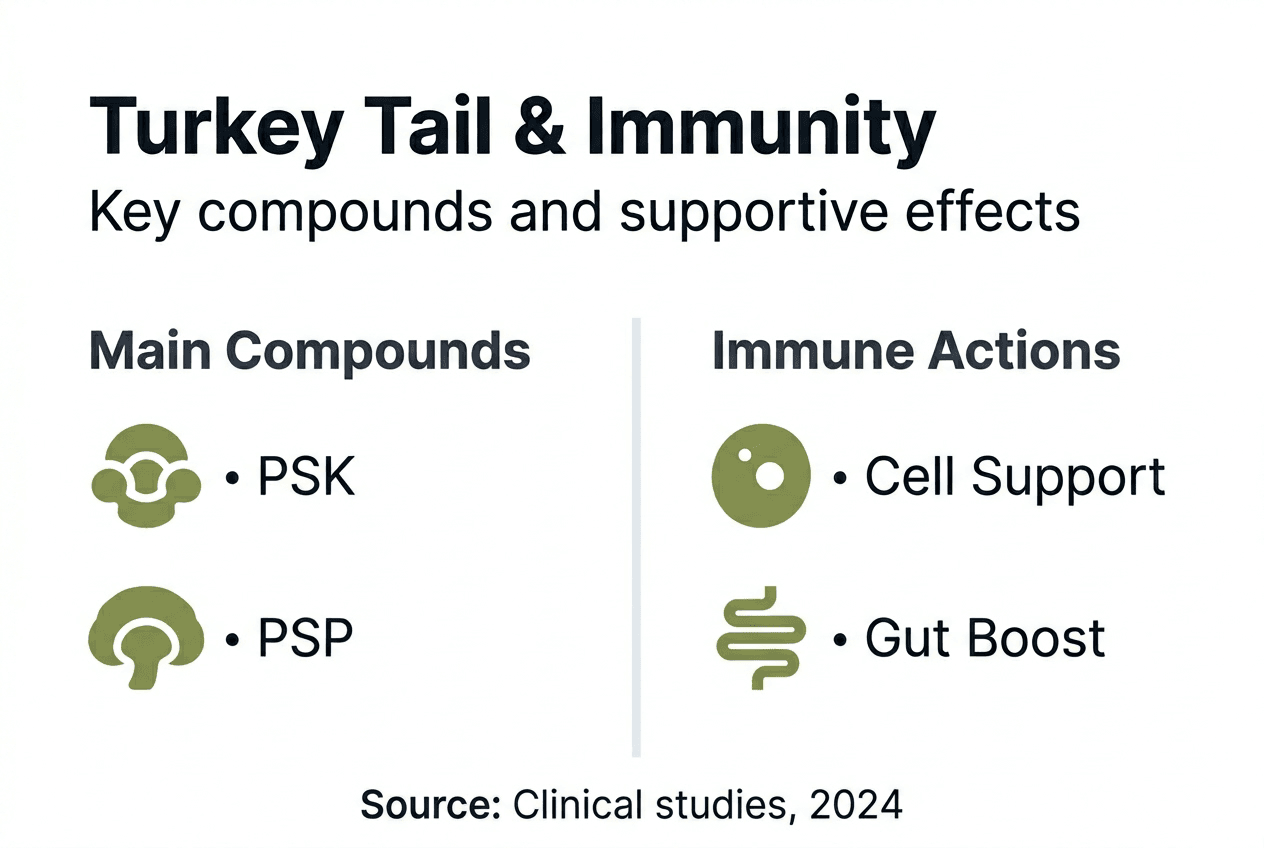
The two star players are Polysaccharide-K (PSK) and Polysaccharide Peptide (PSP). These are protein-bound polysaccharides containing beta-glucans, complex sugar molecules that immune cells recognize as foreign patterns. When your immune system encounters beta-glucans, it doesn’t attack them like invaders. Instead, it uses them as training signals to prepare for real threats.
PSK and PSP interact directly with immune cells through specialized receptors on their surfaces. This interaction doesn’t create an inflammatory storm. It fine-tunes immune activity, making your defenses more responsive without overreacting.
Beyond immune cells, turkey tail compounds also influence your gut microbiota. A healthy gut microbiome produces short-chain fatty acids that support systemic immunity. Turkey tail essentially coaches both your immune cells and the beneficial bacteria in your intestines.
Key immune-active components in turkey tail include:
- Beta-glucans with specific molecular branching patterns
- Protein-bound polysaccharide complexes (PSK and PSP)
- Ergosterol and other fungal sterols
- Polyphenolic compounds with antioxidant properties
If you’re considering turkey tail mushroom supplements, understanding these compounds helps you evaluate product quality and dosing.
How turkey tail enhances immunity: mechanisms and scientific findings
Your immune system has pattern-recognition receptors designed to detect molecular signatures common to pathogens. Turkey tail’s beta-glucans bind to receptors like dectin-1, TLR2/4, and CR3 on immune cells, triggering a cascade of defensive preparations.
When macrophages (your body’s frontline defenders) encounter turkey tail compounds, they become more active. They improve their ability to engulf pathogens and present antigens to T cells. Dendritic cells, which act as messengers between innate and adaptive immunity, also get a boost.
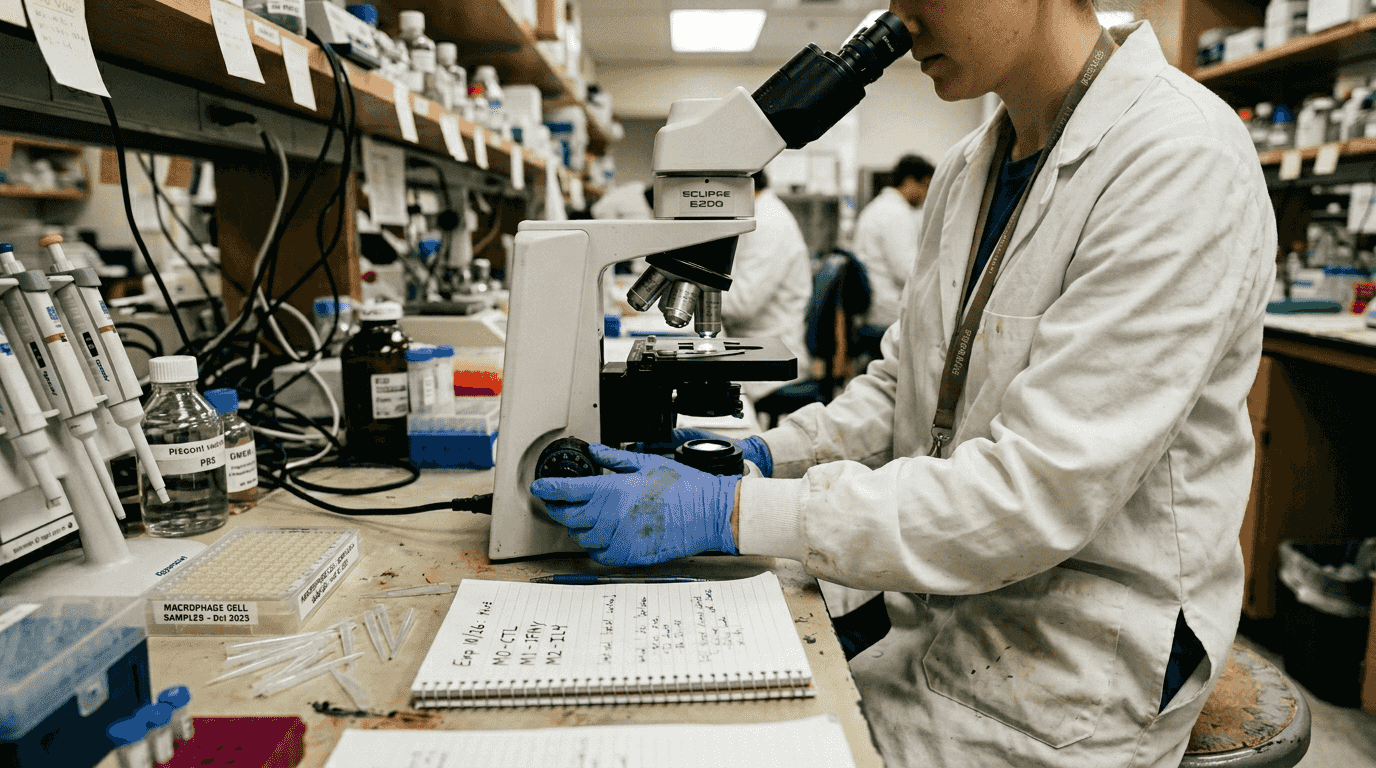
Natural killer (NK) cells patrol your body looking for infected or cancerous cells. Research shows PSK and PSP increase NK cell activity and improve CD4+/CD8+ T cell ratios, markers of balanced adaptive immunity. This matters because many chronic conditions involve NK cell exhaustion or imbalanced T cell populations.
The mechanism unfolds in this sequence:
- Beta-glucans bind to pattern-recognition receptors on innate immune cells
- This triggers intracellular signaling pathways that activate transcription factors
- Immune cells increase production of cytokines and chemokines
- Enhanced communication between innate and adaptive immune compartments occurs
- Overall immune surveillance and pathogen clearance improve
“Turkey tail modulates both innate and adaptive immunity through receptor engagement, leading to coordinated immune responses without excessive inflammation.”
The gut connection amplifies these effects. Turkey tail supports beneficial gut bacteria that produce butyrate and other short-chain fatty acids supporting immune function. Your gut houses 70% of your immune system, so improving gut health directly strengthens immunity.
This dual action, targeting both immune cells and gut microbiota, explains why turkey tail creates steady, sustainable immune support rather than temporary stimulation.
Clinical evidence and safe usage guidelines for turkey tail supplements
While turkey tail has traditional use spanning centuries, modern clinical trials provide concrete evidence of its effects. The most robust data comes from Japan, where PSK has regulatory approval as an adjunct in cancer treatment, particularly for gastrointestinal malignancies.
Japanese studies tracked cancer patients receiving chemotherapy plus PSK versus chemotherapy alone. Patients taking PSK showed extended survival times and better quality of life markers. These weren’t small pilot studies but large trials involving hundreds of patients over years.
Safety data is equally impressive. Clinical research shows turkey tail products have been safely consumed at doses of 1,000 mg or more per day for up to 10 years in cancer patients. Long-term use doesn’t appear to cause tolerance or declining effectiveness.
Recent 2026 research explored turkey tail during COVID-19 vaccination. A clinical study found that combining Fomitopsis officinalis (Agarikon) and Trametes versicolor was safe and feasible alongside vaccination. Participants experienced fewer side effects and maintained antibody responses for six months.
Typical Dosing and Safety Profile
| Factor | Details |
|---|---|
| Standard dose | 1,000 to 3,000 mg daily of standardized extract |
| Duration | Safe for long-term use (years) in clinical settings |
| Common side effects | Mild digestive discomfort in 1 to 10% of users |
| Serious interactions | Avoid with immunosuppressants or anticoagulants without supervision |
Pro Tip: If you’re new to turkey tail, start with 500 mg daily for one week to assess tolerance, then increase to 1,000 to 2,000 mg based on your goals and response.
Before combining turkey tail with chemotherapy, immunotherapy, or immune checkpoint inhibitors, consult your oncologist. While PSK is used clinically in cancer care, dosing and timing matter. Similarly, if you take medications that suppress immune function (like corticosteroids or biologics), medical oversight is essential.
For healthy adults seeking general immune support, turkey tail is well-tolerated. Minor digestive upset occasionally occurs when starting supplementation but typically resolves within days.
How to choose and use turkey tail supplements effectively
Not all turkey tail products deliver the immune-active compounds that research validates. Manufacturing methods dramatically affect potency and bioavailability. Hot water extraction concentrates beta-glucans and polysaccharides, while simple grinding of dried mushrooms leaves these compounds locked in indigestible cell walls.
Look for supplements standardized for PSK content with Certificates of Analysis (CoA) from third-party labs. These documents verify the product contains what the label claims and is free from contaminants like heavy metals or pesticides.
GMP (Good Manufacturing Practices) certification indicates the manufacturer follows quality control protocols. Third-party testing by independent labs adds another layer of verification. These aren’t optional luxuries; they’re essential for therapeutic-grade supplements.
Dosing depends on your extract’s concentration. A 10:1 extract (meaning 10 grams of mushroom produces 1 gram of extract) is more concentrated than a 1:1 powder. Read labels carefully:
- Pure PSK extracts: 500 to 1,500 mg daily
- Hot water extracts (not PSK-isolated): 1,000 to 3,000 mg daily
- Mushroom powders (lower bioavailability): 3,000 to 5,000 mg daily
Timing matters less than consistency. Take your dose with food to minimize any digestive sensitivity. Splitting larger doses (like 2,000 mg) into morning and evening portions can improve absorption.
Pro Tip: Combine turkey tail with vitamin C-rich foods or supplements. Vitamin C may enhance absorption of polysaccharides and supports overall immune function synergistically.
Product Selection Comparison
| Product Type | PSK Standardization | Typical Dose | Best For |
|---|---|---|---|
| PSK extract | Yes, 20% or higher | 500 to 1,500 mg | Clinical immune support |
| Hot water extract | No, but beta-glucan rich | 1,000 to 3,000 mg | General wellness |
| Mushroom powder | No | 3,000 to 5,000 mg | Budget-conscious users |
| Combination blends | Varies | Follow label | Multi-mushroom benefits |
Avoid products making inflated claims like “cures cancer” or “eliminates infections.” Legitimate turkey tail supplements support immune function; they don’t replace medical treatment. Be skeptical of proprietary blends that don’t disclose individual ingredient amounts.
Interactions to watch include anticoagulants (turkey tail may have mild blood-thinning effects) and systemic immunosuppressants. If you’re on these medications, discuss turkey tail with your healthcare provider before starting.
For those seeking comprehensive immune support, consider rotating turkey tail with other medicinal mushrooms or exploring organic mushroom extracts that combine complementary species. Different mushrooms target immunity through varied mechanisms, potentially offering broader protection.
Explore high-quality turkey tail supplements at Longevity Botanicals
Longevity Botanicals offers organic, GMP-certified turkey tail extracts standardized for immune-active polysaccharides. Every product undergoes rigorous third-party testing to verify purity, potency, and safety. You can choose pure turkey tail supplements or explore immune-focused blends that combine turkey tail with complementary mushroom species.
Adding these supplements to your daily routine is simple. Most users take capsules with breakfast or blend powders into smoothies and teas. The organic mushroom extracts collection provides options for various health goals beyond immunity.
Expert customer support is available to help you select the best product for your specific needs. Whether you’re supporting general wellness or looking for adjunctive immune support during medical treatment, quality matters. Invest in supplements backed by testing and transparency.
Frequently asked questions
Is turkey tail safe for daily use?
Yes, turkey tail is generally safe for daily use over extended periods. Clinical studies show it’s been consumed safely at doses of 1,000 mg or more for up to 10 years. However, consult a healthcare provider if you’re taking immunosuppressants, undergoing chemotherapy, or on anticoagulants, as interactions may occur.
How does turkey tail differ from other immune supplements?
Turkey tail works by activating pattern-recognition receptors on immune cells rather than providing direct antimicrobial or anti-inflammatory effects. It also modifies gut microbiota composition, supporting holistic immune health through the gut-immune axis. This mechanism differs from vitamins or herbs that work through other pathways.
Can turkey tail help with vaccine responses?
Research published in 2026 shows that turkey tail combined with Agarikon mushrooms significantly reduced vaccine side effects and preserved antibody responses for six months. This suggests potential as natural immune support during vaccination periods, though more research is needed to confirm optimal protocols.
Are there any known side effects or interactions with turkey tail?
Mild gastrointestinal upset is the most common side effect, occurring in about 1 to 10% of users. Avoid combining turkey tail with systemic immunosuppressants or immune checkpoint inhibitors unless supervised by a healthcare provider. Always consult your doctor before using turkey tail alongside chemotherapy or anticoagulants to ensure safe coordination of treatments.
What dosage of turkey tail should I take for immune support?
Typical adult dosing ranges from 1,000 to 3,000 mg daily, depending on extract concentration and your health goals. Start with 500 mg for the first week to assess tolerance, then increase gradually. PSK-standardized extracts may be effective at lower doses (500 to 1,500 mg), while non-standardized extracts require higher amounts. Check with turkey tail mushroom supplements for specific product recommendations and dosing guidance.


