


Chaga mushroom delivers an antioxidant punch with an ORAC value of 146,700 μmol TE/100g, surpassing most superfoods by a significant margin. Despite its impressive credentials, confusion persists about what Chaga actually is, how it works, and whether the hype matches reality. This guide cuts through the noise with science-backed facts, practical preparation methods, and safety information to help you make informed decisions about incorporating Chaga into your wellness routine.
Table of Contents
- Introduction To Chaga Mushroom: Origin And Botanical Background
- Bioactive Compounds And Immune Support Mechanisms In Chaga
- Antioxidant Potency And Its Role In Oxidative Stress Reduction
- Scientific Evidence, Limitations, And Common Misconceptions
- Consumption Forms, Dosage Recommendations, And Safety Information
- Conclusion: Integrating Chaga Mushroom Into Your Wellness Routine
- Explore Premium Chaga Mushroom Supplements For Immune Support
Key Takeaways
| Point | Details |
|---|---|
| Immune Enhancement | Beta-glucans in Chaga boost natural killer cell activity by up to 30%, supporting immune resilience. |
| Antioxidant Leader | With an ORAC value of 146,700 μmol TE/100g, Chaga ranks higher than acai berries and blueberries combined. |
| Preparation Matters | Raw Chaga provides minimal benefits; proper extraction through tea or tinctures unlocks bioactive compounds. |
| Scientific Status | Lab studies show promise, but human clinical trials remain limited and preliminary. |
| Safety First | Consult your doctor if taking blood thinners, diabetes medications, or managing kidney conditions. |
Introduction to Chaga Mushroom: Origin and Botanical Background
Chaga mushroom, scientifically known as Inonotus obliquus, stands out among medicinal fungi for its unique appearance and powerful medicinal compounds. This parasitic fungus grows primarily on birch trees in cold climates such as Siberia, Northern Europe, Canada, and Alaska.
The fungus presents a striking contrast between its exterior and interior. Its outer surface appears black and cracked, resembling charcoal or burnt wood. When broken open, the interior reveals a rusty golden-brown core with a cork-like texture. This distinctive appearance has earned Chaga various folk names, but its most celebrated title remains the “King of Mushrooms” due to its exceptional medicinal reputation.
Traditional use of Chaga spans centuries across multiple cultures:
- Indigenous Siberian communities brewed Chaga tea to enhance stamina and support overall vitality during harsh winters
- Traditional Chinese Medicine practitioners incorporated Chaga to promote longevity and balance body systems
- Northern European folk medicine valued Chaga for immune support and digestive wellness
- Native communities in Alaska and Canada used Chaga to address various health concerns and maintain resilience
The birch tree relationship proves crucial to Chaga’s potency. As the fungus grows on birch bark, it absorbs valuable compounds like betulin and betulinic acid from its host tree. This symbiotic relationship contributes to Chaga’s unique chemical profile. The fungus takes 10 to 20 years to reach harvestable size, making sustainable sourcing an important consideration for quality products.
Bioactive Compounds and Immune Support Mechanisms in Chaga
Chaga’s immune-supporting reputation stems from specific molecular compounds that interact with your body’s defense systems. Understanding these mechanisms helps separate evidence-based benefits from marketing exaggeration.
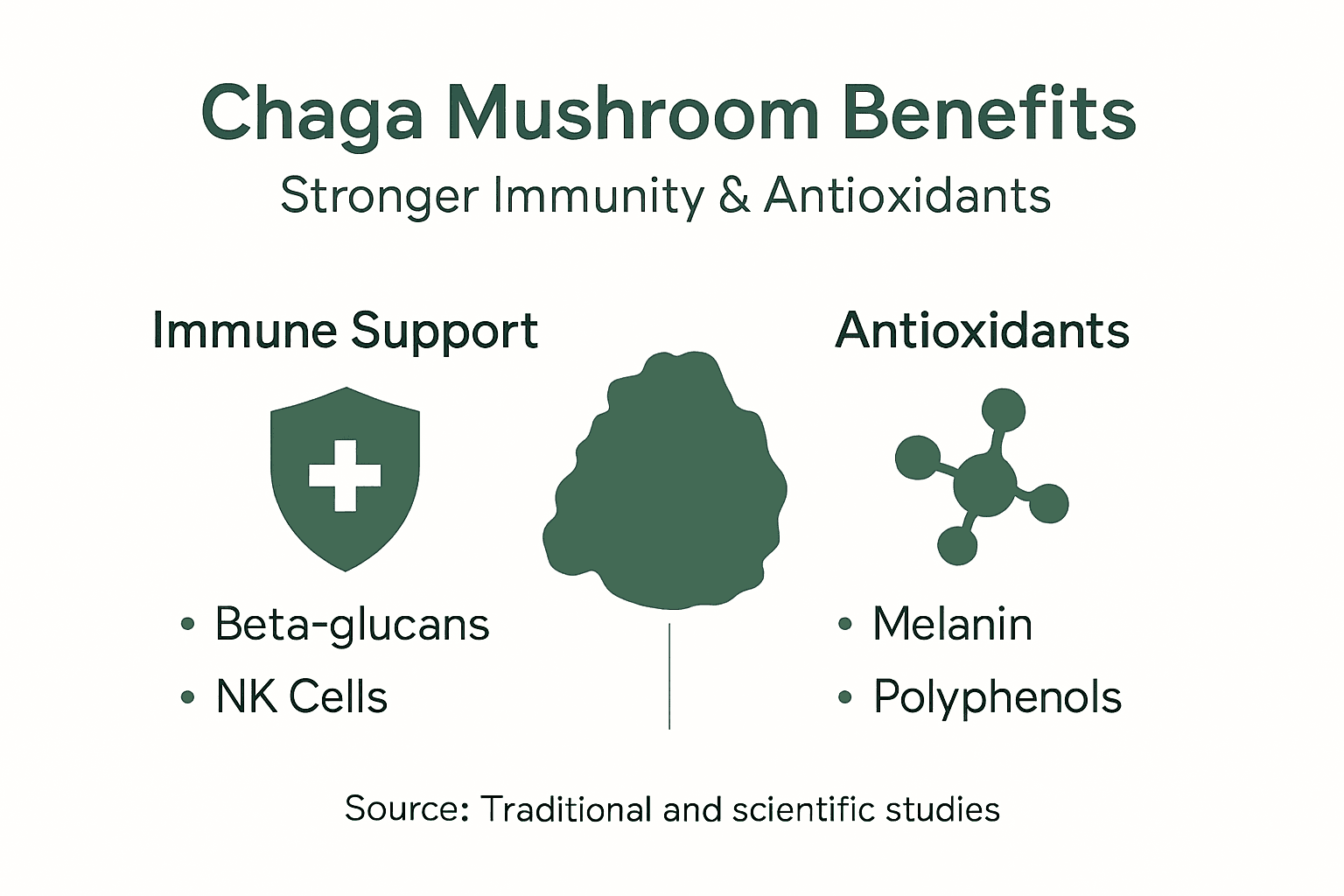
Polysaccharides and beta-glucans represent the primary immune-active compounds in Chaga. These complex carbohydrates stimulate macrophages, the white blood cells that engulf and destroy pathogens, cellular debris, and foreign substances. Research shows Chaga supplementation can increase natural killer (NK) cell activity by approximately 30%, enhancing your body’s ability to identify and eliminate compromised cells.
Beta-glucans work through pattern recognition receptors on immune cells. When these receptors detect beta-glucans, they trigger a cascade of immune responses:
- Activation of macrophages and dendritic cells for enhanced pathogen detection
- Increased cytokine production to coordinate immune responses
- Enhanced communication between innate and adaptive immune systems
- Modulation of inflammatory pathways to prevent excessive inflammation
The cytokine regulation effect deserves special attention. Beta-glucans help balance pro-inflammatory and anti-inflammatory cytokines, preventing the chronic low-grade inflammation linked to numerous health conditions. This balancing act supports immune homeostasis rather than simply ramping up immune activity indiscriminately.
Beyond polysaccharides, Chaga contains triterpenoids like betulinic acid and inotodiol. These compounds contribute anti-inflammatory and antioxidant effects that complement immune function. Melanin, the dark pigment giving Chaga its black exterior, provides additional antioxidant protection and may support skin health when consumed regularly.
Pro Tip: Choose dual-extract Chaga products to access both water-soluble polysaccharides and alcohol-soluble triterpenoids. Single extraction methods miss important compound categories, reducing overall benefit potential.
The immune modulation from Chaga differs from immune stimulation. Stimulants push your immune system into overdrive, which can backfire with autoimmune conditions or chronic use. Chaga’s compounds help your immune system respond appropriately to threats while maintaining balance, making it suitable for long-term wellness support.
Antioxidant Potency and Its Role in Oxidative Stress Reduction
Chaga’s antioxidant capacity stands among the highest measured in natural foods. The ORAC (Oxygen Radical Absorbance Capacity) test quantifies how effectively substances neutralize free radicals. Chaga scores approximately 146,700 μmol TE/100g, dwarfing other antioxidant-rich foods.

| Food Source | ORAC Value (μmol TE/100g) | Comparison to Chaga |
|---|---|---|
| Chaga Mushroom | 146,700 | Baseline |
| Acai Berries | 102,700 | 30% lower |
| Dark Chocolate | 20,816 | 86% lower |
| Blueberries | 9,621 | 93% lower |
| Goji Berries | 3,290 | 98% lower |
This remarkable antioxidant capacity comes from multiple compound classes working synergistically:
- Polyphenols: Water-soluble compounds that neutralize reactive oxygen species in blood and tissues
- Melanin: Provides exceptional free radical scavenging ability and UV protection
- Triterpenoids: Fat-soluble antioxidants that protect cell membranes from lipid peroxidation
- Superoxide dismutase (SOD): An enzyme that specifically neutralizes superoxide radicals, among the most damaging free radical types
Free radicals form naturally during metabolism and increase with environmental stressors like pollution, UV radiation, and poor diet. Unchecked oxidative stress damages cellular components including DNA, proteins, and lipids. This cumulative damage contributes to premature aging and increased disease risk.
Chaga’s antioxidants intercept free radicals before they cause cellular harm. The melanin content provides particularly robust protection against oxidative DNA damage, potentially supporting cellular health and longevity. Some research suggests this DNA protection may explain traditional use of Chaga for vitality and healthy aging.
Skin health represents another area where antioxidant activity shows promise. Melanin and polyphenols may protect skin cells from oxidative stress caused by UV exposure and environmental pollutants. While topical applications receive less research attention than oral consumption, some users report improvements in skin appearance with regular Chaga tea consumption.
Pro Tip: Simmer Chaga chunks for 15 to 30 minutes to maximize antioxidant extraction into your tea. Longer brewing times increase polyphenol and melanin content in the final beverage, though excessively long brewing may produce bitter flavors.
The relationship between antioxidant intake and disease prevention remains complex. While laboratory studies clearly demonstrate Chaga’s free radical neutralizing capacity, translating this to specific health outcomes requires more human research. Antioxidants work best as part of a comprehensive approach including whole foods, adequate sleep, stress management, and regular physical activity.
Scientific Evidence, Limitations, and Common Misconceptions
Separating Chaga facts from fiction requires examining the current scientific evidence objectively. Most published research on Chaga consists of in vitro (test tube) and animal studies. Human clinical trials remain limited, small in scale, and preliminary in nature.
Laboratory studies show impressive results. Test tube experiments demonstrate that Chaga extracts inhibit cancer cell growth, reduce inflammatory markers, and protect cells from oxidative damage. Animal research supports immune modulation, blood sugar regulation, and liver protection. These findings justify continued investigation but do not constitute proof of efficacy in humans.
The anticancer potential attracts significant attention and requires careful interpretation. Chaga’s triterpenoids, particularly betulinic acid, disrupt cancer cell growth pathways in laboratory conditions. Some compounds trigger apoptosis (programmed cell death) in malignant cells while sparing healthy cells. However, laboratory conditions differ drastically from the complex human body environment.
Misconceptions about Chaga proliferate online and in casual conversation:
- Myth: Chaga cures cancer or serious diseases. Reality: No evidence supports Chaga as a standalone treatment for any disease. It may support overall wellness but cannot replace medical treatment.
- Myth: Raw Chaga chunks provide immediate benefits when chewed or eaten. Reality: Bioactive compounds remain locked in tough cell walls without proper extraction through heat or alcohol.
- Myth: More Chaga always equals better results. Reality: Excessive consumption may cause side effects or nutrient imbalances without additional benefit.
- Myth: Chaga replaces fundamental health practices. Reality: No supplement compensates for poor diet, inadequate sleep, or chronic stress.
The anti-inflammatory properties show consistency across multiple study types. Chaga extracts reduce inflammatory cytokines and modulate immune responses in ways that may benefit chronic low-grade inflammation. This mechanism appears more robust than some other proposed benefits, though human dose-response relationships need clarification.
Transparency about research limitations builds trust and sets realistic expectations. The supplement industry sometimes overstates preliminary findings to drive sales. When evaluating Chaga products, look for companies that acknowledge research gaps while highlighting legitimate traditional use and available scientific support.
Chaga functions as a complementary wellness tool, not a miracle cure. It may support immune function, provide antioxidant protection, and contribute to overall vitality when used consistently as part of a health-conscious lifestyle. Approaching Chaga with informed optimism rather than unrealistic expectations leads to better outcomes and satisfaction.
Consumption Forms, Dosage Recommendations, and Safety Information
Choosing the right Chaga format depends on your lifestyle, budget, and desired compound profile. Each preparation method offers distinct advantages and limitations.
Traditional tea preparation involves simmering Chaga chunks in water for 15 to 30 minutes. This hot water extraction pulls out water-soluble compounds like polysaccharides and some polyphenols. Tea provides an affordable, traditional approach with a mild, earthy flavor. The same Chaga chunks can be reused multiple times until the water no longer takes on color.
| Form | Extraction Method | Key Advantages | Drawbacks | Best For |
|---|---|---|---|---|
| Tea/Decoction | Hot water simmering | Affordable, traditional, reusable chunks | Only extracts water-soluble compounds | Daily immune support, budget-conscious users |
| Dual-Extract Tincture | Water + alcohol extraction | Complete compound profile, high potency | Higher cost, alcohol content | Maximum benefit, convenience |
| Powder | Ground dried Chaga | Versatile for smoothies, easy dosing | Variable extraction quality | Convenient daily use |
| Capsules | Encapsulated extract or powder | Precise dosing, travel-friendly | Less control over sourcing | Consistent routine, travel |
Dual-extract tinctures use both hot water and alcohol to capture the full spectrum of bioactive compounds. Water extracts polysaccharides while alcohol pulls out triterpenoids and other fat-soluble constituents. This comprehensive extraction provides superior compound variety but costs more than simple tea or powder.
Powdered Chaga varies significantly in quality. Some powders consist of ground raw Chaga with minimal bioavailability. Better options use extracted and spray-dried Chaga, concentrating active compounds. Always check product labels for extraction ratios and beta-glucan content to assess quality.
Dosage recommendations lack standardization due to limited human trials. Traditional use suggests 1 to 3 grams daily of extracted Chaga powder or 1 to 2 cups of properly prepared tea. Tincture dosing follows manufacturer instructions, typically 1 to 2 mL once or twice daily. Start with lower doses to assess individual tolerance.
Safety considerations deserve serious attention. Chaga may interact with blood-thinning medications like warfarin due to its anticoagulant properties. Blood sugar-lowering effects could potentiate diabetes medications, risking hypoglycemia. High oxalate content raises concerns for individuals with kidney issues or history of kidney stones.
Consult your healthcare provider before using Chaga if you:
- Take anticoagulant or antiplatelet medications
- Manage diabetes with medication
- Have chronic kidney disease or kidney stones
- Are pregnant or breastfeeding
- Take immunosuppressant drugs
- Have scheduled surgery within two weeks
Pro Tip: Start with small doses and monitor your body’s response for at least a week before increasing intake. Keep a simple log noting energy levels, digestion, and any unusual symptoms to identify patterns.
Proper Chaga tea preparation requires patience but rewards you with maximum compound extraction. Break Chaga into small chunks (1 to 2 inch pieces), use 2 to 3 chunks per liter of water, bring to a gentle simmer, maintain low heat for 15 to 30 minutes, and strain before drinking. The resulting dark brown tea can be enjoyed plain or with natural sweeteners.
Quality sourcing matters tremendously. Wild-harvested Chaga from birch trees in clean environments provides superior compound profiles compared to Chaga from polluted areas or other tree species. Look for suppliers who practice sustainable harvesting, leaving enough fungus on trees to regenerate and maintaining ecosystem health.
Conclusion: Integrating Chaga Mushroom into Your Wellness Routine
Chaga mushroom offers legitimate immune support and antioxidant benefits backed by traditional use and preliminary scientific evidence. Its beta-glucans enhance natural killer cell activity by up to 30%, while its exceptional ORAC value of 146,700 μmol TE/100g provides powerful free radical protection. These effects position Chaga as a valuable addition to comprehensive wellness strategies.
Realistic expectations prove essential for satisfaction and safety. Chaga supports immune resilience and provides antioxidant defense, but it does not cure diseases or replace fundamental health practices. Proper preparation through tea, quality extracts, or dual-extraction tinctures unlocks bioactive compounds that raw consumption cannot provide.
Incorporate Chaga alongside whole food nutrition, regular physical activity, adequate sleep, and stress management practices. This holistic approach maximizes the synergistic benefits of multiple health-supporting behaviors. Consult healthcare professionals for personalized guidance, especially if you take medications or manage chronic conditions.
Approach Chaga as one component of your broader immune resilience and longevity strategy. When sourced responsibly, prepared properly, and used consistently, this remarkable fungus may enhance your body’s natural defenses and contribute to vital, healthy aging. Quality matters, so choose products from reputable suppliers who prioritize extraction methods, testing, and sustainable sourcing practices.
Explore Premium Chaga Mushroom Supplements for Immune Support
Ready to experience the immune-boosting and antioxidant benefits of Chaga mushroom? Discover high-quality Chaga mushroom extract supplements designed to deliver maximum bioactive compound content. Whether you prefer convenient capsules, versatile organic mushroom powder supplements, or potent dual-extract tinctures, you’ll find formats that fit seamlessly into your daily routine.
Each product undergoes rigorous quality testing to ensure purity, potency, and proper extraction of immune-supporting beta-glucans and antioxidant compounds. Need guidance selecting the right mushroom supplement for your wellness goals? Learn how to choose mushroom supplements that align with your specific health priorities and lifestyle preferences.
What Is Chaga Mushroom? Frequently Asked Questions
What does Chaga mushroom look like and where does it grow?
Chaga appears as a black, crusty growth on birch tree bark, resembling burnt charcoal on the outside with a golden-brown interior. It grows primarily in cold northern climates including Siberia, Northern Europe, Canada, and Alaska, taking 10 to 20 years to reach harvestable size.
How long should I steep Chaga tea for best benefits?
Simmer Chaga chunks in water for 15 to 30 minutes to extract water-soluble compounds like polysaccharides and polyphenols effectively. Longer steeping times generally increase compound extraction, though excessively long brewing may produce bitter flavors that some find unpleasant.
Can I consume raw Chaga safely for health?
Raw Chaga is not toxic but provides minimal health benefits because bioactive compounds remain locked within tough cell walls. Proper extraction through hot water brewing or alcohol tincturing is necessary to access immune-supporting beta-glucans and antioxidant compounds.
Are there any side effects or drug interactions?
Chaga may interact with blood-thinning medications and diabetes drugs, potentially increasing their effects. Individuals with kidney disease should exercise caution due to high oxalate content. Consult your healthcare provider before use if you take medications or have chronic health conditions.
Does Chaga replace conventional immune-supporting behavior?
No supplement, including Chaga, replaces fundamental health practices like nutritious eating, regular exercise, adequate sleep, and stress management. Chaga works best as a complementary tool within a comprehensive wellness approach, supporting but not substituting for healthy lifestyle behaviors.


