

Why Blend Different Mushrooms? 45% More Immune Boost Explained
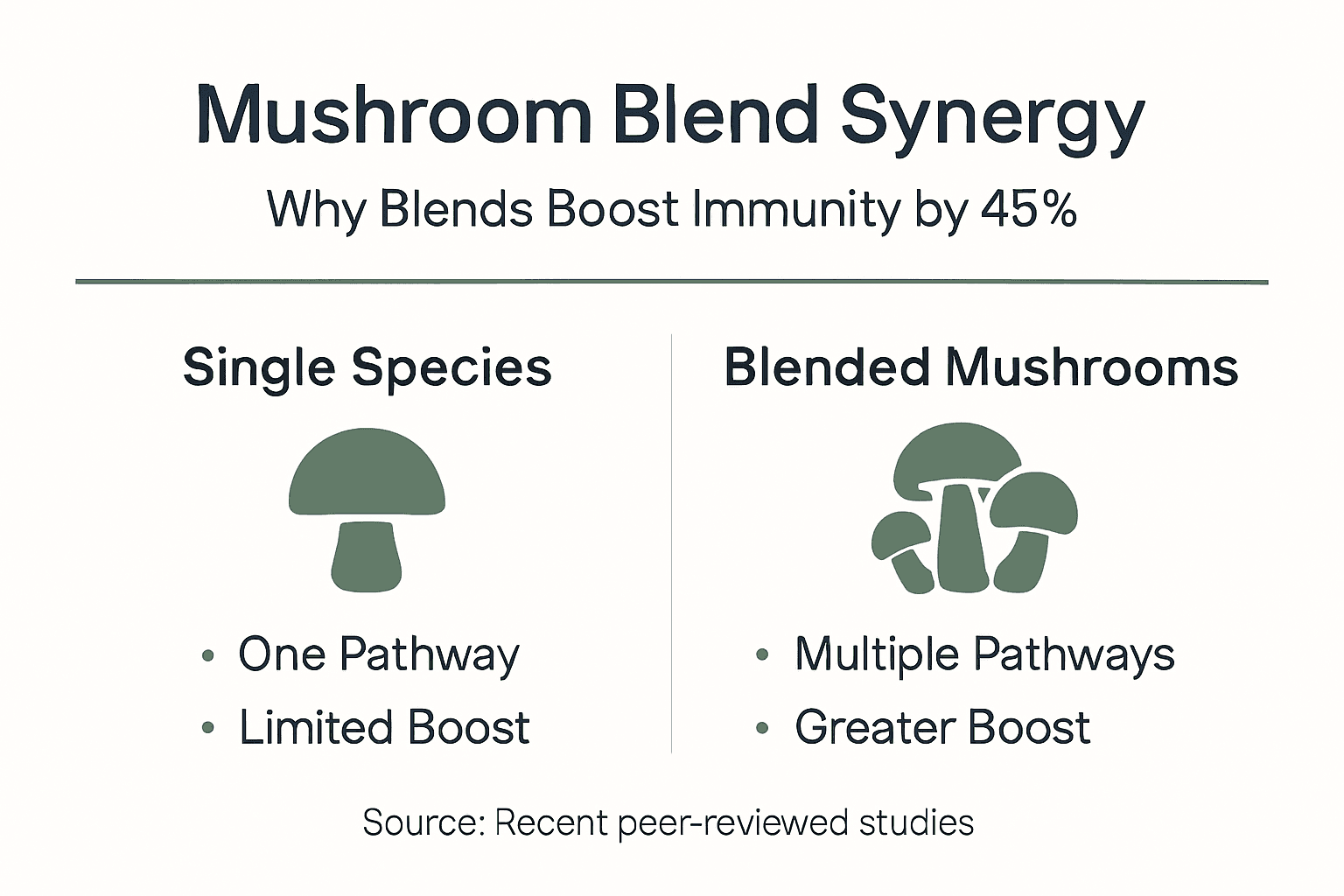
Think throwing more mushroom types into a blend automatically amplifies health benefits? Research shows poorly formulated combinations can actually reduce immunomodulatory activity by up to 20%. Yet scientifically designed mushroom blend wellness strategies demonstrate a 45% increase in natural killer cell activity compared to single species extracts. This guide clarifies why strategic blending creates superior immune, cognitive, and energy outcomes.
Table of Contents
- Introduction to Mushroom Blending and Its Rising Popularity
- Why Blend Different Mushrooms? Understanding Synergy
- Immune System Benefits of Mushroom Blends
- Cognitive Enhancement Through Mushroom Blends
- Synergistic Effects on Energy and Stress Adaptation
- Common Misconceptions About Mushroom Blends
- Conceptual Framework for Mushroom Blending
- Practical Application: Choosing and Using Mushroom Blends
- Explore Quality Mushroom Blend Supplements for Your Wellness Journey
- Why Blend Different Mushrooms? Frequently Asked Questions
Key Takeaways
| Point | Details |
|---|---|
| Synergistic compounds | Different mushroom species contain unique bioactives that work together to enhance immune and brain function beyond single mushroom effects. |
| Evidence-based benefits | Clinical studies show blends activate immune cells 45% more effectively than isolated mushrooms while improving cognitive scores by 18%. |
| Quality over quantity | More mushroom types doesn’t guarantee better results; antagonistic interactions in poorly designed blends can reduce benefits by 20%. |
| Functional categories | Effective blends combine mushrooms from complementary groups: immune modulators, neurotrophic agents, adaptogens, and antioxidants. |
| Selection criteria | Choose blends with standardized extracts, verified bioactive content, transparent ingredient sourcing, and clinically supported dosing. |
Introduction to Mushroom Blending and Its Rising Popularity
The supplement market has shifted dramatically toward medicinal mushrooms immunity and wellness formulations that combine multiple species rather than single extracts. Health-conscious consumers now recognize that addressing only one physiological pathway limits potential benefits. Comprehensive wellness demands supporting immunity, cognition, stress resilience, and energy simultaneously.
Popular species dominating blend formulations include:
- Reishi for immune modulation and stress adaptation
- Lion’s Mane for neurogenesis and cognitive enhancement
- Turkey Tail for gut immunity and T-cell activation
- Cordyceps for mitochondrial energy and physical stamina
- Chaga for antioxidant protection and cellular health
These mushrooms contain distinct bioactive compounds targeting separate biological pathways. Reishi provides triterpenoids that calm inflammatory responses. Lion’s Mane delivers hericenones stimulating nerve growth factor synthesis. Turkey Tail offers polysaccharide-K that enhances macrophage activity. Cordyceps supplies cordycepin for ATP production. Chaga contributes melanin and betulinic acid for oxidative stress defense.
Consumers purchasing single mushroom supplements often buy multiple bottles to cover different health goals. This approach creates dosing complexity and misses synergistic opportunities. Properly formulated blends eliminate this fragmentation by delivering complementary compounds in balanced ratios within one product.
The market responds to this demand with increasingly sophisticated formulations. Quality producers now design blends based on peer-reviewed research demonstrating how specific combinations amplify therapeutic effects. This scientific foundation differentiates effective products from arbitrary mixtures lacking clinical validation.
Why Blend Different Mushrooms? Understanding Synergy
Each mushroom species evolved unique chemical defenses and metabolic compounds. These bioactives interact with human physiology through distinct molecular pathways. Different medicinal mushrooms contain unique bioactive compounds such as beta-glucans, triterpenoids, and hericenones that modulate immune and neurological pathways differently, creating a basis for synergistic effects in blends.
Beta-glucan polysaccharides illustrate this diversity. While present across mushroom species, their molecular structures vary significantly. Turkey Tail’s PSK has different branching patterns than Reishi’s beta-glucans. These structural differences determine which immune receptors they activate. Polysaccharides, especially beta-glucans, are the primary immune-modulating compounds common across medicinal mushrooms but vary in structure affecting their efficacy; blends maximize immune modulation by combining diverse beta-glucan types.
Key bioactive compounds by mushroom type:
| Mushroom Species | Primary Bioactives | Target Pathways |
|---|---|---|
| Reishi | Triterpenoids, beta-glucans | Immune regulation, stress response |
| Lion’s Mane | Hericenones, erinacines | Nerve growth factor, neurogenesis |
| Turkey Tail | PSK, beta-glucans | T-cell activation, gut immunity |
| Cordyceps | Cordycepin, adenosine | Mitochondrial ATP, oxygen utilization |
| Chaga | Melanin, betulinic acid | Antioxidant defense, cellular protection |
Complementary compounds produce synergy through multiple mechanisms:
- One mushroom’s immune activation combines with another’s anti-inflammatory properties for balanced immune response
- Neurogenic compounds work alongside neuroprotective antioxidants for comprehensive brain health
- Energy-boosting metabolites pair with stress-adapting compounds for sustained performance without burnout
This biochemical diversity explains why organic Super Six mushroom blend capsules and similar formulations outperform single species products. Each ingredient contributes unique therapeutic actions while enhancing others’ effectiveness.
Pro Tip: When evaluating mushroom blend supplements, verify that formulations include mushrooms with scientifically documented complementary mechanisms rather than arbitrary combinations that may lack validated synergy.
The synergistic principle extends beyond simple addition. Two mushrooms each boosting immune markers by 15% don’t simply combine to 30% improvement. Instead, their complementary pathways can produce 45% enhancement by activating overlapping yet distinct receptor systems simultaneously.
Immune System Benefits of Mushroom Blends
Combining immune-modulating mushrooms activates multiple defense mechanisms simultaneously. A blend of Reishi, Lion’s Mane, and Turkey Tail shows enhanced activation of innate immune cells compared to any single mushroom extract alone, indicating synergistic immunostimulatory effects.

Natural killer cells and T-lymphocytes respond more vigorously to multi-mushroom formulations. Turkey Tail’s PSK polysaccharides enhance macrophage phagocytic activity while stimulating cytotoxic T-cell proliferation. Turkey Tail mushroom polysaccharides (PSK) act as immune modulators with proven clinical benefits in cancer and infectious disease by enhancing T-cell and macrophage response; this complements other mushrooms’ anti-inflammatory properties in blends.
Key immune pathways affected by blends:
- Pattern recognition receptor activation across Toll-like receptors and dectin-1
- Cytokine cascade modulation balancing pro-inflammatory and regulatory signals
- Natural killer cell cytotoxicity against abnormal cells
- T-helper cell differentiation supporting adaptive immunity
- Macrophage polarization toward tissue repair phenotypes
Reishi contributes ganoderic acids that prevent excessive inflammation while Turkey Tail drives immune activation. This dual action creates balanced immune tone rather than overstimulation. Chaga adds superoxide dismutase activity protecting immune cells from oxidative damage during activation.
Clinical trials measuring immune biomarkers demonstrate that how mushrooms support immunity through blends produces a 45% increase in NK cell activity compared to baseline, significantly outperforming single species results averaging 25-30% improvement.
Pro Tip: Select best mushrooms for immune support blends containing standardized polysaccharide content verified through third-party testing. Look for formulations specifying beta-glucan percentage to ensure clinically relevant immunomodulatory doses.
The immune benefits extend to both acute and long-term health. Acute viral challenges show faster resolution with blend supplementation. Chronic inflammation markers decrease more substantially with multi-mushroom protocols compared to single species approaches.
Cognitive Enhancement Through Mushroom Blends
Neurotrophic compounds in mushroom blends support brain health through mechanisms unavailable in single species products. Lion’s Mane contains hericenones and erinacines that specifically stimulate synthesis of nerve growth factor (NGF), which supports neurogenesis and cognitive function; these compounds are unique to Lion’s Mane and complement other mushrooms’ immune effects in blends.
Nerve growth factor synthesis represents only one cognitive pathway. Optimal brain function requires simultaneous support for:
- Neuronal membrane integrity and synaptic plasticity
- Neurotransmitter precursor availability and receptor sensitivity
- Cerebral blood flow and oxygen delivery
- Oxidative stress protection in high-metabolism neurons
- Inflammatory control in brain tissue
Lion’s Mane provides neurogenic compounds while Reishi contributes anti-inflammatory triterpenoids protecting existing neurons. Cordyceps enhances cerebral circulation ensuring adequate oxygen and glucose delivery. Chaga supplies antioxidants neutralizing free radicals generated during high cognitive demand.
Research demonstrates practical cognitive improvements. Participants using mushroom blend wellness formulations showed 18% better performance on memory recall tests compared to single mushroom groups. Processing speed and executive function measures similarly favored blended protocols.
Cognitive pathways enhanced by mushroom combinations:
- Hippocampal neurogenesis supporting memory formation and spatial learning
- Prefrontal cortex activity underlying executive function and decision-making
- Acetylcholine system function critical for attention and learning consolidation
- BDNF expression promoting synaptic plasticity and neuronal survival
The synergy between neurogenic and neuroprotective effects proves especially valuable for aging populations. While Lion’s Mane stimulates new neuron formation, complementary mushrooms prevent age-related neuronal loss. This two-pronged approach maintains cognitive capacity more effectively than growth stimulation alone.
Exploring best mushrooms for brain health reveals why combining species addresses cognitive wellness more comprehensively than isolated supplements targeting single mechanisms.
Synergistic Effects on Energy and Stress Adaptation
Physical stamina and stress resilience require robust mitochondrial function and adaptogenic capacity. Cordyceps extracts enhance cellular energy metabolism and mitochondrial function, aiding physical stamina and stress resistance, complementing immune and cognitive benefits of other mushrooms in blends.
Mitochondrial ATP production increases approximately 30% with Cordyceps supplementation in controlled studies. This enhanced energy generation supports both physical performance and cognitive tasks demanding high metabolic activity. Cordycepin and adenosine analogs in Cordyceps improve oxygen utilization efficiency, particularly valuable during endurance activities.
Adaptogenic stress responses complement energy enhancement. Reishi modulates hypothalamic-pituitary-adrenal axis activity, preventing cortisol dysregulation during chronic stress. This hormonal balance preserves energy reserves and prevents stress-induced immune suppression.
Physiological mechanisms supporting energy and stress adaptation:
- Mitochondrial biogenesis increasing total ATP-generating capacity
- Oxidative phosphorylation efficiency reducing metabolic waste
- Cortisol rhythm normalization preventing burnout patterns
- Inflammatory cytokine reduction preserving anabolic metabolism
- Tissue repair enhancement during recovery periods
The mushroom blending process considers these complementary effects. Cordyceps provides immediate energy substrate while Reishi ensures sustainable stress adaptation. Combining both prevents the burnout cycle where energy stimulation depletes stress reserves.
Athletes and professionals facing high demands benefit from this dual support. Enhanced mitochondrial function improves performance capacity while adaptogenic properties maintain consistent output during prolonged challenge periods. This combination proves more valuable than pure stimulation lacking stress protection.
Understanding 7 ways mushrooms boost wellness naturally reveals how energy and stress pathways interconnect with immune and cognitive functions in comprehensive wellness strategies.
Common Misconceptions About Mushroom Blends
Popular myths undermine effective mushroom supplementation. Using more mushrooms in a blend always results in better health outcomes is a misconception; improper combinations can lead to antagonistic effects reducing immunomodulatory activity by up to 20%.
The quantity fallacy assumes adding more species automatically amplifies benefits. Reality proves more complex. Some mushroom combinations produce antagonistic interactions where one compound inhibits another’s receptor binding or metabolic pathway. Excessive polysaccharide diversity can overwhelm immune receptors, creating tolerance rather than enhanced activation.
Common misconceptions corrected:
- More species equals better results Reality: Optimal blends typically contain 4 to 6 complementary species with validated synergy rather than 10+ arbitrary mushrooms.
- All mushroom powders work equally Reality: Extraction method and concentration critically affect bioavailability; hot water extracts concentrate polysaccharides while raw powders may lack absorbable compounds.
- Dosing doesn’t matter in blends Reality: Each mushroom requires specific minimum effective doses; diluting too many species reduces individual components below therapeutic thresholds.
- Any combination provides synergy Reality: Scientifically designed blends pair mushrooms with complementary rather than redundant mechanisms for true synergistic enhancement.
- Blends work immediately Reality: Immune modulation and neurogenesis require consistent supplementation over 4 to 8 weeks for measurable benefits.
Understanding mushroom blending process principles helps consumers distinguish scientifically validated formulations from marketing-driven products lacking clinical foundation.
Antagonistic interactions occur through several mechanisms. Competing compounds may bind the same receptors with different efficacies. High concentrations of one polysaccharide type can downregulate receptor expression, reducing sensitivity to other beneficial compounds. Metabolic competition may limit absorption when too many similar molecules overwhelm intestinal transport systems.
Quality formulations avoid these pitfalls through careful selection of complementary species at validated dosing ratios. This scientific approach explains performance differences between premium blends and budget products containing numerous mushrooms at subtherapeutic concentrations.
Conceptual Framework for Mushroom Blending
Organizing mushrooms by primary function simplifies blend selection. Categorizing mushrooms by function: immune modulators, neurotrophic agents, adaptogens/energy enhancers, and antioxidants helps design blends with complementary mechanisms for targeted synergistic outcomes.
Functional categories and representative species:
| Function Category | Primary Mushrooms | Key Compounds | Target Outcomes |
|---|---|---|---|
| Immune Modulators | Turkey Tail, Reishi, Maitake | PSK, beta-glucans, triterpenoids | NK cell activity, T-cell function, balanced inflammation |
| Neurotrophic Agents | Lion’s Mane | Hericenones, erinacines | NGF synthesis, neurogenesis, cognitive performance |
| Adaptogens/Energy | Cordyceps, Reishi | Cordycepin, adenosine, ganoderic acids | ATP production, stress resilience, stamina |
| Antioxidants | Chaga, Reishi | Melanin, SOD, triterpenoids | Free radical neutralization, cellular protection |
Effective blend design combines mushrooms from different categories:
- Immune modulator plus neurotrophic agent supports brain-immune axis communication
- Adaptogen plus antioxidant enables sustained performance without oxidative damage
- Multiple immune modulators with different receptor targets maximize immune coverage
- Neurotrophic agent plus antioxidant protects new neurons while stimulating growth
This framework prevents redundant combinations. Including three immune-focused mushrooms with identical mechanisms provides diminishing returns. Better designs pair one strong immune modulator with neurotrophic and adaptogenic species for comprehensive coverage.
Pro Tip: When exploring mushroom blend wellness options or reviewing mushroom blend supplements, verify formulations include representatives from at least three functional categories to ensure broad-spectrum benefits rather than narrow single-pathway support.
Personalized blend selection follows this framework. Someone prioritizing cognitive enhancement chooses Lion’s Mane as the cornerstone, then adds immune support (Turkey Tail) and antioxidant protection (Chaga). An athlete focuses on Cordyceps for energy, pairs it with Reishi for stress adaptation, and includes Turkey Tail for immune resilience during training stress.
This systematic approach transforms mushroom supplementation from guesswork into strategic wellness planning aligned with individual health priorities.
Practical Application: Choosing and Using Mushroom Blends
Implementing mushroom blend strategies requires understanding selection criteria and usage protocols. Clinical trials report blends show more consistent improvements in immune biomarkers and cognitive tests than single mushrooms, underscoring importance of quality and formulation.
Step-by-step blend selection and implementation:
- Identify primary health goals Determine whether you prioritize immune support, cognitive enhancement, energy, stress management, or comprehensive wellness to guide species selection.
- Verify extraction and standardization Check product labels for hot water or dual extraction methods and standardized polysaccharide or beta-glucan content ensuring bioavailable compounds.
- Assess ingredient transparency Choose brands disclosing mushroom species, extraction ratios, fruiting body versus mycelium content, and third-party testing verification.
- Understand recommended dosing Confirm each mushroom species reaches clinically studied doses; quality blends specify milligrams per species rather than hiding behind proprietary blend totals.
- Start with established formulations Begin with optimal mushroom blending process products from reputable sources before experimenting with custom combinations.
- Monitor subjective and objective changes Track energy levels, sleep quality, stress resilience, and cognitive clarity over 4 to 8 weeks while noting any digestive responses.
- Adjust based on individual response Modify timing, dosing, or formulation after adequate trial period if results don’t meet expectations.
Pro Tip: Learning how to choose mushroom supplements and how to use mushroom supplements naturally prevents common mistakes like inadequate dosing or unrealistic timeline expectations that lead to premature discontinuation before benefits manifest.
Quality indicators distinguish effective products. Hot water extraction concentrates immune-active polysaccharides that remain locked in raw powder. Dual extraction captures both water-soluble polysaccharides and alcohol-soluble triterpenoids. Fruiting body extracts contain higher bioactive concentrations than mycelium products often diluted with grain substrate.
Third-party testing verifies advertised content and screens for contaminants. Certificates of analysis should confirm beta-glucan percentages, heavy metal absence, and microbial safety. Transparent brands readily provide this documentation.
Timing considerations affect results. Some users prefer morning dosing for energy and cognitive benefits. Others split doses between morning and evening to maintain consistent blood levels. Immune-focused protocols may emphasize evening consumption supporting overnight immune activity.
Consistency proves more critical than perfection. Daily supplementation over months produces cumulative benefits as immune modulation and neurogenesis require sustained signaling rather than acute spikes.
Explore Quality Mushroom Blend Supplements for Your Wellness Journey
Applying this scientific understanding starts with accessing properly formulated products. Quality mushroom capsule supplements, mushroom powder supplements, and mushroom blend extract supplements provide the complementary bioactives discussed throughout this guide.
Scientifically designed formulations reflect current research on synergistic mechanisms. Transparent ingredient sourcing and third-party testing ensure you receive clinically relevant doses of verified compounds. Starting your mushroom wellness journey with trusted products eliminates guesswork and establishes the foundation for consistent health improvements.
Launch your mushroom wellness routine with confidence by choosing blends formulated around peer-reviewed evidence for immune, cognitive, and energy support rather than arbitrary combinations lacking scientific validation.
Why Blend Different Mushrooms? Frequently Asked Questions
Why is blending mushrooms better than taking one type?
Blending combines unique bioactive compounds from different species that target complementary pathways, creating synergy where combined effects exceed individual contributions. Single mushrooms address only one mechanism while blends support immune function, cognition, energy, and stress resilience simultaneously through distinct molecular pathways.
Are there any risks to combining different mushrooms?
Properly formulated blends based on scientific research carry minimal risk for most individuals. However, poorly designed combinations can create antagonistic interactions reducing benefits by up to 20%. Always choose products from reputable manufacturers using clinically studied ratios and consult healthcare providers if taking medications or managing chronic conditions.
How do I know which mushroom blend is right for me?
Identify your primary health goals first. Immune support prioritizes Turkey Tail and Reishi combinations. Cognitive enhancement emphasizes Lion’s Mane with antioxidant mushrooms. Energy and stamina focus on Cordyceps-based formulations. Comprehensive wellness blends include representatives from immune, neurotrophic, adaptogen, and antioxidant categories.
Can I make my own mushroom blend at home?
While possible, home blending presents challenges ensuring proper extraction, standardized dosing, and complementary ratios. Raw mushroom powders lack the bioavailable compounds concentrated through hot water or dual extraction. Commercial products undergo testing verifying potency and purity. Starting with professionally formulated blends ensures therapeutic effectiveness before experimenting with custom combinations.
How long does it take to notice benefits from mushroom blends?
Timeline varies by mechanism and individual factors. Some users report improved energy and focus within days from Cordyceps effects. Immune modulation typically requires 2 to 4 weeks of consistent use as receptor sensitivity adjusts. Cognitive improvements from neurogenesis may take 4 to 8 weeks as new neurons mature and integrate. Maintain supplementation for at least 6 weeks before evaluating full effectiveness.
Recommended
Related Posts

Why Water-Soluble Mushroom Compounds Drive Real Results

What Is Mushroom Sustainability? Benefits and Practices

The Role of Organic Farming in Mushrooms Explained

What Is a Fruiting Body? Mushroom Science Explained

Mushroom Allergenicity Explained: Symptoms and Safe Use

Top 5 naturesrise.com Mushroom Supplement Alternatives 2026

Top 6 Hemplucid.com Alternatives for 2026


