
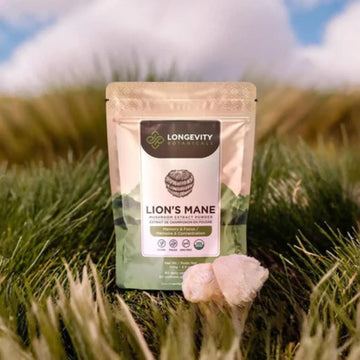
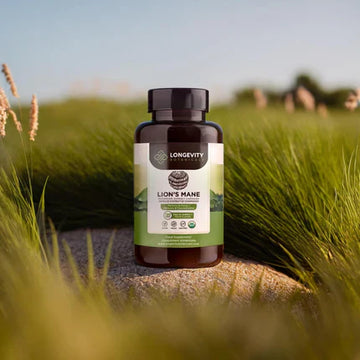


Recent research reveals that medicinal mushrooms can increase key immune cell activity by up to 40%, offering powerful natural support for both immune defense and cognitive function. These supplements provide scientifically backed options for health-conscious individuals seeking natural remedies. This guide breaks down how mushroom compounds work, which species target specific health goals, and how to choose quality supplements that deliver measurable benefits.
Table of Contents
- Introduction To Medicinal Mushrooms
- Bioactive Compounds In Medicinal Mushrooms And How They Work
- Immune System Modulation By Medicinal Mushrooms
- Cognitive Health Benefits And Mechanisms
- Common Misconceptions About Medicinal Mushrooms
- Choosing And Using Medicinal Mushroom Supplements
- Summary And Next Steps
- Explore Quality Medicinal Mushroom Supplements At LongevityBotanicals
- FAQ
Key Takeaways
| Point | Details |
|---|---|
| Beta-glucans boost immunity | These compounds activate macrophages and increase immune cell activity by up to 40%. |
| Lion’s Mane enhances cognition | Stimulates nerve growth factor, leading to 20% improvement in cognitive test scores. |
| Different mushrooms target different pathways | Turkey Tail modulates adaptive immunity while Reishi focuses on innate immune responses. |
| Benefits require patience | Measurable improvements typically appear after 8+ weeks of consistent supplementation. |
| Quality varies significantly | Extraction methods and standardization greatly impact supplement effectiveness and bioavailability. |
Introduction to Medicinal Mushrooms
Medicinal mushrooms are fungal species used therapeutically for health benefits beyond basic nutrition. Unlike culinary mushrooms, these varieties contain concentrated bioactive compounds that support immune function, reduce inflammation, and enhance cognitive performance. For thousands of years, traditional medicine systems in Asia have relied on species like Reishi, Lion’s Mane, Turkey Tail, and Cordyceps for treating various health conditions.
Today’s health-conscious consumers increasingly turn to these natural supplements for boosting immunity with medicinal mushrooms and supporting brain health. The rising popularity stems from growing research validating traditional uses and demonstrating specific mechanisms of action. Modern extraction techniques now make these compounds more bioavailable than ever.
Four species dominate the medicinal mushroom market:
- Reishi: Used traditionally for stress relief and immune modulation
- Lion’s Mane: Prized for cognitive enhancement and nerve health
- Turkey Tail: Employed as immune support, particularly in adjunct cancer care
- Cordyceps: Valued for energy production and athletic performance
Each species offers unique compound profiles that target different physiological pathways. Understanding these differences helps you select supplements aligned with your specific health goals.
Bioactive Compounds in Medicinal Mushrooms and How They Work
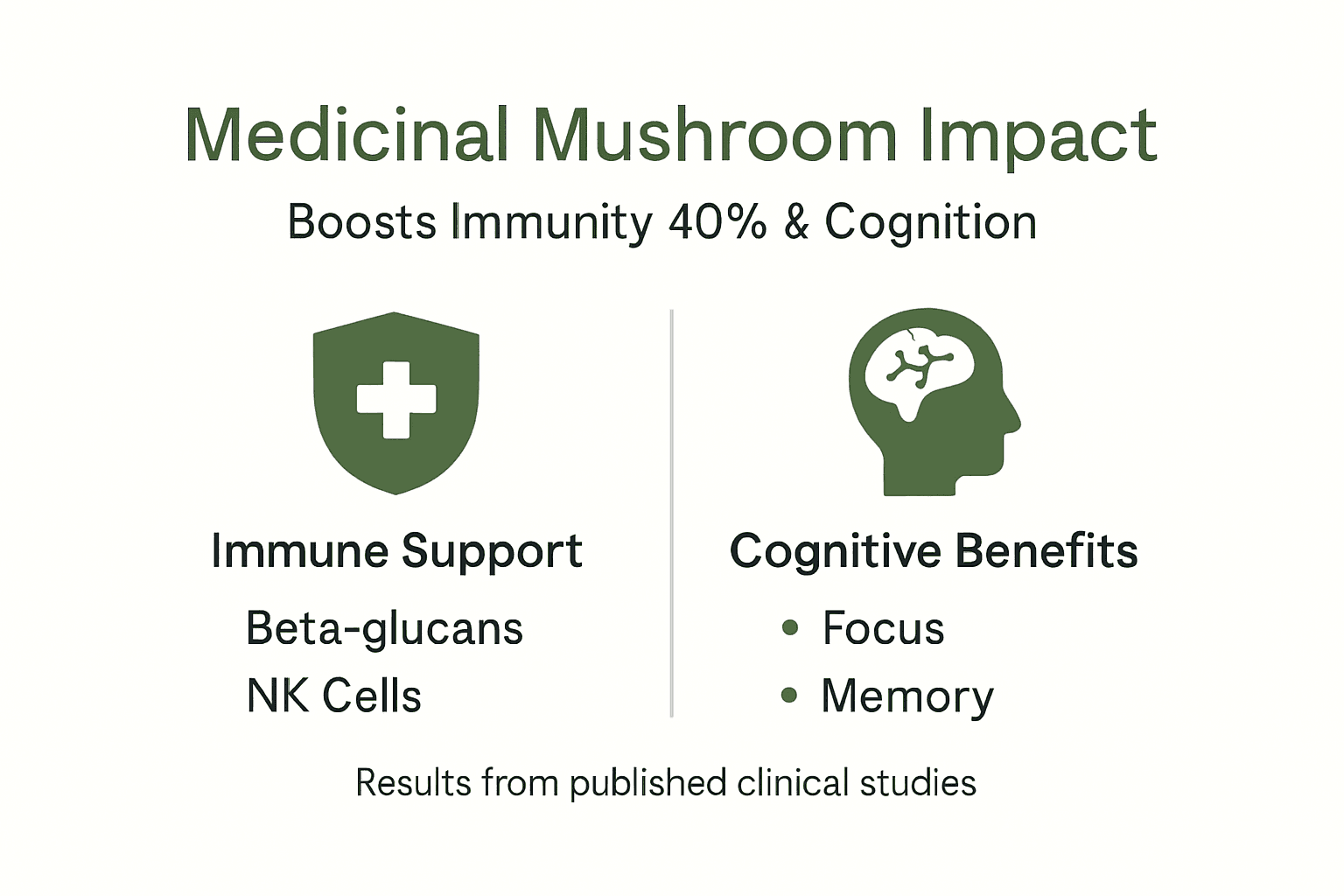
The therapeutic effects of medicinal mushrooms come from specific bioactive molecules, primarily polysaccharides, triterpenoids, and neurotrophic factors. These compounds interact with your body’s cellular receptors to trigger beneficial responses. Beta-glucans in medicinal mushrooms modulate innate immune responses by activating macrophages and natural killer cells, enhancing your body’s defense against infections and abnormal cells.
Polysaccharides, especially beta-glucans, represent the most studied immune-active compounds. These complex sugars bind to specific receptors on immune cells, triggering activation cascades. When macrophages encounter beta-glucans, they increase production of cytokines and boost their pathogen-clearing activity. Natural killer cells become more efficient at identifying and destroying compromised cells.
Reishi mushrooms contain high concentrations of triterpenoids, compounds with powerful anti-inflammatory properties. These molecules work differently than polysaccharides, modulating immune responses to prevent excessive inflammation. This dual action of activation and regulation creates balanced immune function rather than simple stimulation.
Lion’s Mane produces unique compounds called hericenones and erinacines. These molecules cross the blood-brain barrier and stimulate production of nerve growth factor, a protein essential for neuron health. By promoting NGF synthesis, Lion’s Mane supports neurogenesis and helps maintain cognitive function as you age.
Pro Tip: When shopping for supplements, look for products that list specific beta-glucan percentages (aim for 20-30%) and triterpenoid content on labels. These numbers indicate quality extraction and potency.
The concentration of bioactive compounds varies significantly between mushroom species and even between different parts of the same mushroom. The fruiting body typically contains higher polysaccharide levels than mycelium, which is why quality supplements specify their source material.
Immune System Modulation by Medicinal Mushrooms
Medicinal mushrooms enhance immune function through multiple coordinated mechanisms. Rather than simply boosting all immune activity, these compounds modulate responses to create more effective, balanced defense systems. Understanding these pathways helps explain why different mushrooms suit different health goals.

Mushroom polysaccharides activate your innate immune system, the first line of defense against pathogens. When macrophages encounter these compounds, they increase phagocytic activity and produce signaling molecules that alert other immune cells. Polysaccharide-K (PSK) from Turkey Tail mushrooms significantly improves natural killer cell activity, contributing to anti-cancer immune responses documented in clinical studies.
Natural killer cells patrol your body constantly, identifying and destroying infected or abnormal cells. Turkey Tail supplementation can increase NK cell activity by approximately 30%, making these cells more efficient at recognizing threats. This enhancement occurs without causing the hyperactivation that leads to autoimmune issues.
Reishi mushroom compounds reduce chronic inflammation by modulating cytokine production, which supports immune regulation and stress relief. Unlike Turkey Tail’s activation of adaptive immunity, Reishi primarily influences innate immune responses through anti-inflammatory pathways. This difference matters when selecting immune support by medicinal mushrooms for specific health conditions.
| Mushroom | Primary Immune Target | Key Polysaccharide | Triterpenoid Content |
|---|---|---|---|
| Turkey Tail | Adaptive immunity (T cells, NK cells) | PSK, PSP | Low |
| Reishi | Innate immunity (macrophages) | Beta-glucans | High |
| Chaga | Oxidative stress, inflammation | Beta-glucans | Moderate |
The table above illustrates how different species complement each other. Some practitioners recommend rotating mushrooms or using blends to address multiple immune pathways simultaneously. This approach provides comprehensive support rather than targeting a single mechanism.
Pro Tip: For immune support, choose supplements with standardized polysaccharide content above 20%. Third-party testing verification ensures you’re getting effective doses of active compounds.
Cognitive Health Benefits and Mechanisms
Medicinal mushrooms support brain health through several interconnected pathways. These natural compounds promote neurogenesis, enhance cellular energy production, and reduce neuroinflammation. The combination creates an environment where neurons thrive and cognitive performance improves.
Three primary mechanisms drive cognitive benefits:
-
Nerve Growth Factor Stimulation: Lion’s Mane mushroom stimulates nerve growth factor (NGF) synthesis, which supports neurogenesis and cognitive function improvement in humans. NGF proteins guide neuron development and help maintain existing brain cells.
-
Mitochondrial Energy Enhancement: Cordyceps enhances cellular energy production by increasing ATP synthesis in mitochondria, benefiting physical stamina and cognitive alertness. More ATP means neurons have the energy needed for optimal signaling and maintenance.
-
Inflammation Reduction: Chronic brain inflammation impairs cognitive function and accelerates age-related decline. Reishi’s anti-inflammatory triterpenoids cross the blood-brain barrier, reducing neuroinflammation and supporting mental clarity.
Clinical trials demonstrate that individuals with mild cognitive impairment who took Lion’s Mane supplements for 16 weeks showed approximately 20% improvement in cognitive test scores compared to placebo groups.
This improvement reflects measurable changes in memory, focus, and processing speed. The benefits appeared gradually over the study period and diminished when supplementation stopped, suggesting ongoing use maintains cognitive support.
For deeper insights on cognitive applications, explore research on Lion’s Mane cognitive benefits and its specific effects on aging brains. The combination of NGF stimulation and anti-inflammatory effects makes Lion’s Mane particularly valuable for maintaining cognitive health as you age.
Reishi’s indirect cognitive benefits come through stress reduction and improved sleep quality. By modulating cortisol levels and promoting relaxation, Reishi creates conditions where your brain can repair and consolidate memories effectively. Quality sleep remains essential for cognitive performance, making Reishi a valuable complement to direct nootropics like Lion’s Mane.
Common Misconceptions About Medicinal Mushrooms
Several persistent myths about medicinal mushroom supplementation create unrealistic expectations and poor purchasing decisions. Clarifying these misconceptions helps you approach supplementation with informed, realistic goals.
Contrary to the assumption that all medicinal mushrooms boost immunity by the same mechanism, different mushrooms engage distinct immune pathways. Turkey Tail primarily activates adaptive immunity through T cell and NK cell stimulation. Reishi focuses on innate immunity, modulating macrophage activity and reducing inflammatory signaling. This difference matters when selecting mushrooms for specific health conditions.
Three major misconceptions dominate consumer understanding:
-
Myth: All mushroom supplements work immediately. Reality: Clinical benefits require consistent use for at least 8 weeks. Your body needs time to accumulate bioactive compounds and respond with measurable physiological changes.
-
Myth: Any mushroom supplement provides equal benefits. Reality: Quality, extraction method, and bioavailability vary dramatically between products. Hot water extraction or dual extraction processes extract more bioactive compounds than simple grinding of dried mushrooms.
-
Myth: More mushrooms equal better results. Reality: Taking multiple species simultaneously without understanding their mechanisms may not provide additive benefits. Strategic selection based on your specific health goals proves more effective than random combinations.
Patience remains essential when starting mushroom supplementation. Unlike caffeine or sugar that provide immediate energy, mushroom compounds work by gradually modulating cellular function. You’re supporting long-term health changes, not seeking quick fixes.
Extraction quality dramatically impacts effectiveness. Raw mushroom powder contains bioactive compounds trapped in indigestible chitin cell walls. Your digestive system cannot break down these walls efficiently, limiting absorption. Hot water extraction breaks down chitin, releasing polysaccharides. Alcohol extraction captures triterpenoids. Dual extraction methods combine both approaches for comprehensive bioactive availability.
When choosing mushroom supplements effectively, verify extraction methods and standardization testing. Products listing specific beta-glucan percentages demonstrate quality control and potency verification. Generic “mushroom powder” products often lack these specifications and may deliver minimal active compounds.
Choosing and Using Medicinal Mushroom Supplements
Selecting effective mushroom supplements requires understanding quality markers and matching products to your health goals. Following a systematic approach ensures you invest in supplements that deliver measurable benefits.
Five essential steps guide effective supplementation:
-
Identify Your Primary Health Goal: Determine whether you’re targeting immune support, cognitive enhancement, stress management, or energy. This focus helps narrow species selection.
-
Select Appropriate Species: Match mushrooms to goals: Turkey Tail or Reishi for immunity, Lion’s Mane for cognition, Cordyceps for energy, or combinations addressing multiple areas.
-
Choose Proper Extraction: Prioritize hot water or dual extraction supplements. These methods maximize bioavailability of active compounds. Avoid simple powders unless specifically looking for whole food supplements with lower potency.
-
Commit to Adequate Duration: Long-term supplementation (minimum 8 weeks) with medicinal mushrooms is required to observe measurable immune or cognitive benefits, not immediate effects. Plan for at least 12 weeks to fully assess results.
-
Monitor Your Response: Track changes in energy, immune resilience, cognitive clarity, or other target areas. Individual responses vary, and monitoring helps optimize dosing and species selection.
Pro Tip: Always verify third-party testing for heavy metals and verify listed beta-glucan or triterpenoid levels. Reputable suppliers provide certificates of analysis showing compound concentrations and purity testing results.
Dosing varies by species and extraction concentration. Most clinical studies use 1-3 grams daily of extract standardized to specific compound levels. Starting at lower doses and gradually increasing helps you assess tolerance and individual response. Some people notice subtle effects within 2-3 weeks, while others require the full 8-12 weeks for measurable changes.
Purchasing from established suppliers ensures quality control throughout production. Choosing mushroom supplements for best results means verifying organic certification, extraction methods, and testing protocols. Budget supplements often use lower-quality source material or inadequate extraction, delivering minimal active compounds despite attractive pricing.
Timing supplementation with meals often improves absorption, particularly for capsules containing powdered extracts. The fat content in food helps absorb fat-soluble compounds, while the digestive process aids breakdown and assimilation of polysaccharides.
Consider consulting healthcare providers before starting supplementation, especially if you take medications or have existing health conditions. While medicinal mushrooms show excellent safety profiles, individual circumstances may require professional guidance. Quality suppliers like those at high-quality mushroom supplements provide detailed product information to support informed decisions.
Summary and Next Steps
Medicinal mushrooms offer scientifically supported natural options for immune enhancement and cognitive support. Understanding the distinct mechanisms helps you select species aligned with your health goals.
Key insights to remember:
- Beta-glucans and polysaccharides activate immune cells, increasing pathogen defense by up to 40%
- Lion’s Mane stimulates nerve growth factor, supporting neurogenesis and cognitive improvements
- Different mushrooms target different pathways: Turkey Tail for adaptive immunity, Reishi for innate immunity and stress
- Quality extraction methods and standardized compounds ensure effective supplementation
- Benefits require patience, typically appearing after 8+ weeks of consistent use
Incorporating medicinal mushrooms into your wellness routine provides cumulative benefits over time. These supplements work best as part of comprehensive health strategies including proper nutrition, exercise, and stress management. Monitor your response, adjust species or dosing as needed, and maintain realistic expectations about timelines.
If you experience significant health changes or have concerns, consult healthcare providers familiar with integrative approaches. They can help optimize supplementation within your broader health context and monitor for any interactions with existing treatments.
Explore Quality Medicinal Mushroom Supplements at LongevityBotanicals
LongevityBotanicals offers carefully curated mushroom capsule supplements and medicinal mushroom extracts designed for immune and cognitive support. Each product undergoes third-party testing for purity and potency, ensuring you receive verified concentrations of active compounds.
Our organic supplements use dual extraction methods to maximize bioavailability of both water-soluble polysaccharides and alcohol-soluble triterpenoids. This comprehensive approach delivers the full spectrum of beneficial compounds found in medicinal mushrooms. Every batch includes certificates of analysis documenting beta-glucan levels and confirming absence of contaminants.
Apply the insights from this guide by exploring our selection of single-species and blend formulations. Detailed product pages provide compound concentrations, sourcing information, and usage recommendations. For additional guidance, review our comprehensive resources on choosing mushroom supplements to make informed decisions aligned with your health goals.
FAQ
What are the best medicinal mushrooms for immune support?
Turkey Tail and Reishi rank as top choices for immune enhancement due to their unique polysaccharide profiles and extensive clinical validation. Turkey Tail excels at activating natural killer cells and supporting adaptive immunity, while Reishi modulates innate immune responses and reduces chronic inflammation. Both have demonstrated safety and efficacy in multiple human studies.
How long does it take to see benefits from mushroom supplements?
Measurable benefits typically appear after consistent daily use for at least 8 weeks, with optimal results often requiring 12-16 weeks. Clinical improvements noted after 8-16 weeks of supplementation in trials reflect the time needed for bioactive compounds to accumulate and trigger physiological adaptations. Immediate or short-term effects are uncommon and suggest placebo response rather than genuine compound action.
Are all medicinal mushroom supplements equally effective?
No, supplement effectiveness varies dramatically based on extraction methods, source material quality, and standardization. High-quality products use hot water or dual extraction to break down indigestible chitin and release bioactive compounds, then verify beta-glucan and triterpenoid levels through third-party testing. Simple mushroom powders or products without standardization often deliver minimal active compounds despite containing mushroom material. When selecting effective mushroom supplements, prioritize verified extraction methods and compound concentrations.
Can I take multiple medicinal mushrooms together?
Yes, combining different mushroom species can provide complementary benefits by targeting multiple physiological pathways. Many practitioners recommend blends that pair immune-focused mushrooms like Turkey Tail with cognitive enhancers like Lion’s Mane. However, understand each species’ mechanism to create strategic combinations rather than random mixes. Start with single species to assess individual responses before adding combinations.
Do medicinal mushrooms have side effects?
Medicinal mushrooms demonstrate excellent safety profiles in clinical studies, with side effects being rare and typically mild. Some individuals experience minor digestive discomfort when starting supplementation, which usually resolves within a few days. People with mushroom allergies should avoid these supplements. If you take immunosuppressant medications or have autoimmune conditions, consult healthcare providers before beginning mushroom supplementation, as immune-modulating effects may interact with treatments.


