



Feeling overwhelmed by endless wellness choices is more common than you think, especially if you care about what goes into your body. Health-conscious Americans and Canadians are searching for supplements supported by science, not hype. Evidence-based mushroom extracts stand out for their unique bioactive compounds like beta-glucans and polysaccharides, offering real support for brain function and immunity. This guide helps you cut through confusion, showing you exactly how to choose a mushroom supplement that matches your personal health goals.
Table of Contents
- Step 1: Identify Your Health Goals
- Step 2: Research Mushroom Types And Benefits
- Step 3: Evaluate Supplement Quality And Purity
- Step 4: Compare Brands And Check Certifications
- Step 5: Verify Effectiveness And Monitor Results
Quick Summary
| Insights | Explanation |
|---|---|
| 1. Identify Your Health Goals | Define specific health objectives to choose the right mushroom supplement tailored to your needs. |
| 2. Research Mushroom Types | Learn about different mushroom species and their unique health benefits to find the most effective option. |
| 3. Assess Supplement Quality | Check labels for fruiting body sources, extraction ratios, and third-party testing to ensure potency. |
| 4. Compare Brands Thoroughly | List brands, check certifications and reviews to identify reputable products and avoid misrepresentation. |
| 5. Monitor Results Systematically | Track your health changes over time to evaluate the effectiveness of the supplement and make informed decisions. |
Step 1: Identify Your Health Goals
Before you choose a mushroom supplement, get clear on what you actually want to achieve. This step matters because the right supplement depends entirely on your specific health priorities. Mushroom extracts work best when matched to your actual needs, not generic “wellness.”
Start by asking yourself what you’re genuinely struggling with or want to improve. Are you dealing with brain fog at 3 p.m.? Fighting seasonal sniffles every winter? Looking for better sleep quality? Or maybe you want sharper focus for work projects?
Here are the most common health goals people target with mushroom supplements:
- Immune support - strengthening your body’s defense against seasonal challenges
- Mental clarity - reducing brain fog, sharpening focus, or improving concentration
- Energy levels - addressing fatigue without relying on caffeine
- Sleep quality - falling asleep faster or sleeping more deeply
- Stress management - feeling calmer during busy periods
- Athletic recovery - supporting muscle function and endurance
Be as specific as possible. “Feel healthier” is too vague. “I want sustained mental energy for 8-hour work days without afternoon crashes” is actionable. This precision helps you avoid wasting money on supplements that don’t match your actual situation.
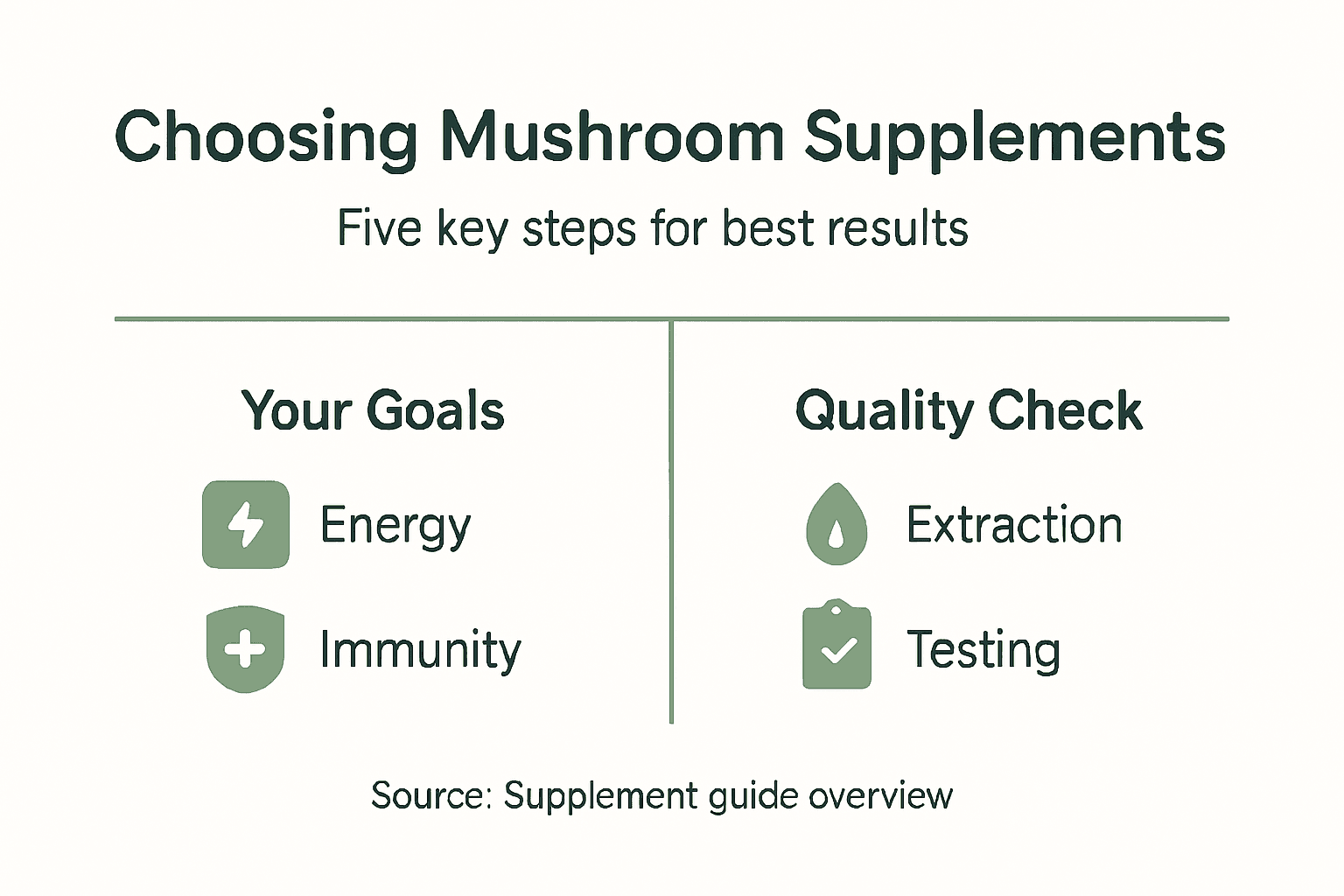
Different mushrooms target different outcomes. Lion’s Mane supports cognitive function. Reishi promotes relaxation. Turkey Tail strengthens immunity. Cordyceps enhances energy. When you know your goal first, identifying the right supplement type becomes much simpler.
Write down your top 1-3 health priorities. Rank them by importance. This clarity transforms supplement shopping from guesswork into informed decision-making.
Know your goal before you pick your mushroom. The supplement can’t work if it’s not designed for what you actually need.
Pro tip: Test one primary goal at a time rather than trying to solve everything simultaneously. This lets you track results clearly and identify which supplements genuinely work for your body.
Step 2: Research Mushroom Types and Benefits
Now that you know your health goal, it’s time to match it with the right mushroom species. Different mushrooms contain different bioactive compounds that create different health effects. Your research here determines whether your supplement actually works for your needs.
Start by learning about the main mushroom types used in supplements. Each one has specific strengths based on its nutrient profile and chemical composition. Mushrooms contain bioactive compounds like polysaccharides and beta-glucans that trigger specific health benefits in your body.
Here are the most popular medicinal mushrooms and what they target:
- Lion’s Mane - supports cognitive function, focus, and mental clarity
- Reishi - promotes relaxation, stress relief, and immune modulation
- Turkey Tail - strengthens immune system and supports gut health
- Cordyceps - enhances energy levels and athletic performance
- Chaga - provides antioxidant support and immune strengthening
- Shiitake - offers immune support and cardiovascular benefits
Read the research behind your specific goal. If you want better sleep, Reishi has strong evidence. For focus at work, Lion’s Mane studies show cognitive improvements. For immunity, Turkey Tail and Chaga both have documented benefits. Don’t just assume all mushroom supplements do the same thing.
To help you quickly match popular mushroom species with their unique health effects, see the summary below:
| Mushroom Type | Primary Benefit | Key Compounds |
|---|---|---|
| Lion’s Mane | Cognitive support | Hericenones, Erinacines |
| Reishi | Stress relief, sleep aid | Triterpenes, Beta-glucans |
| Turkey Tail | Immune and gut support | Polysaccharopeptides |
| Cordyceps | Energy and stamina | Cordycepin, Adenosine |
| Chaga | Antioxidant, immunity | Polyphenols, Beta-glucans |
| Shiitake | Cardiovascular, immunity | Lentinan, Eritadenine |
Look for supplements that specify which mushroom species they contain and in what concentration. Vague labels like “mushroom blend” tell you nothing about potency or targeted benefits. The extraction method and nutrient concentration directly affect how well the supplement works for your body.
Compare 2-3 options within your target category. Write down which mushroom appears most relevant to your goal. This research step prevents wasting money on supplements that don’t match your health priorities.
Match your mushroom to your goal. The best supplement is useless if it targets a different health outcome than what you actually need.
Pro tip: Look for supplements that list the fruiting body source (not just mycelium) and include extraction ratios, which tell you how concentrated the active compounds actually are.
Step 3: Evaluate Supplement Quality and Purity
Not all mushroom supplements are created equal. Some products contain mostly starch and grain fillers with minimal actual mushroom content. Learning to spot quality differences saves you money and ensures you actually get the health benefits you’re paying for.

Start by checking what source material the supplement uses. Fruiting body supplements come from the actual mushroom cap and stem where bioactive compounds concentrate. Mycelium supplements use the root structure, often grown on grain. Many cheap products use mycelium on grain, which means you’re mostly getting starch instead of medicinal compounds.
Look for these quality indicators on the product label:
- Fruiting body source listed as the primary ingredient
- Extraction ratio clearly stated (like 10:1 or 8:1)
- Beta-glucan percentage disclosed or testable
- Third-party testing verification from independent labs
- Country of origin for sourcing transparency
- No grain fillers or added starches in the ingredient list
Understand what extraction ratio means. A 10:1 ratio means ten pounds of mushrooms were used to make one pound of extract, concentrating the active compounds. Higher ratios indicate more potent products. Low-quality supplements often don’t list this at all.
Check if the manufacturer uses enzymatic testing to verify beta-glucan content. This proves the supplement actually contains real medicinal mushroom compounds, not just filler. Beta-glucans are the bioactive molecules responsible for immune and cognitive benefits.
Read third-party test results if available. Reputable brands submit to independent labs that test for potency, contaminants, and heavy metals. This transparency shows the company stands behind their product quality.
For evaluating mushroom supplement quality, use the table below to compare key product label factors:
| Quality Indicator | Why It Matters | What to Look For |
|---|---|---|
| Fruiting body source | Higher active compound levels | Listed before mycelium |
| Extraction ratio | Indicates potency | Numbers like 10:1, 8:1 |
| Beta-glucan content | Core for immune benefits | Percentage or lab test |
| Third-party testing | Verifies purity and safety | Independent lab results |
Compare price per serving within your target category. Suspiciously cheap options often cut corners on sourcing or extraction. Quality mushroom supplements cost more because they use better ingredients and proper processing methods.
Quality matters more than quantity. A high-potency supplement at higher cost beats a cheap product filled with grain and starch.
Pro tip: Contact the manufacturer directly and ask about their extraction process, testing protocols, and fruiting body sourcing. Companies confident in their quality answer these questions promptly.
Step 4: Compare Brands and Check Certifications
With multiple brands offering mushroom supplements, you need a system to compare them fairly. Certifications and third-party verification separate trustworthy companies from those cutting corners. This step takes time but protects your investment in your health.
Start by listing 3-5 brands that match your health goal and budget range. Write down their key details side by side so you can spot differences quickly. Comparison prevents impulse buying and helps you spot red flags.
Here’s what to check for each brand:
- Certifications like USP, NSF, or ConsumerLab verification
- Ingredient sourcing where mushrooms are grown and processed
- Customer reviews on independent sites, not just their website
- Company transparency about testing and quality control
- Price per serving to assess true value
- Return policy in case the product doesn’t work for you
Look for third-party certifications that matter. USP Verified means the product was tested for strength and purity. NSF Certified ensures quality and accurate labeling. ConsumerLab independently tests supplements and publishes results. These certifications cost companies money, so brands with them usually take quality seriously.
Check customer reviews on multiple platforms, not just the brand’s website. Real users describe whether they actually felt results, experienced side effects, or noticed quality issues. Look for patterns in reviews rather than individual opinions.
Research the company itself. How long have they been in business? Do they publish research on their products? Are they responsive to customer questions? Established companies with transparent practices tend to deliver better products than newer brands making wild claims.
Compare the final cost per dose across your top choices. A premium brand at higher cost might offer better value than a cheaper alternative if it has higher potency and better sourcing. Calculate cost by dividing the price by the number of servings per container.
Understand that choosing quality mushroom extracts requires balancing price, potency, and trustworthiness. No single factor determines the best choice.
Brand reputation and certifications reflect real quality differences. A certified supplement from a transparent company is worth paying more for.
Pro tip: Start with one brand and use it for at least 30 days before switching. Most mushroom supplements require consistent use to show benefits, so jumping between brands prevents you from seeing real results.
Step 5: Verify Effectiveness and Monitor Results
Buying a mushroom supplement is just the beginning. The real test happens when you actually use it and track whether it delivers the results you’re seeking. Monitoring your experience tells you if this supplement is working for your body.
Start with realistic expectations. Mushroom supplements work gradually, not instantly. Most people notice changes after 2-4 weeks of consistent daily use, though some effects take 6-8 weeks. Your body isn’t a light switch that flips on immediately.
Understand that mushroom supplement effectiveness varies based on individual factors and study design. Scientific research shows promise for immune support, cognitive enhancement, and stress relief, but results aren’t identical for everyone. Your genetics, diet, sleep, and stress levels all influence how well a supplement works.
Track your results systematically. Choose specific metrics that match your health goal:
- For cognitive support: Note your afternoon brain fog levels, focus duration, or work productivity
- For immune support: Track how many seasonal sniffles or illnesses you experience
- For sleep quality: Record when you fall asleep, how many times you wake, and morning alertness
- For energy levels: Rate your daily energy on a scale of 1-10 before and after starting
- For stress management: Notice your anxiety levels during typically stressful situations
Keep a simple log in your phone or notebook. Write down the date, what you observed, and any side effects. This removes guesswork from whether the supplement actually works. After 30 days, review your log and look for patterns.
Give supplements adequate time before deciding they don’t work. While some clinical trials show mixed results requiring careful interpretation, individual response varies significantly. Two months of consistent use is a fair test period.
If results don’t appear after 60 days, consider whether dosage, timing, or consistency might be the issue. Taking your supplement with food and at the same time daily improves absorption and consistency.
Track your experience. Without monitoring, you won’t know if the supplement actually works for you.
Pro tip: Take photos or write detailed notes about your baseline before starting, then compare your condition after 30 and 60 days. Tangible evidence beats vague feelings of wellness.
Find Your Perfect Mushroom Supplement at Longevity Botanicals
Choosing the right mushroom supplement can feel overwhelming with so many options and health goals to consider. Whether your priority is boosting immune support, sharpening mental clarity, improving sleep quality, or managing stress effectively, Longevity Botanicals is here to simplify that journey. Our carefully curated collection includes high-quality products that clearly state their mushroom types and extraction potency to match your specific needs.
Explore our range of Mushroom Powder Supplements – LongevityBotanicals for pure, potent extracts and convenient options. If you prefer a synergistic approach, try our Mushroom Blend Extract Supplements – LongevityBotanicals to harness combined benefits. Ready to add natural wellness to your daily routine? Visit Longevity Botanicals today, make an informed choice, and start tracking your health transformation. The right supplement tailored to your goals is just a click away.
Frequently Asked Questions
What should I consider when identifying my health goals for mushroom supplements?
Before selecting a mushroom supplement, clearly define your specific health goals. Are you looking for immune support, better sleep, or enhanced mental clarity? Write down your top 1-3 priorities to guide your supplement choices and improve effectiveness.
How do I research different mushroom types and their benefits?
Research the main types of mushrooms used in supplements to find ones that align with your health goals. For example, Lion’s Mane is known for cognitive support, while Reishi promotes relaxation. Create a list of mushrooms paired with their benefits to help focus your search.
How can I evaluate the quality and purity of mushroom supplements?
To assess quality, check if the supplement uses the fruiting body rather than mycelium, and look for extraction ratios on the label. Ensure the product is free from grain fillers and has been third-party tested to verify potency and safety. Prioritize supplements with clear quality indicators to maximize your investment.
What certifications should I look for when comparing mushroom supplement brands?
Look for certifications like USP Verified or NSF Certified that indicate the product’s quality and accurate labeling. These certifications show that the brand has undergone rigorous testing, ensuring you get a reliable supplement. Use these as a benchmark to filter out lower-quality options.
How long should I take a mushroom supplement before determining its effectiveness?
Most people typically notice changes within 2-4 weeks of consistent daily use, though some benefits may take up to 8 weeks. Keep a log of your experiences and review your progress after 30 days to determine if the supplement is working for you.
What records should I keep to monitor the results of my mushroom supplement?
Track specific metrics relevant to your health goals, such as energy levels, immune support, or sleep quality. Maintain a simple log detailing your observations, including dates and any side effects, to help you see patterns and make informed decisions about continuing the supplement.
Recommended
- 7 Essential Tips for Choosing Mushroom Extracts – LongevityBotanicals
- Mushroom Extract vs Powder: Choosing for Optimal Health – LongevityBotanicals
- How to Use Mushroom Supplements for Natural Wellness – LongevityBotanicals
- Master the Mushroom Blending Process for Optimal Wellness – LongevityBotanicals


