

Standardized Mushroom Extract: Potency, Purity, Explained
TL;DR:
- Standardized mushroom extracts contain verified levels of active compounds like beta-glucans and triterpenes.
- Extraction methods and source material significantly influence supplement potency and target benefits.
- Check labels for beta-glucan percentages, source details, extraction methods, and third-party testing for quality assurance.
Most mushroom supplements on store shelves look nearly identical. Same brown powder, similar claims, comparable prices. But extraction methods vary widely among products, and that variation directly affects what you’re actually getting in each capsule. The word ‘standardized’ on a label sounds reassuring, but without knowing what it means, you can’t tell a high-potency extract from a diluted product with minimal active compounds. This guide breaks down what standardization actually involves, how extraction methods shape potency, and what to look for when reading a label so you can make informed choices for your immune health and overall wellness.
Table of Contents
- What is standardized mushroom extract?
- How standardized mushroom extracts are made
- Fruiting body vs. mycelium: What’s inside your supplement
- Health benefits: What does the science actually support?
- How to read a mushroom supplement label with confidence
- Our perspective: Why ‘standardization’ isn’t a guarantee (and what actually matters)
- Ready to reap the benefits? Explore our standardized mushroom extracts
- Frequently asked questions
Key Takeaways
| Point | Details |
|---|---|
| Real standardization | Only extracts tested for beta-glucan or triterpene content can guarantee consistent potency. |
| Source matters | Fruiting body extracts are richer in immune-active compounds than mycelium-on-grain products. |
| Trust third-party verification | Look for lab testing and clear labels to avoid adulterated or diluted mushroom supplements. |
| Science-backed benefits | Beta-glucans support immune function and energy, but effects depend on quality and dose. |
What is standardized mushroom extract?
A standardized extract is one that has been processed and tested to contain a confirmed, consistent level of specific bioactive compounds. In mushroom supplements, those compounds are primarily beta-glucans (immune-modulating polysaccharides) and triterpenes (compounds linked to adaptogenic and anti-inflammatory effects).
This is different from a regular mushroom powder or a non-standardized extract. A regular mushroom powder is simply dried and ground mushroom material. It may contain beneficial compounds, but nobody has verified how much. A non-standardized extract has been through some processing, but the final product hasn’t been tested to confirm active compound levels.
Here’s what standardization actually covers:
- Beta-glucans: The primary immune-active compounds in most medicinal mushrooms. Standardized extracts target beta-glucans specifically, not just total polysaccharides, which is a critical distinction.
- Triterpenes: Found especially in Reishi. These are fat-soluble compounds linked to stress response and liver support.
- Erinacines and hericenones: Unique to Lion’s Mane, these compounds are associated with nerve growth factor stimulation.
One common labeling issue: many products list “polysaccharides” instead of “beta-glucans.” Polysaccharides include starch, which is not bioactive in the same way. A product claiming 40% polysaccharides might have very low actual beta-glucan content. That’s a meaningful difference when you’re looking for immune modulation and mushroom benefits.
Third-party testing is the clearest signal of a standardized product. A certificate of analysis (COA) from an independent lab confirms what’s on the label actually matches what’s inside.
Understanding the benefits of herbal extracts starts with knowing whether those extracts have been verified. Without that verification, you’re guessing.
Pro Tip: When evaluating a product, search for the COA on the brand’s website before purchasing. If it’s not available or the brand won’t share it, that’s a clear signal to look elsewhere.
How standardized mushroom extracts are made
The extraction method used determines which compounds end up in your supplement and at what concentration. Not all methods work equally well for all mushrooms or all target compounds.
Here are the four main extraction approaches used in mushroom supplement production:
- Hot water extraction (HWE): The most common method. Mushroom material is simmered in hot water, which pulls out water-soluble compounds like beta-glucans. Effective for immune-support products.
- Ethanol extraction: Uses alcohol as the solvent. Targets fat-soluble compounds like triterpenes. Essential for Reishi extracts where triterpene content matters.
- Dual extraction: Combines both HWE and ethanol extraction. Captures both water-soluble and fat-soluble compounds in one product. Common in premium Reishi and Chaga extracts.
- Microwave-assisted extraction (MAE) and ultrasound-assisted extraction (UAE): Newer techniques that use energy to speed up solvent penetration. Different extraction methods yield varying levels of active compounds and overall quality.
| Extraction method | Target compounds | Best for | Typical beta-glucan yield |
|---|---|---|---|
| Hot water (HWE) | Beta-glucans | Immune support | 20-40% |
| Ethanol | Triterpenes | Adaptogen/stress | Low beta-glucans |
| Dual extraction | Beta-glucans + Triterpenes | Full-spectrum Reishi, Chaga | 15-30% |
| MAE/UAE | Varies | Specialized applications | Variable |
Method selection directly shapes the supplement’s function. A hot water extract of Turkey Tail will be rich in beta-glucans and well-suited for immune support. An ethanol-only Reishi extract will have higher triterpene levels but lower beta-glucan content, making it better suited for adaptogenic use.
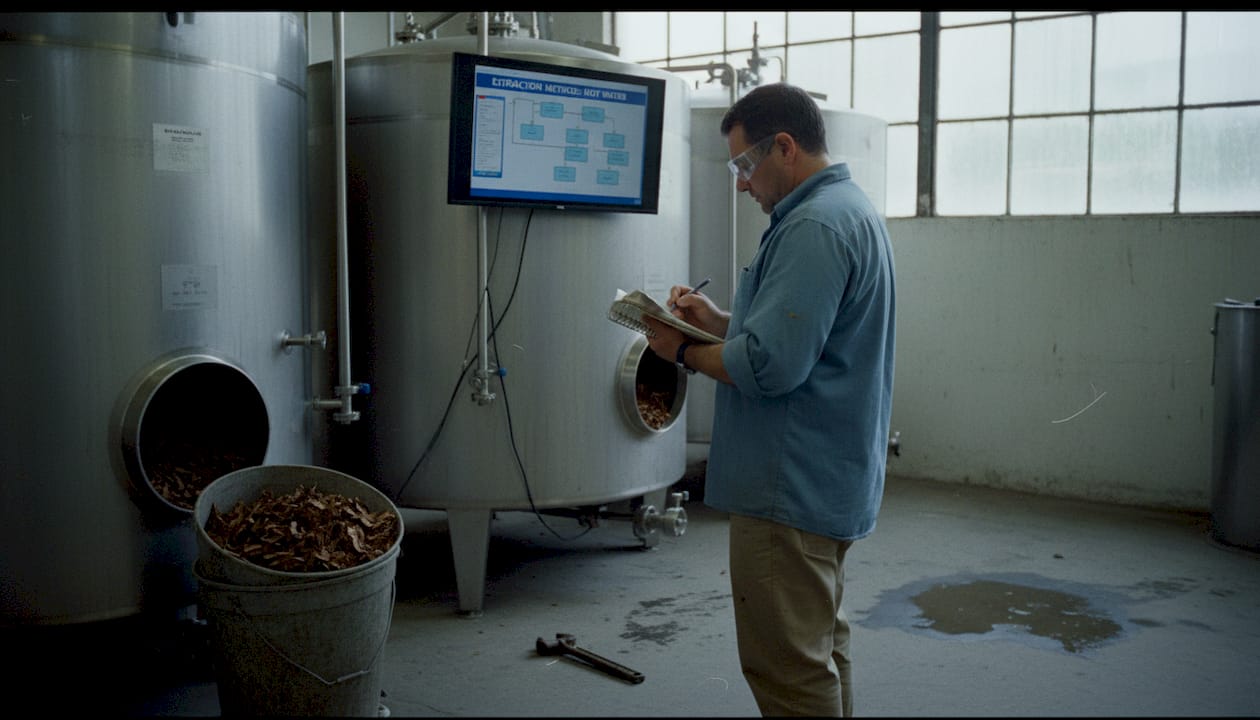
For defining supplement quality, the extraction method isn’t a minor detail. It’s foundational.
Pro Tip: Always look for products that specify their extraction method on the label or product page. If a brand doesn’t disclose this, the product may not be standardized at all.
Fruiting body vs. mycelium: What’s inside your supplement
Beyond extraction method, the source material matters enormously. Mushroom supplements are made from one of two parts of the fungus: the fruiting body (the visible mushroom cap and stem) or the mycelium (the root-like network that grows through substrate).
Think of it this way: the fruiting body is the mature, concentrated part of the organism. The mycelium is the vegetative network, often grown on grain substrate in commercial production.
This distinction has real consequences for potency:
- Fruiting body: Richer in beta-glucans, less diluted by starch. Typical beta-glucan content: 25-40%.
- Mycelium on grain: Often contains significant amounts of grain starch from the growing medium. Typical beta-glucan content: 1-5%.
| Source | Beta-glucan content | Starch content | Potency for immune use |
|---|---|---|---|
| Fruiting body extract | 25-40% | Minimal | High |
| Mycelium on grain | 1-5% | High | Low to moderate |
| Mycelium extract (grain-free) | 5-15% | Low | Moderate |
The grain filler problem is significant. Many mycelium products are grown on rice or oats, and the final powder includes the undigested grain. When a label lists “mycelium” without specifying grain-free or providing beta-glucan percentages, there’s a real chance you’re paying for starch.
That said, mycelium isn’t without value. Lion’s Mane mycelium contains erinacines, compounds that may support nerve growth factor production. These are not found in the fruiting body at meaningful levels.
For most immune-focused applications, fruiting body vs. mycelium comparisons consistently favor the fruiting body. But for cognitive support with Lion’s Mane, a dual-source or mycelium-inclusive product may offer broader compound coverage.
Health benefits: What does the science actually support?
Standardized mushroom extracts have been studied across a range of health outcomes. Here’s what the evidence actually shows, without overstating the results.
Top researched benefits, based on clinical and laboratory data:
- Immune modulation: Beta-glucans activate macrophages and natural killer cells. A meta-analysis shows significant immune improvements in trial participants using beta-glucan supplementation, including reduced fatigue and enhanced immune defense.
- Antiviral support: Turkey Tail and Chaga extracts have shown activity against certain viral pathogens in laboratory studies, though human clinical trials remain limited.
- Fatigue reduction: Cordyceps extracts have been studied for physical performance and fatigue, with some trials showing improved oxygen utilization and reduced perceived effort.
- Gut-associated immune activity: Beta-glucans interact with gut-associated lymphoid tissue (GALT), which houses a significant portion of the body’s immune cells. This local activity supports broader immune readiness without requiring high systemic absorption.
Dose ranges in studies typically fall between 2-4 grams per day for immune and wellness outcomes. Some clinical insights on beta-glucans suggest benefits at lower doses, but potency of the extract matters as much as total dose weight.
For guidance on proper mushroom extract dosage, the key variable is always the actual beta-glucan content per serving, not just the milligrams of extract listed.
Pro Tip: A 500mg capsule of a 40% beta-glucan extract delivers more active compound than a 1,000mg capsule with no stated beta-glucan percentage. Always compare active compound content, not just serving size.
Realistic expectations matter here. Mushroom extracts support immune function over time. They are not fast-acting treatments for acute illness.
How to read a mushroom supplement label with confidence
Applying everything above comes down to a practical checklist. Here are five things to confirm before buying any mushroom supplement:
- Beta-glucan percentage listed: Look for a specific number, ideally 20% or higher for immune support. “Polysaccharides” alone is not sufficient.
- Source material declared: Fruiting body, mycelium, or both should be clearly stated. Avoid products that list only “mushroom extract” without specifying the part used.
- Extraction method noted: Hot water, dual extraction, or ethanol should appear on the label or product page.
- Third-party testing available: A COA from an independent lab confirms the label claims. Third-party testing and clear beta-glucan percentages are the clearest markers of a trustworthy product.
- No proprietary blend masking: If a product hides amounts behind a “proprietary blend,” you can’t verify what you’re getting.
For reference on standards for mushroom supplements, the industry is still developing consensus, which makes third-party verification even more important right now.
If a product omits beta-glucan data or lists only polysaccharides, contact the brand directly and ask for Megazyme beta-glucan assay results. This is the industry-recognized testing method for accurate beta-glucan quantification.
For a broader look at top immune-boosting mushrooms, knowing how to read labels helps you compare options across species and formats.
Pro Tip: Save time by searching “[brand name] COA” before buying. Brands that publish COAs readily are generally more transparent about their sourcing and testing practices.
Our perspective: Why ‘standardization’ isn’t a guarantee (and what actually matters)
The word ‘standardized’ has become a marketing term as much as a quality indicator. The industry lacks consensus standards, which means a brand can call a product standardized without meeting any universal benchmark. That’s worth knowing before you put too much weight on that label claim alone.
What actually matters is verified sourcing, transparent testing, and honest labeling. A brand that publishes COAs, discloses extraction methods, and lists specific beta-glucan percentages is demonstrating real quality commitment. A brand that uses vague terms like “full-spectrum” or “whole mushroom complex” without supporting data is not.
Mycelium products are often dismissed, but that’s an oversimplification. For Lion’s Mane specifically, mycelium-sourced erinacines offer cognitive support that fruiting body products may not match. The nuance matters.
For anyone starting out with mushroom supplements, the single most useful habit is checking science-backed supplement quality markers before choosing a product. Experienced users consistently say they wish they’d prioritized COA availability from the beginning rather than relying on marketing language.
Ready to reap the benefits? Explore our standardized mushroom extracts
If the label criteria above describe what you’re looking for, Longevity Botanicals offers a range of organic mushroom extracts that meet those standards. Each product includes clear beta-glucan percentages, declared source material, and third-party testing. There’s no guesswork involved. For those focused specifically on immune support mushroom supplements, the collection covers Reishi, Turkey Tail, Chaga, and Cordyceps in verified, potency-confirmed formats. Browse by mushroom type, benefit, or format to find the right fit for your wellness routine.
Frequently asked questions
What makes a mushroom extract ‘standardized’ versus regular extract?
A standardized extract is tested for specific active compounds like beta-glucans and verified for potency, typically by a third-party lab. Regular extracts may lack any reliable content verification, so you can’t confirm what you’re actually getting.
Is fruiting body always better than mycelium in extracts?
For immune support, fruiting body extracts typically contain significantly more beta-glucans. However, mycelium extracts from Lion’s Mane contain erinacines not found in the fruiting body, so the best choice depends on your specific wellness goals.
How do I know if a mushroom extract is high-quality?
Check the label for third-party testing documentation, a stated beta-glucan percentage of 20% or higher, and a clear declaration of fruiting body or grain-free mycelium as the source material.
What dose of standardized mushroom extract is effective?
Clinical studies commonly use 2-4 grams per day for immune and wellness outcomes, though doses from 300-3000mg have been studied depending on the mushroom species and target benefit. Active compound content per serving matters more than total weight.
Recommended
- Mushroom Extract vs Powder: Choosing for Optimal Health – LongevityBotanicals
- 7 Essential Tips for Choosing Mushroom Extracts – LongevityBotanicals
- Mushroom Extract Explained: Key Benefits and Uses – LongevityBotanicals
- Comprehensive Guide to Mushroom Extract Usage for Wellness – LongevityBotanicals
Related Posts

What Is a Fruiting Body? Mushroom Science Explained

Mushroom Allergenicity Explained: Symptoms and Safe Use

How to read mushroom supplement labels effectively

What is an anti-inflammatory mushroom? Benefits and uses

Mushroom supplement dos and don'ts: safe guide for wellness

Top 6 Best Mushroom Supplements 2026

Mushroom extract dosage guide for immune and brain support


