

Role of Fungi in Nature: Health and Ecosystem Impact
Navigating the search for natural immune and cognitive support can leave many health-conscious adults questioning what truly sets mushroom-based supplements apart. The Kingdom Fungi is not just a source for wellness products, but a uniquely complex group with over 150,000 described species that play vital roles in our world, from nutrient cycling to ecological balance. Understanding these remarkable organisms helps reveal why their bioactive compounds offer so much promise for strengthening immunity and supporting overall brain health.
Table of Contents
- Defining Fungi: Unique Kingdom And Misconceptions
- Major Types Of Fungi And Their Differences
- How Fungi Support Ecosystems And Soil Health
- Fungi’s Role In Human Health And Medicine
- Risks, Harmful Species, And Responsible Use
Key Takeaways
| Point | Details |
|---|---|
| Unique Characteristics of Fungi | Fungi are a distinct kingdom with heterotrophic nutrition, chitinous cell walls, and no photosynthesis, playing critical roles in ecosystems. |
| Diverse Phyla and Ecological Roles | There are over 150,000 described fungal species classified into major phyla, each contributing uniquely to nutrient cycling and plant symbiosis. |
| Impact on Ecosystem and Soil Health | Fungi are essential for maintaining soil health through nutrient cycling, improving soil structure, and supporting diverse ecosystems. |
| Risks and Benefits to Human Health | Fungi present both challenges, such as infections, and opportunities, including the development of antibiotics, necessitating careful management. |
Defining Fungi: Unique Kingdom and Misconceptions
The Kingdom Fungi represents a fascinating and complex biological realm that challenges our traditional understanding of living organisms. Molecular phylogenetic studies continue to reshape our comprehension of these remarkable life forms, revealing their extraordinary diversity and critical ecological importance.
Fungi occupy a unique position in the biological world, distinctly different from plants and animals. Their defining characteristics include:
- Heterotrophic nutrition: Unable to produce their own food like plants
- Chitinous cell walls: A structural feature unlike any other kingdom
- Absence of photosynthesis: Completely dependent on external organic matter
- Wide-ranging habitat adaptability: From microscopic yeasts to extensive underground networks
Fungal species diversity is astonishing, with over 150,000 described species spanning incredibly varied environments. These organisms play pivotal roles as decomposers, symbionts, and occasionally as pathogens, fundamentally influencing ecosystem dynamics.
Fungi are not plants, not animals, but a kingdom entirely unto themselves - complex, adaptive, and essential to global ecological balance.
Common misconceptions about fungi often stem from their alien-like biology and remarkable abilities. Many people mistakenly view fungi as simple, passive organisms, when in reality, they represent sophisticated life forms with intricate communication networks and remarkable survival strategies.
Pro tip: Learn to appreciate fungi as complex living systems that are far more than just mushrooms you see in the forest.
Major Types of Fungi and Their Differences
The Kingdom Fungi encompasses an incredibly diverse range of organisms with fascinating taxonomic complexities. Scientists estimate that between 2 to 3 million fungal species exist, each belonging to unique phylogenetic groups with remarkable characteristics and ecological roles.
Fungi are traditionally classified into several major phyla, each with distinctive features:
- Ascomycota (Sac Fungi): Largest fungal phylum, includes yeasts and molds
- Basidiomycota (Club Fungi): Produces mushrooms and other familiar fruiting bodies
- Zygomycota: Simple fungi found in soil and decaying organic matter
- Chytridiomycota: Primitive aquatic fungi with flagellated reproductive cells
- Glomeromycota: Essential mycorrhizal fungi forming symbiotic relationships with plant roots
Molecular phylogenetics research continues to refine our understanding of fungal taxonomy, revealing intricate evolutionary relationships and unique biological mechanisms. These classifications help scientists comprehend the extraordinary diversity of fungal life forms, ranging from unicellular yeasts to complex multicellular networks.
Not all fungi are alike - each group represents a unique evolutionary strategy for survival and reproduction.
Understanding these different types helps us appreciate fungi’s crucial roles in ecosystems, from decomposition to symbiotic partnerships with other organisms. Some fungi play critical roles in food production, while others can cause diseases, demonstrating their complex interactions with the living world.
To better understand the major groups of fungi, here’s a comparison of their key features and ecological roles:
| Fungal Phylum | Common Examples | Main Habitat | Ecological Role |
|---|---|---|---|
| Ascomycota | Yeasts, truffles | Soil, plants, decaying matter | Decomposers, some pathogens |
| Basidiomycota | Mushrooms, puffballs | Forests, grasslands | Decomposers, plant symbionts |
| Zygomycota | Bread molds | Soil, food, manure | Early decomposers |
| Chytridiomycota | Water molds | Aquatic environments | Breaks down organic matter |
| Glomeromycota | Arbuscular mycorrhizae | Plant roots, soil | Forms plant symbioses |
Pro tip: Explore the incredible diversity of fungi beyond just mushrooms by learning about different fungal phyla and their unique characteristics.
How Fungi Support Ecosystems and Soil Health
Fungi are the unsung heroes of ecosystem sustainability, playing a critical role in maintaining soil ecosystem services. These remarkable organisms are fundamental to soil health, acting as nature’s recyclers and ecosystem engineers through complex biological processes that support environmental resilience.
The remarkable contributions of fungi to ecosystem health include:
- Nutrient Cycling: Breaking down organic matter and releasing essential minerals
- Soil Structure: Creating stable soil aggregates that improve water retention
- Carbon Sequestration: Capturing and storing carbon in underground networks
- Plant Symbiosis: Forming collaborative relationships that enhance plant nutrition
- Biodiversity Support: Creating habitats and supporting microbial communities
Enzymatic capabilities of soil fungi enable them to decompose complex organic substrates that other organisms cannot process. This unique ability allows fungi to transform dead organic matter into nutrients, effectively regenerating soil fertility and supporting plant growth in diverse environmental conditions.
Fungi are not just decomposers - they are the architects of ecosystem resilience and environmental regeneration.
Environmental factors like temperature, moisture, and soil composition directly influence fungal diversity and activity. Some fungi can survive in extreme conditions, making them critical for ecosystem adaptation and sustainability. Their intricate underground networks, known as mycelium, connect different plant species and facilitate nutrient exchange in ways scientists are only beginning to understand.
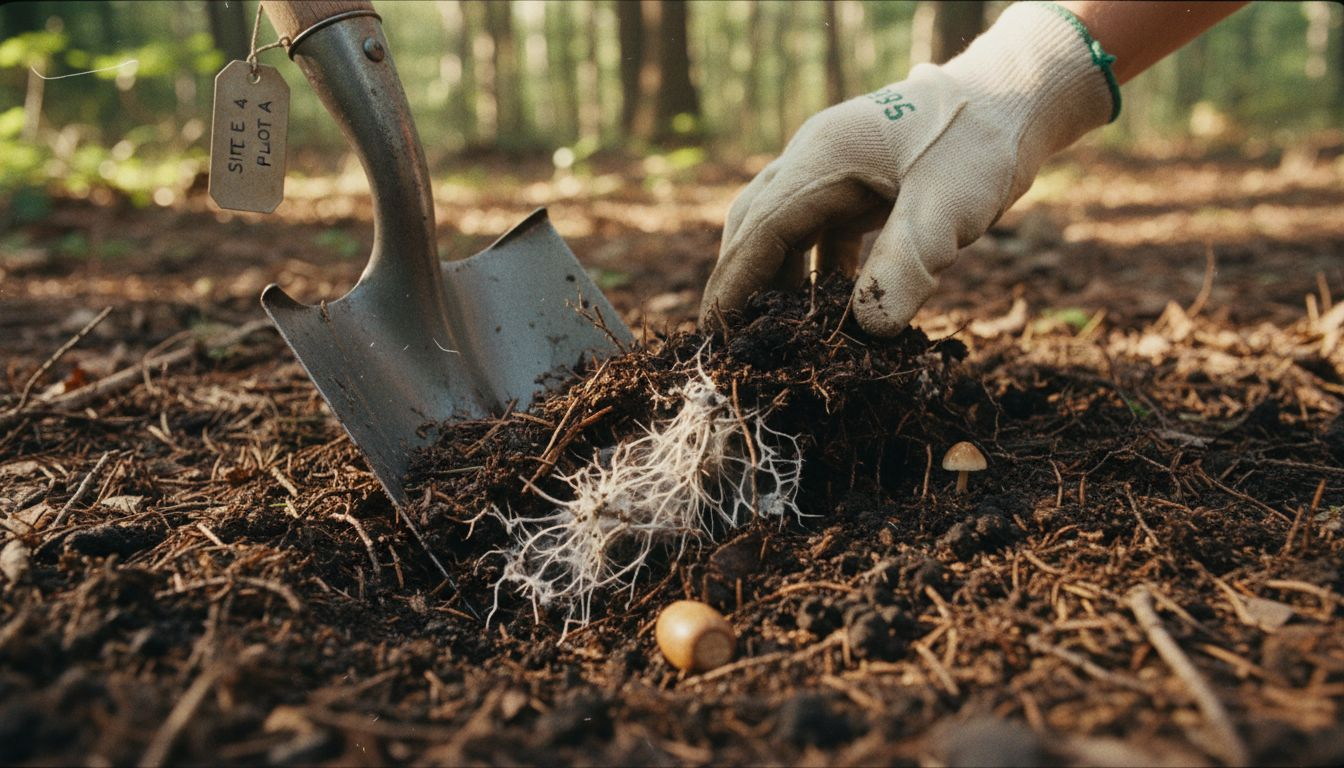
Pro tip: Observe the forest floor and appreciate the complex fungal networks working silently beneath your feet to sustain life.
Fungi’s Role in Human Health and Medicine
Fungi have a complex and profound relationship with human health, simultaneously presenting both challenges and opportunities in medical science. Global fungal diseases now impact over a billion people worldwide, ranging from mild allergic reactions to life-threatening systemic infections.
The medical significance of fungi encompasses multiple critical domains:
- Pharmaceutical Production: Source of antibiotics and critical medicinal compounds
- Infectious Disease Management: Causing and potentially treating complex health conditions
- Immunological Research: Providing insights into immune system interactions
- Therapeutic Compound Development: Generating novel medical treatments
- Metabolic Understanding: Exploring fungal metabolites with health implications
Medical research strategies increasingly recognize fungi’s dual nature in human health. Some fungal species pose significant infection risks, particularly for immunocompromised individuals, while others offer breakthrough therapeutic potential through unique metabolic compounds and biological mechanisms.
Not all fungi are harmful - many represent untapped potential for revolutionary medical discoveries.
Climate change and environmental shifts are dramatically influencing fungal distribution and their potential health impacts. Researchers are developing integrated approaches to understand fungal interactions with human physiology, seeking to mitigate risks while leveraging their remarkable biological capabilities for medical innovations.
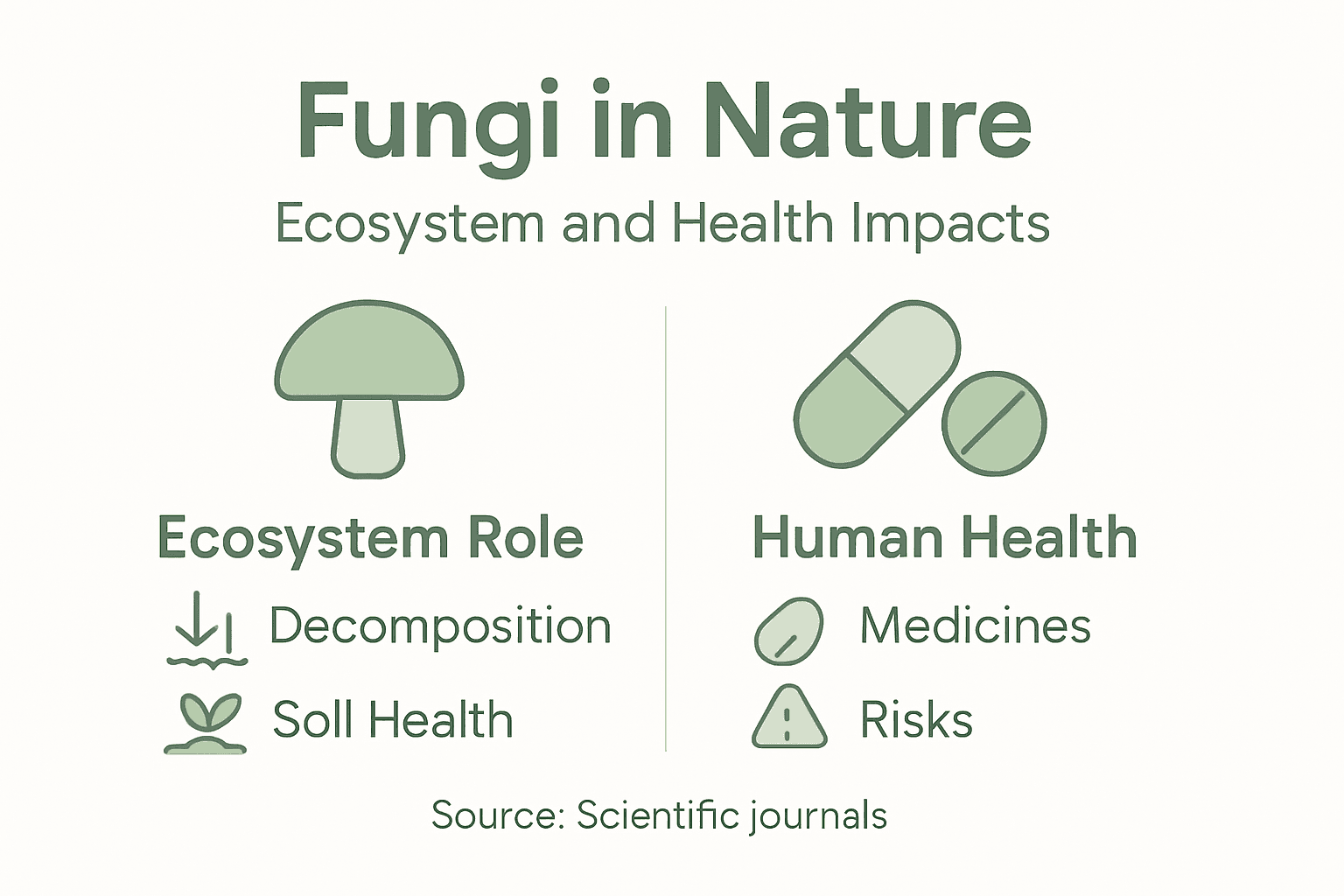
Pro tip: Stay informed about emerging fungal research and consult healthcare professionals about potential fungal-based treatments.
Risks, Harmful Species, and Responsible Use
Fungi present a complex landscape of potential risks and benefits that demand careful scientific understanding and responsible management. Global health authorities have identified specific fungal species that pose significant public health challenges, emphasizing the critical need for comprehensive risk assessment and monitoring.
The most concerning fungal risks include:
- Pathogenic Species: Candida, Aspergillus, and Cryptococcus
- Immunocompromised Vulnerability: Higher infection risks for vulnerable populations
- Antifungal Resistance: Emerging strains challenging medical treatments
- Toxin Production: Potential contamination of food and environmental systems
- Ecological Disruption: Invasive fungal species threatening biodiversity
Biosafety guidelines are essential for managing fungal risks in environmental and industrial applications. These protocols help control potential pathogenicity, manage toxin production, and minimize ecological impacts while supporting responsible fungal research and utilization.
Understanding fungal risks is not about fear, but about intelligent, scientific management of biological diversity.
The increasing complexity of fungal interactions with human health and ecosystems requires multidisciplinary approaches. Researchers must balance the potential benefits of fungal applications with rigorous safety protocols, ensuring that scientific exploration does not compromise human or environmental well-being.
Here is a summary of ways fungi affect both the environment and human society:
| Area | Positive Impacts | Negative Impacts |
|---|---|---|
| Ecosystems | Nutrient cycling, plant partnerships | Crop diseases, biodiversity loss |
| Soil Health | Builds structure, holds water | Depletes nutrients if mismanaged |
| Human Health | Antibiotic production, therapies | Infections, toxin production |
| Industry | Food processing, biotechnology | Product spoilage, contamination |
Pro tip: Always consult professional healthcare providers before experimenting with or consuming unfamiliar fungal species.
Discover the Power of Fungi for Your Health and Wellness
The article highlights the vital role fungi play in both ecosystem balance and human health, revealing how these complex organisms support immune function, nutrient absorption, and overall resilience. If you are seeking natural ways to harness the benefits of powerful mushrooms like Reishi and Lion’s Mane, understanding fungal diversity and their medicinal properties can transform your wellness journey.
Explore our carefully crafted collection of mushroom supplements at Longevity Botanicals to experience targeted support for immune health, cognitive function, and stress relief. Each product draws from nature’s intelligence, offering you the chance to strengthen your body with the very fungi that sustain ecosystems globally. Don’t wait to embrace this natural advantage for your health. Visit our store today and start your path toward enhanced vitality.
Frequently Asked Questions
What role do fungi play in nutrient cycling in ecosystems?
Fungi break down organic matter, releasing essential nutrients back into the soil, which supports plant growth and overall ecosystem health.
How do fungi contribute to soil health and structure?
Fungi help create stable soil aggregates, improving water retention and soil aeration, which are crucial for plant roots and overall soil ecosystem functionality.
What is the relationship between fungi and human health?
Fungi can cause infections in vulnerable populations but also provide valuable medicinal compounds like antibiotics, highlighting their complex relationship with human health.
How can fungi be beneficial in agriculture?
Fungi form symbiotic relationships with plant roots, enhancing nutrient uptake and supporting crop health, which can lead to increased agricultural yields.
Recommended
- What Is Mycelium and Why It Matters in Wellness – LongevityBotanicals
- Soil Doctors: Mycoremediation for Cleaner Farmland – LongevityBotanicals
- The Benefits and Risks of Mushroom Mycelium – LongevityBotanicals
- How Mushrooms Might Sit Closer to Animals Than Plants – LongevityBotanicals
- The Science of Immune Support – Nutribliss Inc.
- Do “Shrooms” Show Up On Drug Tests?
Related Posts

What Is a Fruiting Body? Mushroom Science Explained

Mushroom Allergenicity Explained: Symptoms and Safe Use

How to read mushroom supplement labels effectively

What is an anti-inflammatory mushroom? Benefits and uses

Standardized Mushroom Extract: Potency, Purity, Explained

Mushroom supplement dos and don'ts: safe guide for wellness

Top 6 Best Mushroom Supplements 2026


