


You’ve heard Reishi mushroom can boost your immunity, but does it really work that way? Many believe Reishi simply ramps up immune activity, but the science tells a different story. Reishi, known scientifically as Ganoderma lucidum, is traditionally called the ‘mushroom of immortality’ in Chinese medicine. This guide clears up common myths and shows you how Reishi actually modulates your immune system for balanced, long-term wellness.
Table of Contents
- Introduction To Reishi Mushroom
- Bioactive Compounds And Their Immune Effects
- Immune Benefits Backed By Science
- Common Misconceptions About Reishi Mushroom
- Comparison With Other Medicinal Mushrooms
- Practical Guide: Using Reishi For Immune Health
- Adaptogenic Benefits: Stress Relief And Immune Balance
- Summary And Next Steps
- Discover High-Quality Reishi Supplements Today
Key takeaways
| Point | Details |
|---|---|
| Active compounds | Reishi contains beta-glucans and triterpenoids that regulate immune cell activity and inflammation. |
| Clinical benefits | Reishi supplementation increases natural killer (NK) cell activity and enhances T cell functions important for antiviral defense. |
| Common myth | Reishi doesn’t indiscriminately boost immunity; it balances immune responses to prevent overreaction. |
| Unique advantage | Reishi has a distinct and significantly higher triterpenoid content than Turkey Tail and Lion’s Mane, contributing to unique anti-inflammatory effects. |
| Safe dosing | White blood cell counts improve with dosages of 1.5 to 9 grams daily with consistent use over weeks. |
Introduction to Reishi mushroom
Reishi mushroom has earned its reputation over thousands of years. Known as Lingzhi in China, this woody fungus grows on decaying hardwood trees across Asia. Traditional healers valued it so highly they reserved it for royalty, believing it granted longevity and vitality.
Today’s health-conscious consumers are rediscovering Reishi’s background as natural supplements gain popularity. Unlike quick-fix remedies, Reishi works gradually through complex biological pathways. Its effects on immunity aren’t about simple stimulation but sophisticated balance.
The mushroom’s distinctive kidney shape and reddish-brown color make it recognizable. However, its true value lies beneath the surface in hundreds of bioactive compounds. These molecules interact with your immune system in ways modern science is still uncovering.
Rising interest in natural immune support has placed Reishi center stage. People seeking alternatives to synthetic supplements want evidence-based options. Understanding what Reishi actually does, not what marketing claims suggest, empowers smarter health decisions for immune wellness and overall vitality in 2026.
Bioactive compounds and their immune effects
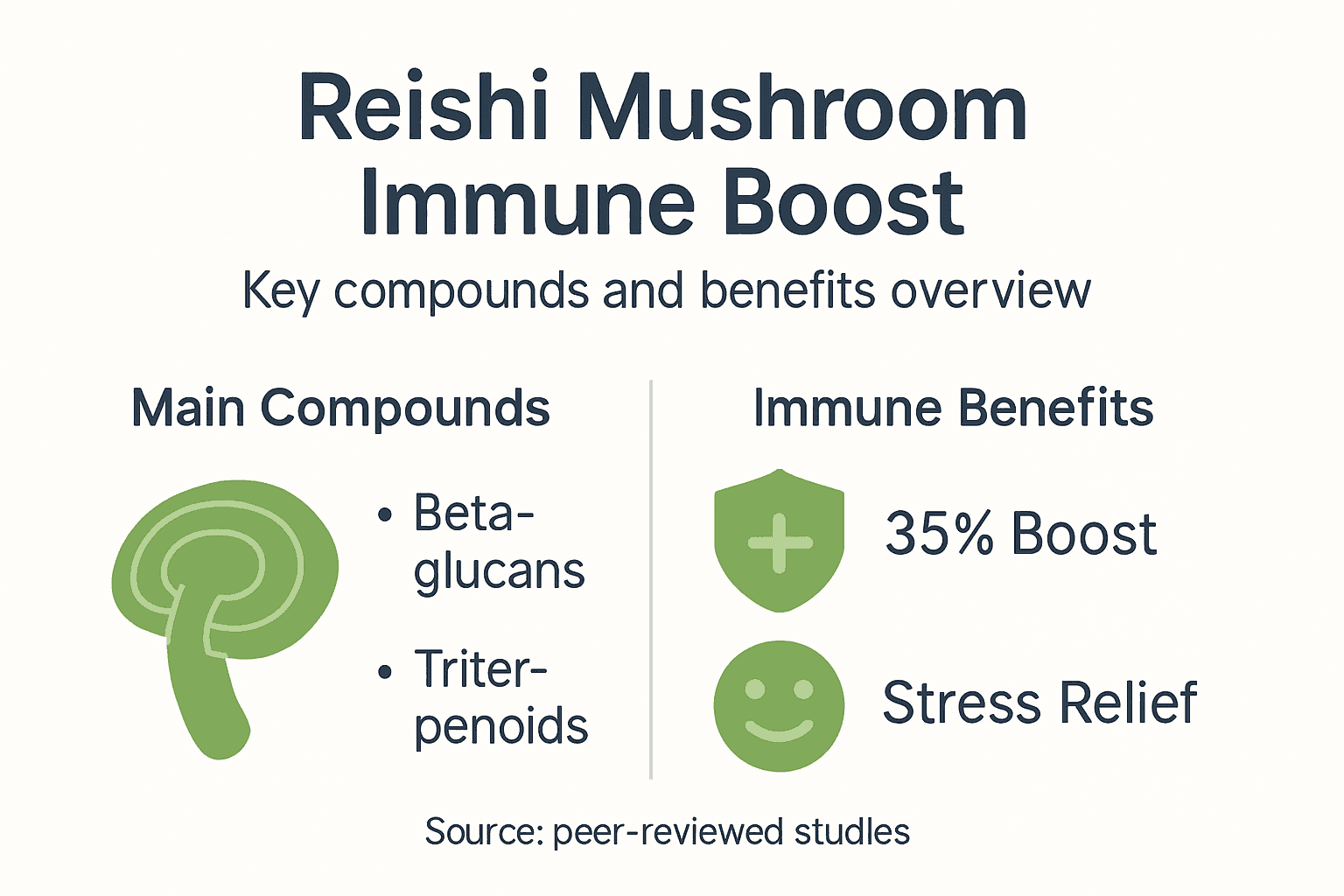
Reishi’s power comes from two main compound families: beta-glucans and triterpenoids. Beta-glucans and triterpenoids are the primary active ingredients responsible for immune modulation in Reishi. These molecules don’t just activate your immune system randomly; they fine-tune it.

Beta-glucans are complex polysaccharides that bind to immune cell receptors. When they connect with macrophages and natural killer cells, these frontline defenders become more alert. Think of beta-glucans as training sergeants that sharpen your immune army’s readiness without exhausting them.
Triterpenoids work differently. These compounds reduce excessive inflammation while supporting necessary immune responses. Reishi activates innate and adaptive immune cells and regulates cytokine production to balance inflammation. This dual action prevents your body from attacking itself while maintaining defense against real threats.
The interaction between these compounds creates a balancing act:
- Beta-glucans stimulate innate immunity for immediate pathogen response
- Triterpenoids modulate adaptive immunity for targeted, lasting protection
- Together they regulate cytokines, the messenger molecules that control inflammation
- This balance prevents chronic inflammation linked to autoimmune conditions
- The compounds work synergistically, meaning combined effects exceed individual contributions
Your immune system operates best in equilibrium, not overdrive. Reishi’s compounds help maintain that sweet spot. For more context on how medicinal mushrooms and immunity work together, understanding these mechanisms becomes crucial for informed supplementation.
Immune benefits backed by science
Clinical research confirms what traditional medicine observed. Studies show measurable improvements in immune markers when people take Reishi regularly. The evidence goes beyond subjective feelings to objective laboratory data.
Research demonstrates specific immune enhancements:
- NK cell cytotoxicity increases by 35% in some trials, improving viral defense
- T cell proliferation markers show statistically significant improvements
- White blood cell counts normalize in individuals with compromised immunity
- Pro-inflammatory cytokines decrease while beneficial immune signals increase
- Benefits accumulate over 4 to 8 weeks of consistent supplementation
Dosage matters significantly. Too little produces minimal effect, while excessive amounts may cause side effects without added benefit. Most clinical studies on Reishi immunity use 1.5 to 9 grams daily, depending on extract concentration and individual needs.
The anti-inflammatory effects deserve special attention. Chronic inflammation underlies many modern health challenges, from cardiovascular issues to metabolic disorders. By reducing unnecessary inflammatory signals, Reishi helps your body allocate immune resources more efficiently.
Pro Tip: Reishi works best as part of a consistent wellness routine. Taking it sporadically won’t produce the documented benefits. Plan for at least 6 weeks of daily use to assess your personal response, as discussed in clinical evidence on Reishi timing.
Patient compliance studies reveal that people who maintain regular dosing schedules experience better outcomes. Your immune system needs time to integrate Reishi’s effects into its normal functioning. Quick fixes don’t exist in immune health; sustainable support does.
Common misconceptions about Reishi mushroom
Misunderstanding Reishi’s mechanisms leads to unrealistic expectations. Let’s correct the most persistent myths that circulate online and in supplement marketing.
The biggest misconception centers on immune stimulation. Many people think Reishi simply increases immune activity across the board. Reality is more nuanced. Reishi modulates immune responses, meaning it adjusts activity up or down as needed. This prevents both underactive immunity and harmful overreactions.
Another myth positions Reishi as a disease cure. No mushroom supplement, however powerful, replaces medical treatment for serious conditions. Reishi supports wellness and may complement conventional care, but it’s not a standalone therapy for diagnosed illnesses. Always work with healthcare providers for medical issues.
Dosing myths abound too. Some believe more is always better, leading to excessive intake. Therapeutic windows exist for a reason:
- Higher doses don’t proportionally increase benefits beyond optimal ranges
- Excessive intake may cause dry mouth, digestive discomfort, or dizziness
- Individual tolerance varies based on body weight, health status, and sensitivity
- Starting low and increasing gradually helps identify your sweet spot
- Quality matters more than quantity; poor extracts at high doses underperform premium products at moderate amounts
Pro Tip: If you experience digestive upset or unusual fatigue after starting Reishi, reduce your dose by half for a week before gradually increasing. Your body may need time to adjust to new compounds. For correct Reishi usage guidance, timing and consistency matter as much as dosage.
Timing confusion also persists. Some sources claim Reishi must be taken at specific times for absorption, but research doesn’t strongly support rigid timing rules. Consistency matters more than clock watching for most users.
Comparison with other medicinal mushrooms
Reishi shares the stage with several other medicinal mushrooms, but each has distinct properties. Understanding these differences helps you choose the right supplement for your specific needs.
Turkey Tail (Trametes versicolor) excels at supporting gut immunity through its polysaccharide-K content. It focuses primarily on digestive and systemic immune function. While both Reishi and Turkey Tail boost immunity, Reishi’s triterpenoid richness gives it superior anti-inflammatory properties.
Lion’s Mane (Hericium erinaceus) targets cognitive health rather than direct immune modulation. It stimulates nerve growth factor production, supporting brain function and nervous system health. Combining Lion’s Mane with Reishi addresses both mental clarity and immune balance.
A detailed comparison reveals distinct advantages:
| Mushroom | Primary Compounds | Main Benefits | Best For |
|---|---|---|---|
| Reishi | Triterpenoids, beta-glucans | Immune modulation, inflammation reduction, stress relief | Overall immune balance and adaptogenic support |
| Turkey Tail | Polysaccharide-K, beta-glucans | Gut immunity, cancer therapy support | Digestive health and targeted immune enhancement |
| Lion’s Mane | Hericenones, erinacines | Cognitive function, nerve regeneration | Brain health and neurological support |
| Chaga | Melanin, betulinic acid | Antioxidant protection, immune support | Oxidative stress and general wellness |
Reishi’s unique profile comes from its exceptional triterpenoid content. These compounds provide anti-inflammatory effects that other mushrooms can’t match at the same level. For comprehensive insights, explore Reishi vs other medicinal mushrooms to understand how combinations might serve your wellness goals.
Many practitioners recommend combining mushrooms for synergistic effects. Reishi’s calming, immune-balancing properties complement the energizing effects of Cordyceps or the cognitive benefits of Lion’s Mane. This layered approach addresses multiple health dimensions simultaneously.
Practical guide: using Reishi for immune health
Ready to incorporate Reishi into your wellness routine? Following evidence-based guidelines ensures you get maximum benefits safely. Here’s your step-by-step approach to smart supplementation.
-
Choose your format wisely. Reishi comes as powders, capsules, tinctures, and teas. Extracts concentrate active compounds, requiring smaller doses than raw powder. Look for products listing beta-glucan and triterpenoid content.
-
Start with conservative dosing. Begin at 1 to 1.5 grams daily if using extracts, or 3 to 5 grams for powders. Monitor your response for one week before adjusting upward.
-
Establish consistency. Take Reishi at the same time daily to build routine and maintain steady levels in your system. Morning or evening both work; choose what fits your schedule.
-
Assess quality markers. Reputable brands provide third-party testing certificates, clearly state extraction ratios, and source from organic farms. Avoid products with excessive fillers or unclear labeling.
-
Time your evaluation period. Give Reishi at least 4 to 6 weeks before judging effectiveness. Immune changes happen gradually, not overnight.
-
Consult healthcare providers if you’re pregnant, nursing, taking immunosuppressants, or managing chronic conditions. Reishi interacts with certain medications, particularly blood thinners and diabetes drugs.
For specifics on Reishi supplement dosage and timing, consider your individual health context. People with autoimmune conditions should work closely with practitioners, as immune modulation requires careful monitoring in these cases.
Extraction method significantly impacts potency. Hot water extraction pulls out polysaccharides, while alcohol extraction captures triterpenoids. Dual extraction processes capture both compound families for comprehensive benefits. Understanding how long Reishi takes to work helps set realistic expectations and maintain commitment through the initial weeks.
Adaptogenic benefits: stress relief and immune balance
Reishi’s immune effects don’t work in isolation. As an adaptogen, it addresses stress, a major immune suppressor in modern life. This dual action makes Reishi particularly valuable for comprehensive wellness.
Reishi contains over 400 bioactive compounds that help regulate stress-related hormones and improve sleep quality. Chronic stress elevates cortisol, which dampens immune function over time. By moderating stress responses, Reishi indirectly supports immunity through multiple pathways.
The connection between stress and immunity runs deep:
- Elevated cortisol reduces white blood cell production and activity
- Poor sleep from stress prevents immune system repair and regeneration
- Chronic stress promotes inflammatory cytokine release
- Adaptogens like Reishi help restore homeostasis under physical and emotional pressure
- Improved stress resilience creates conditions for optimal immune performance
Many users report better sleep quality within 2 to 3 weeks of starting Reishi. Quality sleep directly enhances immune function, as your body performs critical maintenance during rest. This creates a positive cycle where better rest supports immunity, and balanced immunity improves overall vitality.
Reishi’s calming effects don’t cause sedation like pharmaceutical sleep aids. Instead, it promotes natural relaxation by supporting your body’s own regulatory systems. This gentle approach aligns with long-term wellness rather than masking symptoms.
The adaptogenic properties complement direct immune modulation discussed earlier. While beta-glucans and triterpenoids work on immune cells directly, the stress-reducing effects create an internal environment where those cells function optimally. For comprehensive understanding, explore Reishi adaptogen properties and how they integrate with immune support.
Summary and next steps
Reishi mushroom offers scientifically validated immune support through sophisticated modulation, not simple stimulation. Its beta-glucans and triterpenoids balance immune responses while reducing harmful inflammation. This dual action positions Reishi as a valuable tool for modern wellness challenges.
The evidence is clear: consistent use at appropriate doses produces measurable immune improvements. Benefits accumulate over weeks, requiring patience and commitment. Quality matters enormously; seek products with verified potency and purity standards.
Integrating Reishi into your routine starts with informed choices. Understand your health baseline, consult practitioners when needed, and track your responses. The mushroom’s adaptogenic effects complement its immune benefits, creating comprehensive support for body and mind.
Explore quality Reishi products from trusted sources that prioritize transparency and testing. Your immune system deserves the best support available, backed by both traditional wisdom and modern science. Taking that first step toward balanced immunity starts with choosing the right supplements and committing to consistent use.
Discover high-quality Reishi supplements today
Longevity Botanicals offers premium Reishi mushroom extract supplements designed for optimal immune support. Our products feature concentrated extracts from organically grown mushrooms, third-party tested for purity and potency.
Each batch undergoes rigorous quality control to ensure you receive the beneficial compounds discussed throughout this guide. Whether you prefer capsules for convenience or powders for flexibility, our range meets diverse wellness needs. We source sustainably and extract using methods that preserve both beta-glucans and triterpenoids.
Our organic mushroom capsule supplements make daily supplementation effortless. No measuring, no preparation, just consistent immune support in every dose. Educational resources on our blog help you maximize benefits through informed usage.
Join thousands who have chosen Longevity Botanicals for their immune health journey. Experience the difference that quality, transparency, and science-backed formulations make in your wellness routine.
Frequently asked questions
What is reishi mushroom good for?
Reishi excels at modulating your immune system rather than simply boosting it. It reduces inflammation, relieves stress through adaptogenic properties, and promotes overall wellness. The mushroom supports both innate immunity, your first line of defense, and adaptive immunity, which creates lasting protection. Its balancing effects help prevent immune overreaction while maintaining vigilance against actual threats.
How should I take reishi mushroom supplements?
Take Reishi as powders mixed in beverages, convenient capsules, or concentrated extracts. Daily dosage typically ranges from 1.5 to 9 grams depending on extract concentration and your individual needs. Start with lower amounts and increase gradually over 1 to 2 weeks. Consistency matters more than timing, so take it daily at whatever hour fits your routine. For optimal results, maintain regular use for at least 4 to 6 weeks, as benefits accumulate gradually. Consult healthcare providers if you have existing health conditions or take medications. Learn more about the best time to take Reishi for your schedule.
Are there any side effects or risks with reishi?
Most people tolerate Reishi well at recommended doses. Potential side effects include dry mouth, digestive upset, dizziness, or mild allergic reactions in sensitive individuals. Higher doses increase risk without proportional benefits. Pregnant or nursing women should avoid Reishi due to insufficient safety data. People taking blood thinners, immunosuppressants, or diabetes medications must consult doctors before starting, as interactions may occur. Following dosing guidelines and starting conservatively minimizes risks. Review Reishi safety considerations for comprehensive precautions.
How does reishi mushroom modulate the immune system?
Reishi’s beta-glucans bind to immune cell receptors, activating natural killer cells and enhancing their pathogen-fighting ability. T cells become more responsive, improving your adaptive immune memory. Simultaneously, triterpenoids regulate cytokines, the chemical messengers that control inflammation. This regulation balances pro-inflammatory signals with anti-inflammatory responses. The result is an immune system that responds appropriately to threats without attacking healthy tissue or staying activated when danger passes.


