
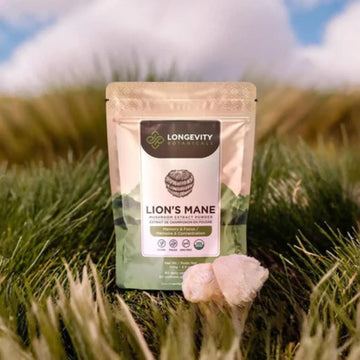



Lion’s mane mushroom has exploded in popularity among people seeking natural cognitive enhancement. Yet confusion surrounds how it actually works and what benefits are realistic. Many expect instant mental clarity, only to feel disappointed when nothing happens overnight. This article cuts through the hype to explain the science-backed mechanisms by which lion’s mane genuinely supports brain function, memory, and long-term cognitive health.
Table of Contents
- Introduction To Lion’s Mane And Brain Health
- How Lion’s Mane Supports Brain Health: Biological Mechanisms
- Clinical Evidence: Cognitive Improvement With Lion’s Mane
- Common Misconceptions About Lion’s Mane
- Lion’s Mane Compared To Other Brain Supplements
- Practical Usage And Dosage Guidance
- Limitations And Ongoing Research
- Summary And Takeaways
- Explore Lion’s Mane Supplements To Support Your Brain Health
- Frequently Asked Questions
Key takeaways
| Point | Details |
|---|---|
| Nerve growth factor boost | Lion’s mane contains bioactive compounds that stimulate NGF synthesis, promoting neural repair and growth over time. |
| Clinical cognitive gains | Human trials show up to 28% improvement in cognitive scores after 12 weeks of consistent supplementation. |
| Not an instant fix | Benefits require 8 to 16 weeks of daily use; no immediate effects should be expected. |
| Effective dosing matters | Daily intake of 500 mg to 3000 mg is recommended based on clinical research for measurable brain benefits. |
Introduction to lion’s mane and brain health
Lion’s mane mushroom, scientifically known as Hericium erinaceus, is a natural supplement gaining traction for its potential to enhance brain function. Its distinctive white, cascading tendrils resemble a lion’s mane, hence the name. Health-conscious individuals increasingly turn to this mushroom as a natural alternative to synthetic nootropics.
Interest in lion’s mane stems from widespread cognitive challenges. Aging often brings memory decline, difficulty concentrating, and slower mental processing. Even younger adults face brain fog from chronic stress, poor sleep, and modern lifestyle demands. People want safe, plant-based solutions that support long-term brain vitality without harsh side effects.
Why natural cognitive enhancers appeal:
- Growing awareness of synthetic drug side effects and dependency risks
- Desire for holistic wellness approaches rooted in traditional medicine
- Increased research validating mushroom compounds for health benefits
- Consumer preference for supplements with minimal processing and natural origins
Lion’s mane fits this profile perfectly. It offers a science-backed option for those seeking cognitive support through natural means, making it a standout choice in the functional mushroom market.
How lion’s mane supports brain health: biological mechanisms
Lion’s mane owes its brain-boosting reputation to specific bioactive compounds called hericenones and erinacines. These molecules are unique to this mushroom and play a critical role in brain health. They stimulate nerve growth factor synthesis and promote neurogenesis, the creation of new neurons. NGF is essential for neuron survival, growth, and repair. Without adequate NGF, brain cells deteriorate and cognitive function suffers.
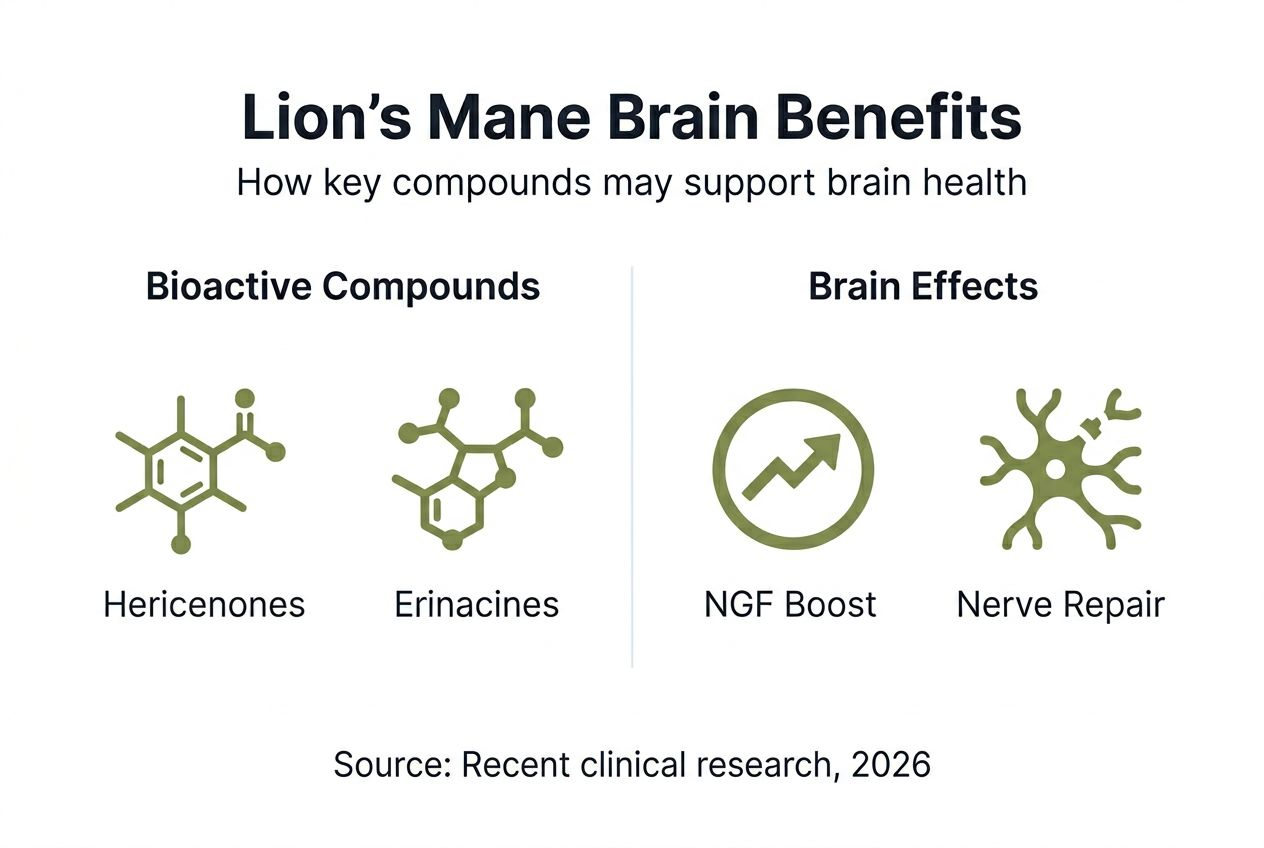
When you consume lion’s mane regularly, these compounds cross into your brain and trigger NGF production. This process supports neurogenesis, helping your brain maintain plasticity and adapt to new information. Cell studies indicate bioactive compounds can increase NGF levels by up to 1.5 times, a significant boost that translates into better neural communication and resilience.
Beyond NGF stimulation, lion’s mane reduces neuroinflammation by inhibiting microglial activation, decreasing inflammatory cytokines by up to 35%. Chronic brain inflammation is linked to cognitive decline, dementia, and mood disorders. By calming this inflammation, lion’s mane protects neurons from damage and supports clearer thinking.
Key biological actions:
- Stimulates NGF synthesis for neuron growth and repair
- Promotes neurogenesis and neural plasticity
- Inhibits harmful microglial activation reducing brain inflammation
- Protects neurons from oxidative stress and toxic buildup
These combined mechanisms work synergistically over weeks and months. You won’t feel a sudden surge of brilliance after one dose. Instead, your brain gradually rebuilds, repairs, and optimizes function. For a deeper dive into neuroprotection and NGF pathways, explore dedicated research explaining these processes in detail.
Pro Tip: Think of lion’s mane like going to the gym for your brain. One workout doesn’t build muscle, but consistent training over months reshapes your body. Similarly, consistent lion’s mane use reshapes neural connections and brain health.
Clinical evidence: cognitive improvement with lion’s mane
Human clinical trials provide the gold standard for evaluating supplement effectiveness. Lion’s mane has been tested in controlled settings with promising results. A 12-week study involving adults with mild cognitive impairment found a 28% improvement in cognitive function after daily lion’s mane supplementation. Participants showed better memory recall, focus, and mental clarity compared to placebo groups.

Another trial examined lion’s mane’s effect on mood. Participants with mild depression and anxiety experienced noticeable symptom reduction after eight weeks. Improved mood indirectly boosts cognition because anxiety and low mood drain mental resources. When you feel calmer and more balanced, your brain has more capacity for focus and memory tasks.
However, it’s important to acknowledge study limitations. Most clinical trials involve small sample sizes, often fewer than 50 participants. Study durations are relatively short, typically 8 to 16 weeks. Long-term effects beyond a few months remain unclear. Additionally, trials often use specific extracts at controlled doses, which may differ from over-the-counter supplements.
“Consistent daily use over weeks is the key to unlocking lion’s mane’s cognitive benefits. Patience and adherence matter more than dosage tweaking.”
Research highlights:
- Cognitive scores improved nearly 28% after 12 weeks in mild cognitive impairment patients
- Mood improvements in depression and anxiety trials enhance focus and memory indirectly
- Small sample sizes and short durations limit definitive conclusions
- Reliable, consistent supplementation over weeks is essential for clinical benefits
For insights on how lion’s mane may benefit an aging brain cognitive study, review findings tailored to older adults. If you struggle with mental fatigue, explore how lion’s mane addresses brain fog and mitochondrial support.
Common misconceptions about lion’s mane
Misunderstandings about lion’s mane set unrealistic expectations and lead to disappointment. Let’s clear up the biggest myths.
-
Instant cognitive boost: Many people expect to feel smarter or sharper within hours of taking lion’s mane. This doesn’t happen. Benefits require 8 to 16 weeks of consistent use as your brain gradually rebuilds neural pathways.
-
Cure for Alzheimer’s or dementia: Lion’s mane is not a cure for serious neurodegenerative diseases. Research shows promise in slowing cognitive decline, but no evidence supports reversing Alzheimer’s or curing dementia.
-
Low doses work just as well: Taking doses below 500 mg daily often proves ineffective. Clinical trials use 500 mg to 3000 mg daily. Underdosing means you won’t experience measurable benefits.
-
More is always better: Overdosing doesn’t accelerate results. Excessive intake offers no proven additional benefit and may cause digestive discomfort in some people.
-
It’s a miracle supplement: Lion’s mane supports brain health naturally, but it’s not magic. Combining it with good sleep, a balanced diet, exercise, and stress management yields the best outcomes.
Avoiding these misconceptions helps you approach lion’s mane with realistic expectations. Understand that it’s a long-term investment in brain health, not a quick fix.
Pro Tip: Keep a simple journal tracking your mood, focus, and memory over 12 weeks while taking lion’s mane. Subtle improvements become clear when you compare notes from week 1 to week 12.
Lion’s mane compared to other brain supplements
Lion’s mane isn’t the only natural nootropic on the market. Comparing it to popular alternatives helps you choose the right supplement for your goals.
Lion’s mane promotes nerve regeneration via NGF stimulation, unlike Bacopa which modulates acetylcholine or Ginkgo which improves cerebral blood flow. Bacopa monnieri enhances memory formation by modulating acetylcholine neurotransmission, a different pathway. Ginkgo biloba improves cerebral blood flow and acts as an antioxidant, supporting brain oxygenation but not directly stimulating nerve growth.
| Supplement | Primary Mechanism | Key Benefit | Timeframe |
|---|---|---|---|
| Lion’s Mane | NGF stimulation, neurogenesis | Neural repair, long-term cognitive support | 8 to 16 weeks |
| Bacopa Monnieri | Acetylcholine modulation | Memory formation, recall enhancement | 6 to 12 weeks |
| Ginkgo Biloba | Cerebral blood flow increase | Improved brain oxygenation, antioxidant protection | 4 to 6 weeks |
Choosing the right supplement depends on your specific cognitive goals:
- Want to rebuild and protect neurons over time? Lion’s mane offers unique nerve regeneration benefits.
- Need better memory recall and learning? Bacopa targets neurotransmitters involved in memory encoding.
- Seeking improved mental clarity from better blood flow? Ginkgo may help if circulation is your concern.
Lion’s mane stands out for its unique approach among natural nootropics. It doesn’t just improve existing function; it actively supports the growth and repair of brain cells. For comprehensive neuroprotection and NGF pathways, lion’s mane is unmatched. Explore mushrooms for brain health collection to compare options and find the best fit.
Practical usage and dosage guidance
Knowing how to take lion’s mane correctly maximizes your chances of experiencing benefits. Clinical research provides clear dosing guidelines.
Effective dosages range from 500 mg to 3000 mg daily, with most benefits seen after consistent use over 8 to 16 weeks. Start with 500 mg to 1000 mg daily if you’re new to lion’s mane. This allows you to assess tolerance and avoid potential digestive upset. After a week or two, you can increase to 1500 mg or higher if needed.
Lion’s mane is available in several forms:
- Capsules: Convenient, pre-measured doses ideal for busy lifestyles
- Powders: Flexible dosing, mix into smoothies, coffee, or recipes
- Extracts: Concentrated forms with higher bioactive compound levels
Consistent daily supplementation for 8 to 16 weeks is necessary for measurable effects. Missing doses frequently or stopping after a few weeks won’t deliver results. Set a daily reminder to take your supplement with a meal to improve absorption and reduce stomach irritation.
Consult healthcare providers when combining lion’s mane with medications or if you have existing health conditions. While generally safe, interactions with blood thinners or immunosuppressants are possible. Pregnant or breastfeeding women should avoid lion’s mane due to limited safety data.
Pro Tip: Pair lion’s mane with a high-quality omega-3 supplement. Omega-3s support brain cell membrane health, complementing lion’s mane’s NGF-boosting effects for comprehensive cognitive support.
For detailed guidance on lion’s mane side effects, review safety information before starting. Browse lion’s mane extract supplements to find trusted products with verified potency.
Limitations and ongoing research
Despite promising findings, lion’s mane research has notable gaps. Understanding these limitations helps you make informed decisions.
Limited large-scale, long-term human studies are available. Most trials involve fewer than 100 participants and last only 8 to 16 weeks. We lack data on what happens after years of continuous use or in diverse populations. No conclusive evidence shows lion’s mane cures serious neurodegenerative diseases yet. While it may slow cognitive decline, reversing Alzheimer’s or Parkinson’s remains unproven.
Most evidence comes from short-term or preclinical research:
- Animal studies show impressive neuroprotective effects, but human biology differs
- Cell culture studies demonstrate NGF stimulation, but real-world brain complexity is greater
- Small human trials provide early evidence but need replication in larger groups
Emerging studies continue investigating broader benefits. Researchers are exploring lion’s mane’s role in anxiety, depression, gut-brain axis health, and even immune function. As science evolves, we’ll gain clearer insights into optimal dosing, long-term safety, and specific populations who benefit most. Consumers should remain aware of evolving science and avoid treating preliminary findings as definitive proof.
Summary and takeaways
Lion’s mane supports brain health mainly via NGF stimulation, neurogenesis, and reduced inflammation. These biological mechanisms work gradually over weeks to repair and strengthen neural networks. Clinical trials show cognitive and mood improvements with sustained use, particularly in people with mild cognitive impairment or mood disorders.
Misconceptions about instant effects and cure claims are common but unfounded. Lion’s mane is not a quick fix or miracle drug. It’s a natural supplement that requires patience and consistency. Effective use demands correct dosing between 500 mg and 3000 mg daily and taking it for at least 8 to 16 weeks without interruption.
Ongoing research will clarify future benefits and applications. As larger, longer studies emerge, we’ll better understand who benefits most and how to optimize supplementation strategies. For now, lion’s mane stands as one of the most scientifically supported natural nootropics for long-term brain health.
Explore lion’s mane supplements to support your brain health
Ready to experience the cognitive benefits of lion’s mane for yourself? High-quality supplements make a difference in effectiveness and safety. Look for products with verified potency, organic sourcing, and third-party testing to ensure you’re getting real hericenones and erinacines.
Longevity Botanicals offers a range of lion’s mane products tailored to your preferences. Choose from organic mushroom capsule supplements for convenient daily use or organic mushroom powders for flexible dosing in smoothies and recipes. For concentrated potency, try lion’s mane powder extract 100g to maximize bioactive compound intake.
Investing in your brain health today supports sharper thinking, better memory, and long-term cognitive resilience tomorrow.
Frequently asked questions
What is lion’s mane mushroom and how does it help brain health?
Lion’s mane is a medicinal mushroom containing hericenones and erinacines, compounds that promote nerve growth factor synthesis. By stimulating NGF, it supports neuron growth, repair, and survival, enhancing memory, focus, and overall cognitive function. It’s used as a natural nootropic for long-term brain vitality.
How long does it take to notice brain benefits from lion’s mane?
Cognitive benefits typically appear after consistent daily use for 8 to 16 weeks. You won’t experience immediate or overnight effects. Think of it as a gradual rebuilding process where your brain strengthens neural connections over time with sustained supplementation.
What is the recommended daily dosage of lion’s mane for cognitive support?
For cognitive benefits, daily intake between 500 mg and 3000 mg is recommended based on clinical trials. Start with 500 mg to assess tolerance, then increase as needed. Dosages should be maintained consistently over weeks to months for best results.
Can lion’s mane cure Alzheimer’s disease?
No current scientific evidence shows lion’s mane cures Alzheimer’s disease. Research suggests it may slow cognitive decline and support brain health, but studies are preliminary and mostly preclinical. It should not replace medical treatment for neurodegenerative diseases.
Recommended
- Can Lion’s Mane Really Sharpen an Aging Brain? Science Says Yes – LongevityBotanicals
- Top 6 Lion’s Mane Brands in 2026 for Cognitive Boosting – LongevityBotanicals
- Lion’s Mane for Neuroprotection and NGF Support Explained – LongevityBotanicals
- ▷ Lion’s Mane Mushroom Capsules Extract (120) – LongevityBotanicals
- Brain Fog Slowing You Down? – Asli Nutrition


