
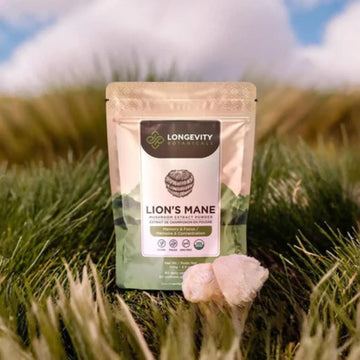
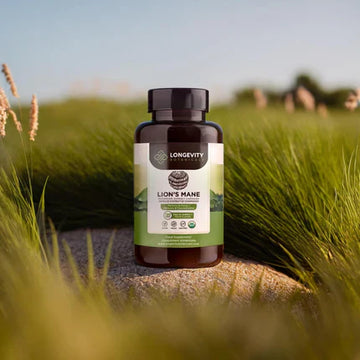


Finding a reliable way to support your mind and body can feel complicated when you care about real results, not just hype. Natural mushroom supplements offer a powerful approach, drawing on concentrated fruiting bodies and advanced extraction to deliver more than a basic dietary boost. Backed by traditional use and modern science, these products provide bioactive compounds that fuel immunity and cognitive health. Understanding what goes into each supplement ensures you choose formulas that truly match your wellness goals.
Table of Contents
- Mushroom Supplements—Definition, Uses, Misconceptions
- Types Of Mushroom Supplements And Key Distinctions
- Health Benefits—Cognition, Immunity, Stress Relief
- Risks, Side Effects, And Safety Guidance
- Choosing Quality Supplements And Common Mistakes
Key Takeaways
| Point | Details |
|---|---|
| Mushroom Supplements are Distinct from Culinary Mushrooms | They are concentrated sources of bioactive compounds aimed at promoting health, unlike regular mushrooms used in cooking. |
| Quality of Ingredients Matters | Look for products specifying ‘fruiting body’ and extraction ratios to ensure potency and efficacy. |
| Common Uses Align with Specific Mushroom Species | Different mushrooms serve distinct health purposes, such as cognitive support from Lion’s Mane and immune support from Turkey Tail. |
| Awareness of Side Effects and Interactions is Crucial | While generally safe, mushroom supplements can cause mild side effects and interact with certain medications, requiring consultation with a healthcare provider. |
Mushroom supplements—definition, uses, misconceptions
Mushroom supplements are dietary products made from mushroom fruiting bodies or extracts designed to support overall health and wellness. Unlike culinary mushrooms you cook with, these supplements contain concentrated bioactive compounds that support specific body systems. Think of them as nutritionally dense plant medicines rather than food.
These products contain pharmacologically active substances including polysaccharides, triterpenes, and immunomodulatory proteins that your body can use to support immune function, cognitive clarity, and general vitality. The specific compounds and their potency depend heavily on which mushroom species you choose and how it’s processed.
What Mushroom Supplements Actually Contain
Not all mushroom products are created equal. Understanding what you’re buying matters significantly for results.
Key bioactive compounds found in quality supplements:
- Polysaccharides (especially beta-glucans) that support immune cell activity
- Triterpenes with antioxidant and stress-reducing properties
- Lectins and proteins that modulate immune responses
- Ergothioneine, a natural antioxidant unique to mushrooms
The complex bioactive compounds in mushroom extracts work synergistically—meaning they’re more effective together than separately. This is why whole-mushroom supplements often outperform isolated compounds.
Common Uses Based on Evidence
Health-conscious individuals aged 25-45 typically use mushroom supplements for three main reasons:
- Immune support - Species like Turkey Tail and Reishi contain compounds that enhance white blood cell function
- Cognitive performance - Lion’s Mane contains compounds shown to support focus and mental clarity
- Stress management - Reishi and Cordyceps help regulate the stress response system
These uses reflect both traditional applications and modern research findings. Your specific goals determine which mushroom species makes sense for your routine.
Clearing Up Major Misconceptions
Where do people go wrong? Here are the biggest myths:
- “All mushrooms have the same benefits.” Wrong. Turkey Tail supports immunity differently than Lion’s Mane supports cognition. Species matters significantly.
- “Eating shiitake mushrooms replaces supplements.” Not quite. Culinary mushrooms contain bioactive compounds, but in much lower concentrations than extracts. Supplements deliver therapeutic doses.
- “More dose equals better results.” Actually, balance matters. Quality extraction and consistent moderate dosing outperforms random high doses.
- “All supplements work instantly.” Realistic timeline: most people notice changes after 2-4 weeks of consistent use, not days.
The quality of your supplement depends on mushroom species, extraction method, and source material—not marketing claims.
Many products labeled as “mushroom supplements” actually contain grain fillers instead of real fruiting body material. You get paying for expensive packaging rather than active compounds.
When you understand what mushroom supplements actually are—concentrated sources of specific bioactive compounds—you can evaluate products objectively. You’ll ask the right questions about sourcing, extraction methods, and which species genuinely matches your wellness goals.
Pro tip: Check if your supplement lists the mushroom fruiting body (not mycelium or grain) and includes an extraction ratio (like “10:1”) to verify you’re getting concentrated bioactive compounds, not filler.
Types of mushroom supplements and key distinctions
Mushroom supplements come in several distinct types, each with different potency levels and applications. The differences aren’t just marketing—they affect what your body actually absorbs and whether you get results. Understanding these distinctions helps you choose products that match your specific wellness goals.
The main types break down into three categories: mushroom species, supplement form, and source material. Each factor influences bioavailability and effectiveness differently.
Mushroom Species—Different Benefits
About 25 edible mushroom varieties have documented medicinal properties, but only a handful dominate the supplement market. Popular species include Lion’s Mane, Reishi, Turkey Tail, Cordyceps, Shiitake, and Maitake.
Common functional mushroom species and their primary uses:
- Lion’s Mane - Supports cognitive function, focus, and mental clarity
- Reishi - Promotes relaxation, sleep quality, and stress resilience
- Turkey Tail - Supports digestive health and immune cell activity
- Cordyceps - Enhances energy and exercise performance
- Shiitake - Provides immune support and antioxidant protection
- Maitake - Strengthens immune response and cell-mediated immunity
Each mushroom contains different bioactive polysaccharides and triterpenoids that target specific body systems. You wouldn’t take Cordyceps expecting sleep support—you’d choose Reishi for that goal.
Here’s a quick comparison of popular mushroom supplement species and their main benefits:
| Mushroom Species | Primary Wellness Benefit | Notable Compounds |
|---|---|---|
| Lion’s Mane | Cognitive clarity and focus | Hericenones, erinacines |
| Reishi | Stress resilience, improved sleep | Triterpenoids, polysaccharides |
| Turkey Tail | Immune system support | Beta-glucans, PSP, PSK |
| Cordyceps | Enhanced energy, physical endurance | Cordycepin, adenosine |
| Shiitake | Antioxidant protection, immune support | Lentinan, ergothioneine |
| Maitake | Stronger immune response | D-fraction, beta-glucans |
Supplement Form—Absorption Matters
The form you choose affects how much of the active compounds your digestive system can actually use. Three main forms exist:
Powders absorb quickly but require measuring and mixing. They work well blended into beverages or food.Capsules offer convenience and precise dosing without taste concerns, though they take slightly longer to digest.
Extracts deliver the highest concentration of bioactive compounds because water or alcohol extraction removes cell walls and concentrates beneficial molecules. A 10:1 extract means 10 pounds of mushroom reduced to 1 pound of concentrate.
Think of it this way: whole mushroom powder is like eating regular food, while extracts are like taking a concentrated supplement version of that same food. Extracts typically cost more but deliver stronger results per serving.
See how supplement forms differ in effectiveness and convenience:
| Supplement Form | Bioavailability | User Convenience | Typical Potency |
|---|---|---|---|
| Powder | Moderate | Requires mixing | Lower to moderate |
| Capsule | Moderate | Easy to use | Moderate |
| Extract | High | Simple dose | Highest concentration |
Source Material—Fruiting Body vs. Mycelium
This distinction separates quality supplements from mediocre ones. Fruiting bodies are the visible mushroom caps you recognize—the reproductive part of the fungus where bioactive compounds concentrate.

Mycelium is the root network growing underground. It contains some bioactive compounds but in much lower concentration. Many budget supplements use mycelium grown on grain because it’s cheaper to produce, not because it’s more effective.
Fruiting body supplements contain 5-10 times more polysaccharides than mycelium-based products. If your supplement doesn’t specify “fruiting body,” you’re likely getting a lower-potency product.
Quality supplements clearly state “fruiting body extract” or “fruiting body powder”—not mycelium, not grain-based, not “mushroom complex.”
Blends Versus Single-Mushroom Supplements
Blended supplements combine multiple mushroom species in one product. Blends work well for general wellness when you want broad immune and cognitive support. Single-species supplements give you targeted support for a specific goal.
Choosing between them depends on your priority: general health maintenance or addressing a specific area like focus or stress recovery?
Pro tip: Before buying, check the product label for fruiting body source, extraction method (hot water or dual extraction), and extraction ratio—these three details tell you if you’re getting a potent product or expensive filler.
Health benefits—cognition, immunity, stress relief
Mushroom supplements deliver three major wellness benefits backed by research: sharper thinking, stronger immunity, and better stress management. These aren’t marketing promises—they’re supported by documented biological mechanisms and peer-reviewed studies. For health-conscious individuals balancing demanding careers and active lifestyles, these benefits address real daily challenges.
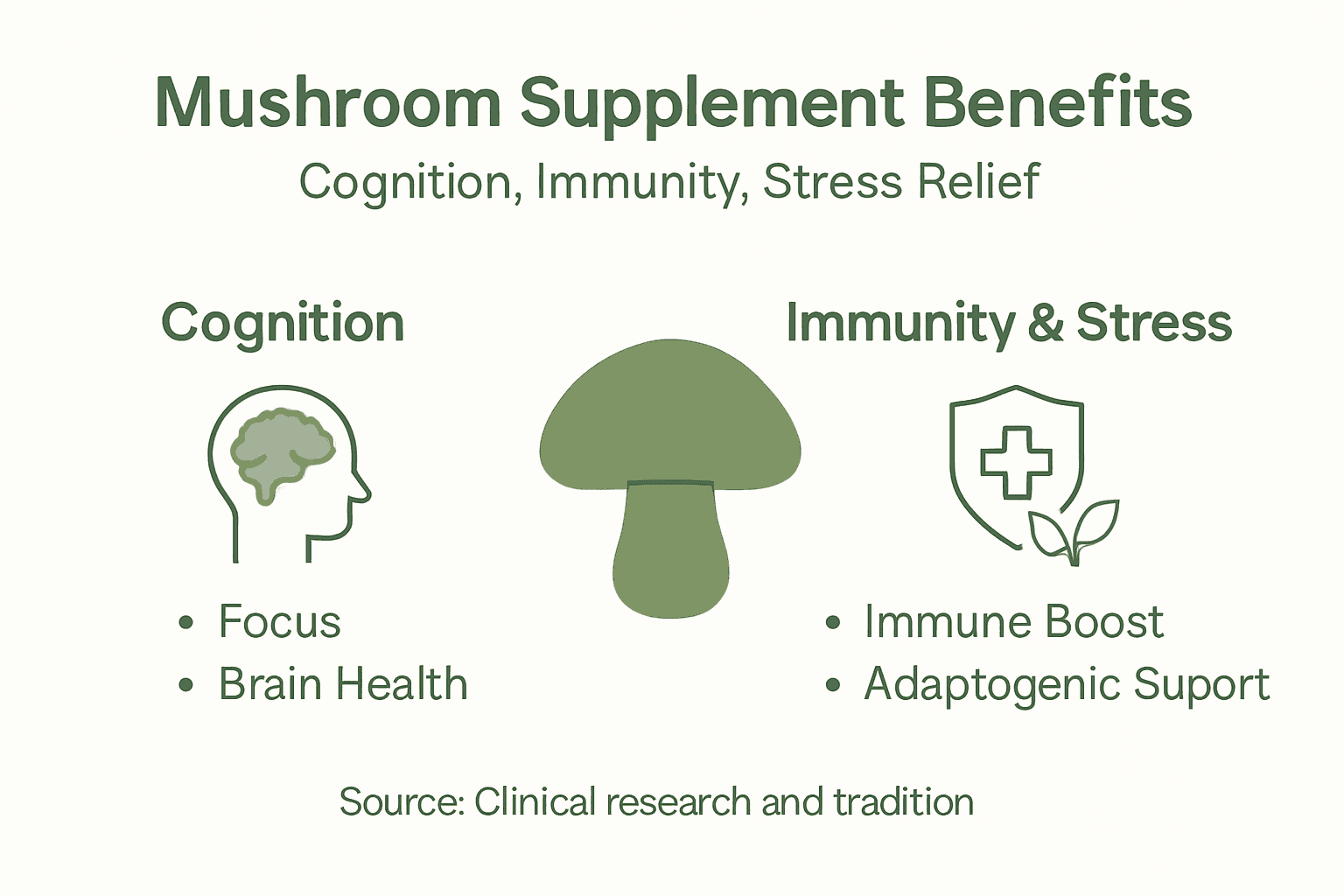
The key compounds responsible are polysaccharides, triterpenoids, and phenolic acids. These bioactive molecules work directly with your body’s systems to produce measurable results.
Cognitive Enhancement and Brain Protection
Lion’s Mane stands out for neuroprotection and nerve growth factor (NGF) stimulation. NGF is essentially your brain’s repair and renewal system—it helps existing neurons stay healthy and encourages new neural connections to form.
Research shows Lion’s Mane users report improved focus, faster processing speed, and clearer thinking within 4-8 weeks of consistent use. This matters when you’re managing projects, learning new skills, or navigating complex decision-making at work.
The neuroprotective effects work on two levels. First, the supplement reduces oxidative stress in brain tissue. Second, it actively stimulates brain cells to maintain and strengthen connections. This dual approach explains why people notice both immediate clarity and long-term cognitive resilience.
Immune System Support
Multiple mushroom species strengthen immune function through different mechanisms. Turkey Tail and Maitake contain beta-glucans that enhance white blood cell activity. Your immune system recognizes these compounds as signals to activate defense responses.
Reishi works differently—it helps balance immune response rather than just amplifying it. This prevents overreaction (which causes inflammation) while maintaining vigilance against actual threats.
Immune support benefits include:
- Fewer seasonal illness days (clinical studies show 15-30% reduction)
- Faster recovery when illness does occur
- Enhanced natural killer cell activity (your body’s primary defense against infections)
- Reduced inflammation from immune overresponse
For busy professionals aged 25-45, consistent immune support means fewer sick days disrupting work and family time.
Stress Relief and Adaptogenic Effects
Reishi functions as an adaptogen—a substance that helps your body regulate stress response. This doesn’t mean feeling artificially calm. Instead, your nervous system develops better resilience against daily stressors.
Adaptogens work by helping normalize cortisol patterns. When stress hormones stay elevated too long, they suppress immunity and impair sleep. Reishi helps bring these patterns back to healthy ranges.
Cordyceps addresses stress differently by supporting energy production. When fatigue makes stress feel overwhelming, Cordyceps helps restore physical capacity. You feel less exhausted, which naturally reduces perceived stress.
Research shows polysaccharides and triterpenoids work together to produce these wellness effects—isolated compounds deliver weaker results than whole-mushroom products.
The timeline matters: stress relief typically appears after 2-3 weeks as your nervous system adapts. Cognitive benefits often show within 4-6 weeks. Immune benefits build gradually over 6-8 weeks as your body establishes stronger baseline defenses.
Pro tip: Stack Lion’s Mane for cognitive support with Reishi for stress management—they target different systems, so combining them provides comprehensive brain health and nervous system resilience without overlap.
Risks, side effects, and safety guidance
Mushroom supplements are generally well-tolerated, but like any supplement, they carry potential risks you should understand before adding them to your routine. Most people experience zero issues, but knowing what can happen helps you make informed decisions and catch problems early.
The good news: serious adverse effects are rare. The realistic view: minor side effects occur occasionally, and certain drug interactions deserve attention.
Common Side Effects
Most side effects are mild and temporary. Your digestive system is typically the first place you’ll notice changes since mushroom compounds directly interact with gut bacteria and stomach acid.
Possible side effects include:
- Dry mouth or mild itching (usually resolves within days)
- Gastrointestinal upset—bloating, nausea, or loose stools
- Headaches during the first week (often means your body is detoxifying)
- Allergic reactions in sensitive individuals (rare but possible)
These effects tend to appear within the first few days and fade as your body adjusts. Starting with a lower dose and gradually increasing helps minimize digestive discomfort.
Medication Interactions—The Critical Concern
Mushroom supplements can interact with specific medications, particularly those affecting blood clotting or immune function. This isn’t theoretical—it’s documented in clinical literature.
Mushrooms contain compounds that naturally enhance immune response and may thin blood slightly. When combined with anticoagulants (blood thinners like warfarin) or immunosuppressants (medications that suppress immune function intentionally), you could amplify effects beyond what’s safe.
If you take any of these medication categories, consult your healthcare provider before starting mushroom supplements:
- Blood thinners (warfarin, clopidogrel, aspirin)
- Immunosuppressants (used after transplants or for autoimmune conditions)
- Diabetes medications (mushrooms may lower blood sugar)
- Blood pressure medications (potential additive effects)
Your doctor can assess individual risk and monitor you appropriately.
Quality and Contamination Risks
Not all mushroom supplements are created equal. Product contamination represents a real safety issue that gets overlooked. Mushrooms are bioaccumulators—they absorb whatever exists in their growing environment, including heavy metals and pesticides.
Poor manufacturing practices create additional risks. Some products contain fillers instead of actual mushroom material, while others contain mislabeled species entirely. Quality control issues such as contamination represent measurable safety concerns.
Verify your supplier uses third-party testing for contaminants and properly identifies mushroom species. Transparent sourcing information and testing certificates indicate a responsible manufacturer.
Choose supplements verified for species accuracy and tested for heavy metals and pesticide residues—this single decision eliminates most contamination risks.
Special Populations Requiring Medical Approval
Certain groups should consult healthcare providers before using mushroom supplements. Pregnancy, nursing, and pre-existing conditions change the safety calculation.
Pregnant and nursing individuals lack sufficient safety data to guarantee no risk. People with mushroom allergies obviously should avoid them. Those with bleeding disorders or scheduled surgeries need medical guidance since mushrooms affect coagulation.
Practical Safety Steps
Implement these strategies to use mushroom supplements safely:
- Start with half the recommended dose for 3-5 days
- Monitor how your body responds before increasing
- Keep a simple log of any physical changes you notice
- Get third-party tested products from established manufacturers
- Inform your healthcare provider what supplements you’re taking
These steps take minimal time but catch potential issues early.
Pro tip: If you take any medications, bring your supplement bottle to your next doctor’s appointment and ask directly about interactions—don’t assume your doctor knows all supplements you’re using.
Choosing quality supplements and common mistakes
Choosing a quality mushroom supplement separates people who get results from those who waste money on ineffective products. The difference often comes down to understanding what separates legitimate supplements from marketing hype. Your purchasing decision determines whether you’re investing in genuine wellness or expensive filler.
Most mistakes happen because people don’t know what to look for on product labels. Learning five key evaluation criteria takes 10 minutes but saves you hundreds of dollars and months of wasted effort.
Critical Label Information to Verify
Before buying any supplement, examine the product label like you’re investigating a crime scene. Labels reveal whether you’re getting quality or deception.
Essential label elements to check:
- Fruiting body source (not mycelium or grain-based products)
- Extraction ratio (10:1, 8:1, or similar notation showing concentration)
- Extraction method (hot water or dual extraction preferred)
- Species name in Latin and common English (like “Hericium erinaceus (Lion’s Mane)”)
- Third-party testing certification for contaminants
- Country of origin and manufacturing location
- Supplement facts panel with dosage information
If a product omits any of these details, skip it. Legitimate manufacturers provide transparent information because they have nothing to hide. Vague labeling indicates either incompetence or intentional deception.
Common Mistake: Confusing Mycelium with Fruiting Body
This single mistake costs consumers millions annually. Mycelium-on-grain products cost manufacturers significantly less to produce, so they market them aggressively using scientific-sounding language.
The reality: mycelium contains fewer bioactive compounds than fruiting bodies. You’re paying premium prices for budget-quality material. Labels that say “mycelium,” “grain-based,” or simply “mushroom complex” without specifying fruiting body are red flags.
Fruiting body supplements deliver 5-10 times more polysaccharides per serving. This difference explains why some people see results while others taking cheaper products don’t.
Mistake: Ignoring Extraction Methods
Extraction method directly affects bioavailability—how much your body actually absorbs. Two supplements with identical mushroom species can have wildly different potency based on processing.
Hot water extraction dissolves polysaccharides effectively but misses some triterpenoids. Dual extraction (hot water plus alcohol) captures both compound classes. Products listing no extraction method likely used simple drying without actual extraction—delivering minimal bioactive compounds.
A quality supplement states its extraction method clearly. This transparency indicates manufacturing competence.
Mistake: Trusting Brand Names Over Verification
Popular brands have bigger marketing budgets, not necessarily better products. Marketing spend and product quality are unrelated. Many people choose supplements based on pretty packaging or celebrity endorsements rather than actual quality indicators.
Third-party testing matters infinitely more than brand recognition. Look for NSF Certified, USP Verified, or ConsumerLab testing badges. These certifications mean independent laboratories verified the product contains what the label claims and is free from contaminants.
Mistake: Buying Based on Price Alone
Cheap supplements are cheap for a reason—they use inferior source material or inadequate extraction. Paying $15 for a month’s supply seems like a bargain until you realize it’s 90% grain filler.
Quality fruiting body extracts cost more because they’re actually worth more. Compare cost per serving rather than total price. A $40 bottle with 60 servings ($0.67 per serving) of quality extract beats a $15 bottle with 30 servings ($0.50 per serving) of grain-based filler.
Quality supplements clearly document fruiting body source, extraction method, and third-party testing—these three factors predict effectiveness better than price or brand name.
The Sourcing Question
Where mushrooms grow matters significantly. Mushrooms absorb heavy metals and pesticides from soil and air. Supplements sourced from regions with strict environmental regulations contain fewer contaminants.
Ask suppliers: Where are mushrooms grown? Are they grown in controlled facilities or wild-harvested? Responsible manufacturers answer these questions readily. Vague sourcing indicates potential quality issues.
Pro tip: Request a Certificate of Analysis from the manufacturer before buying—it documents exactly what contaminants were tested for and the results, giving you definitive proof of product safety and potency.
Unlock the Full Potential of Mushroom Supplements for Your Wellness Journey
The article highlights key challenges like choosing the right mushroom species, ensuring high-quality extracts from fruiting bodies, and understanding proper dosing for immune support, cognitive clarity, and stress relief. You want effective products that deliver real benefits backed by scientific extraction methods rather than fillers or low-potency mycelium. It is critical to avoid common mistakes such as confusing extraction methods or settling for cheap supplements that provide little active compounds.
At Longevity Botanicals we address these concerns by offering premium, transparently sourced mushroom supplements designed to help you achieve your health goals. Explore our carefully crafted Mushroom Blend Extract Supplements for broad immune and cognitive support or choose targeted options from our Mushroom Powder Supplements to add potent fruiting body nutrition directly to your meals. Each product clearly states its fruiting body source, extraction ratio, and method so you can trust what you are putting into your body.
Take control of your wellness now by selecting the highest-quality mushroom supplements optimized for real results. Visit Longevity Botanicals to discover authentic mushroom supplements made for sustained immune strength, mental focus, and effective stress management. Don’t wait to invest in your health with supplements that truly work.
Frequently Asked Questions
What are mushroom supplements made of?
Mushroom supplements are dietary products that contain concentrated bioactive compounds extracted from mushroom fruiting bodies. These include polysaccharides, triterpenes, and immunomodulatory proteins that help support various health functions.
How do mushroom supplements support cognitive function?
Lion’s Mane, a popular mushroom supplement, enhances cognitive function by stimulating nerve growth factor (NGF), which promotes brain health and supports mental clarity and focus over time.
What is the difference between fruiting body and mycelium in mushroom supplements?
Fruiting bodies are the actual mushrooms that contain higher concentrations of bioactive compounds, while mycelium refers to the root structure of the mushroom, which typically has lower potency. Choosing supplements that specify fruiting body sources ensures greater effectiveness.
How long does it take to notice the effects of mushroom supplements?
Most users begin to notice benefits from mushroom supplements after consistent use for 2-4 weeks. Effects may include improved cognitive clarity, enhanced immune support, and better stress management, depending on the specific species used.
Recommended
- How to Use Mushroom Supplements for Natural Wellness – LongevityBotanicals
- Comprehensive Guide to Mushroom Extract Usage for Wellness – LongevityBotanicals
- 7 Ways Mushrooms Boost Wellness Naturally for You – LongevityBotanicals
- Master the Mushroom Blending Process for Optimal Wellness – LongevityBotanicals


