

Step-by-step mushroom extract guide for wellness and immunity
TL;DR:
- Proper dual extraction releases full spectrum bioactives from medicinal mushrooms.
- Stacking multiple mushroom extracts enhances immune, cognitive, and stress support simultaneously.
- Quality sourcing, proper technique, and consistent daily use determine extract effectiveness.
Most people add mushroom powder to their morning coffee and assume they’re getting the full benefit. They’re not. The bioactive compounds in mushrooms like Reishi, Lion’s Mane, and Turkey Tail are locked behind tough cell walls made of chitin, a material the human digestive system can’t fully break down. A proper extract, built through a dual extraction process, releases compounds like beta-glucans and NGF stimulators that deliver real immune, cognitive, and wellness support. This guide covers exactly what you need and how to do it.
Table of Contents
- What you need to make mushroom extracts
- Step-by-step mushroom dual extraction process
- Wellness, immunity, and cognitive benefits of mushroom extracts
- Safety, side effects, and troubleshooting tips
- The truth about mushroom extracts: What most guides miss
- Upgrade your wellness routine with quality mushroom extracts
- Frequently asked questions
Key Takeaways
| Point | Details |
|---|---|
| Dual extraction unlocks power | Using both alcohol and water steps lets you capture immune and cognitive benefits inaccessible from powders alone. |
| Choose quality mushrooms | Dried, woody types such as Reishi, Lion’s Mane, Turkey Tail, and Chaga are best for effective extracts. |
| Safety matters | Monitor side effects and avoid extracts if you have allergies, GI issues, or take blood thinners. |
| Stack for synergy | Combining different mushroom extracts yields broad-spectrum support for mood, immunity, and cognition. |
| Check concentration | Ensure finished tincture has at least 25% alcohol to preserve and stabilize your extract safely. |
What you need to make mushroom extracts
To begin your extraction journey, let’s gather the essentials. Having the right materials from the start determines whether your final product is potent or weak. Missing even one key item, like amber glass storage or high-proof alcohol, can reduce shelf life and extract quality significantly.
Core materials
Here’s what you need before starting any batch:
- Dried, powdered mushrooms. Fresh mushrooms contain too much water, which makes controlling final alcohol concentration nearly impossible. Dried and powdered forms also maximize surface area for extraction.
- High-proof alcohol. 95% food-grade ethanol or 190-proof grain alcohol works best. Lower proof spirits like 40% vodka are not sufficient for a full-spectrum extraction.
- Filtered water. Used in the water extraction phase to pull out water-soluble compounds like beta-glucans and polysaccharides.
- Amber glass bottles. Protects the finished tincture from UV light degradation. Dark glass extends shelf life considerably.
- A large mason jar. For the alcohol maceration phase. Glass is preferred over plastic to avoid any chemical interaction.
- Fine mesh strainer and cheesecloth. For filtering out plant material after each extraction phase.
- A small saucepan. For the water decoction phase.
Best mushrooms for extraction
Woody mushroom types like Reishi, Chaga, Lion’s Mane, and Turkey Tail are the best candidates for dual extraction because their chitin-heavy cell walls require both alcohol and hot water to fully release active compounds. Softer mushrooms like oyster or shiitake don’t have the same dense structure and are better suited for culinary use.
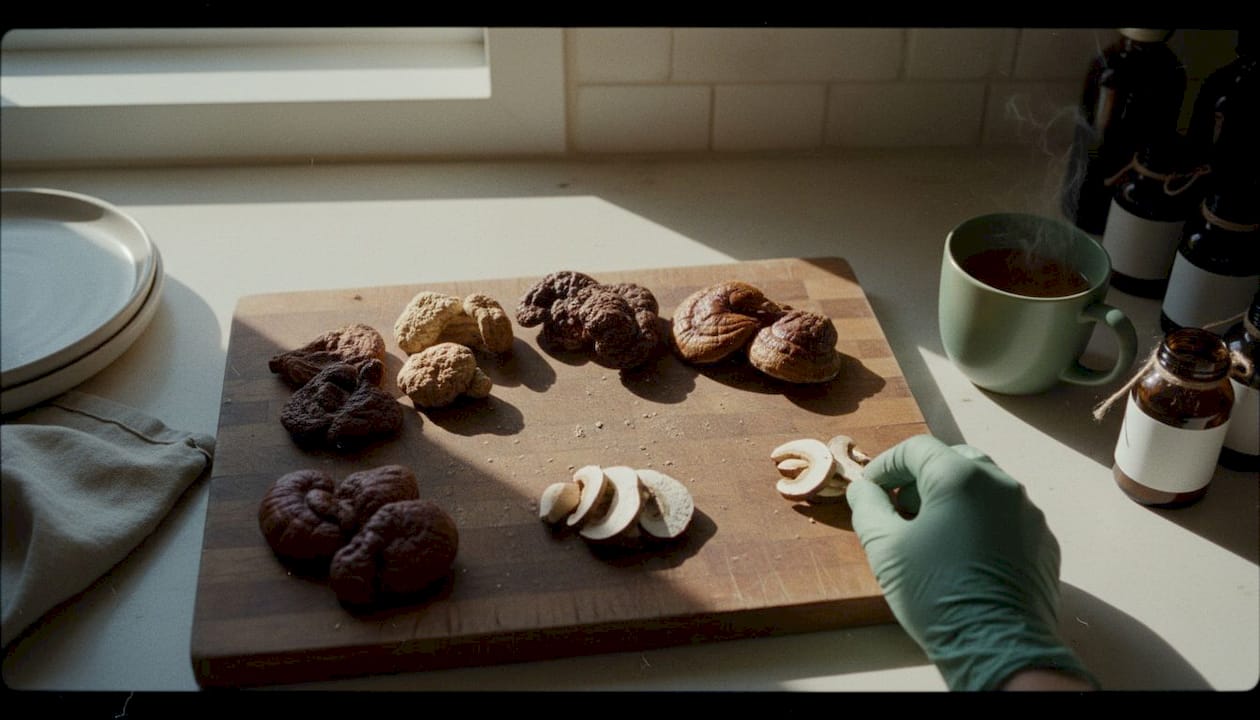
Comparison: Mushroom types and extraction suitability
| Mushroom | Cell wall density | Needs dual extraction | Primary benefit |
|---|---|---|---|
| Reishi | Very high | Yes | Adaptogenic, sleep, stress |
| Chaga | Very high | Yes | Antioxidant, immune support |
| Lion’s Mane | High | Yes | Cognitive, nerve health |
| Turkey Tail | High | Yes | Immune support, gut health |
| Oyster | Low | No | General nutrition only |
| Shiitake | Low | No | General nutrition, culinary |
Pro Tip: Source certified organic, tested dried mushrooms from reputable suppliers. Contaminated or adulterated mushrooms can introduce heavy metals or fillers that no extraction process can remove. Quality input equals quality output. You can also learn more about mushroom extract usage to understand how different formats compare before you start.
Step-by-step mushroom dual extraction process
With your materials ready, follow these steps for a potent extract. The dual extraction method is named for its two-phase approach: alcohol first, then water. Each phase targets different compound classes, and combining them gives you the broadest possible range of bioactives in one tincture.
Phase 1: Alcohol extraction
- Weigh and grind your mushrooms. Start with 100g of dried mushrooms. Grind them to a fine powder using a coffee grinder or blender to maximize surface contact with the solvent.
- Combine with alcohol. Place the powder into a clean mason jar. Use a 1:5 ratio of mushroom to alcohol, so 100g mushrooms to 500ml of high-proof alcohol. Seal tightly.
- Macerate for 4 to 6 weeks. Store in a cool, dark place. Shake the jar daily to encourage full contact between the solvent and plant material. The longer this sits, the more alcohol-soluble triterpenes are pulled out.
- Strain the liquid. After 4 to 6 weeks, pour the mixture through cheesecloth into a clean container. Squeeze out every drop. The remaining solid material is called “marc” and gets used in Phase 2. Set the liquid aside.
Phase 2: Water extraction
- Decoct the marc. Place the strained marc into a saucepan. Cover with 1 liter of filtered water.
- Simmer for 2 to 4 hours. Keep the temperature low, around 180°F (82°C). High heat can destroy some heat-sensitive compounds, so avoid a rolling boil. Add water as needed to prevent the marc from drying out.
- Strain and reduce. Strain out all solid material through cheesecloth. Return the liquid to the saucepan and gently reduce it down to approximately 500ml.
Phase 3: Combining and bottling
- Combine both extracts. Mix the alcohol extract with the reduced water extract at a 1:1 ratio. This produces roughly 1 liter of finished tincture.
- Check alcohol concentration. The final blend must contain at least 25% alcohol to preserve the tincture and prevent mold or bacterial growth. If your starting alcohol was 95% proof and the ratio was correct, you should be well within this range.
- Bottle in amber glass. Pour into clean, dark amber bottles using a funnel. Label each bottle with the mushroom type, date, and alcohol percentage.
Batch yield reference table
| Input | Quantity | Output |
|---|---|---|
| Dried mushrooms | 100g | Alcohol marc for phase 2 |
| High-proof alcohol | 500ml | ~500ml alcohol extract |
| Water | 1 liter | ~500ml water extract (post-reduction) |
| Final combined tincture | Combined 1:1 | ~1 liter |
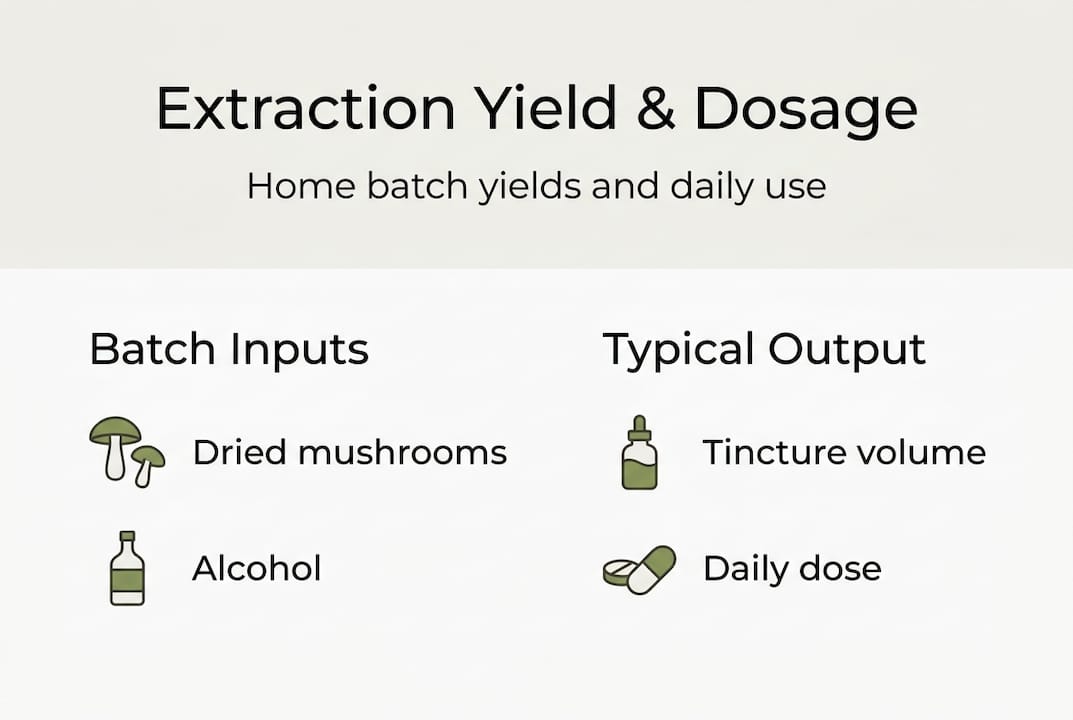
Pro Tip: A standard batch yields approximately 1 liter of tincture from 100g of dried mushrooms. A typical daily dose is 2 to 4ml, so 1 liter provides roughly 250 to 500 daily servings. That’s a substantial return on a single batch. For those especially focused on cognitive support, studying brain health mushrooms alongside your extraction work gives useful context on dosing decisions.
Wellness, immunity, and cognitive benefits of mushroom extracts
Now, it’s critical to understand exactly what makes these extracts so beneficial. The dual extraction method isn’t just a process preference. It’s the only reliable way to access the full spectrum of compounds each mushroom contains. Single-phase extraction, whether alcohol only or water only, leaves a significant portion of the bioactive profile untapped.
Key compounds and their benefits
- Turkey Tail and beta-glucans. Turkey Tail mushroom is rich in polysaccharopeptide (PSK) and beta-glucans, compounds that activate and regulate immune cell activity. These compounds are water-soluble and would be missed entirely in an alcohol-only extraction.
- Lion’s Mane and nerve growth factor. Lion’s Mane contains hericenones and erinacines, which are known to stimulate NGF (nerve growth factor) production. NGF plays a direct role in maintaining and regenerating neurons. Clinical data shows these cognitive function improvements are especially relevant for aging adults.
- Reishi and adaptogenic compounds. Reishi contains triterpenes, particularly ganoderic acids, which are alcohol-soluble and support the body’s stress response. Regular use is associated with improved sleep quality and mood stability.
- Chaga and antioxidants. Chaga has one of the highest known ORAC scores of any natural substance, reflecting its powerful antioxidant content including superoxide dismutase (SOD) and betulinic acid.
What the clinical data shows
“Published research on Lion’s Mane, Turkey Tail, and Reishi consistently shows improved MMSE scores in cognitive trials, immune activation markers, and measurable reductions in perceived stress and sleep latency.”
Clinical trials on medicinal mushrooms show that Lion’s Mane supported statistically significant cognitive improvement in older adults with mild cognitive impairment, based on MMSE scoring. Turkey Tail’s PSK has been studied extensively in oncology settings as an immune adjuvant. Reishi trials demonstrate reduced cortisol levels and improved sleep duration, particularly relevant for chronically stressed individuals.
Stacking multiple mushroom extracts in one routine builds what practitioners call a “full-spectrum wellness protocol.” Combining Lion’s Mane for cognition, Turkey Tail for immunity, and Reishi for stress management targets three distinct physiological systems simultaneously. This approach is also consistent with broader family immunity strategies that emphasize layered, multi-system support over single interventions.
Looking deeper into specific research: Lion’s Mane NGF stimulation and beta-glucan immune effects show consistent results across multiple randomized controlled trials, lending credibility beyond anecdotal wellness claims. For a focused look at what the science says about Lion’s Mane specifically, see Lion’s Mane benefits and for broader immune context, the immune support mushroom guide covers the full landscape.
Safety, side effects, and troubleshooting tips
To maximize benefits, handling safety and quality is essential. Mushroom extracts are well-tolerated by most people, but there are specific scenarios where caution is warranted and specific extraction mistakes that consistently reduce product quality.
Who should exercise caution
- People on blood thinners. Reishi mushroom has mild anticoagulant properties and may interact with medications like warfarin. This isn’t a reason to avoid all mushroom extracts, but Reishi in particular warrants care for anyone on anticoagulant therapy.
- Those with mushroom allergies. Allergic reactions are uncommon but possible. Start with a small dose and monitor for any response before adopting a regular routine.
- People with autoimmune conditions. Since several mushrooms modulate immune activity, those with active autoimmune diseases should consult a healthcare provider before starting.
- Children and pregnant individuals. Limited clinical data exists for these groups. Best to consult a physician before use.
Side effects to expect
Mild side effects, including GI upset and rare allergic responses, occur in fewer than 10% of users. These typically resolve when dose is reduced. There are no known toxic thresholds for the mushroom species covered here at normal supplemental doses.
“Fruiting body extracts are clinically preferred over mycelium-based products because fruiting bodies contain higher concentrations of the key active compounds, particularly beta-glucans and triterpenes.”
Common extraction mistakes and fixes
- Cloudiness in finished tincture. This is usually caused by starch or fine particulate from mycelium-based or poorly sourced mushrooms. Solution: use fruiting bodies and filter more carefully with multiple cheesecloth passes.
- Low yield or weak extract. Most often caused by too-short maceration time or insufficient alcohol proof. If the alcohol phase ran less than 4 weeks or used under 60% proof alcohol, redo the batch with proper parameters.
- Mold growth in the water phase. Occurs when the final tincture falls below 25% alcohol concentration. Recombine with additional alcohol to bring the level up, or discard and restart with correct ratios.
- Off-putting bitterness. Normal for Reishi and Chaga due to their triterpene content. This indicates a successful extraction, not a problem. Dilute in water or juice for easier consumption.
Pro Tip: Always choose fruiting body mushroom material over mycelium on grain products. Mycelium on grain contains a significant portion of grain starch, not mushroom bioactives. Look for products that specify fruiting body only on their label.
The truth about mushroom extracts: What most guides miss
Having covered how to do it, let’s look beyond the basics: what most guides ignore. Most mushroom extract tutorials focus entirely on one mushroom at a time. They walk through Lion’s Mane extraction or Reishi extraction as isolated projects. That approach misses the most valuable strategy available.
Stacking extracts, meaning combining two or three individual mushroom tinctures into a daily protocol, produces results that no single-mushroom extract can replicate. The immune activation from Turkey Tail beta-glucans operates through different pathways than the adaptogenic effects of Reishi triterpenes. Neither interferes with the other. Together, they cover more physiological ground with the same daily serving volume.
The second thing most guides get wrong is the assumption that price equals quality. A well-executed home extraction using certified organic dried mushrooms can outperform expensive commercial tinctures that use mycelium on grain, short maceration periods, or diluted alcohol phases. The quality of any extract comes down to three factors: source material, extraction time, and alcohol concentration. Technique matters far more than brand markup.
There’s also a practical reality that gets overlooked: consistency is more important than perfection. A slightly imperfect batch taken daily for three months will produce more measurable benefits than a perfect batch taken sporadically. The clinical data on Lion’s Mane brands and other mushrooms consistently shows results in trials that run 8 to 16 weeks. Short-term use rarely delivers the outcomes people are looking for.
The bottom line is this: dual extraction, multi-mushroom stacking, and consistent daily use are the three variables that most determine whether mushroom extracts actually work for you. Focusing on all three simultaneously produces results that focusing on just one never will.
Upgrade your wellness routine with quality mushroom extracts
Ready to take action? Homemade extracts are a powerful option, but tested, quality-controlled supplements offer consistency that’s hard to replicate at home, especially for those without 6 weeks to commit to a maceration cycle. Longevity Botanicals offers a full range of organic mushroom capsule supplements that use fruiting body material with verified beta-glucan content, formatted for daily use. For those who prefer versatility in how they consume mushroom extracts, the organic mushroom powders collection allows easy addition to drinks, smoothies, and food. Specifically for immune function, the immune function mushroom extracts range features Turkey Tail, Reishi, and Chaga formulations designed to complement any wellness routine.
Frequently asked questions
Which mushroom is best for cognitive support?
Lion’s Mane has the strongest clinical backing for cognitive function, particularly for memory and nerve health in aging adults.
How long does a dual extraction batch take?
The alcohol phase runs 4 to 6 weeks, followed by a 2 to 4 hour water decoction, making the full process approximately one to one and a half months.
Are mushroom extracts safe for everyone?
Most people tolerate them well, but rare GI upset and allergic responses do occur, and those on blood thinners or with autoimmune conditions should consult a healthcare provider first, especially regarding Reishi.
Can I use fresh mushrooms for extraction?
Dried and powdered mushrooms are strongly preferred. Fresh mushrooms make alcohol concentration control difficult and reduce the concentration of bioactive compounds in the finished product.
What’s the typical yield from home extraction?
A standard batch using 100g mushrooms with 500ml alcohol and 1L water yields approximately 1 liter of finished tincture, enough for several months of daily use.
Recommended
- Comprehensive Guide to Mushroom Extract Usage for Wellness – LongevityBotanicals
- Step-by-step immune support with mushrooms: your guide – LongevityBotanicals
- Master the Mushroom Blending Process for Optimal Wellness – LongevityBotanicals
- How to Use Mushroom Supplements for Natural Wellness – LongevityBotanicals
Related Posts

Why Water-Soluble Mushroom Compounds Drive Real Results

What Is Mushroom Sustainability? Benefits and Practices

The Role of Organic Farming in Mushrooms Explained

What Is a Fruiting Body? Mushroom Science Explained

Mushroom Allergenicity Explained: Symptoms and Safe Use

Top 5 naturesrise.com Mushroom Supplement Alternatives 2026

Top 6 Hemplucid.com Alternatives for 2026


