

Mushroom supplement dos and don'ts: safe guide for wellness
Mushroom supplements have moved from niche health stores to mainstream wellness routines, and the options keep growing. Reishi, Lion’s Mane, Turkey Tail, Chaga, Cordyceps — each carries a distinct set of reported benefits, and each comes in powders, capsules, and blends. The problem is that no standardized dosages exist and human research is still catching up, which makes sorting reliable guidance from marketing noise genuinely difficult. This guide cuts through that confusion with clear, practical dos and don’ts covering safety, product quality, dosage, and realistic expectations.
Table of Contents
- What to know before starting mushroom supplements
- How to start: Dosage, choosing products, and introducing mushrooms
- The essential dos: Safe practices for mushroom supplementation
- The essential don’ts: Risks, interactions, and pitfalls
- What to expect: Realistic results and troubleshooting
- Take the next step with high-quality mushroom supplements
- Frequently asked questions
Key Takeaways
| Point | Details |
|---|---|
| Start low, go slow | Begin with low doses and increase gradually while observing your body’s response. |
| Verify quality always | Look for third-party testing, fruiting body extracts, and clear labeling when choosing mushroom supplements. |
| Consult your doctor | Discuss new supplements with your healthcare provider, especially if you take medication or have conditions. |
| Dos and don’ts matter | Follow safe practices and avoid shortcuts or unverified products for optimal results. |
What to know before starting mushroom supplements
Before adding any mushroom supplement to a daily routine, it helps to understand what you are actually buying. Mushroom supplements come in several formats: capsules for convenience, powders for flexible dosing, and blended formulas that combine multiple mushroom species. The core mushrooms most commonly found in supplements include Reishi for stress and immune support, Lion’s Mane for cognitive function, Turkey Tail for gut and immune health, Chaga for antioxidant support, and Cordyceps for energy. Understanding why use mushroom supplements matters before choosing a product.
Product quality varies widely. The most important markers to look for are fruiting body extracts (not mycelium grown on grain), beta-glucan content above 20%, dual extraction methods, and third-party tested purity. Avoid products with unverified blends, undisclosed fillers, or no certificate of analysis.
“Choose high-quality supplements: fruiting body extracts preferred over mycelium-on-grain, third-party tested for purity, beta-glucans above 20%, dual-extracted; avoid fillers and unverified blends.”
Not everyone should start without medical input. Certain groups need to consult a doctor first:
- Pregnant or breastfeeding individuals
- People taking prescription medications (especially blood thinners or immunosuppressants)
- Those with autoimmune conditions
- Individuals with known mushroom allergies
- Diabetics monitoring blood sugar levels
Reishi, for example, carries specific safety warnings around bleeding risk and blood pressure interactions. Knowing the risks tied to specific mushrooms is part of responsible supplementation. Exploring medicinal mushrooms and wellness provides a solid foundation before purchasing.

How to start: Dosage, choosing products, and introducing mushrooms
Starting mushroom supplements does not need to be complicated, but a stepwise approach reduces the risk of unwanted reactions and helps you identify what works.
- Start low. Begin with 500 to 1,000 mg per day for a single mushroom type.
- Increase gradually. Typical wellness doses range from 1 to 3 grams per day, with higher amounts only under professional supervision.
- Read the label carefully. Check serving size, beta-glucan percentage, extraction method, and any third-party certifications.
- Introduce one mushroom at a time. This makes it easier to track your body’s response.
- Keep a simple log. Note energy, digestion, sleep, and mood changes over the first few weeks.
Here is a quick reference for popular mushrooms and their typical serving ranges:
| Mushroom | Typical daily serving | Primary benefit area |
|---|---|---|
| Lion’s Mane | 500 mg to 3 g | Cognitive support |
| Reishi | 1 g to 2 g | Stress, immune support |
| Turkey Tail | 1 g to 3 g | Gut health, immunity |
| Chaga | 1 g to 2 g | Antioxidant support |
| Cordyceps | 1 g to 3 g | Energy, endurance |
For more detail on serving sizes by goal, the mushroom extract dosage guide covers immune and brain support specifically. Reviewing wellness benefits of mushrooms also helps align product choice with personal health goals.
Pro Tip: Introduce one mushroom at a time for at least two weeks before adding another. This way, if a reaction occurs, you know exactly which product caused it.
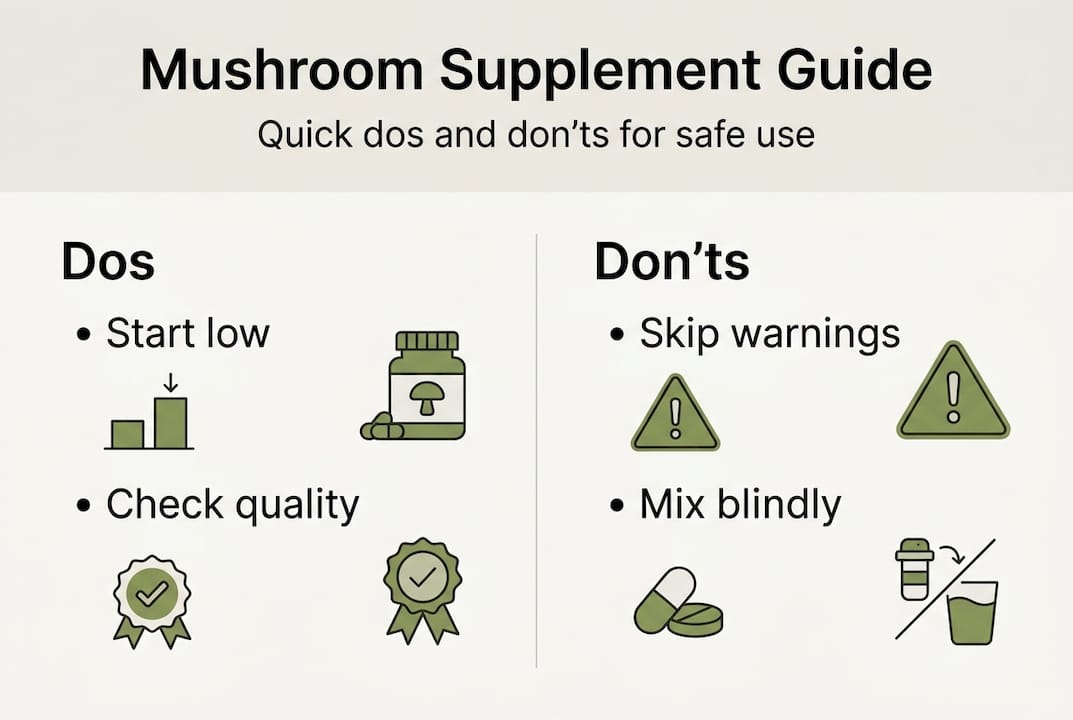
The essential dos: Safe practices for mushroom supplementation
Following a few consistent habits makes a real difference in both safety and results. These are the practices worth building into a routine.
- Keep a supplement diary. Track what you take, when, and how you feel. Patterns become visible over weeks, not days.
- Cycle your use. Many practitioners suggest five days on, two days off, or rotating mushroom types monthly to prevent tolerance buildup.
- Pair with a nutrient-rich diet. Absorption and bioavailability improve when supplements are taken alongside whole foods, particularly those with healthy fats.
- Tell your doctor. Always disclose every supplement you take, especially if you are on prescription medications.
- Choose verified brands. Look for dual-extracted products with published beta-glucan content and independent lab testing.
The immune and cognitive benefits associated with mushroom supplements are promising, but most evidence is still preclinical or based on small human trials. That context matters when setting expectations. For those focused on cognitive goals, brain health mushrooms outlines the most researched options. Pairing supplementation with natural immunity boosters like sleep, hydration, and whole foods amplifies results.
Pro Tip: Look for products labeled “dual-extracted” and backed by a certificate of analysis from an independent lab. These two markers alone filter out the majority of low-quality products on the market.
For a broader view of how to build a routine around these products, wellness with mushroom supplements is a useful reference.
The essential don’ts: Risks, interactions, and pitfalls
Knowing what to avoid is just as important as knowing what to do. These are the most common mistakes that undermine safety and effectiveness.
- Do not exceed recommended doses without supervision. Typical servings range from 500 mg to 2 g per mushroom per day. Going beyond that without guidance increases the risk of side effects.
- Do not combine with prescription medications without consulting a doctor. Reishi, for instance, may increase bleeding risk and interact with anticoagulants and blood pressure medications.
- Do not buy mycelium-on-grain products. These contain significant amounts of starch filler and deliver far less active compound than fruiting body extracts.
- Do not ignore allergy history. Anyone with mold sensitivities or known mushroom allergies should get medical clearance before starting.
- Do not expect immediate results. Benefits from mushroom supplements build gradually. Expecting overnight changes leads to premature discontinuation or unsafe dose increases.
“Do not exceed recommended doses without supervision, ignore drug interactions, use low-quality mycelium products, or expect immediate results.”
For those exploring cognitive boost with mushrooms, patience is especially important since neurological benefits tend to accumulate over weeks of consistent use. Reviewing natural mushroom supplement use provides additional context on safe, practical application.
Statistic callout: A typical safe starting dose is 500 mg to 1,000 mg per mushroom per day, with wellness maintenance doses generally falling between 1 g and 3 g daily.
What to expect: Realistic results and troubleshooting
Setting realistic expectations is one of the most overlooked parts of starting mushroom supplements. Most people will not notice dramatic changes in the first week. That is normal.
- Timeline: Noticeable effects typically emerge after two to four weeks of consistent daily use. Some benefits, like immune modulation, may take six to eight weeks to become measurable.
- No effect after four to six weeks? Review product quality first. Check whether the product uses fruiting body extract, confirm beta-glucan content, and verify third-party testing. A low-quality product is the most common reason for no results.
- Mild side effects: Some users experience temporary digestive changes, particularly when starting higher doses. These usually resolve within a few days.
- Rare reactions: Allergic responses are uncommon but possible. Skin reactions, difficulty breathing, or significant digestive distress warrant stopping use and consulting a doctor.
- Troubleshooting steps: Rotate mushroom types, reduce dose temporarily, confirm extract quality, and consult a healthcare provider if effects persist.
Because research remains largely preclinical, benefits are best measured against personal baselines rather than clinical benchmarks. Tracking sleep, energy, and focus over time gives a clearer picture than expecting a single measurable outcome. Learning how to blend mushroom extracts for immune and brain health can also help optimize results. For those focused on immunity specifically, the immune support mushroom guide outlines what to look for in a product and what realistic immune support looks like.
Benefits are cumulative. Consistency over months, paired with a healthy diet and lifestyle, produces the most reliable outcomes.
Take the next step with high-quality mushroom supplements
For those ready to apply what this guide covers, product quality is the starting point. Longevity Botanicals offers a curated range of mushroom supplements built around the standards outlined here: fruiting body extracts, verified beta-glucan content, and third-party testing. Browse organic mushroom extracts for concentrated, dual-extracted options across core mushroom types. For daily convenience, mushroom capsule supplements offer pre-measured servings with no preparation required. Those who prefer flexible dosing can explore mushroom powder supplements for use in drinks, smoothies, or food. Each category is organized by mushroom type and benefit area, making it straightforward to match product to goal.
Frequently asked questions
Is it safe to take mushroom supplements every day?
Most mushroom supplements are safe for daily use in healthy adults, but cycling use (such as five days on, two days off) is generally recommended. Starting at 500 to 1,000 mg per day and monitoring for any side effects is the safest approach.
What are the signs of a poor-quality mushroom supplement?
Key red flags include undisclosed fillers, beta-glucan content below 20%, no third-party certification, and use of mycelium-on-grain instead of fruiting body. Fruiting body extracts with verified beta-glucans are the standard for quality products.
Can mushroom supplements interact with medications?
Yes. Reishi in particular may increase bleeding risk and interact with anticoagulants, antihypertensives, and immunosuppressants. Always consult a doctor before combining mushroom supplements with any prescription medication.
How long does it take to notice effects from mushroom supplements?
Noticeable effects typically require several weeks of consistent use, as benefits build gradually rather than appearing immediately. Because research is still largely preclinical, tracking personal baselines over time is the most reliable way to gauge progress.
Recommended
- Mushroom powders checklist: guide for natural wellness – LongevityBotanicals
- How to Use Mushroom Supplements for Natural Wellness – LongevityBotanicals
- Unlock wellness benefits with mushroom supplements – LongevityBotanicals
- Comprehensive Guide to Mushroom Extract Usage for Wellness – LongevityBotanicals
Related Posts

What Is a Fruiting Body? Mushroom Science Explained

Mushroom Allergenicity Explained: Symptoms and Safe Use

How to read mushroom supplement labels effectively

What is an anti-inflammatory mushroom? Benefits and uses

Standardized Mushroom Extract: Potency, Purity, Explained

Top 6 Best Mushroom Supplements 2026

Mushroom extract dosage guide for immune and brain support


