

Immune support: why it matters and how mushrooms help
Most people assume a stronger immune system is always better. That idea is actually backwards. Micronutrient deficiencies impair immune cell growth and function, but an overactive immune system causes its own problems, from chronic inflammation to autoimmune conditions. Real immune support is about balance, not intensity. Nutrition lays the foundation, and natural tools like medicinal mushrooms can add a meaningful layer on top of that foundation. This article breaks down the science, the role of mushrooms, and how to apply both in a practical, evidence-based way.
Table of Contents
- Why immune support matters: The science and your health
- How nutrition, lifestyle, and mushrooms fit together
- Medicinal mushrooms: Core types and immune support mechanisms
- Evaluating the evidence: What mushroom supplements can and can’t do
- Practical tips for choosing and using mushroom immune supplements
- Explore natural immune support solutions
- Frequently asked questions
Key Takeaways
| Point | Details |
|---|---|
| Balanced nutrition first | A healthy diet is essential for proper immune function before considering supplements. |
| Mushrooms modulate immunity | Evidence shows Reishi, Turkey Tail, and Maitake help the immune system work efficiently, not just ‘boost’ it. |
| Supplement quality matters | Choose standardized, fruiting body extracts from trusted brands and start with lower doses. |
| Effects are gradual | Consistent use is key, as real immune improvement appears over weeks, not days. |
Why immune support matters: The science and your health
The immune system does far more than fight colds. It defends against viruses, bacteria, and even abnormal cell growth. When it works well, you barely notice it. When it fails, the consequences range from frequent infections to serious disease.
Nutrition is one of the most direct levers you can pull. Key micronutrients include:
- Vitamin C: Supports the production and function of white blood cells
- Vitamin D: Regulates immune cell activity and reduces inflammation
- Zinc: Essential for immune cell development and signaling
- Iron: Required for immune cell proliferation
- Selenium: Protects immune cells from oxidative damage
Malnutrition and micronutrient deficiencies increase infection risk and directly impact immune cell function. This is not a minor issue. Deficiencies in even one of these nutrients can slow your immune response at a critical moment.
“Immune support is not about pushing your immune system above its normal range. It is about keeping it functioning at its best through consistent, balanced nutrition and healthy habits.”
The goal of any immune support guide is to help the immune system do its job, not to artificially amplify it. Over-activation, sometimes called immune hyperactivation, is linked to tissue damage and chronic disease. Balance is the target.
How nutrition, lifestyle, and mushrooms fit together
A strong immune system does not come from a single supplement. It comes from a combination of consistent habits that work together. The core pillars include:
- Sleep: 7 to 9 hours per night supports immune memory and cell repair
- Exercise: Moderate, regular activity improves immune surveillance
- Stress management: Chronic stress suppresses immune function over time
- Whole foods: Colorful vegetables, legumes, and whole grains provide the micronutrients your immune cells need
Once those foundations are in place, mushrooms support immunity by adding a complementary layer. Medicinal mushrooms like Reishi, Maitake, and Turkey Tail contain bioactive compounds that help modulate, meaning regulate and balance, the immune response rather than simply stimulate it.
Prioritizing nutrition and lifestyle before supplements is the evidence-based approach. Mushrooms are most effective when they are added to an already solid health routine, particularly in people who are deficient, stressed, or recovering.
Pro Tip: If you are not consistently eating a varied diet with plenty of vegetables and getting adequate sleep, start there before adding any supplement. Mushrooms work best as a complement, not a substitute.
The mushroom supplement science is promising, but it is most relevant for people who have already addressed the basics. Think of mushrooms as a targeted addition, not a shortcut.
Medicinal mushrooms: Core types and immune support mechanisms
Not all mushrooms work the same way. The most studied varieties each have distinct active compounds and documented effects on immune function.

| Mushroom | Key compounds | Primary immune effect |
|---|---|---|
| Reishi | Beta-glucans, triterpenoids | Increases NK cell activity, reduces inflammation |
| Turkey Tail | PSK, PSP polysaccharides | Modulates T-cell response, gut-immune axis support |
| Maitake | D-fraction beta-glucans | Activates macrophages and dendritic cells |
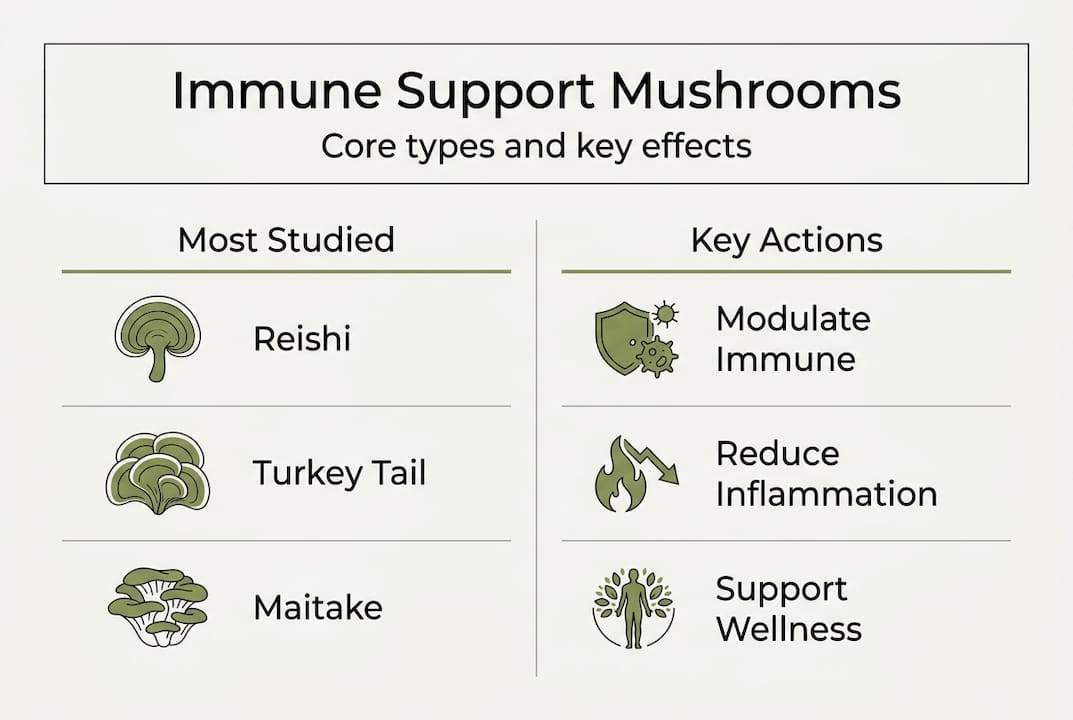
Beta-glucans and polysaccharides in Reishi, Turkey Tail, and Maitake modulate immune responses by binding to receptors on immune cells and triggering a calibrated reaction. This is different from simply stimulating the immune system. Modulation means the response is adjusted up or down depending on what the body needs.
Clinical trial data adds weight to these mechanisms. Reishi increased NK cytotoxicity by 83% in one trial, Turkey Tail reduced COVID vaccine side effects, and Maitake showed measurable immune modulation in human subjects. These are not trivial findings.
“Triterpenoids in Reishi do more than modulate immunity. They also reduce inflammatory signaling, which matters for people dealing with chronic low-grade inflammation.”
For a broader look at how these varieties compare, the top immune boosting mushrooms resource covers additional options. And for a deeper look at the research behind mushrooms for immunity and wellness, the evidence base is growing steadily.
Evaluating the evidence: What mushroom supplements can and can’t do
The science is real, but it comes with important caveats. Here is what the current research actually shows:
| Evidence type | Finding | Limitation |
|---|---|---|
| Meta-analysis (RCTs) | SMD of -0.42 for immune markers | Small sample sizes, short durations |
| Preclinical studies | Strong mechanistic data | Limited human translation |
| Network pharmacology | Turkey Tail PSP shows 5 to 7x potency for inflammation control | Needs more human validation |
RCTs are often small and short-term with modest effects. Preclinical data is stronger but limited by bioavailability and standardization issues. This does not mean mushrooms do not work. It means the evidence supports them as adjuncts, not primary treatments.
Key takeaway: A standardized mushroom effect size of -0.42 in meta-analysis is considered clinically meaningful for a dietary supplement. That is comparable to many over-the-counter wellness products with far less scrutiny.
What matters most for results:
- Dose of at least 1.5g per day of standardized extract
- Fruiting body extracts rather than mycelium-only products
- Consistent daily use over several weeks
- Products with verified beta-glucan content
Turkey Tail PSP shows particularly strong data for multi-targeted inflammation control, with network pharmacology models showing 5 to 7 times the potency of single-compound approaches. The gut-immune axis is a key pathway here, and beta-glucans are especially active in that space.
For more on how immunity and cognition research intersects with mushroom use, and for practical mushroom dosage guidance, those resources provide additional depth.
Practical tips for choosing and using mushroom immune supplements
Knowing the science is useful. Applying it correctly is what produces results. Here is a straightforward process for getting started:
- Choose fruiting body extracts. Fruiting body products contain higher concentrations of active beta-glucans compared to mycelium-on-grain products.
- Check beta-glucan content. Look for products that list the percentage of beta-glucans on the label. This is the key marker of potency.
- Verify third-party testing. Reputable brands provide certificates of analysis from independent labs. This confirms purity and potency.
- Start with a lower dose. Begin at the lower end of the recommended range and increase gradually over one to two weeks.
- Be consistent. Immune effects from mushroom extracts build over time. Daily use for at least four weeks is needed to assess results.
- Keep your core habits strong. Supplements work best alongside good sleep, a varied diet, and regular movement.
- Consult your healthcare provider. If you take prescription medications or have a chronic health condition, check before adding any new supplement.
Selecting standardized beta-glucan extracts, starting low, and adding gradually is the best practice approach supported by current research. Supplements are most effective as adjuncts to a healthy lifestyle, not replacements for one.
Pro Tip: When reading a supplement label, look for the phrase “standardized to X% beta-glucans.” If that information is missing, the product may not be potent enough to produce measurable effects.
For more detail on what to look for, the mushroom extract tips resource is a practical starting point. The mushroom powders wellness checklist and the guide to mushroom extract usage cover additional selection and usage criteria in detail.
Explore natural immune support solutions
For those ready to add medicinal mushrooms to their wellness routine, Longevity Botanicals offers a curated range of high-quality, standardized mushroom products. The immune function mushroom extracts collection includes options specifically selected for immune support, with clear ingredient transparency and verified beta-glucan content. For convenient daily use, the organic mushroom capsule supplements range offers pre-measured doses in easy-to-take formats. Those who prefer to blend mushrooms into food or drinks can explore the organic mushroom powders collection. All products are designed to complement a balanced diet and healthy lifestyle, not replace them.
Frequently asked questions
What are the best mushrooms for immune support?
Reishi, Turkey Tail, and Maitake have the strongest evidence for immune modulation, primarily due to their high beta-glucan and polysaccharide content. These compounds interact directly with immune cell receptors to help regulate the immune response.
Can I ‘boost’ my immune system with supplements?
Supplements help maintain a balanced immune function but do not push it above healthy levels. Nutrition and lifestyle habits remain the most reliable foundation for consistent immune health.
How quickly do mushroom immune supplements work?
RCTs with mushroom extracts typically observe measurable immune changes after several weeks of consistent use. These are not fast-acting products and work best with daily, long-term use.
Are there any risks to using mushroom supplements?
Mushroom supplements are generally safe when sourced from reputable brands with third-party testing. However, poor-quality supplements carry real risks, and anyone with underlying health conditions should consult their healthcare provider before starting.
What dose of mushroom extract is recommended?
Research supports at least 1.5g per day of standardized mushroom extract for measurable immune effects. Always check that the product specifies beta-glucan content to confirm it meets this threshold.
Recommended
- How Mushrooms Support Immunity Naturally – LongevityBotanicals
- Top immune boosting mushrooms for natural health support – LongevityBotanicals
- Antioxidants in mushrooms: 40% immunity boost potential – LongevityBotanicals
- What are immune support supplements? Mushroom guide 2026 – LongevityBotanicals
- Why understanding hormone balance matters for… | Biostarks
Related Posts

Why Water-Soluble Mushroom Compounds Drive Real Results

What Is Mushroom Sustainability? Benefits and Practices

The Role of Organic Farming in Mushrooms Explained

What Is a Fruiting Body? Mushroom Science Explained

Mushroom Allergenicity Explained: Symptoms and Safe Use

Top 5 naturesrise.com Mushroom Supplement Alternatives 2026

Top 6 Hemplucid.com Alternatives for 2026


