

Why stress support supplements work and how to choose safely
TL;DR:
- Adaptogens and medicinal mushrooms support stress response by regulating the HPA axis and cortisol levels.
- Clinical evidence shows significant stress reduction with standardized doses of ashwagandha and mushroom blends over several weeks.
- Quality sourcing, proper dosing, and integrating lifestyle habits are essential for effective stress management.
Most people assume stress relief comes down to meditation, better sleep habits, or a daily walk. Those strategies matter, but they don’t tell the whole story. Research shows that certain supplements, specifically adaptogens and medicinal mushroom formulations, can support your body’s stress response at a biological level, not just a behavioral one. This guide covers how these supplements work, what the clinical evidence actually shows, how to pick quality products, and how to fit them into a realistic routine. If you’ve been curious about mushroom-based stress support, this is the practical, evidence-grounded breakdown you need.
Table of Contents
- How stress support supplements work in the body
- What the evidence says: Clinical results for ashwagandha and mushroom blends
- How to choose and use stress support supplements wisely
- Beyond supplements: Integrating holistic stress support
- The real story: What most guides miss about stress support supplements
- Shop quality stress support mushroom supplements with confidence
- Frequently asked questions
Key Takeaways
| Point | Details |
|---|---|
| Biology-based stress support | Adaptogens and medicinal mushrooms work by modulating stress hormones like cortisol at the HPA axis. |
| Clinical evidence promising | Studies show ashwagandha and mushroom blends can significantly reduce stress and anxiety markers compared to placebo. |
| Choose quality products | Prioritize standardized fruiting body extracts and third-party tested supplements to maximize safety and efficacy. |
| Supplements not a magic cure | Use supplements as complementary tools alongside diet, sleep, and healthy routines for optimal stress resilience. |
How stress support supplements work in the body
Adaptogens are a class of plants and fungi that help the body resist physical, chemical, and biological stressors. The term isn’t just marketing language. It has a functional definition: an adaptogen must be non-toxic at normal doses, produce a nonspecific resistance to stress, and help normalize physiological functions. Ashwagandha, Reishi, Lion’s Mane, and Cordyceps all meet these criteria in varying degrees.
The central target is the HPA axis, short for hypothalamic-pituitary-adrenal axis. This is the system your body uses to detect and respond to stress. When you encounter a stressor, your hypothalamus signals the pituitary gland, which then signals the adrenal glands to release cortisol. Cortisol is useful in short bursts, but chronically elevated levels damage memory, suppress immunity, and disrupt sleep. Adaptogens help regulate this feedback loop, preventing cortisol from spiking too high or staying elevated too long.
Stress support supplements, particularly adaptogens like ashwagandha and certain mushrooms such as Reishi, Lion’s Mane, and Cordyceps, help the body manage stress by modulating the HPA axis, reducing cortisol levels, and promoting resilience to stressors. Mushrooms bring additional mechanisms including beta-glucans, triterpenes, and nerve growth factor (NGF) stimulation, which support both immune regulation and nervous system health.
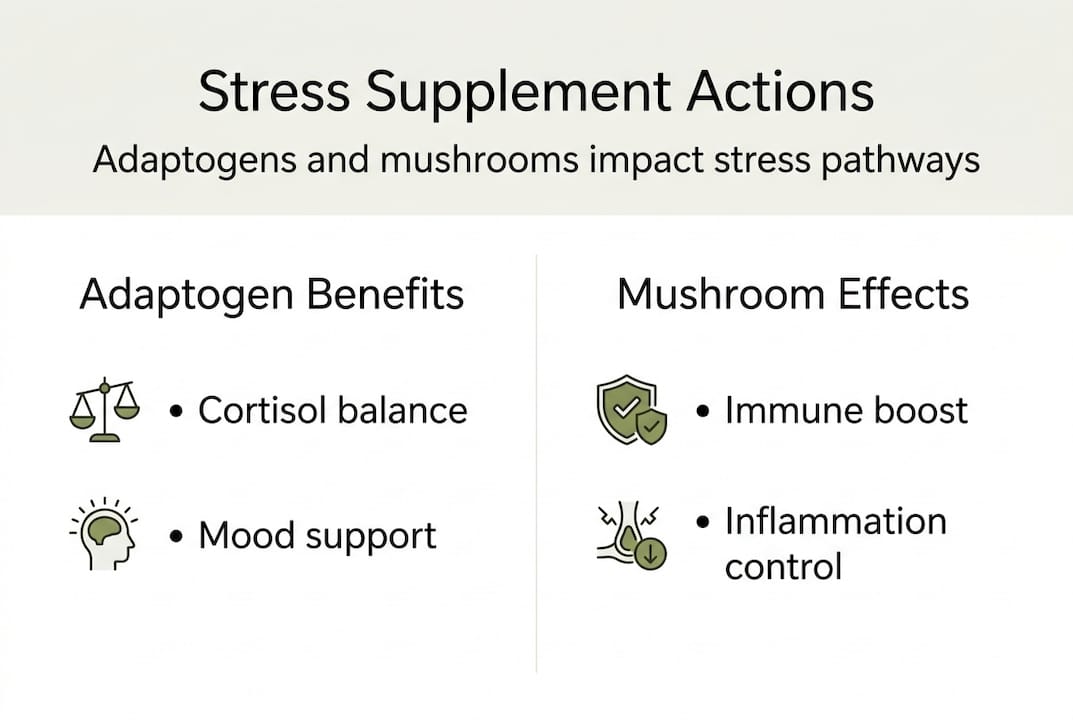
Beta-glucans are polysaccharides found in mushroom cell walls. They interact with immune receptors to modulate inflammation, which is closely tied to chronic stress. Triterpenes, found especially in Reishi, have demonstrated calming and cortisol-modulating properties in preliminary research. NGF stimulation, most associated with Lion’s Mane, supports the growth and maintenance of neurons, which may help with stress-related cognitive symptoms like brain fog.
Ashwagandha works differently. Its active compounds, called withanolides, act more directly on the adrenal system and have a stronger body of RCT (randomized controlled trial) evidence behind them. Mushrooms tend to work more broadly, supporting immune function and nervous system health as part of a longer-term strategy. Both approaches are valid, and they can complement each other.
Pro Tip: Look for supplements that list extract ratios (like 10:1) or standardized percentages of active compounds (such as 5% withanolides or 30% beta-glucans). These details signal that you’re getting a concentrated, consistent product rather than raw powder with unpredictable potency.
| Compound | Source | Primary stress-related action |
|---|---|---|
| Withanolides | Ashwagandha | HPA axis regulation, cortisol reduction |
| Beta-glucans | All mushrooms | Immune modulation, inflammation control |
| Triterpenes | Reishi | Calming effect, cortisol modulation |
| NGF stimulators | Lion’s Mane | Neuron support, cognitive resilience |
For a broader look at how immune boosting mushrooms support overall wellness, or to explore options specifically formulated as mushrooms for anxiety, those are solid starting points.
What the evidence says: Clinical results for ashwagandha and mushroom blends
With the basics of biological action explained, let’s look at real-world outcomes from high-quality clinical studies.
Ashwagandha has the most robust clinical record among adaptogens. Multiple RCTs show significant reductions in cortisol, Perceived Stress Scale (PSS) scores, and Hamilton Anxiety Rating (HAM-A) scores in adults taking 300 to 600mg of standardized extract daily. One well-cited trial found cortisol reductions of over 27% compared to placebo after 60 days. These aren’t trivial numbers.
Mushroom blends are catching up. A 12-week RCT involving a blend of Reishi and four other mushrooms found statistically significant reductions in anxiety scores, fatigue, and cortisol compared to placebo. Participants used doses in the 500 to 1000mg range daily. The results suggest that multi-mushroom formulations may offer broader benefits than single-species products.
Key clinical benchmarks to know:
- Ashwagandha: 300 to 600mg daily, standardized to 5% withanolides, showing benefits in 6 to 12 weeks
- Mushroom blends: 500 to 1000mg daily, fruiting body extracts preferred, benefits observed at 8 to 12 weeks
- Cortisol reduction: up to 27% with ashwagandha; meaningful but smaller reductions seen with mushroom blends
- Anxiety scores: significant improvement on PSS and HAM-A scales in multiple ashwagandha trials
- Fatigue: meaningfully reduced in mushroom blend trials, which is relevant since fatigue and stress are closely linked
For a side-by-side breakdown of how individual mushrooms compare, the Lion’s Mane vs Reishi comparison is worth reading. And if you’re wondering whether combining species makes sense, the science behind blending different mushrooms explains the rationale well.
| Supplement | Typical dose | Time to benefit | Key outcome measured |
|---|---|---|---|
| Ashwagandha | 300 to 600mg/day | 6 to 12 weeks | Cortisol, PSS, HAM-A |
| Mushroom blend | 500 to 1000mg/day | 8 to 12 weeks | Anxiety, fatigue, cortisol |
| Lifestyle only | N/A | Variable | PSS, general wellbeing |
It’s worth noting that even adaptogen research experts describe the evidence as promising but not definitive. Most trials are short-term and involve relatively small sample sizes. That doesn’t mean the supplements don’t work. It means you should treat the evidence as directional, not conclusive, and monitor your own response.
How to choose and use stress support supplements wisely
Seeing the evidence, it’s crucial to understand how to safely and effectively incorporate these supplements into your real life.
Step-by-step selection framework:
- Check for standardized extracts. The label should specify the percentage of active compounds (withanolides, beta-glucans, triterpenes).
- Confirm mushroom source. Fruiting body extracts are more potent than mycelium-on-grain products, which often contain more starch than active compounds.
- Look for third-party testing. Certifications from NSF, USP, or independent labs confirm purity and label accuracy.
- Avoid proprietary blends with hidden dosages. You need to know exactly how much of each ingredient you’re getting.
- Start with one supplement at a time. This makes it easier to track what’s working and catch any adverse reactions early.
Red flags to avoid:
- No extract ratio or standardization listed
- “Mushroom powder” without specifying fruiting body or mycelium source
- Excessive fillers, artificial colors, or unnecessary additives
- Unrealistic claims like “eliminates stress in 24 hours”
The risks of adaptogens include variability in extract quality and potential adverse effects involving the liver, thyroid, and drug interactions. Ashwagandha specifically may affect thyroid hormone levels, so anyone with thyroid conditions should consult a doctor before use. Blood thinners and immunosuppressants can also interact with mushroom compounds.

Pregnancy is a clear contraindication for most adaptogens. If you’re pregnant, nursing, or managing a chronic condition, skip self-prescribing and talk to a healthcare provider first.
For most healthy adults, a practical starting regimen looks like this: begin at the lower end of the clinical dose range, take consistently for at least 8 weeks before evaluating results, and keep a simple stress journal to track sleep quality, mood, and energy. The reishi and ashwagandha synergy article covers how combining these two specifically can work well together. For cognitive aspects of stress, mushrooms for mental clarity is a useful read.
Pro Tip: Supplements work best when your baseline habits are solid. If you’re sleeping fewer than 6 hours a night or eating a highly processed diet, no supplement will fully compensate. Think of adaptogens as a layer on top of a functional foundation, not a replacement for one. A practical stress resilience stack that combines nutrition, sleep, and supplementation is more effective than any single approach.
Beyond supplements: Integrating holistic stress support
Supplements offer potential, but true stress resilience is more than just a capsule. Here’s how to bring it all together.
Diet and sleep are non-negotiable. Integrated approaches that prioritize diet and sleep consistently outperform supplement-only strategies. Chronic stress depletes magnesium, B vitamins, and zinc. Eating a varied, whole-food diet helps replenish these nutrients, which in turn supports the same HPA axis that adaptogens target. Sleep is when cortisol naturally resets. Without adequate sleep, cortisol stays elevated regardless of what you take.
Practical holistic routine elements:
- 7 to 9 hours of sleep, with a consistent wake time
- Anti-inflammatory diet with plenty of vegetables, omega-3 fats, and fiber
- Daily movement, even a 20-minute walk, to lower baseline cortisol
- Mindfulness or breathwork practice, even 5 minutes daily, to activate the parasympathetic nervous system
- Stress support supplements as an adjunct, not a centerpiece
Therapy and professional mental health support belong in this picture too. If stress is significantly affecting your daily function, supplements are not a substitute for professional care. Resources like mental health self-care and structured mindfulness workflows can help bridge the gap between lifestyle habits and clinical support.
Supplements work best as one layer in a broader system. Diet, sleep, movement, and professional support form the foundation. Adaptogens and mushroom formulations can add meaningful support on top of that foundation, but they don’t replace it.
If you’re looking for a convenient way to start with a multi-mushroom approach, the organic Super Six blend combines six functional mushrooms in a single capsule, making it easy to incorporate into a daily routine without managing multiple products.
The real story: What most guides miss about stress support supplements
Most articles on adaptogens either oversell the benefits or dismiss them entirely. Neither is accurate or useful.
The honest picture is this: stress support supplements, when sourced well and used consistently, can produce real, measurable improvements in cortisol, anxiety scores, and fatigue. But the benefits are often subtle, especially in the first few weeks. Users who expect dramatic, immediate relief tend to quit too early or assume the product doesn’t work.
Experienced users and practitioners know that self-tracking matters. Keeping notes on sleep quality, mood, and energy over 8 to 12 weeks gives you actual data to evaluate. Without that, it’s easy to miss gradual improvements or overlook a product that isn’t doing anything for you specifically.
Quality is the biggest variable. Two products with the same label claim can have wildly different potency depending on extraction method, mushroom source, and standardization. That’s why the insights on blending mushrooms and understanding what’s actually in your supplement matters more than brand recognition alone.
Stay curious, stay consistent, and stay skeptical of anything that promises fast or effortless results.
Shop quality stress support mushroom supplements with confidence
If you’re ready to explore high-quality mushroom-based support for your stress routine, here’s where to start. Longevity Botanicals carries a curated range of independently tested, real fruiting body mushroom extracts designed for consistent, daily use. Whether you prefer the convenience of capsules or the flexibility of powders, there are options suited to different routines and goals. Browse organic mushroom capsules for easy daily dosing, explore organic mushroom powders for flexible use in drinks or food, or check out mushroom blend supplements for multi-species formulations. Each product page includes full ingredient and extract details to support informed decisions.
Frequently asked questions
Are stress support supplements safe for everyone?
No. Avoid them if you are pregnant, have thyroid issues, or take blood thinners. Adaptogen risks include liver effects and drug interactions, so always consult a healthcare provider before starting.
How long does it take to notice effects from ashwagandha or mushroom blends?
Clinical studies suggest 6 to 12 weeks of daily use is typical. The 12-week RCT on mushroom blends found meaningful anxiety and fatigue reductions at the end of the study period, not before.
Can supplements replace lifestyle changes for stress management?
No. Experts consistently agree that lifestyle comes first, with supplements serving as adjuncts to a healthy diet, adequate sleep, and regular movement, not replacements for them.
What are the key signs of a quality stress support supplement?
Look for standardized extracts with listed percentages, confirmed fruiting body mushroom content, and third-party testing certification. These details, supported by RCT-backed dosing standards, separate effective products from underdosed fillers.
Recommended
- Unlock wellness benefits with mushroom supplements – LongevityBotanicals
- Mushroom supplement dos and don’ts: safe guide for wellness – LongevityBotanicals
- Brain health support: Evidence, mushrooms, and strategies – LongevityBotanicals
- How to Choose Mushroom Supplements for Best Results – LongevityBotanicals
- Mindfulness workflow for anxiety relief: step-by-step - Revive Health Therapy
Related Posts

Why Water-Soluble Mushroom Compounds Drive Real Results

What Is Mushroom Sustainability? Benefits and Practices

The Role of Organic Farming in Mushrooms Explained

What Is a Fruiting Body? Mushroom Science Explained

Mushroom Allergenicity Explained: Symptoms and Safe Use

Top 5 naturesrise.com Mushroom Supplement Alternatives 2026

Top 6 Hemplucid.com Alternatives for 2026


