

How to choose medicinal mushrooms for optimal wellness
TL;DR:
- Choose medicinal mushrooms based on specific health goals like immunity, cognition, or energy.
- Verify product quality by checking for fruiting body extract and third-party lab testing.
- Opt for concentrated extracts over powders for higher bioavailability and proven results.
Picking a medicinal mushroom supplement sounds simple until you’re staring at a wall of products with unfamiliar terms, vague claims, and wildly different price points. Many health-conscious shoppers end up choosing based on packaging or price alone, which often means missing the real benefits these fungi can deliver. The wrong product, the wrong form, or the wrong species for your goals can leave you with nothing but an empty wallet. This guide cuts through the noise with clear, evidence-based steps to help you identify the right medicinal mushroom supplement for your specific wellness needs.
Table of Contents
- Understand your goals and the benefits of medicinal mushrooms
- Decoding product labels: Key ingredients and what matters most
- Choosing the right form: Extracts, powders, and capsules explained
- Avoiding common mistakes and ensuring real results
- Why most advice about medicinal mushrooms leaves you shortchanged
- Ready to experience the benefits? Shop high-quality mushroom supplements
- Frequently asked questions
Key Takeaways
| Point | Details |
|---|---|
| Prioritize fruiting body extracts | Look for supplements using the mushroom’s fruiting body for the highest beta-glucan and active compound levels. |
| Check beta-glucan percentages | Quality extracts should clearly list beta-glucan content, with 20-60% considered potent and clinically relevant. |
| Choose the right form | Select extracts or capsules over straight powders for better absorption and effectiveness. |
| Verify lab testing and transparency | Only select supplements with third-party lab reports to guarantee potency and safety. |
Understand your goals and the benefits of medicinal mushrooms
Before browsing products, it helps to get specific about what you want to achieve. Medicinal mushrooms are not a one-size-fits-all solution. Each species has a distinct bioactive profile, and matching the right mushroom to your goal is what separates effective supplementation from guesswork.
Here are the most common wellness goals and the mushrooms that research supports for each:
- Immune support: Turkey tail and reishi are the most studied. Turkey tail contains polysaccharopeptide (PSP) and beta-glucans that activate immune cells.
- Cognitive function and focus: Lion’s mane stimulates nerve growth factor (NGF), which supports brain cell maintenance and mental clarity.
- Energy and endurance: Cordyceps is linked to improved oxygen utilization and physical stamina.
- Stress and sleep: Reishi has adaptogenic properties that support the body’s stress response and promote restful sleep.
- Antioxidant and anti-inflammatory support: Chaga has one of the highest antioxidant ratings of any natural substance.
The wellness benefits of mushrooms extend across multiple body systems, which is why these fungi have been used in traditional medicine for centuries. Modern research now backs many of these uses. Medicinal mushrooms boost immunity and cognitive function, with reishi, lion’s mane, and turkey tail showing consistent results across clinical studies.
A practical example: if your primary concern is staying sharp at work and maintaining focus throughout the day, lion’s mane is your starting point. You can read more about mushrooms for cognitive support to understand the mechanisms behind this. If you are more focused on gut health and immune resilience, turkey tail is a better fit. For something less commonly known but equally promising, agaricus blazei benefits include immune modulation and potential anti-tumor activity.
Key takeaway: Defining your primary health goal before you shop is the single most important step. It narrows your choices immediately and prevents you from buying a blend that dilutes the specific compounds you actually need.
For a broader overview of how to navigate the supplement landscape, the medicinal mushroom guide from Mushroom Extracts is a useful reference point.
Decoding product labels: Key ingredients and what matters most
With your wellness goals in mind, it’s time to demystify the technical terms and numbers on mushroom supplement packaging. Labels can be confusing, and some brands use that confusion to their advantage.
The single most important distinction on any label is fruiting body vs. mycelium on grain. The fruiting body is the actual mushroom cap and stem, where bioactive compounds like beta-glucans are concentrated. Mycelium on grain is the root-like network grown on a grain substrate, and it often contains more starch than active compounds. Fruiting body extracts contain higher concentrations of bioactive compounds, with quality extracts showing beta-glucan content between 20% and 60%.
Here is a quick label comparison to help you evaluate products:
| Label feature | What to look for | Red flag |
|---|---|---|
| Source | Fruiting body extract | Mycelium on grain |
| Beta-glucan % | 20% to 60% listed | Only “polysaccharides” listed |
| Extraction method | Hot water or dual extraction | No extraction method stated |
| Third-party testing | COA (Certificate of Analysis) available | No testing information |
| Fillers | None or minimal | Maltodextrin, rice flour, starch |
Extraction method matters because the cell walls of mushrooms are made of chitin, a tough fiber the human body cannot break down efficiently. Hot water extraction breaks down this barrier and releases water-soluble beta-glucans. Dual extraction (hot water plus alcohol) also pulls out fat-soluble compounds like triterpenes, which are especially relevant in reishi supplements.
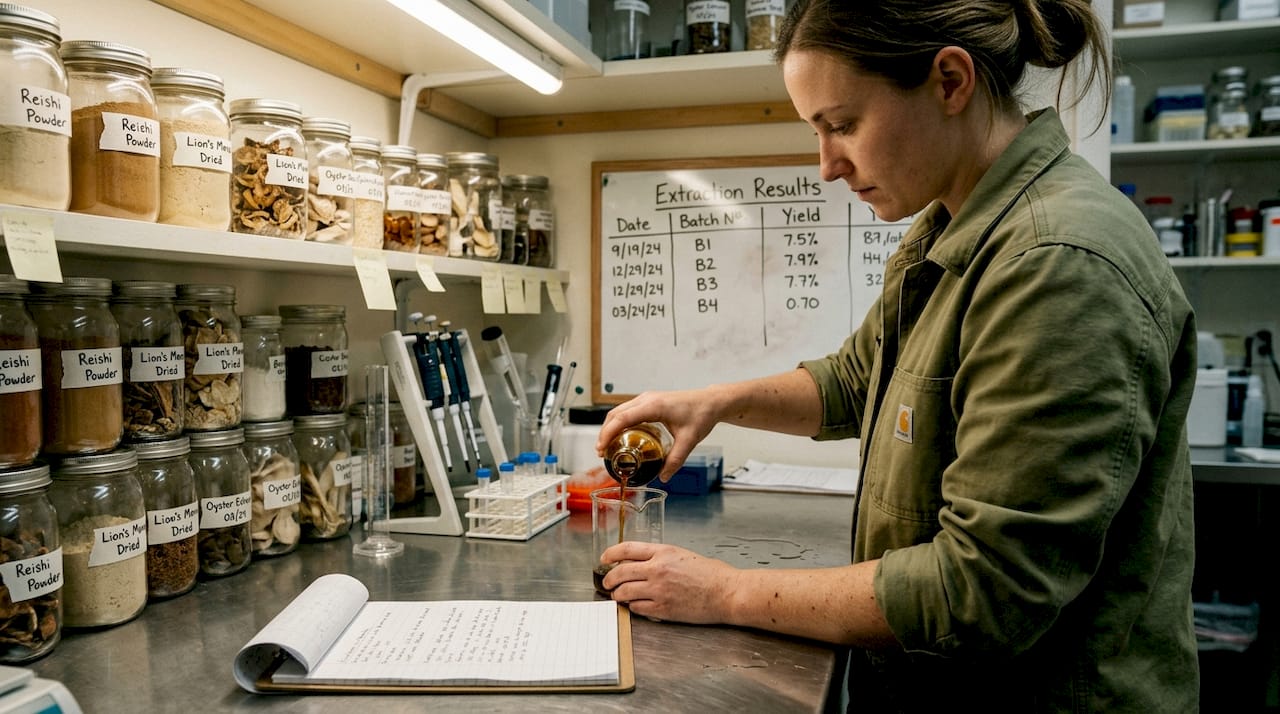
Pro Tip: If a label lists only “polysaccharides” without specifying beta-glucan percentage, treat it as a warning sign. Starch is also a polysaccharide, and some products inflate their polysaccharide numbers by counting grain starch. Always look for a specific beta-glucan figure.
The mushroom powders checklist covers what to verify before purchasing any powder-based product. For a broader look at what separates effective products from weak ones, the guide on choosing mushroom supplements is worth reviewing.
Choosing the right form: Extracts, powders, and capsules explained
After understanding product quality signals, you need to select the supplement form that best fits your goals and routine. The three main formats are extracts, powders, and capsules, and each has real trade-offs.
- Extracts (liquid or concentrated powder): These are processed to remove inert material and concentrate the active compounds. They offer the highest bioavailability and are the most reliable for therapeutic use.
- Raw or whole mushroom powders: These are dried and ground mushrooms with no extraction step. They retain fiber and some nutrients but may not deliver meaningful beta-glucan levels because the chitin wall remains intact.
- Capsules: Usually contain either extract powder or raw powder. Capsules are convenient and tasteless, making them easy to add to a daily routine. Check the capsule contents to confirm it is an extract, not raw powder.
- Tinctures: Liquid extracts that absorb quickly. Useful if you want fast uptake or prefer to add to drinks.
- Blended formulas: Combine multiple mushroom species. Good for general wellness but less targeted than single-species products.
Quality extracts cost more because extraction and third-party testing add real production costs. Raw powders that seem affordable may pass through the digestive system without releasing active compounds. Cheap is rarely efficient here.
| Form | Bioavailability | Convenience | Best for |
|---|---|---|---|
| Concentrated extract | High | Medium | Targeted therapeutic use |
| Capsule (extract-based) | High | High | Daily routine, easy dosing |
| Raw powder | Low to medium | Medium | Adding to food/drinks |
| Tincture | High | High | Fast absorption, flexible use |
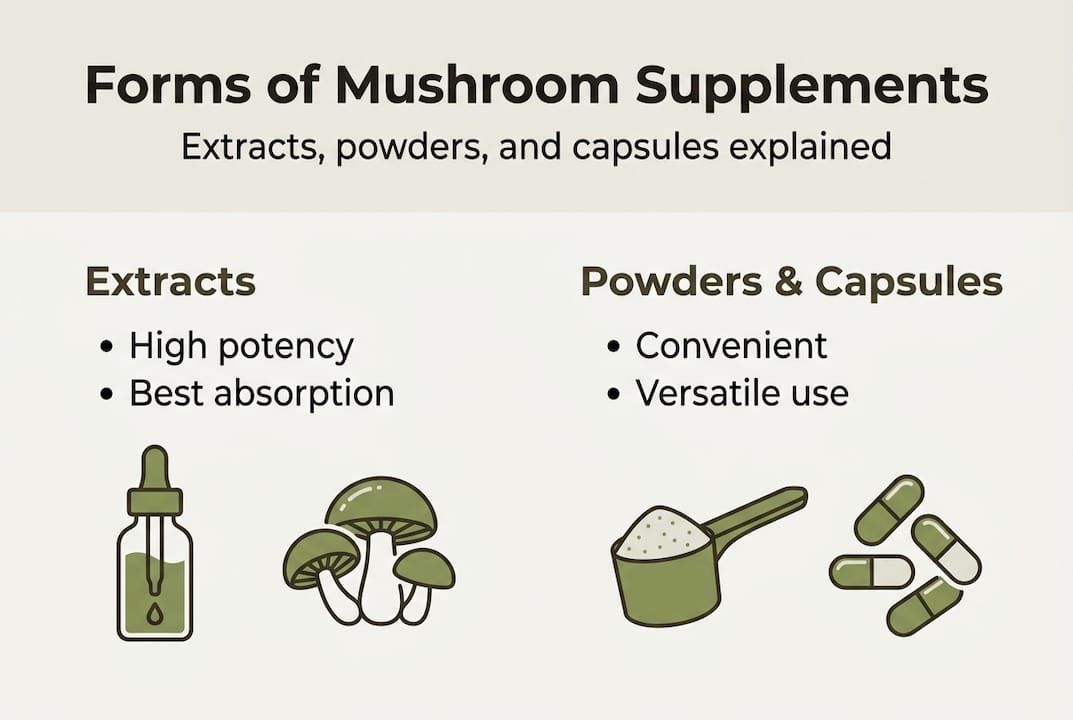
Pro Tip: If you are new to mushroom supplements, start with an extract-based capsule. It removes the guesswork around dosing, is easy to take consistently, and gives you the bioavailability of a proper extract. You can explore the extract vs powder comparison for a detailed breakdown, and the extract usage guide covers practical tips for getting the most from your supplement.
Avoiding common mistakes and ensuring real results
Now you’re ready to finalize your choice. Here is how to avoid buyer’s regret and get the most from your mushroom supplements.
The most common mistakes buyers make:
- Buying based on price alone. Extremely low prices usually signal raw powder, mycelium on grain, or underdosed products. Quality extraction is not cheap.
- Ignoring extraction type. A product labeled “mushroom powder” with no extraction process is unlikely to deliver meaningful bioactive compounds.
- Skipping third-party lab results. Any reputable brand will provide a Certificate of Analysis (COA) showing beta-glucan content and safety testing.
- Choosing blends without checking individual doses. Some blends spread 500mg across ten mushroom species, giving you 50mg per species. That is not a therapeutic dose for any of them.
- Not checking the source. Mushrooms grown in polluted environments can accumulate heavy metals. Certified organic sourcing and clean growing conditions matter.
Before you buy, run through this checklist: Fruiting body confirmed? Beta-glucan percentage listed? Extraction method stated? Third-party COA available? No excessive fillers? Dose per serving clearly labeled?
Powders without extraction may pass through the digestive system without releasing active compounds, which means testing and evidence of bioactive content are not optional extras. They are the baseline for any product worth buying.
For more guidance on evaluating specific products, the resource on choosing mushroom extracts provides practical tips for verifying quality before committing to a purchase.
Why most advice about medicinal mushrooms leaves you shortchanged
Most guides on medicinal mushrooms repeat the same surface-level advice: “choose reishi for stress, lion’s mane for focus.” That is not wrong, but it stops well short of what you actually need to know to buy a product that works.
The real gap is between label claims and verified bioactive content. Many articles talk about polysaccharides as if that number alone tells the whole story. It does not. Starch is a polysaccharide. What matters is the specific beta-glucan fraction, and that number needs to come from independent lab testing, not the brand’s own marketing material.
The supplement market is not fully regulated in a way that forces brands to prove their claims before selling. That puts the responsibility on you as the buyer. Asking for a COA is not being difficult. It is the minimum standard for a product you are putting in your body.
The guidance on best mushroom supplement results reinforces this point: transparency and verified content are the markers of a brand worth trusting. Quality comes at a fair price, and that price reflects real extraction, real testing, and real results.
Ready to experience the benefits? Shop high-quality mushroom supplements
You now know what to look for: fruiting body extracts, verified beta-glucan content, transparent lab testing, and the right form for your lifestyle. Applying these criteria makes it straightforward to find products that actually deliver. Longevity Botanicals offers a curated range of lab-tested options across every format. Browse organic mushroom capsule supplements for convenient daily use, explore organic mushroom powders for flexible dosing, or shop the full mushroom extracts collection for concentrated, high-potency options. Every product is sourced with quality and transparency in mind.
Frequently asked questions
Which mushroom extract is best for immune support?
Turkey tail and reishi are top choices for immune support. Turkey tail in particular has documented beta-glucan content up to 60.79%, making it one of the most potent immune-supporting mushrooms available.
How can I tell if a mushroom supplement is high quality?
Look for products that use fruiting body extract, list a specific beta-glucan percentage, and provide third-party lab reports confirming bioactive content and safety.
Is there a difference between mushroom powders and extracts?
Yes. Extracts concentrate bioactive compounds through a processing step, while powders without extraction may pass through the digestive system without releasing meaningful levels of beta-glucans.
Can I combine medicinal mushrooms for better results?
Combining species like reishi, lion’s mane, and cordyceps can provide complementary benefits, since different mushrooms support immunity, cognition, and energy through distinct mechanisms.
Recommended
- How to Use Mushroom Supplements for Natural Wellness – LongevityBotanicals
- Mushroom powders checklist: guide for natural wellness – LongevityBotanicals
- Unlock wellness benefits with mushroom supplements – LongevityBotanicals
- How to Choose Mushroom Supplements for Best Results – LongevityBotanicals
- Топ комбинации кафе и гъби за фокус и енергия – Neurofuel™️
Related Posts

Why Water-Soluble Mushroom Compounds Drive Real Results

What Is Mushroom Sustainability? Benefits and Practices

The Role of Organic Farming in Mushrooms Explained

What Is a Fruiting Body? Mushroom Science Explained

Mushroom Allergenicity Explained: Symptoms and Safe Use

Top 5 naturesrise.com Mushroom Supplement Alternatives 2026

Top 6 Hemplucid.com Alternatives for 2026


