

Mushroom supplement certification: what really matters
TL;DR:
- Certification indicates product safety, identity, potency, and purity when independently verified.
- USP Verified involves comprehensive testing, facility audits, and post-market surveillance.
- Certification alone does not confirm biological efficacy or specific active compound levels.
Not all mushroom supplements are the same, and the label on the bottle does not always tell the full story. A shiny seal or a bold health claim can look convincing without reflecting what’s actually inside the product. For health-conscious consumers investing in supplements like Reishi, Lion’s Mane, or Turkey Tail, understanding how certification works is a practical skill, not just background knowledge. This guide breaks down what mushroom supplement certification actually covers, where the process is solid, and where it still falls short, so you can make smarter, more informed choices.
Table of Contents
- Why certification matters for mushroom supplements
- Breaking down the mushroom supplement certification process
- Beta-glucans, fruiting bodies, and certification: What really gets measured?
- Common certification pitfalls and how to spot high-quality mushroom supplements
- The real-world problem with mushroom supplement certification
- Discover high-quality mushroom supplements you can trust
- Frequently asked questions
Key Takeaways
| Point | Details |
|---|---|
| Certification builds trust | Reliable mushroom supplement certification means robust testing, audits, and ongoing oversight. |
| Label claims may mislead | Beta-glucan numbers and ingredient lists can be confusing without validated methods. |
| Look beyond the seal | High-quality supplements show third-party testing, GMP audits, and transparent results. |
| Stay informed, shop wisely | Combine certification knowledge with brand reputation and product data when choosing supplements. |
Why certification matters for mushroom supplements
The dietary supplement industry operates under different rules than pharmaceuticals. In the United States, the FDA does not require manufacturers to prove a supplement is safe or effective before it goes to market. This means products can reach store shelves without ever being reviewed by an independent authority. Certification programs exist to fill that gap.
Not all certifications are equal, though. Some programs involve only a basic label review. Others put products through rigorous independent testing, facility inspections, and ongoing monitoring. Knowing the difference gives you a clearer picture of what a seal actually represents.
A solid certification process typically covers:
- Identity verification: Confirming the supplement contains what it claims
- Potency testing: Checking that active compounds are present at the stated levels
- Purity assessment: Screening for contaminants like heavy metals, pesticides, and microbial agents
- Dissolution testing: Verifying the product breaks down properly so your body can absorb it
- Label accuracy: Making sure claims on the packaging match what’s in the product
- Good Manufacturing Practices (GMP) compliance: Auditing the facility where the supplement is made
One of the more thorough models available is the USP Verified program. The USP Verified process involves manufacturer application, independent lab testing for identity, potency, purity, and dissolution, facility audits for GMP compliance, label review, and post-market surveillance. This is a multi-layer approach, and it sets a high bar compared to simpler third-party seals that only review documentation.
Certification is most valuable when it involves independent lab testing and facility audits, not just a manufacturer’s self-reported data.
Reviewing a product’s supplement quality guide before purchasing helps you understand what specific quality markers to look for beyond the certification seal. It’s also worth checking a reliable mushroom powders checklist when evaluating powdered forms, since those can have additional sourcing and processing variables.
For consumers exploring mushrooms for immune support, cognitive benefits, or stress relief, certification is the starting point for trust. It does not guarantee results, but it does confirm that what’s on the label reflects what’s in the bottle.
Breaking down the mushroom supplement certification process
Understanding the actual steps in a certification process removes the mystery behind what a seal represents. Using the USP Verified program as a reference point, here is how a mushroom supplement moves through a rigorous certification cycle:
- Manufacturer application: The brand submits its product and documentation to the certifying body. This includes ingredient sourcing records, formulation data, and manufacturing details.
- Independent lab testing: Samples are sent to accredited laboratories where scientists test for identity, potency, purity, and dissolution. This is not the manufacturer’s own lab, which removes a major conflict of interest.
- GMP facility audit: Inspectors visit the manufacturing facility to verify it meets Good Manufacturing Practice standards. This checks equipment, processes, staff training, and recordkeeping.
- Label review: The certifying body checks that every claim on the packaging is accurate and supported by the product’s tested contents.
- Post-market surveillance: Certified products are monitored after approval. Random market samples may be tested again to confirm ongoing compliance.
The USP Verified framework is a useful benchmark because it includes all five of these phases. Many simpler “certified” labels stop at step two or skip facility audits entirely.
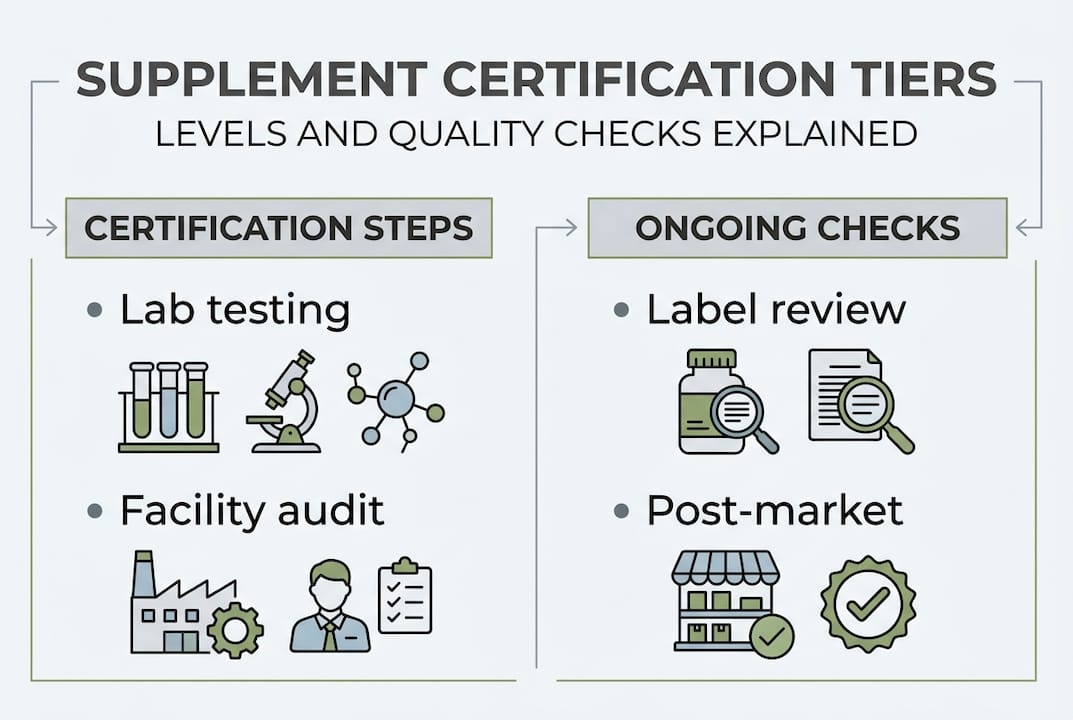
Here is a quick comparison of what different certification tiers typically include:
| Certification tier | Lab testing | Facility audit | Post-market checks |
|---|---|---|---|
| Basic third-party seal | Partial | No | No |
| NSF Certified for Sport | Yes | Yes | Limited |
| USP Verified | Yes | Yes | Yes |
| Informed Sport | Yes | No | Limited |
When you’re choosing mushroom supplements for daily wellness, this table gives a useful frame of reference. A seal from a program that only covers partial lab testing is better than nothing, but it doesn’t match the confidence level of a program that audits the facility and tracks products after they hit the market.
Pro Tip: Look for certifications that list the specific tests performed, not just the name of the certifying body. A transparent brand will link to its Certificates of Analysis (COAs) directly on its product pages.
For mushroom-specific products, tips for choosing extracts go deeper on how extraction methods affect what gets tested and what ends up in the final product. Dual extraction, for example, can change the profile of active compounds in ways that basic certification testing may not fully capture.
Beta-glucans, fruiting bodies, and certification: What really gets measured?
When you pick up a Lion’s Mane or Turkey Tail supplement, you’ll often see a beta-glucan percentage on the label. Beta-glucans are polysaccharides (complex carbohydrates) found in mushroom cell walls and are considered the primary bioactive compounds responsible for immune-supporting effects. High beta-glucan content is frequently used as a quality signal by brands.
Here’s where it gets complicated. There are no validated methods yet for measuring all beta-glucan types, and a total percentage on the label can mislead because it includes non-immune fibers alongside the compounds actually associated with health effects. In other words, a product could show a high total beta-glucan number while containing far fewer of the immune-relevant beta-1,3-glucans you’re actually looking for.
Certification processes like USP Verified test for identity and purity, but the challenge is that the industry has not fully standardized which compounds to measure and how. This creates a scenario where a product can pass certification testing while still having a label claim that doesn’t tell the whole story about its functional value.
The fruiting body versus mycelium debate adds another layer. Fruiting bodies (the visible mushroom cap and stem) tend to have higher beta-glucan concentrations. Mycelium products, which are made from the root-like structure of the fungus, often grown on grain, can contain significant amounts of starch from the growing medium. Learning about fruiting body vs mycelium differences is essential before interpreting any certification or potency claim.
| Source | Typical beta-glucan content | Potential starch content | Certification testing impact |
|---|---|---|---|
| Fruiting body | Higher | Low | More relevant active compounds |
| Mycelium on grain | Variable | High | May inflate total polysaccharide reading |
| Dual extract blend | Variable | Low to moderate | Depends on extraction method |
Understanding the benefits of beta-glucans helps clarify why accurate measurement actually matters. These compounds interact with immune receptors in the gut in specific ways, and the type and structure of the beta-glucan determines its biological activity.
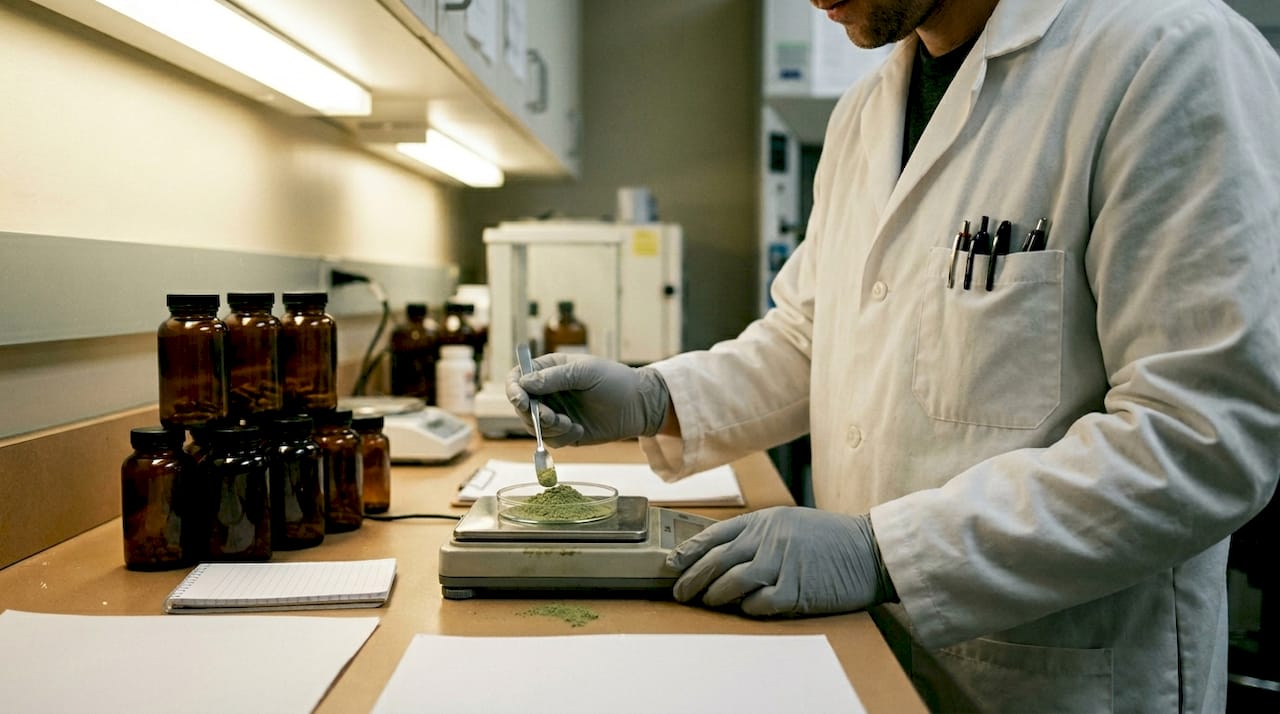
Pro Tip: When reviewing a supplement’s beta-glucan claim, look for products that specify 1,3/1,6-beta-glucans rather than just “total polysaccharides.” The specificity indicates a more precise measurement method and a more transparent brand.
Current certification programs do their best with available validated methods. The honest reality is that the science of mushroom standardization is still catching up to the market. Certification today confirms purity and basic identity but does not yet fully validate the bioactive potency of every active mushroom compound.
Common certification pitfalls and how to spot high-quality mushroom supplements
Knowing what good certification looks like is only useful if you can also recognize the warning signs of weaker claims. The mushroom supplement market is growing fast, and with that growth comes a surge of products that use the language of quality without the substance behind it.
Common pitfalls to watch for:
- Vague “certified” claims: A product labeled “certified natural” or “certified pure” without naming the certifying body offers very little meaningful assurance. Anyone can create a logo.
- Self-certification: Some brands create their own internal quality seals. These are not independent and carry no verification from a third party.
- Missing COAs: Legitimate brands share Certificates of Analysis from independent labs. If a brand’s website has no COA access, that’s a red flag.
- Broad GMP claims without specifics: GMP compliance is a legal minimum in the U.S., not a premium certification. Mentioning GMP without additional testing documentation doesn’t set a product apart.
- Polysaccharide percentages without specificity: As covered earlier, high polysaccharide numbers can be inflated by starch content. Look for specificity around 1,3/1,6-beta-glucans.
According to a USP Verified framework review, rigorous certification includes application, independent lab testing covering identity, potency, purity and dissolution, GMP facility audits, label review, and post-market surveillance. Use this as your benchmark when evaluating any brand’s claims.
What to look for in trustworthy brands:
- Named third-party certifiers (USP, NSF, Informed Sport) with verifiable databases
- Accessible COAs that are dated and product-specific
- Clear sourcing information (fruiting body vs. mycelium, country of origin)
- Detailed extraction method disclosure
- Responsive customer service that can answer technical questions about testing
Reviewing the dos and don’ts for supplements is a practical next step for building your personal evaluation checklist. It’s also worth staying current with trends in supplement certification as new standards are being developed specifically for functional mushroom products.
The supplement industry is self-regulating in many ways, which puts more responsibility on the consumer. But consumers who know what rigorous certification actually involves are far better positioned to separate quality products from clever marketing.
The real-world problem with mushroom supplement certification
Here’s an honest take: current certification processes are genuinely valuable, and USP Verified in particular represents a serious commitment to consumer safety. But certification as it stands today was not designed specifically for functional mushrooms. It was built for a much broader supplement category, which means some of the most important quality signals for mushroom products, like specific beta-glucan structures, extraction ratios, and fruiting body sourcing, fall outside what standard testing protocols reliably capture.
As current measurement limitations show, there are no validated methods yet for all beta-glucan types, and total percentages can include non-immune fibers. This is not a flaw in certification programs. It’s a reflection of where mushroom science currently stands. Standardization is improving, but the market has outpaced the testing frameworks.
The practical implication for informed buyers is this: treat certification as a necessary baseline, not a final answer. A certified product is almost certainly safer and more accurately labeled than a non-certified alternative. But certification alone does not confirm that a product will deliver the biological effects you’re seeking. For deeper context on what quality actually means at a scientific level, the science-backed supplement quality resource offers a more complete picture.
Smart supplement decisions combine certification awareness with ingredient-specific knowledge and brand transparency. That combination is more reliable than any single seal.
Discover high-quality mushroom supplements you can trust
Applying what you’ve learned about certification starts with choosing brands that take quality controls seriously. Longevity Botanicals offers a range of mushroom-based supplements built with sourcing transparency and formulation clarity. Whether you’re focused on daily immune support or targeted wellness goals, the product range covers multiple formats and mushroom types.
Explore organic capsule supplements for convenient daily use, or browse mushroom blend extracts for multi-mushroom formulas that combine complementary species. For seasonal immune support specifically, the spring immune support collection highlights products well-suited to immune maintenance during higher-demand periods. Every product listing includes clear ingredient and format information so shoppers can evaluate what they’re buying with confidence.
Frequently asked questions
What does USP Verified mean on a mushroom supplement?
USP Verified means the supplement has passed independent lab tests, GMP audits, label reviews, and is monitored for quality and safety even after it reaches store shelves. It is one of the most thorough certification programs available in the U.S. supplement market.
How can I tell if a mushroom supplement is truly certified?
Check for documentation of third-party lab results and GMP compliance, and look for the name of the certifying agency on the packaging or brand website, along with a verifiable product listing in the certifier’s public database.
Are all beta-glucan numbers on mushroom labels reliable?
No. Current testing methods don’t reliably measure all beta-glucan types, and total percentages may include non-immune fibers, which means the number on the label can overstate the immune-relevant content.
Do certifications guarantee a supplement’s benefits?
Certifications confirm that quality controls are in place but do not guarantee health outcomes, since individual responses to supplements vary based on diet, health status, dosage, and many other factors.
Recommended
- Define supplement quality: science-backed guide for mushrooms – LongevityBotanicals
- Mushroom supplement dos and don’ts: safe guide for wellness – LongevityBotanicals
- Mushroom powders checklist: guide for natural wellness – LongevityBotanicals
- Mushroom Supplement Trends 2026: What Matters – LongevityBotanicals
Related Posts

Why Water-Soluble Mushroom Compounds Drive Real Results

What Is Mushroom Sustainability? Benefits and Practices

The Role of Organic Farming in Mushrooms Explained

What Is a Fruiting Body? Mushroom Science Explained

Mushroom Allergenicity Explained: Symptoms and Safe Use

Top 5 naturesrise.com Mushroom Supplement Alternatives 2026

Top 6 Hemplucid.com Alternatives for 2026


