Mushrooms

Top mushrooms for stress relief: natural support backed by science

Woman opening reishi supplement at kitchen table


TL;DR:

  • Medicinal mushrooms act as adaptogens, helping regulate stress responses via the HPA axis.
  • Reishi, Lion’s Mane, and Cordyceps are clinically supported for stress, mood, and energy.
  • Blended mushroom protocols often outperform single supplements by targeting multiple stress pathways.

Stress is persistent, and finding something that actually works without a long list of side effects is harder than it should be. Medicinal mushrooms have moved well beyond folk tradition into serious clinical research, with mushroom supplementation showing significant reductions in stress, anxiety, and cortisol levels in controlled trials. This article covers the top mushrooms for stress relief, how they work at a biological level, what the evidence actually says, and how to match the right mushroom or blend to your specific stress profile.

Table of Contents

Key Takeaways

Point Details
Evidence-based stress relief Clinical studies support Reishi, Lion’s Mane, and Cordyceps for lowering stress and anxiety.
Blends outperform singles Mushroom blends provide superior adaptogenic results compared to using one type alone.
Chronic use is key Daily use for 4-8 weeks provides best results; effects build gradually over time.
Safe for most adults Mild, rare side effects make these mushrooms safe when used as directed for up to 12 weeks.

How mushrooms reduce stress: Science and criteria for selection

Medicinal mushrooms work differently from conventional stress supplements. They act as adaptogens, meaning they help the body regulate its own stress response rather than simply suppressing it. The primary target is the HPA (hypothalamic-pituitary-adrenal) axis, the system responsible for cortisol production. When this axis is overactive, cortisol stays elevated, sleep suffers, mood drops, and focus fades.

The active compounds driving these effects include:

  • Triterpenoids: Found heavily in Reishi, these compounds have direct calming and anti-inflammatory properties.
  • Beta-glucans (β-glucans): Polysaccharides that modulate immune activity and support stress resilience.
  • Hericenones and erinacines: Unique to Lion’s Mane, these stimulate Nerve Growth Factor (NGF) production.

Not every mushroom supplement is worth your time or money. When evaluating options, the criteria that matter most are: clinical evidence in humans (not just animal models), confirmed adaptogenic action on the HPA axis, a clean safety profile, and documented cognitive or mood benefits. Reishi, Lion’s Mane, and Cordyceps all meet these criteria by modulating the HPA axis and lowering cortisol in clinical settings.

For those exploring mushrooms for anxiety, understanding how stress supplements work at a mechanistic level helps set realistic expectations and avoid wasted spending.

“Adaptogens do not force a single outcome. They help the body find balance, which is why the same mushroom can calm an overactive stress response while also supporting energy in someone who is depleted.”

Pro Tip: Always choose fruiting body extracts over mycelium-on-grain products. Fruiting bodies contain significantly higher concentrations of active compounds like triterpenoids and beta-glucans, which is where the clinical evidence is grounded. Recent mood and stress research consistently uses standardized fruiting body extracts.

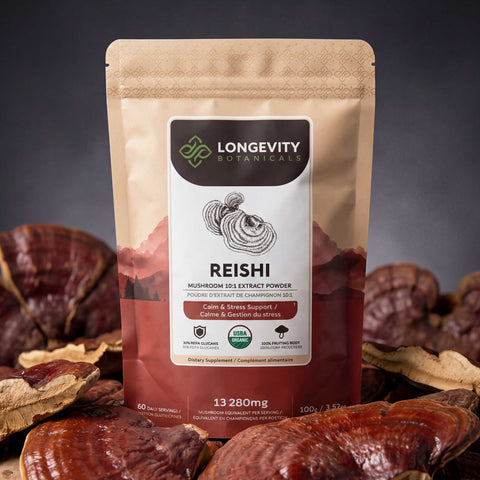
1. Reishi (Ganoderma lucidum): The calming adaptogen

Reishi is the most studied mushroom for stress and anxiety relief, and its reputation is well earned. The key active compounds are triterpenes, specifically ganoderic acids, which interact with the nervous system to reduce cortisol output and promote a calmer physiological state. Unlike sedatives, Reishi does not cause drowsiness. It supports relaxation without impairing alertness.

One of Reishi’s most practical benefits is its effect on sleep quality. Chronic stress disrupts sleep architecture, and poor sleep amplifies stress the following day. Reishi helps break this cycle by supporting deeper, more restorative sleep stages. Users typically notice improvements in sleep quality before they notice mood changes.

Key benefits and usage notes for Reishi:

  • Reduces cortisol and supports HPA axis regulation
  • Promotes relaxation and restorative sleep
  • Shows significant reductions in stress and anxiety scores versus placebo in trials
  • Best suited for: chronic stress, high baseline anxiety, trouble winding down at night
  • Rare side effects: mild GI discomfort in sensitive individuals, especially at higher doses

Reishi supplementation modulates the stress response through direct action on the HPA axis, making it one of the most targeted options available for cortisol-driven stress.

“Reishi is not a quick fix. Its benefits build over weeks of consistent use, which is why many users underestimate it after a short trial.”

For those deciding between options, the Lion’s Mane vs Reishi comparison breaks down which profile fits different stress presentations. The mushroom anxiety relief evidence also supports Reishi as a first-line adaptogenic option for anxiety-dominant stress profiles.

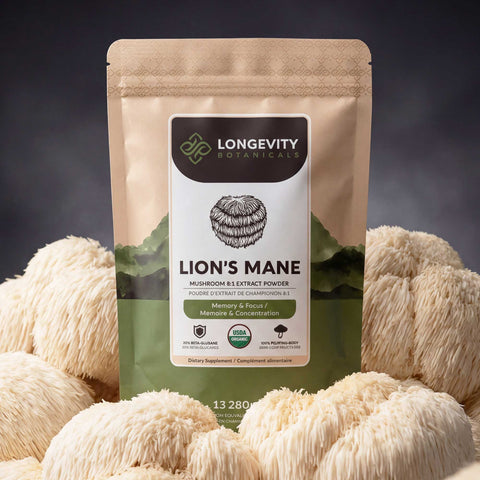
2. Lion’s Mane (Hericium erinaceus): Brain fog fighter and mood booster

If your stress shows up as brain fog, mental fatigue, or difficulty concentrating, Lion’s Mane addresses the cognitive side of stress that Reishi does not directly target. Its mechanism is distinct: Lion’s Mane stimulates the production of Nerve Growth Factor (NGF), a protein essential for the growth and maintenance of neurons. Higher NGF activity supports mood resilience, sharper focus, and better emotional regulation over time.

The clinical evidence is encouraging, though it requires context. RCTs show Lion’s Mane reduces depression and anxiety scores after 4 to 8 weeks, particularly in populations already experiencing elevated stress. In healthy adults with low baseline stress, acute effects are minimal. This is not a weakness; it reflects how adaptogens work.

Practical notes for Lion’s Mane:

  • Supports NGF production for long-term brain and mood health
  • Most effective with consistent use over 4 or more weeks
  • Fruiting body extracts provide optimal hericenone and erinacine content
  • Best suited for: brain fog, mental fatigue, stress-related cognitive decline
  • Mild digestive upset possible in sensitive users at higher doses

Pro Tip: If you are comparing options, the Lion’s Mane and Reishi article covers how to stack or choose between them based on your primary symptoms. For cognitive-focused support, also explore mushrooms for brain health to see standardized extract options.

The Lion’s Mane research from 2025 also highlights that combination approaches tend to outperform single-mushroom protocols, which leads naturally into why blends are worth considering.

3. Cordyceps: The energizing adaptogen

Not all stress looks the same. For people dealing with burnout, physical fatigue, or the kind of exhaustion that makes it hard to function, Cordyceps offers something Reishi and Lion’s Mane do not emphasize: energy support alongside stress adaptation.

Man sitting tiredly with cordyceps mushroom powder

Cordyceps works by increasing cellular ATP (adenosine triphosphate) production, which is the body’s primary energy currency. When stress depletes energy reserves, this mechanism becomes especially relevant. Beyond energy, Cordyceps reduces stress by modulating inflammation and supporting HPA axis function, addressing both the energy deficit and the hormonal imbalance that chronic stress creates.

Key benefits and usage notes for Cordyceps:

  • Enhances ATP production to counter stress-induced fatigue
  • Supports adrenal function and balances immune activity
  • Clinical findings show lower salivary cortisol and improved stress scores in blend trials
  • Best suited for: burnout, low energy, physical fatigue linked to chronic stress
  • Pairs well with Reishi and Lion’s Mane for a more complete stress support protocol

“Cordyceps is often overlooked in stress conversations because people associate it with athletic performance. But its adrenal support and cortisol-lowering effects make it highly relevant for anyone running on empty.”

Pro Tip: If stress has left you feeling flat rather than wired, Cordyceps is worth prioritizing. Learn more about how combining mushrooms amplifies results in the mushroom blend wellness guide, and see the science behind benefits of mushroom blends for a deeper look at synergistic formulations.

Mushroom blends: Synergy for comprehensive stress relief

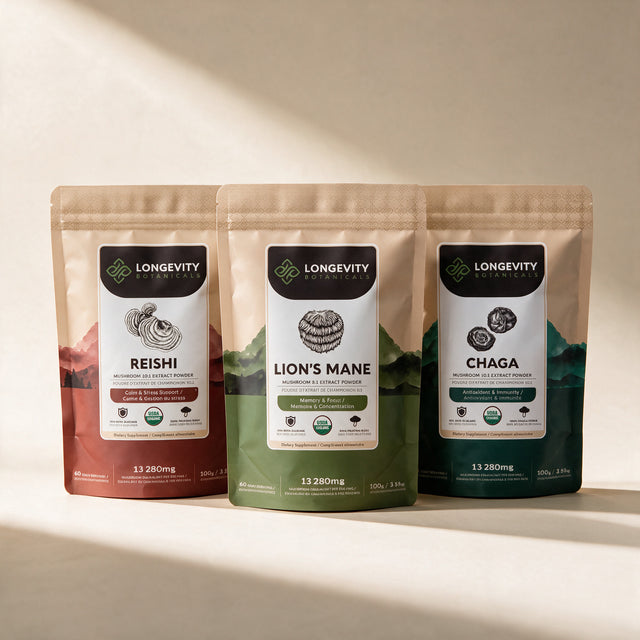
Each mushroom above targets stress through a different mechanism. Reishi calms the HPA axis. Lion’s Mane supports cognitive resilience. Cordyceps restores energy. A well-formulated blend activates all three pathways simultaneously, which is why clinical outcomes with blends consistently outperform single-mushroom protocols.

The numbers are notable. A 43.8% reduction in anxiety was observed in participants using a Reishi, Lion’s Mane, and Cordyceps blend over 12 weeks, compared to just 10.1% in the placebo group. That is a meaningful clinical gap. The blended mushroom clinical trial also confirmed improvements in sleep and mood alongside anxiety reduction.

When selecting a blend, prioritize these factors:

  • Fruiting body extracts as the primary ingredients (not mycelium-on-grain)
  • Full ingredient transparency with listed extract ratios
  • No unnecessary fillers, binders, or proprietary blends that hide dosing
Blend type Active compounds Target benefits Clinical support
Reishi + Lion’s Mane Triterpenes, NGF stimulators Calm, mood, cognition Strong (RCTs)
Reishi + Cordyceps Triterpenes, ATP support Calm + energy balance Moderate (blend trials)
Triple blend (all three) Full spectrum Stress, mood, energy, focus Strongest (12-week RCT)
Single mushroom Targeted compounds Specific symptom focus Varies by mushroom

For practical guidance on combining mushrooms, the mushroom blending process article covers formulation principles, and using mushroom supplements explains timing, dosing, and format options.

Our perspective: Why single-mushroom thinking limits your results

Most people approach mushroom supplements the same way they approach pharmaceuticals: find the one thing that targets the problem and take it. That logic makes sense for drugs designed to hit a single receptor. It does not map well onto adaptogens, which work by supporting systemic balance rather than overriding a specific pathway.

The practical implication is that if you try Reishi alone for two weeks and feel nothing dramatic, you might conclude it does not work. But stress is rarely a single-pathway problem. Cortisol dysregulation, neuroinflammation, energy depletion, and disrupted sleep all feed into each other. Addressing only one while ignoring the others produces limited results.

The clinical data supports this view clearly. Blends outperform single mushrooms not because the individual mushrooms are weak, but because stress itself is multi-dimensional. Starting with a triple blend for the first 8 to 12 weeks, then narrowing to a single mushroom for maintenance, is a more evidence-aligned approach than the reverse.

Another overlooked factor is product quality. The gap between a standardized fruiting body extract and a mycelium-on-grain product can be enormous in terms of active compound content. Many negative user experiences with mushroom supplements trace back to underdosed or poorly extracted products, not to the mushrooms themselves. Choosing quality matters as much as choosing the right species.

Explore stress support options at Longevity Botanicals

Longevity Botanicals offers a range of mushroom supplements formulated with fruiting body extracts, including single-mushroom options and multi-mushroom blends designed for stress, mood, and cognitive support. Products are clearly labeled with extract ratios and active compound content, making it straightforward to match a supplement to a specific stress profile. Whether the priority is calming cortisol, clearing brain fog, or restoring depleted energy, the mushrooms for anxiety collection and mushrooms for brain health range offer targeted starting points backed by the same clinical evidence covered in this article.

Frequently asked questions

How long does it take for mushrooms to relieve stress?

Most benefits appear after daily use for 4 to 8 weeks. Chronic Lion’s Mane use over 28 days shows mild stress reduction, with stronger effects in already-stressed populations. Acute effects in healthy adults are minimal.

Are mushroom supplements safe for daily use?

Yes, clinical trials show daily use is generally safe for up to 12 weeks. Side effects are rare and typically mild, such as minor GI discomfort, especially at higher doses.

Can I combine mushroom types for stress relief?

Yes, and blends tend to produce better outcomes. Blends led to greater reductions in anxiety and stress compared to single-mushroom supplementation in controlled trials, due to synergistic adaptogenic effects.

Are there any risks or people who should avoid mushroom supplements?

Those on blood thinners, immunosuppressants, or with autoimmune conditions should consult a doctor before starting. Caution is advised due to mild risks of GI effects, allergic reactions, or medication interactions in these groups.

Previous
How to take reishi for immunity: safe & effective steps
Next
Functional mushrooms for brain and immune health: 2026

Leave a Comment

Your email address will not be published.