



TL;DR:
- Gluten-free labeling on supplements is often unverified and may pose health risks, especially with mushroom products grown on grain substrates or processed in shared facilities. Consumers should request independent lab test results, such as Certificates of Analysis, and look for third-party certifications to ensure genuine gluten safety. Verified gluten-free mushroom supplements support immune health effectively without risking gluten exposure that can harm sensitive individuals.
The “gluten-free” label on a supplement sounds reassuring, but it isn’t always the whole story. Gluten-free labeling does not always guarantee safety, particularly when products haven’t been independently tested. For health-conscious consumers adding mushroom supplements to their wellness routine, this gap matters more than most realize. Mushroom products carry unique gluten risks that standard supplements don’t, from grain-based growing substrates to manufacturing cross-contact. This guide breaks down exactly what to look for, what to avoid, and how to choose products that actually support immune health without hidden gluten exposure.
Table of Contents
- Why gluten-free matters in mushroom supplements
- Mushroom supplement forms: Mycelium vs fruiting-body and gluten risk
- How to verify genuinely gluten-free supplements
- Wellness benefits of gluten-free mushroom supplements
- Our take: Gluten-free is a wellness discipline, not a marketing trend
- Explore rigorously vetted mushroom supplements for your wellness journey
- Frequently asked questions
Key Takeaways
| Point | Details |
|---|---|
| Gluten-free is not automatic | Supplements labeled gluten-free may still contain gluten due to manufacturing or ingredient risks. |
| Mycelium vs fruiting-body | Choosing fruiting-body-based mushroom supplements helps reduce hidden gluten risks. |
| Verify with certifications | Look for independent lab certification and avoid relying solely on front-of-pack gluten-free claims. |
| Immune support benefits | Properly verified gluten-free mushroom supplements help maximize immune and overall health benefits. |
| Make informed choices | Demand transparency and documentation so you can choose the safest, most effective mushroom supplements. |
Why gluten-free matters in mushroom supplements
Most people think of gluten as a bread or pasta issue. In the supplement world, the picture is more complicated. Gluten can show up in places that have nothing to do with wheat flour on the ingredient list, and mushroom supplements are a prime example of a category where those hidden sources are real.
For individuals with celiac disease (an autoimmune condition triggered by gluten) or non-celiac gluten sensitivity (NCGS), even trace amounts of gluten in a supplement can cause measurable harm. Symptoms range from digestive distress and fatigue to longer-term gut damage. Choosing a mushroom supplement that appears clean but isn’t verified for gluten content is a genuine health risk, not a theoretical one.
Gluten exposure risks in mushroom supplements come from several hidden sources that even careful label readers can miss:
- Cross-contact during manufacturing: Facilities that process both grain-based and mushroom-based products can introduce gluten through shared equipment, bins, or airborne particles.
- Mycelium grown on grain substrate: Many mushroom products use mycelium (the root-like network of the fungus) grown on oats, rice, or wheat. The substrate can end up in the final product.
- Excipients and fillers: Capsule coatings, anti-caking agents, and flow agents sometimes contain gluten-derived ingredients that aren’t prominently listed.
- Regulatory gaps: There is no mandatory gluten testing requirement for dietary supplements in the U.S., which means brands can display “gluten-free” without running a single lab test.
When exploring alternatives to gluten in the diet, most resources focus on food. But supplement intake is daily and cumulative. A small gluten load from a supplement taken twice a day adds up fast, especially for celiac patients who have very low tolerance thresholds.
Good Manufacturing Practice (GMP) compliance, while important, is not a substitute for gluten-specific testing. GMP ensures cleanliness and consistency in production, but it doesn’t require brands to test for gluten. A product can be GMP-certified and still test positive for gluten above safe limits. The mushroom immune support guide at Longevity Botanicals covers additional quality factors to consider.
“Gluten-free labeling on supplements is not regulated the same way as food labeling. Consumers who rely on a printed label without asking for independent test results are taking an unverified risk.”
Mushroom supplement forms: Mycelium vs fruiting-body and gluten risk
Not all mushroom supplements are made the same way, and the form matters a great deal for gluten-sensitive consumers. The two main types on the market are mycelium-based and fruiting-body-based products. Understanding the difference is key to making an informed choice.
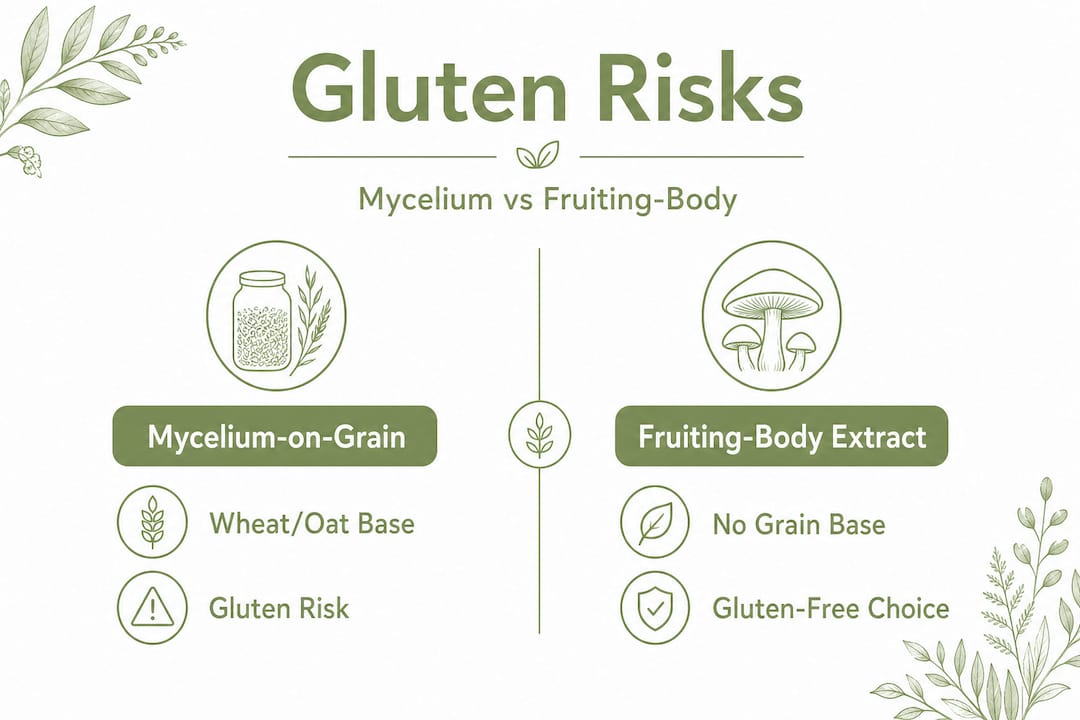
Mycelium is the vegetative part of a fungus, the thread-like network that grows through a medium before a mushroom fruit is formed. In supplement production, mycelium is often grown on grain substrates such as brown rice, oats, or sometimes wheat. Once harvested, the mycelium and substrate are processed together, meaning the final supplement may contain residual grain content. The gluten concern in mycelium products is not theoretical. Consumers may genuinely be ingesting the grain used to grow the mycelium, which creates a measurable gluten risk that many labels don’t disclose.

Fruiting-body extracts, by contrast, use the actual mushroom cap and stem, which is harvested and processed separately from any growing substrate. Because the fruiting body grows away from the grain medium, it carries significantly lower gluten risk for sensitive individuals.
Here’s a simple comparison:
| Feature | Mycelium-on-grain | Fruiting-body extract |
|---|---|---|
| Substrate used | Often grain (rice, oats, wheat) | Soil, wood, or controlled medium |
| Gluten risk level | Higher (substrate may remain) | Lower (substrate separated) |
| Active compound concentration | Generally lower | Generally higher |
| Transparency in labeling | Often limited | More commonly disclosed |
| Best for gluten-sensitive users | Not recommended without COA | Preferred option |
For a deeper breakdown of how these two product types compare across quality and bioactivity, the extract vs powder comparison resource covers the technical distinctions in plain language.
It’s also worth understanding that wheat and gluten intolerance are related but not identical. Some individuals react specifically to wheat proteins beyond gluten. When mycelium is grown on wheat substrate, the risk compounds beyond just gluten exposure.
Pro Tip: Always request a Certificate of Analysis (COA) from any mushroom supplement brand. A COA from an independent, accredited laboratory should explicitly confirm gluten levels in parts per million (ppm). The FDA’s threshold for a gluten-free food claim is under 20 ppm, but many celiac organizations recommend confirming levels below 10 ppm for supplements taken daily.
How to verify genuinely gluten-free supplements
Understanding the risk is useful. Acting on it is what protects health. Here’s a practical, step-by-step process for verifying that a mushroom supplement is genuinely gluten-free before buying.
- Request the Certificate of Analysis (COA). Every reputable brand should be able to provide a COA from a third-party lab. The document should list gluten testing results in ppm alongside other purity markers.
- Check who ran the test. A COA from the brand’s own in-house lab is less reliable than one from an accredited external lab. Look for names like NSF International, Eurofins, or similar recognized testing bodies.
- Look for third-party certifications on the label. Logos from organizations like NSF Certified for Sport, the Gluten-Free Certification Organization (GFCO), or USDA Organic provide an additional verification layer. These certifications require ongoing auditing, not a one-time test.
- Scan the ingredient list for filler flags. Terms like “natural flavors,” “maltodextrin,” or “modified starch” can sometimes be derived from gluten-containing grains. Ask for clarification from the brand if these appear.
- Contact the brand directly. Ask specifically whether their product is tested for gluten, at what ppm, and whether the test covers finished product or raw ingredients only. Finished-product testing is the gold standard.
Independent lab testing and clean ingredient sourcing are what separate high-quality mushroom supplements from generic offerings. Many consumers settle for front-of-pack claims without asking for documentation.
Gluten-free labeling gaps in third-party research highlight exactly why front-of-pack promises alone are insufficient. The data shows that even products marketed as gluten-free can exceed safe gluten limits when tested.
| Verification method | Reliability | Cost to consumer |
|---|---|---|
| Front-of-pack “gluten-free” claim | Low | Free |
| In-house lab COA | Moderate | Free on request |
| Third-party COA (accredited lab) | High | Free on request |
| GFCO or NSF certification | Very high | Reflected in product cost |
Red flags to avoid: Brands that can’t produce a COA, products with long lists of unnamed “proprietary blends,” and supplements with no transparency on substrate or sourcing. Gluten intolerance testing resources can also help clarify the distinction between celiac disease and gluten sensitivity, which matters when deciding how strict to be with ppm thresholds.
For additional guidance, the mushroom supplement certification resource outlines what certifications carry the most weight in practice. The science-backed supplement quality guide adds depth on what quality indicators matter most overall.
Pro Tip: When comparing two similarly priced products, always choose the one with documented third-party gluten testing. That documentation is a signal of overall quality discipline, not just gluten safety.
Wellness benefits of gluten-free mushroom supplements
When a mushroom supplement is genuinely gluten-free and independently verified, it can deliver meaningful wellness benefits without the interference of hidden gluten exposure. That combination matters because gluten exposure in sensitive individuals actively works against the immune and gut goals these supplements are meant to support.
The immune benefits of mushroom supplements center heavily on beta-glucans. Beta-glucans are naturally occurring polysaccharides (complex carbohydrates) found in the cell walls of mushrooms. They interact with immune receptors to help modulate the body’s immune response, meaning they can support both activation and regulation depending on the body’s current state. This is distinct from simply “boosting” immunity, which is an oversimplification.
Key bioactive compounds and their roles:
- Beta-glucans: Found in Turkey Tail, Reishi, Chaga, and Maitake. Support immune cell activity and gut health.
- Triterpenes: Found in Reishi. Associated with anti-inflammatory and adaptogenic (stress-balancing) properties.
- Ergothioneine: A unique antioxidant present across many mushroom species, linked to cellular protection.
- Polysaccharides: Broader category including beta-glucans, linked to gut microbiome support and immune regulation.
- Hericenones and erinacines: Found in Lion’s Mane. Associated with nerve growth factor support and cognitive health.
Now consider what happens when gluten is present in a supplement taken by someone with celiac disease or NCGS. Gluten triggers an inflammatory response in the gut lining, which can reduce the absorption of beneficial compounds, damage microvilli (the gut’s nutrient-absorbing structures), and counteract the anti-inflammatory actions of mushroom bioactives. The supplement works against itself.
Statistic: Research suggests that over 16% of products labeled as gluten-free fail certification screening when independently tested. For daily supplement users, that’s a significant risk if verification isn’t part of the purchasing process.
Choosing a clean, verified product means the active compounds in mushrooms can do their job without interference. That’s why the wellness benefits of mushrooms are best realized through products with rigorous sourcing and testing, not simply the ones with the longest ingredient benefit claims on the label. The mushroom powders wellness checklist is a practical resource for evaluating powder-format products in particular.
Our take: Gluten-free is a wellness discipline, not a marketing trend
Here’s a perspective that doesn’t get stated often enough: most consumers who buy gluten-free supplements never verify the claim. They read the label, feel confident, and move on. That’s understandable because labels are designed to reassure. But in the supplement industry, reassurance without documentation is just marketing.
Years of experience in the mushroom supplement space show a clear pattern. Even well-regarded, widely sold brands sometimes lack third-party gluten verification on finished products. They may test raw ingredients. They may rely on supplier claims. But a finished-product COA from an independent lab? That’s rarer than it should be.
The consumers who actually maintain gluten-free wellness goals over time are the ones who build a short, repeatable verification habit. Before buying any new supplement, they ask for the COA. They check the certifications. They look at the substrate information. This takes five minutes but protects months of wellness investment.
The hard-won lesson here is that diligence isn’t about distrust. It’s about holding brands to a standard that benefits everyone. Brands that welcome these questions and provide complete documentation quickly are, almost without exception, the ones that invest in real quality across the board. Transparency in gluten testing correlates with transparency in extraction ratios, mushroom sourcing, and overall product integrity.
For those building a reliable supplement routine, the guide to choosing mushroom supplements lays out a broader framework for making confident, well-informed decisions.
Pro Tip: When in doubt, contact the brand directly and ask: “Do you test your finished product for gluten, and can you share the COA?” The speed and completeness of the answer tells you a great deal about the brand’s overall commitment to quality.
Explore rigorously vetted mushroom supplements for your wellness journey
Ready to put smart choices into practice? Longevity Botanicals offers a range of independently vetted, organic mushroom supplements designed for immune support and overall wellness. The organic mushroom capsules collection includes fruiting-body options from Reishi, Lion’s Mane, Turkey Tail, Chaga, and Cordyceps. For concentrated bioactives, organic mushroom extracts provide a higher potency format with full sourcing transparency. Those focused specifically on immune health can explore the spring immune support range, curated for seasonal wellness goals. Each product comes with verifiable quality documentation to support confident, gluten-safe supplementation.
Frequently asked questions
What makes a mushroom supplement truly gluten-free?
A truly gluten-free mushroom supplement is verified by independent lab testing for gluten and avoids mycelium grown on gluten-containing grain substrates. A COA from an accredited third-party lab is the clearest proof of gluten-free status.
Can ‘gluten-free’ labeled supplements still contain gluten?
Yes. Research confirms that a portion of products labeled as gluten-free still contain gluten above safe limits, which is why independent certification matters more than front-of-pack claims.
Why are fruiting-body mushroom supplements typically safer for gluten-sensitive individuals?
Fruiting-body extracts are harvested and processed separately from the grain-based substrate, which significantly reduces gluten risk compared to mycelium-on-grain products where grain residue can remain in the final product.
How can I confirm the gluten-free status of a mushroom supplement?
Ask the brand for a finished-product COA from an accredited independent lab. Quality supplement brands provide this documentation readily. Third-party certifications such as GFCO or NSF add a further verification layer.
What are the wellness benefits of gluten-free mushroom supplements?
Mushroom supplements support immune function and overall wellness through beta-glucans and other bioactive polysaccharides. Verified gluten-free products deliver these benefits without the immune and gut interference that hidden gluten causes in sensitive individuals.
Recommended
- Mushroom immunomodulators: Boosting wellness and immunity – LongevityBotanicals
- Why choose organic supplements for better health and immunity – LongevityBotanicals
- How to Choose Mushroom Supplements for Best Results – LongevityBotanicals
- Top immune boosting mushrooms for natural health support – LongevityBotanicals


