


TL;DR:
- Holistic mushroom supplementation involves using diverse species regularly to support multiple body systems rather than addressing single symptoms. This approach emphasizes consistent, long-term routines integrated with diet, sleep, and stress management for broader, more sustainable wellness benefits. Choosing high-quality, standardized products verified by third-party testing ensures safety and effective results.
Mushroom supplements are not just for immune support. A growing number of wellness-focused individuals are discovering that functional mushrooms support multiple body systems at once, from cognition to energy to gut health, rather than addressing a single symptom. This broader application is what separates a truly holistic approach from simply adding one capsule to a morning routine. Understanding what “holistic” actually means, how these mushrooms work at a biological level, why product quality defines results, and how to build an effective daily routine gives you a clear, evidence-based path to whole-person wellness.
Table of Contents
- What does ‘holistic’ mean in mushroom supplementation?
- How do medicinal mushrooms work in the body?
- Why evidence quality, product testing, and standardization matter
- Making holistic mushroom supplementation work for you
- The missing link: Holistic means the sum is greater than the parts
- Ready to explore holistic mushroom supplementation?
- Frequently asked questions
Key Takeaways
| Point | Details |
|---|---|
| Holistic means whole-person | Holistic mushroom supplementation supports multiple wellness domains—beyond just immunity—with the right blend of species and lifestyle habits. |
| Bioactives drive function | Mushroom benefits depend on unique compounds like beta-glucans and require high-quality, standardized supplements. |
| Quality and testing matter | Effectiveness and safety rely on choosing third-party tested and clearly labeled products with verified bioactive content. |
| Routine boosts results | Integrating mushrooms with nutrition, sleep, and stress management maximizes the impact for your health. |
What does ‘holistic’ mean in mushroom supplementation?
The word “holistic” gets used loosely in wellness marketing, so it helps to anchor it to something specific. In the context of mushroom supplementation, holistic refers to using diverse species together, within a consistent routine, to support several body systems rather than chasing one outcome.
Holistic mushroom approaches draw on a range of medicinal species and target multiple systems simultaneously, including immunity, cognition, and energy. This is a fundamentally different framing than taking Echinacea when you feel a cold coming on. It is a continuous, proactive practice.
“Holistic mushroom supplementation is best understood as a consistent, whole-routine complement targeting multiple domains via different mushroom species and bioactives, integrated with diet, sleep, and stress management.”
This matters because no single mushroom addresses everything. Reishi is recognized for its calming and immune properties. Lion’s Mane is studied for its neurological benefits. Cordyceps is associated with energy and endurance. Turkey Tail is known for its gut and immune support. Using them together, as part of a broader wellness routine, reflects the holistic model. Relying on one species for one symptom does not.
Holistic versus limited supplementation: A quick comparison
| Feature | Holistic approach | Single-symptom approach |
|---|---|---|
| Number of species used | Multiple (blends) | One |
| Body systems targeted | Immunity, cognition, energy, gut | Usually one |
| Routine consistency | Daily, long-term | As-needed or short-term |
| Integration with lifestyle | Yes (diet, sleep, stress) | Minimal |
| Goal | Whole-person wellness | Specific symptom relief |
Core practices for a holistic mushroom routine:
- Choose multi-species blends or rotate proven individual species
- Use supplements consistently over weeks and months, not just occasionally
- Pair supplementation with quality sleep, whole-food nutrition, and stress reduction
- Review integrative health tips to align supplementation with your full wellness picture
- Set outcomes across multiple domains: energy, mood, focus, and immune resilience
The shift from single-symptom thinking to multi-system support is the defining feature of this approach. It takes longer to see results, but the outcomes are broader and more sustainable.
How do medicinal mushrooms work in the body?
Understanding the intent behind holistic supplementation sets the stage for examining how these mushrooms actually work in your body. The effects come down to specific bioactive compounds and the cellular pathways they activate.
Beta-glucans and immune modulation
Beta-glucans are polysaccharides found in the cell walls of functional mushrooms like Chaga, Turkey Tail, Reishi, and Shiitake. They are the most studied class of mushroom bioactives. Beta-glucans modulate immunity by binding to receptors on immune cells, particularly macrophages and natural killer cells, and also exert meaningful effects on gut health through prebiotic activity. They do not simply “boost” immunity in a blunt sense. They help regulate it, supporting appropriate responses rather than overstimulating the immune system.

Neurotrophic compounds and brain health
Lion’s Mane (Hericium erinaceus) contains two unique classes of compounds, hericenones and erinacines, that are not found in other mushrooms. Lion’s Mane compounds are linked to neurotrophic signaling, a process that supports the growth and maintenance of nerve cells, which may help preserve cognition and memory over time. This is why Lion’s Mane is consistently featured in products targeting brain and immune health.
Visual overview: Mushrooms, bioactives, and wellness targets
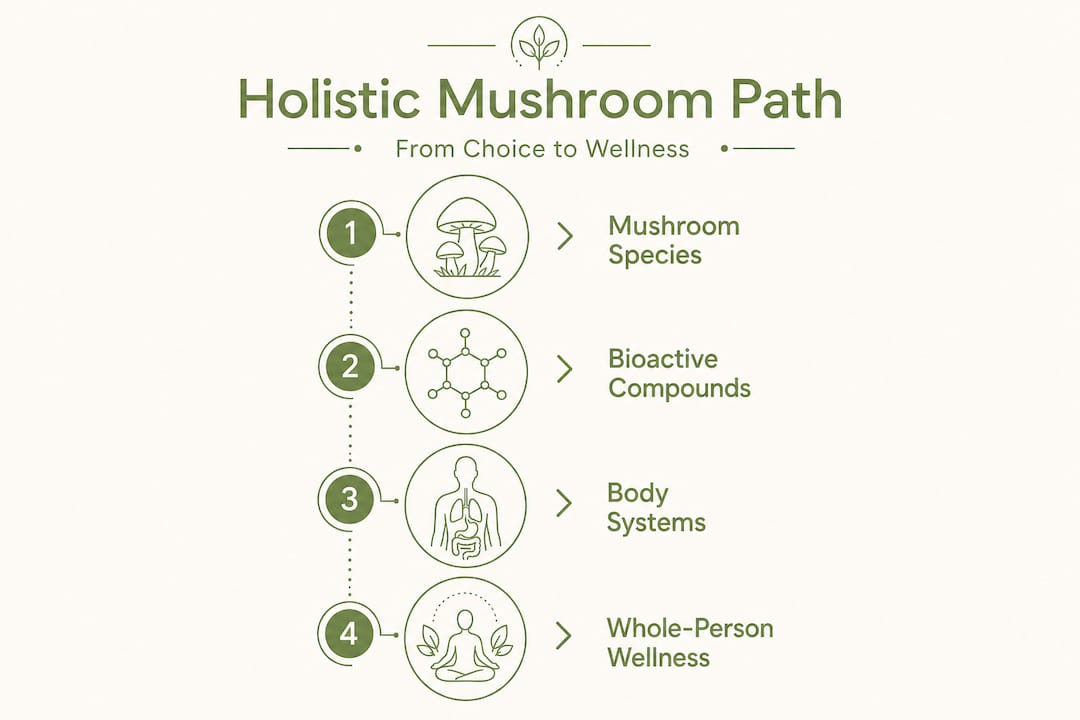
| Mushroom | Key bioactive | Primary wellness target |
|---|---|---|
| Reishi | Triterpenes, beta-glucans | Stress, immune regulation |
| Lion’s Mane | Hericenones, erinacines | Cognition, nerve health |
| Turkey Tail | PSK, PSP, beta-glucans | Gut health, immune support |
| Chaga | Betulinic acid, beta-glucans | Antioxidant, immune defense |
| Cordyceps | Cordycepin, adenosine | Energy, endurance |
How these compounds act in the body, step by step:
- Ingestion and digestion: Compounds from mushroom extracts enter the digestive tract, where beta-glucans begin interacting with gut-associated immune tissue.
- Receptor binding: Beta-glucans bind to pattern recognition receptors like Dectin-1 on immune cells, triggering regulated immune signaling.
- Systemic distribution: Bioactives and metabolites enter circulation and reach target tissues including the brain, liver, and adrenal system.
- Cellular response: Neurotrophic compounds from Lion’s Mane stimulate the production of nerve growth factor (NGF), supporting neural maintenance.
- Cumulative effect: With consistent daily use, these signals accumulate, producing measurable shifts in immune markers, energy levels, and cognitive clarity over weeks to months.
Understanding beta-glucan benefits in this mechanistic context makes it clear why dose, extract type, and daily consistency all influence outcomes. A once-a-week serving will not replicate what a daily routine achieves. For those interested in how this connects to cognitive enhancement, consistent use of the right species is the key variable.
Pro Tip: Combine mushroom supplementation with natural immunity practices like adequate sleep, zinc-rich foods, and stress reduction. These lifestyle factors amplify the effects of bioactive compounds rather than working in isolation.
Why evidence quality, product testing, and standardization matter
Knowing how mushrooms work spotlights why choosing proven, high-quality products is essential for safety and real results. Not all mushroom supplements are built equally, and the differences are significant.
Evidence is promising but variable
The research on functional mushrooms has expanded substantially over the past decade, but it is not uniformly strong. Evidence quality varies by species, extract type, and dose, with results that can be modest, mixed, or dependent on product standardization. A study using a hot water extract standardized to 30% beta-glucans will not produce the same outcome as a product using raw mushroom powder with no standardization.
This inconsistency is partly explained by the chemistry itself. Beta-glucan structure is heterogeneous, with significant variation in branching, molecular weight, and linkage patterns across species and products, all of which influence biological activity. Two products that both claim to contain beta-glucans may produce very different results based on the structural form present.
The bioavailability and contamination problem
Supplement bioavailability depends heavily on manufacturing practices, and there is a real risk of mislabeling and variable potency in unverified products. Some supplements may not deliver the same active concentrations as eating whole mushrooms regularly. Others may carry contaminants such as heavy metals or pesticides, particularly if grown in uncontrolled environments. This makes third-party testing and transparent labeling non-negotiable for serious wellness applications.
“Standardized extracts and independent lab verification are the two factors that most reliably separate effective mushroom supplements from ineffective ones.”
Quality checklist for holistic mushroom supplements:
- Look for dual extraction methods (hot water and alcohol) where relevant to the species
- Check the label for standardized beta-glucan percentages, not just general “mushroom content”
- Verify third-party testing for heavy metals, pesticides, and microbial contaminants
- Prioritize products that clearly distinguish fruiting body from mycelium, as these have different active profiles
- Review the supplement quality guide to understand what certification markers actually mean
- Check whether products carry relevant mushroom supplement certification
- Understand the differences outlined in the mushroom extract vs powder comparison before purchasing
Pro Tip: Always request or locate the Certificate of Analysis (COA) for any supplement you plan to use long-term. A reputable brand publishes these openly. If a brand does not make its testing data accessible, that is useful information in itself.
Understanding evidence and holistic benefits in context helps set realistic expectations. The wellness benefits of mushrooms are real but incremental. They accumulate with consistent, quality-driven use rather than appearing overnight.
Making holistic mushroom supplementation work for you
Armed with this knowledge, you can approach holistic mushroom supplementation with confidence and intention for maximum benefits. The practical implementation is straightforward when broken into clear steps.
Step-by-step routine setup:
- Identify your primary wellness goals: immunity, cognitive clarity, energy, stress management, or gut health.
- Select mushroom species or blends that align with those goals, using the species table above as a starting reference.
- Choose a high-quality, standardized product from a transparent brand. Capsules, powders, and blends each have different use cases. Capsules offer convenience; powders work well in morning beverages.
- Start with the recommended daily dose listed on the product. Allow 4 to 8 weeks of consistent use before evaluating results.
- Track personal markers such as sleep quality, energy levels, mental clarity, and frequency of illness.
- Revisit your species selection every 2 to 3 months and adjust based on observed outcomes and evolving wellness priorities.
Matching mushroom species to wellness goals:
- Immunity: Turkey Tail, Reishi, Chaga, Shiitake
- Cognitive focus: Lion’s Mane (primary), Cordyceps (secondary for energy that supports focus)
- Energy and physical endurance: Cordyceps, Chaga
- Stress and sleep quality: Reishi, Lion’s Mane
- Gut microbiome support: Turkey Tail, Shiitake
Lifestyle alignment is foundational
Supplements work best when layered on top of solid health habits, not as a substitute for them. The holistic approach succeeds most consistently when supplementation complements a broader routine that includes balanced nutrition, adequate sleep, and active stress management. Skipping sleep, eating poorly, and relying entirely on supplements to compensate will produce limited results.
Pairing mushroom supplements with evidence-based wellness practices such as daily movement, whole foods, and mindfulness creates a system where each element reinforces the others. Exploring natural ways to use mushroom supplements beyond simple capsule consumption, such as adding powders to meals or functional beverages, can also improve adherence and daily integration.
Setting realistic expectations
Results from holistic mushroom supplementation are rarely dramatic in the short term. Most users report gradual improvements in energy consistency, reduced frequency of minor illness, improved cognitive sharpness, and better sleep quality over a 6 to 12 week period. Setting expectations around these incremental markers rather than overnight transformation leads to better adherence and more accurate self-assessment.
The missing link: Holistic means the sum is greater than the parts
Most discussions about mushroom supplementation get stuck on the same question: which mushroom is the best? It is a reasonable question but ultimately the wrong one. The focus on finding a single superior species misses the more important point about how holistic wellness actually functions.
The real value in a holistic mushroom routine is not any individual species. It is the combined, consistent effect of multiple bioactives working across several body systems simultaneously, amplified by the foundational habits that surround them. Chasing the “best mushroom” is the equivalent of asking which vegetable is most important to eat. The answer, supported by nutritional science, is always variety and consistency over singular optimization.
There is also a quality trap that many wellness-focused consumers fall into without realizing it. They spend significant effort researching species benefits but minimal effort verifying product quality. A well-researched mushroom species in a poorly manufactured, unstandardized product will underperform a good-quality, standardized product of a less-discussed species. Product integrity is at least as important as species selection.
The limitations and real-world benefits of mushroom supplements become clear when you track your own markers honestly over time. This self-monitoring is the most underused tool in personal wellness. Generic wellness claims do not apply equally to everyone. Your sleep quality, stress load, dietary baseline, and health history all shape how your body responds to any supplement.
Pro Tip: Track two or three specific personal health markers, such as sleep onset time, afternoon energy, or frequency of minor illness, before and after starting a mushroom routine. Objective self-data cuts through marketing noise more effectively than any review.
The holistic mindset, when applied seriously, shifts focus away from shortcuts and toward a repeatable, quality-driven system. That system, built on diverse species, verified products, and aligned lifestyle habits, is where durable wellness gains actually live.
Ready to explore holistic mushroom supplementation?
Putting holistic mushroom supplementation into practice starts with choosing products that meet the quality standards this approach requires. Longevity Botanicals offers a range of third-party tested, standardized options designed for whole-person wellness routines. Browse organic mushroom capsule supplements for a convenient daily format, explore organic mushroom powders for flexible use in beverages and meals, or find purpose-built mushroom blend extract supplements formulated to support multiple wellness domains at once. Each option reflects the transparency and standardization that make holistic supplementation effective rather than speculative.
Frequently asked questions
What is holistic mushroom supplementation versus regular supplements?
Holistic mushroom supplementation targets multiple body systems for whole-person wellness using diverse mushroom species, while regular supplements typically address a single health concern with a single ingredient.
Do holistic mushroom supplements really boost immunity and brain function?
Some evidence supports modest improvements in immune and cognitive function, but benefits are often mixed and depend heavily on species selection, extract quality, and consistent daily use over several weeks.
Is there a risk of contamination or ineffective products in mushroom supplements?
Yes. Bioavailability and active compounds vary significantly by manufacturing method, and contamination risks are real in unverified products. Third-party testing and transparent labeling are the most reliable safeguards.
What’s the best way to use holistic mushroom supplements?
For best results, use supplements consistently as part of a broader routine that includes quality nutrition, adequate sleep, and stress management, and select species based on your specific wellness goals.
Recommended
- Unlock wellness benefits with mushroom supplements – LongevityBotanicals
- How to Use Mushroom Supplements for Natural Wellness – LongevityBotanicals
- Plant-based wellness with mushrooms: 5 key benefits – LongevityBotanicals
- Comprehensive Guide to Mushroom Extract Usage for Wellness – LongevityBotanicals


