



TL;DR:
- Mushrooms support energy metabolism by providing essential nutrients, enhancing gut health, and boosting mitochondrial function. Cordyceps, beta-glucans, and B vitamins in mushrooms improve aerobic capacity, reduce fatigue, and regulate systemic energy signals. Choosing high-quality extracts and maintaining a lifestyle foundation maximizes their real-world benefits for energy and resilience.
Most people reach for another cup of coffee when energy drops. That pattern is familiar, but it skips over a more interesting question: why does energy dip in the first place? Emerging research points to cellular metabolism, gut health, and micronutrient availability as root factors, and mushrooms address all three directly. This article walks through the science of how specific mushrooms and their bioactive compounds influence energy metabolism, what the strongest evidence actually shows, and how to apply these findings practically.
Table of Contents
- Understanding energy metabolism and why it matters
- Essential nutrients from mushrooms: Fuel for your cells
- Gut health, beta-glucans, and the energy connection
- Ergogenic power: Cordyceps and mushroom blends for real energy
- Limitations, formulation, and what to watch out for
- The real-world view: What most guides miss about mushrooms and energy
- How to start with the right mushroom supplements
- Frequently asked questions
Key Takeaways
| Point | Details |
|---|---|
| Mushrooms aid metabolism | Mushrooms provide key B vitamins and polysaccharides that boost the body’s energy production. |
| Gut benefits matter | Beta-glucans in mushrooms support gut microbiota, indirectly enhancing energy through SCFA production. |
| Cordyceps stands out | Cordyceps mushrooms are clinically proven to improve endurance and reduce fatigue. |
| Extracts are powerful | Mushroom extracts deliver higher levels of active compounds and often more noticeable effects than whole foods. |
| Quality counts | Choosing well-formulated, quality mushroom products maximizes energy support and wellness potential. |
Understanding energy metabolism and why it matters
To understand how mushrooms influence your energy, it’s important to grasp the basics of how your body turns food into fuel.
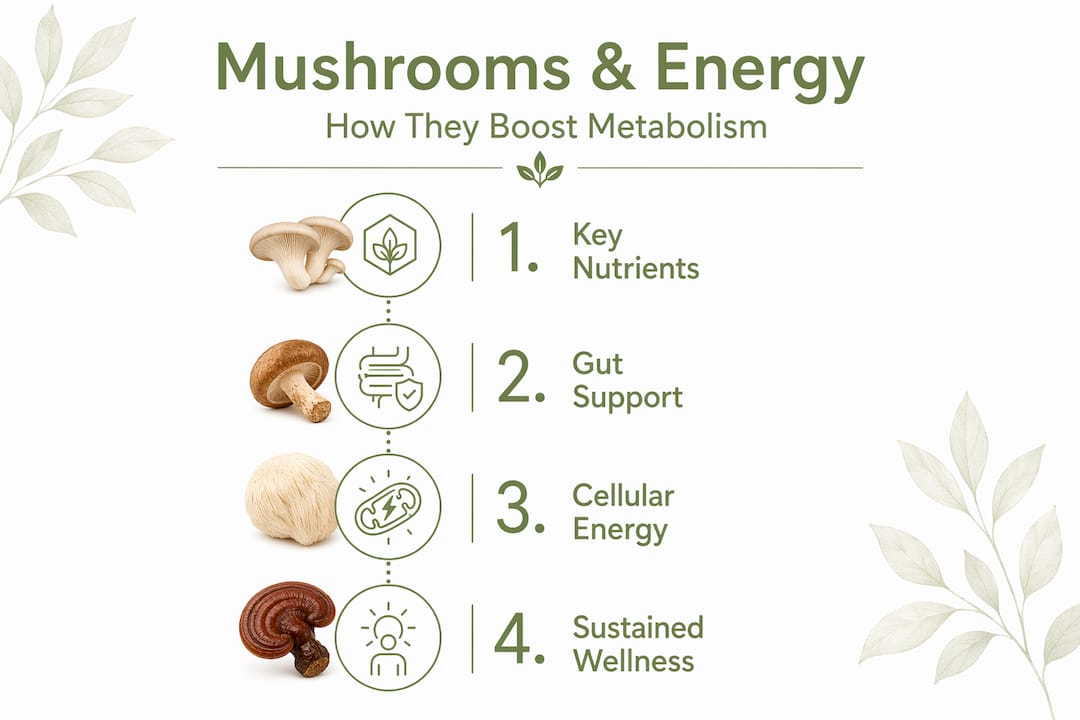
Energy metabolism refers to the set of biochemical reactions that convert carbohydrates, fats, and proteins into adenosine triphosphate (ATP). ATP is the actual currency your cells use for every function, from muscle contraction to cognitive processing. When these pathways run efficiently, you feel alert and physically capable. When they don’t, fatigue sets in regardless of how much sleep you get or how clean you eat.
Several factors shape metabolic efficiency:
- Micronutrient availability: B vitamins act as coenzymes in the electron transport chain
- Mitochondrial density: More mitochondria per cell means more ATP output
- Gut microbiota balance: Gut bacteria influence how well nutrients are absorbed and converted
- Hormonal environment: Cortisol, insulin, and thyroid hormones all regulate metabolic rate
Mushrooms connect to all four factors. Mushrooms contribute to energy metabolism primarily through B vitamins like niacin and riboflavin, which are essential for converting food into cellular energy. Beyond vitamins, their polysaccharides and bioactive compounds interact with gut bacteria and mitochondrial pathways in measurable ways.
It’s worth noting that optimal metabolism means more than simply “feeling energetic.” It also means metabolic flexibility, the ability to switch between fuel sources efficiently. Athletes and active individuals particularly benefit from this. Research on athletic performance and energy shows that mushrooms play a real supporting role in exercise capacity, not just general wellness.
Key insight: Energy metabolism is a systems-level process. Targeting it with micronutrients, prebiotic fiber, and mitochondrial support simultaneously is more effective than any single intervention.
Essential nutrients from mushrooms: Fuel for your cells
With the foundation of metabolism in mind, let’s examine exactly which nutrients in mushrooms make the difference.
Portobello mushrooms provide 15% DV niacin and 16% DV riboflavin per 100g, directly supporting energy metabolism at the cellular level. Niacin (vitamin B3) is a precursor to NAD+ (nicotinamide adenine dinucleotide), a coenzyme that drives the electron transport chain inside mitochondria. Riboflavin (vitamin B2) is a component of FAD and FMN, two coenzymes that also participate in ATP synthesis. Without adequate levels of both, energy production slows noticeably.
Key nutrients found in edible and supplemental mushrooms
| Nutrient | Primary role | Notable mushroom sources |
|---|---|---|
| Niacin (B3) | NAD+ synthesis, ATP production | Portobello, shiitake, cremini |
| Riboflavin (B2) | FAD/FMN coenzyme activity | Portobello, oyster, reishi |
| Vitamin D2 | Mitochondrial function, immune support | UV-exposed varieties, fortified products |
| Beta-glucans | Prebiotic fiber, gut microbiota support | Reishi, turkey tail, lion’s mane |
| Ergosterol | Precursor to vitamin D2 | Most edible mushrooms |
| Copper | Cytochrome c oxidase activity | Shiitake, oyster, lion’s mane |
Dietary inclusion is straightforward. Adding 100g of portobello or shiitake mushrooms daily to meals covers meaningful portions of the B vitamin requirement. For those preferring a more concentrated approach, mushroom supplements in capsule or powder form deliver standardized doses without requiring meal prep.
Key practical points:
- Cook or process mushrooms to break down chitin cell walls and improve nutrient release
- Pair with a source of fat when consuming vitamin D2, since it is fat-soluble
- Look for dual-extraction products when supplementing, as water extraction captures polysaccharides while alcohol extraction captures triterpenoids
- Pair mushroom supplements with a varied whole-food diet for maximum synergy with other B vitamins like B12 and folate
For targeted energy support, top energy-boosting mushrooms include Cordyceps, lion’s mane, and several culinary varieties with strong nutritional profiles.
Pro Tip: If you’re evaluating a supplement, check for a listed beta-glucan percentage. Products specifying 30% or higher beta-glucan content indicate more rigorous processing and likely better bioavailability than products listed only by mushroom species weight.
Gut health, beta-glucans, and the energy connection
Beyond direct nutrients, mushrooms deliver even more subtle metabolic benefits through the gut.
Beta-glucans are a class of soluble dietary fiber found in mushroom cell walls. In the digestive system, they are not absorbed directly. Instead, they travel to the large intestine, where they act as prebiotics, selectively feeding beneficial bacteria like Lactobacillus and Bifidobacterium. Beta-glucans from mushrooms modulate gut microbiota, leading to short-chain fatty acid (SCFA) production, including acetate, propionate, and butyrate. These compounds provide direct energy to colonocytes (cells lining the colon) and influence systemic metabolism in measurable ways.
Butyrate, in particular, is a critical energy substrate for intestinal cells and also sends signals that regulate insulin sensitivity and inflammation throughout the body. This connects gut health directly to whole-body energy regulation, not just digestion. Understanding the peptide-gut connection provides additional context for how gut-derived signals shape metabolic outcomes.
Comparing direct and indirect energy support from mushrooms
| Mechanism | Source | Speed of effect | Evidence level |
|---|---|---|---|
| B vitamin cofactors (niacin, riboflavin) | Dietary intake | Immediate to short-term | Strong |
| Mitochondrial support (Cordyceps) | Targeted supplementation | Weeks to months | Moderate to strong |
| SCFA production via beta-glucans | Consistent prebiotic intake | Weeks with regular use | Moderate |
| Metabolic flexibility via gut microbiota | Long-term dietary pattern | Months | Emerging |
Key points about beta-glucan intake:
- A daily intake of 3 to 6 grams of beta-glucans is the range studied for metabolic benefits
- Reishi, turkey tail, and lion’s mane are among the richest sources in supplement form
- Beta-glucan effects build over time with consistent intake, not single doses
- The beta-glucans benefits include immune support and blood sugar regulation alongside energy-related effects
Pro Tip: For higher polysaccharide content per serving, choose hot water extracts over raw mushroom powders. The extraction process concentrates beta-glucans while removing excess chitin, which can otherwise limit absorption.
Ergogenic power: Cordyceps and mushroom blends for real energy
Let’s move from the science of nutrients and gut health to actual results you can feel, especially with targeted mushroom types.
Cordyceps (Cordyceps sinensis and Cordyceps militaris) stands apart from other mushrooms in the energy context. Cordyceps species enhance mitochondrial ATP production and oxygen utilization, improving aerobic capacity and reducing fatigue. The mechanism involves increased activity of cytochrome c oxidase, the enzyme at the final step of the electron transport chain. More enzyme activity means more ATP per oxygen molecule consumed.

Human trial data adds weight to this claim. In one placebo-controlled study, Cordyceps supplementation increased VO2peak by approximately 7% over three weeks in older adults. VO2peak measures the maximum rate of oxygen the body can use during exercise. That percentage represents a real, measurable improvement in aerobic capacity, not a subjective feeling.
Here are the key ways Cordyceps supports energy:
- Increases ATP output by upregulating mitochondrial enzyme activity
- Improves oxygen utilization during aerobic exercise, delaying fatigue onset
- Reduces blood lactate accumulation, allowing harder effort before metabolic burnout
- Supports adrenal health, which regulates cortisol and stress-linked fatigue
- Enhances endurance recovery, reducing the time needed between hard training sessions
Beyond Cordyceps, multi-species blends show additional advantages. Medicinal mushroom blends reduce fatigue, improve mood, and lower stress markers in human trials. Combining Cordyceps with adaptogens like reishi adds stress resilience to direct energy support. Fatigue is rarely purely physical. Mental and stress-related fatigue compounds physical tiredness, and a blend targeting both dimensions produces broader results than Cordyceps alone.
Clinical finding: Blends combining Cordyceps, lion’s mane, and reishi showed statistically significant reductions in fatigue scores and cortisol levels in a randomized, double-blind trial with young adults over eight weeks.
The Cordyceps endurance effects are the most well-documented in human studies, but mushrooms for stress and mood add important coverage for the psychological dimension of energy management.
Limitations, formulation, and what to watch out for
Any effective plan for adding mushrooms should take practical considerations and limitations seriously.
The research on mushrooms and energy metabolism is promising but uneven. Evidence for Cordyceps endurance benefits is strong, but evidence for general metabolic improvement via B vitamin content or gut pathways remains indirect and largely preliminary. Large-scale randomized controlled trials (RCTs) specifically targeting energy metabolism are still limited. This doesn’t mean the mechanisms are wrong. It means they haven’t been fully tested in controlled human populations yet.
Formulation matters enormously. Polysaccharides are more bioavailable in extracts than in whole food, and ergosterol conversion to vitamin D2 requires UV exposure, which varies significantly by product source and storage conditions. Excessive UV exposure after harvest can actually degrade heat-sensitive nutrients, creating a narrow optimal window for preparation.
Key practical guidelines:
- Choose extracts over raw powders when polysaccharide content is a priority
- Check for third-party testing to verify active compound content
- Store supplements away from direct light and heat to preserve potency
- Avoid products with no listed beta-glucan or polysaccharide percentage, as these offer little transparency
- Consult a healthcare provider if taking medications, as some mushroom compounds may interact with anticoagulants or immunosuppressants
Understanding the difference between extract vs powder forms is a practical starting point. Detailed guidance on extract preparation steps can also help evaluate product quality before purchasing.
Pro Tip: When comparing products, favor those that list their extraction ratio (for example, 10:1 or 20:1) and specify the beta-glucan or active compound percentage. These numbers indicate a standardized, tested product rather than simple dried mushroom powder.
The real-world view: What most guides miss about mushrooms and energy
Having reviewed the science and practical details, let’s pull back and look honestly at what truly matters for results.
Most discussions of mushrooms and energy focus entirely on compounds and studies. They skip the part that matters just as much: context. A high-quality Cordyceps extract taken while sleeping four hours a night and eating a processed food diet will deliver fraction of its potential benefit. Mushrooms are adjuncts. They work best when layered onto a foundation of adequate sleep, regular movement, balanced macros, and managed stress.
The quality variable is significantly underestimated by most buyers. Standardized extracts from verified sources behave differently from bulk mushroom powders. Two products with identical names can contain dramatically different beta-glucan concentrations. One peer-reviewed analysis found that some commercial mushroom products contained no detectable beta-glucans at all, despite labeling claims. That makes sourcing a real determinant of outcome, not just marketing preference.
Self-experimentation matters here. Metabolic responses to mushroom supplementation vary by individual, influenced by gut microbiota composition, baseline nutrient status, and activity level. Tracking energy, mood, and performance across a consistent four to eight week period gives more useful data than any single supplement review.
The honest position on therapeutic mushrooms and their benefits is this: the science supports real mechanisms, the clinical evidence is strongest for Cordyceps and beta-glucan gut effects, and results depend heavily on product quality and lifestyle context. Mushrooms are a meaningful tool, not a replacement for fundamentals.
How to start with the right mushroom supplements
Ready to put science into action? Here’s how to get started safely and effectively.
Choosing the right format matters. Organic mushroom capsules offer precise dosing and convenience, making them a practical starting point for daily supplementation without changing meal routines. For more flexibility in how mushrooms are consumed, organic mushroom powders mix easily into smoothies, coffee, or warm drinks, and often deliver higher serving sizes per dose. For those targeting both energy and stress resilience, blended mushroom extracts combine multiple species in standardized ratios, offering broader coverage than single-species products.
All three formats are available in organic, standardized options. Look for products that specify beta-glucan content, list extraction method, and include third-party testing. Starting with a single species like Cordyceps for energy-specific goals, then adding a blend over time, is a clear and practical approach supported by the available evidence.
Frequently asked questions
Which mushrooms are best for boosting energy metabolism?
Cordyceps and blends with B-vitamin-rich mushrooms like portobello and shiitake show the strongest evidence for supporting energy metabolism, particularly for aerobic capacity and fatigue reduction. Cordyceps species specifically enhance mitochondrial ATP production and oxygen utilization.
How do beta-glucans in mushrooms help with energy?
Beta-glucans from mushrooms modulate gut microbiota, producing short-chain fatty acids like butyrate that directly fuel colon cells and regulate systemic metabolic signals, including insulin sensitivity and inflammation.
Is there a difference between whole mushrooms and extracts for energy support?
Yes. Extracts deliver higher concentrations of bioactive compounds. Polysaccharides are more effective in extracts than whole food forms because extraction removes chitin barriers and concentrates active compounds.
Can mushroom supplements reduce fatigue and stress?
Medicinal mushroom blends reduce fatigue, improve mood, and lower stress markers in human clinical trials, with effects observed for both physical and psychological fatigue over several weeks of consistent use.
Are there any risks or limitations to using mushrooms for energy metabolism?
Product quality and formulation are the primary practical risks. Excessive UV exposure degrades nutrients and evidence for general metabolic claims remains limited by a lack of large-scale RCTs outside of Cordyceps endurance research. Third-party tested products from reputable sources reduce both concerns.


