


TL;DR:
- Micronized mushroom powders have smaller particles, enhancing absorption and providing more consistent results.
- High-quality products should be organic, sourced from fruiting bodies, and verified for active compound levels.
- Proper use includes daily consistency, appropriate dosing, and choosing products with transparent testing and sourcing.
Not all mushroom powders deliver the same results, even when they share the same label. Many products on the market are made from mycelium on grain, contain minimal active compounds, and use particle sizes too large for efficient absorption. Micronized mushroom powders work differently. By reducing particle size to microscopic levels, micronization increases the surface area available for absorption, which may translate into stronger, faster, and more consistent wellness outcomes. Safety data supports doses up to 2000mg/kg with no adverse findings, provided sourcing and quality controls are in place. This guide covers what micronization actually means, how to choose quality products, and how to use them effectively.
Table of Contents
- What is micronization and why does it matter?
- How micronized mushroom powders unlock more wellness benefits
- Safety and quality: What to look for in micronized powders
- How to use micronized mushroom powders for best results
- Why most people still miss out on the real benefits of micronized mushroom powders
- Ready to experience the difference? Shop high-quality micronized mushroom powders and blends
- Frequently asked questions
Key Takeaways
| Point | Details |
|---|---|
| Micronization boosts absorption | Smaller particles in micronized powders allow more potent wellness benefits by enhancing absorption. |
| Quality and testing matter | Always choose organic, tested powders with high beta-glucan content for maximum safety and efficacy. |
| Safe at recommended doses | Human studies show no safety concerns up to 2000mg/kg with quality controls in place. |
| Blend for daily wellness | You can easily add micronized mushroom powders to daily drinks, smoothies, and meals for ongoing support. |
What is micronization and why does it matter?
Most people assume mushroom powder is mushroom powder. Buy a bag, scoop it into your morning drink, done. But the reality is more nuanced than that. The physical structure of a mushroom powder determines how well your body can access its active compounds.
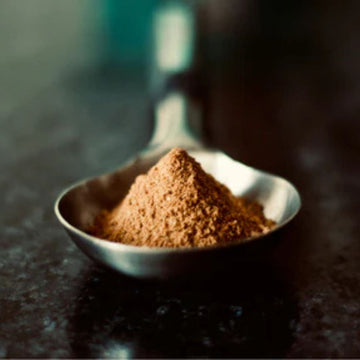
Micronization is a manufacturing process that reduces mushroom powder particles to an extremely small size, typically between 1 and 100 microns. One micron equals one millionth of a meter. To put that in perspective, a single human hair is about 70 microns wide. Standard mushroom powders often contain particles well above 200 microns.
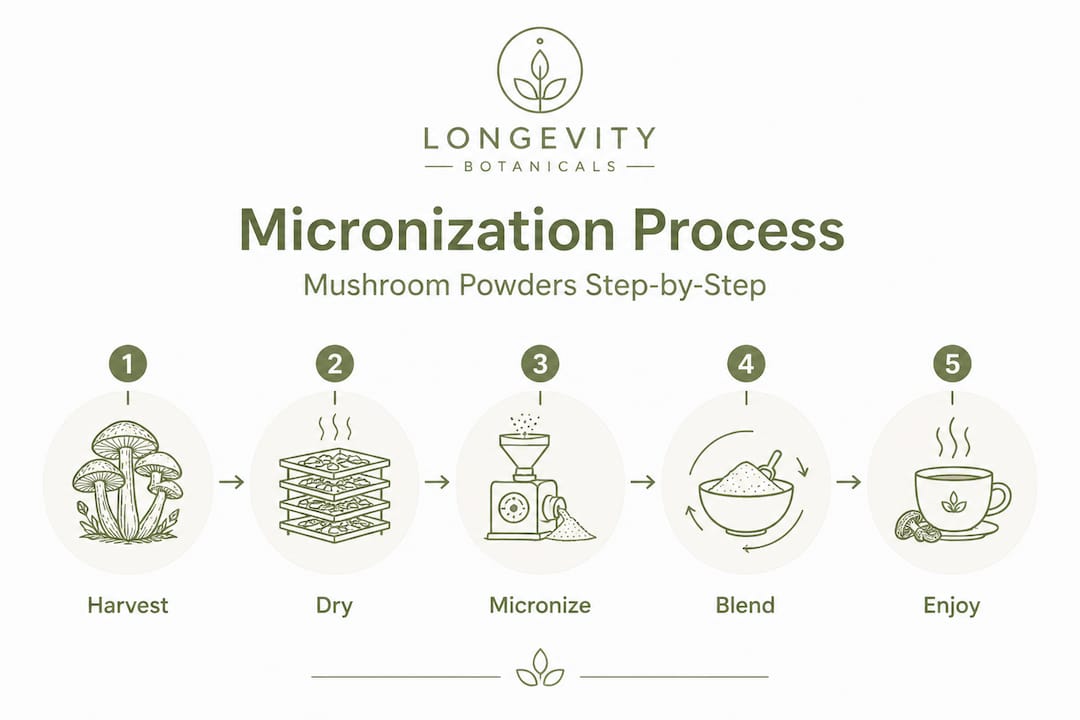
Why does this matter? The digestive system absorbs nutrients and bioactive compounds through the surface area of particles in contact with the gut lining. Larger particles mean less contact. Smaller particles mean more contact, and therefore greater potential for absorption. This principle applies broadly across nutritional science, and mushroom compounds like beta-glucans, triterpenes, and polysaccharides are no exception.
Here is what changes when you shift from conventional to micronized powder:
- Particle size: Reduced from 200+ microns to under 100 microns
- Surface area: Dramatically increased, allowing greater contact with the gut wall
- Absorption speed: Compounds can reach the bloodstream more quickly
- Effect consistency: More predictable results because absorption is more reliable
- Mixing quality: Micronized powders dissolve better in liquids with far less grit
Pro Tip: When reviewing a mushroom powder product, check whether the manufacturer publishes particle size data. If they don’t, that’s a gap worth questioning. A proper powder quality checklist can help you evaluate products systematically before buying.
It is also worth noting that safety research confirms no concerns at doses up to 2000mg/kg when products meet quality standards, meaning the form of the powder matters, but so does everything else behind the label.
How micronized mushroom powders unlock more wellness benefits
With a clear understanding of micronization, the next step is seeing how this technology connects to specific wellness outcomes. Whether the goal is sharper focus, stronger immune response, or better stress management, the underlying mechanism stays the same: more efficient absorption leads to more consistent benefits.
The key compounds in functional mushrooms include beta-glucans, hericenones, erinacines, triterpenes, and various polysaccharides. Each of these serves a distinct role. Beta-glucans, for example, are well-studied for their role in immune modulation. Hericenones and erinacines found in Lion’s Mane support nerve growth factor production, which is directly tied to cognitive health. Triterpenes in Reishi support stress response and sleep quality.
All of these compounds need to be absorbed to work. Micronized powders give them a better route in.
Here is a side-by-side comparison of how regular and micronized powders perform:
| Feature | Regular mushroom powder | Micronized mushroom powder |
|---|---|---|
| Particle size | 200+ microns | Under 100 microns |
| Bioavailability | Moderate | Higher |
| Absorption speed | Slower | Faster |
| Consistency of effect | Variable | More consistent |
| Mixability in liquids | Grainy, settles | Smooth, dissolves well |
| Optimal for sensitive users | Less ideal | More suitable |
The numbers matter here. Research published in Frontiers in Toxicology emphasizes that the benefits of mushroom powders are closely tied to the quality of the bioactive compounds delivered, including their concentration and form. This supports the idea that micronization is not just a processing detail but a functional factor in outcomes.
For cognitive support: Micronized Lion’s Mane powder delivers hericenones and erinacines with greater efficiency. Users targeting focus, memory, and mental clarity benefit from the consistent compound delivery that smaller particles allow.
For immune support: Beta-glucan benefits are well-documented. Turkey Tail and Chaga, for example, are rich in immune-modulating beta-glucans. Micronized forms ensure more of these compounds reach the gut-associated immune tissue where they do their work.
For whole-body balance: Adaptogenic mushrooms like Reishi and Cordyceps support the body’s stress response systems. Consistent absorption through micronized formats means these effects accumulate reliably over time rather than fluctuating based on digestion.
- Start with a single mushroom species to understand your response before combining.
- Choose products with verified immune support profiles.
- Track cognitive and energy changes weekly, not daily, since mushroom benefits often build gradually.
- Look for products specifying beta-glucan content on the label, not just total mushroom content.
Pro Tip: Lion’s Mane in micronized form taken in the morning supports focus during peak cognitive hours. Reishi in micronized form taken in the evening may support wind-down and sleep quality. Timing your mushroom powders around your goals can increase their practical impact.
Safety and quality: What to look for in micronized powders
Even with top-tier micronization, quality control matters immensely. A product can be micronized and still deliver poor results if it starts from low-grade raw material. Here is how to identify the best and safest products.

The good news first: safety data shows no adverse effects at doses up to 2000mg/kg, a figure that is far above any realistic daily consumption. This means mushroom powders have a strong safety profile. But safety alone is not enough. A product can be safe and still be ineffective.
The markers that predict both safety and efficacy:
- Organic certification: Mushrooms are highly efficient at absorbing compounds from their growing medium, including toxins. Organic certification reduces contamination risk significantly.
- Fruiting body source: The fruiting body (the part that looks like a mushroom) contains the highest concentration of active compounds. Mycelium on grain products often contain more starch and less beta-glucans.
- Beta-glucan content above 20-30%: This is the benchmark for a product delivering meaningful immune support. Always look for third-party lab verification of this figure, not just a marketing claim.
- Third-party testing: Independent labs test for heavy metals, pesticides, microbial contamination, and active compound levels. No third-party test results means no verification.
- Standardized extracts: Products labeled as extracts (such as 8:1 or 10:1) have been concentrated to retain more active compounds per gram.
Here is a practical comparison of what separates high-quality from low-quality micronized mushroom powder products:
| Quality marker | High-quality product | Low-quality product |
|---|---|---|
| Source material | Certified organic fruiting body | Mycelium on grain |
| Beta-glucan content | Greater than 20-30%, lab-verified | Unstated or unverified |
| Testing | Third-party, publicly available | None or internal only |
| Filler ingredients | None | Fillers, flow agents |
| Country of origin | Transparent, audited | Unclear or undisclosed |
| Micronization verified | Particle size stated | Not mentioned |
“Mushroom supplement safety is well-supported at high doses, but quality markers such as organic certification, fruiting body sourcing, and beta-glucan content above 20-30% are what truly separate effective products from ineffective ones.” Frontiers in Toxicology, 2025
Understanding mushroom supplement safety goes beyond reading the label. It means asking questions about sourcing, testing, and processing before committing to a product. Use the quality markers above as your filter.
If you are unsure where to start evaluating options, reviewing what separates products side by side can help. A focused guide on finding the best mushroom powder for your specific goals makes this process much more straightforward.
How to use micronized mushroom powders for best results
Armed with safety and quality knowledge, the next step is putting micronized mushroom powders to work in a consistent daily routine. This is where many people drop the ball. They buy a quality product and then use it inconsistently or incorrectly, which limits results.
Here is a step-by-step daily use framework that maximizes what micronized powders can do:
- Start with a single powder. Pick one mushroom that aligns with your primary goal. Lion’s Mane for cognition, Turkey Tail or Chaga for immune support, Reishi for stress and sleep, Cordyceps for energy and endurance.
- Set a consistent daily time. Take your powder at the same time each day. Consistency of timing supports consistent blood levels of active compounds.
- Use 1 to 2 grams per serving to start. This is a reasonable starting dose for most adults. Research shows no safety concerns at much higher doses, but starting lower lets you gauge your personal response first.
- Mix with a warm liquid. Coffee, hot water, or broth work well. Warm liquids help micronized powders dissolve evenly without clumping.
- Track your response over 4 to 8 weeks. Mushroom benefits accumulate over time. Changes in focus, immunity, or energy are often subtle at first and build progressively.
- Adjust dose or timing based on your response. If you notice no change after 4 weeks, consider increasing the dose or switching to a higher-concentration extract.
Common mistakes to avoid:
- Taking mushroom powders inconsistently, a few days on, a few days off
- Mixing multiple new supplements at once, which makes it impossible to isolate effects
- Choosing products based on price alone without checking beta-glucan content or testing data
- Ignoring how your body responds and defaulting to maximum doses without need
Pro Tip: Blending micronized mushroom powder with healthy fats like coconut oil or MCT oil in a smoothie may support absorption of fat-soluble compounds like triterpenes. This small change can enhance the practical value of each serving.
For more detailed guidance on daily application, the guide on maximizing mushroom powder benefits covers advanced strategies for incorporating these powders into varied routines. For foundational use advice, the resource on using mushroom supplements is a practical starting point.
Why most people still miss out on the real benefits of micronized mushroom powders
Here is an honest observation after years of watching supplement marketing evolve alongside consumer purchasing behavior: most people choose mushroom powders based on packaging, price, or a single influencer recommendation. Very few start with the label data that actually predicts outcomes.
The term “micronized” has become a marketing label in many cases, just like “natural” or “whole food.” A product can claim micronization without publishing any particle size data. It can also be micronized from low-grade mycelium on grain and deliver very little actual beta-glucan content. The word on the label means nothing without the evidence behind it.
The uncomfortable truth is that the supplement industry still operates with significant gaps in standardization. Brands that invest in third-party testing, organic sourcing, and fruiting body extraction are the exception, not the rule. Most products compete on price, which creates a race to the bottom on ingredient quality.
What actually drives results is the full package: proper micronization from high-quality fruiting body material, independently verified beta-glucan content above 20-30%, and clean sourcing free from contaminants. These three factors together are far more predictive of outcomes than any marketing claim.
Reading labels critically is a skill worth developing. Start with the mushroom powder checklist to build that habit systematically. Over time, spotting weak products becomes second nature, and the investment in quality products starts to pay off in real, trackable health improvements.
The market will continue to evolve. Micronization technology is genuinely promising. But it only delivers on that promise when the raw material behind it is worth micronizing in the first place.
Ready to experience the difference? Shop high-quality micronized mushroom powders and blends
Longevity Botanicals carries a curated selection of mushroom powders and blends built around the quality markers covered in this guide: organic sourcing, whole fruiting body extraction, independently verified beta-glucan content, and third-party testing. Whether the goal is immune support, cognitive performance, or overall wellness, there are targeted and multi-mushroom options available across formats. Browse the full range of organic mushroom powders for single-species options, or explore mushroom blend extracts for synergistic formulas designed to support multiple health goals at once. Every product listed includes detailed ingredient and testing information to support confident, informed purchasing decisions.
Frequently asked questions
How is micronized mushroom powder different from regular mushroom powder?
Micronized mushroom powder has much smaller particles, typically under 100 microns, which increases contact with the gut lining and supports more efficient absorption compared to standard powders with larger particle sizes.
Are micronized mushroom powders safe to use daily?
Research confirms no safety concerns at doses up to 2000mg/kg, well above typical daily use, provided the product meets quality standards for purity, sourcing, and active compound content.
What should I look for when buying micronized mushroom powders?
Choose certified organic products made from whole fruiting bodies with third-party lab results confirming beta-glucan content above 20-30%. Avoid products that lack independent testing data or do not disclose their source material.
Can micronized mushroom powder be mixed with other foods or supplements?
Yes. Micronized powders are typically flavorless or mildly earthy and dissolve well in hot or cold liquids, smoothies, and foods. They can be combined with other supplements without negatively affecting absorption.
Recommended
- How to maximize mushroom powder benefits: a 2026 workflow – LongevityBotanicals
- Mushroom Extract vs Powder: Choosing for Optimal Health – LongevityBotanicals
- How to Blend Mushroom Powders: 68% See Immune Boost – LongevityBotanicals
- Master the Mushroom Blending Process for Optimal Wellness – LongevityBotanicals
- Mushrooms


