

Mushroom immunomodulators: Boosting wellness and immunity
TL;DR:
- Mushroom immunomodulators read your immune system and help balance activity rather than just boost it.
- Compounds like beta-glucans, triterpenoids, phenolics, and peptides interact with immune cell receptors to modulate responses.
- They are generally safe, effective as adjuncts, and require standardized, high-quality extracts for best results.
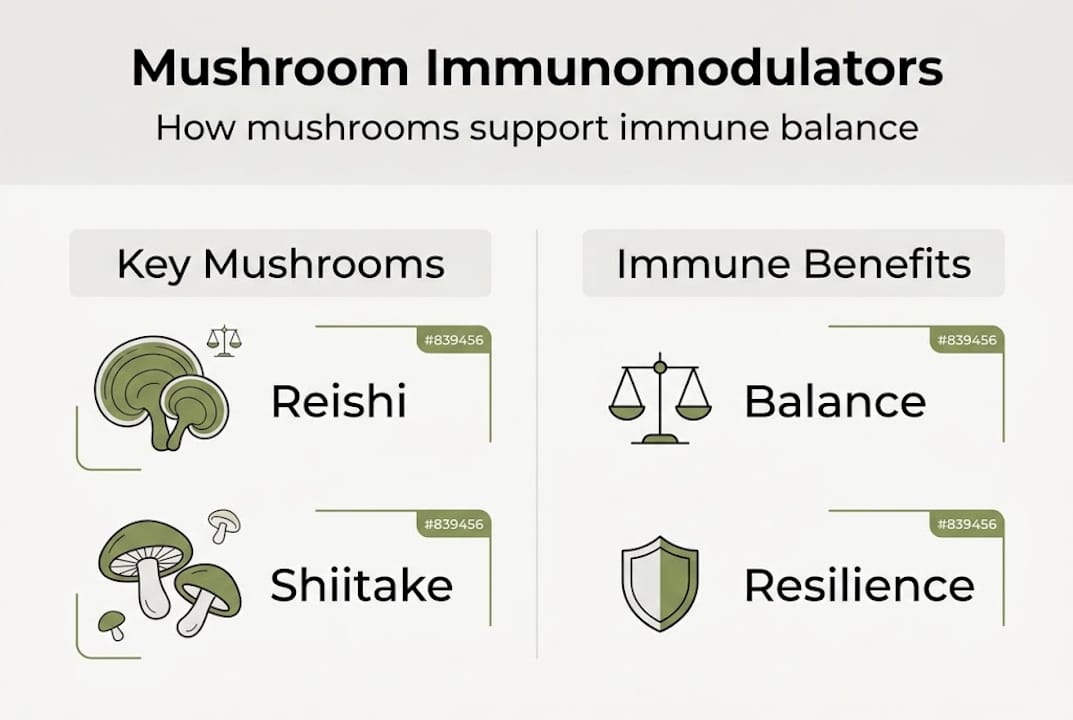
Most people assume immune supplements work by cranking up immune activity. More is better, right? Not exactly. Certain compounds from medicinal mushrooms do something far more interesting: they read your immune system’s current state and help bring it into balance. This is not marketing language. Bioactive compounds from mushrooms like Reishi, Turkey Tail, and Shiitake act as biological response modifiers, nudging immune activity up or down depending on what the body actually needs. This article covers what mushroom immunomodulators are, how they work at the cellular level, what clinical research reveals, and how to use them effectively.
Table of Contents
- What are mushroom immunomodulators?
- How do mushroom immunomodulators work?
- Evidence from clinical trials
- Nuances, safety, and who should consider them
- Integrating mushroom immunomodulators into wellness routines
- Our perspective: Why mushroom immunomodulators are underappreciated and what most guides miss
- Explore premium mushroom immunomodulator supplements
- Frequently asked questions
Key Takeaways
| Point | Details |
|---|---|
| Balanced immune support | Mushroom immunomodulators help maintain immune balance, not overstimulation. |
| Backed by research | Clinical trials support benefits for immunity, inflammation, and adjunct therapies. |
| Safe but nuanced | Most people tolerate them well, but quality and dosing nuances matter. |
| Practical integration | Routine use requires proper selection, reputable brands, and consistency. |
| Expert guidance advised | Consult a healthcare provider for use with autoimmune or chronic conditions. |
What are mushroom immunomodulators?
An immunomodulator is any substance that adjusts immune function rather than simply stimulating or suppressing it. That distinction matters. Standard immune supplements, like high-dose vitamin C or zinc, tend to push the immune system in one direction. Mushroom immunomodulators work differently because they interact with immune cells in context-dependent ways.
Immune modulation benefits from mushrooms come from a mix of bioactive compounds, not just one active ingredient. These include:
- Beta-glucans (β-glucans): Polysaccharides that bind directly to immune receptors and are considered the primary drivers of immune activity in most medicinal mushrooms.
- Triterpenoids: Found in high concentrations in Reishi, these compounds show anti-inflammatory and adaptogenic properties.
- Phenolic compounds: Antioxidant-active molecules that support immune homeostasis by reducing oxidative stress on immune cells.
- Peptides and proteins: Less studied but increasingly recognized for direct immune signaling roles.
Beta-glucans in mushrooms are the most researched category, and most clinical work on mushroom immunity centers on their activity.
As Frontiers in Nutrition notes, mushroom immunomodulators are bioactive compounds that modulate the immune system by acting as biological response modifiers. This means they do not simply activate or suppress. They help calibrate.
Mushroom immunomodulators are not general immune boosters. They are multi-compound, context-sensitive biological response modifiers.
Pro Tip: When buying mushroom supplements, look for products labeled as standardized extracts. These products have guaranteed β-glucan percentages per serving, which means you know what you are actually getting rather than guessing.
For health-conscious consumers, this category represents a more targeted and nuanced approach to immune support compared to most single-nutrient supplements on the market.
How do mushroom immunomodulators work?
With an understanding of what these compounds are, the next question is: how do they actually influence your immune system?
The short answer is that mushroom compounds interact directly with immune cell receptors, triggering cascades of activity that affect everything from inflammation to natural killer (NK) cell function. Here is how it unfolds step by step:
- Ingestion and absorption: β-glucans and other bioactives are absorbed in the gut. Bioavailability can be low (under 5%), which is why extraction method matters significantly.
- Receptor binding: Compounds bind to pattern recognition receptors on immune cells, primarily Dectin-1, complement receptor 3 (CR3), and toll-like receptors (TLRs).
- Signaling pathway activation: Receptor binding triggers intracellular pathways including NF-κB and MAPK, which regulate cytokine production and inflammatory response.
- Immune cell modulation: Key mechanisms include macrophage polarization from pro-inflammatory (M1) to anti-inflammatory (M2) states, enhanced NK cell cytotoxicity, and T cell regulation.
- Cytokine balance: The net result is a more calibrated cytokine environment, reducing chronic low-grade inflammation while preserving acute immune responsiveness.
| Receptor | Mushroom compound | Primary immune effect |
|---|---|---|
| Dectin-1 | β-glucans | Activates macrophages and dendritic cells |
| TLRs | β-glucans, polysaccharides | Triggers innate immune alerts |
| CR3 | β-glucans | Boosts NK cell activity |
| NF-κB pathway | Triterpenoids | Reduces pro-inflammatory cytokines |
| Nrf2/HO-1 pathway | Phenolics | Antioxidant and anti-inflammatory effects |
Compared to standard immune supplements that simply provide precursor nutrients, mushroom immunomodulators engage specific receptor systems. Learning how mushrooms support immunity at the receptor level explains why they can function in both under-reactive and over-reactive immune states.

For a practical overview of immune support with mushrooms, the key takeaway is that these are not blunt instruments. They are selective, receptor-driven modulators.
Evidence from clinical trials
Knowing how mushrooms modulate immunity, let us see what the research says about how well they actually work in people.
Human data on mushroom immunomodulators has grown substantially over the past three decades. Here are the most relevant clinical highlights:
- PSK (Turkey Tail extract): Approved in Japan as a cancer treatment adjunct across more than 40 trials, PSK is the most clinically validated mushroom immune compound globally.
- Reishi (Ganoderma lucidum): Human trials show measurable increases in NK cell activity and T cell counts with consistent supplementation.
- FoTv (Trametes versicolor): In a randomized controlled trial with 90 naive participants, combining FoTv extract with a COVID vaccine reduced side effects and preserved antibody levels at the 6-month mark.
| Approach | Clinical evidence level | Primary mechanism | Notable limitation |
|---|---|---|---|
| Mushroom immunomodulators | Moderate to strong (PSK approved) | Multi-receptor, cytokine balance | Standardization gaps |
| Vitamin C (high dose) | Moderate | Antioxidant, neutrophil support | Single target |
| Echinacea | Low to moderate | Innate immune stimulation | Inconsistent RCT results |
| Zinc | Moderate | T cell and antiviral support | Toxicity risk at high doses |
Research advantages and current gaps:
- Advantages: Long clinical history for PSK, regulatory recognition in Japan, multi-compound synergy, adjunct benefit to vaccines
- Gaps: Most top immune-boosting mushrooms still lack large-scale Phase III human trials; dosing standards vary widely across products
- Most available data is on extracts, not raw powders or whole mushrooms
The clinical picture for medicinal mushrooms for immunity is encouraging, particularly for people looking at adjunct wellness support rather than standalone treatment.
Nuances, safety, and who should consider them
Scientific support is compelling, but it is just as important to navigate safety details and practical nuances.
Mushroom immunomodulators are generally well-tolerated with rare cases of allergy or extract-related side effects. That said, several nuances deserve attention before you start.
Biphasic dose effects: Some research indicates that low doses prime immune activity while high doses may suppress certain inflammatory pathways, including the NLRP3 inflammasome. This is not dangerous, but it does mean that more is not always better. Dosing guidance on standardized products provides a reliable starting point.
Species and extraction variability: A Frontiers in Nutrition review found that species variation and extraction method significantly affect bioactive content and efficacy. Hot water extraction preserves β-glucans; alcohol extraction captures triterpenoids. Dual-extraction products offer both.
Bioavailability: Raw oral bioavailability for β-glucans can be below 5%. Newer nanoformulation technologies are being studied to improve this, but currently standardized extracts remain the most practical option for consumers.
Who stands to benefit most:
- Adults with normal to moderately stressed immune function
- People seeking adjunct support alongside vaccines or standard care
- Individuals managing chronic low-grade inflammation
- Those looking for non-stimulant immune support
Who should use caution:
- People with diagnosed autoimmune conditions (consult your doctor first)
- Pregnant or breastfeeding individuals (limited safety data)
- Those with known mushroom allergies
- Children (dosing data for pediatric use is limited)
Always consult your healthcare provider if you have an immune-related health condition before adding mushroom immune support supplements to your routine.
Pro Tip: If you have an autoimmune condition, do not assume mushroom immunomodulators are automatically off-limits. The modulatory action may be beneficial, but that assessment requires professional input given your specific diagnosis and medications.
Integrating mushroom immunomodulators into wellness routines
With the science and safety out of the way, here is how to put this knowledge into practice for your own wellness.
Adding mushroom immunomodulators to a daily regimen does not need to be complicated. A structured approach helps you start safely, assess response, and optimize over time.
- Choose your format. Capsules with standardized extracts are the easiest starting point. Powders allow flexible dosing and can be blended into food or drinks. Tinctures and dual extracts offer faster absorption for some compounds.
- Read labels carefully. Look for listed β-glucan percentage (ideally 20% or higher for most mushrooms), extraction method, and species name (both common and Latin). Avoid products with only dried mycelium on grain, which may dilute active content.
- Start with a single species. Begin with one well-researched option like Reishi or Turkey Tail for 4 to 6 weeks. This makes it easier to notice effects and rule out any sensitivity.
- Add species strategically. A step-by-step mushroom immune support approach means adding complementary species over time. Reishi (triterpenoid-rich) and Turkey Tail (β-glucan-rich) together, for example, cover more immune pathways than either alone.
- Be consistent. Mushroom immunomodulators are not fast-acting stimulants. Consistent daily use over weeks builds the cumulative receptor engagement that research supports.
- Monitor and adjust. Track energy, illness frequency, or any gut sensitivity. Adjust dose or species with guidance from a healthcare provider if you notice unexpected effects.
Combining species for complementary effects is a well-supported strategy, particularly for covering both innate and adaptive immune pathways simultaneously.
Pro Tip: Combining β-glucan-rich species like Shiitake or Maitake with triterpenoid-rich Reishi may produce broader immune effects than any single mushroom alone, due to complementary receptor targeting.
Our perspective: Why mushroom immunomodulators are underappreciated and what most guides miss
Most content on mushroom supplements focuses on individual species: Reishi for stress, Lion’s Mane for the brain, Turkey Tail for immunity. That framing is useful for marketing but misses the bigger picture.
What makes mushroom immunomodulators genuinely interesting is the interplay between compound classes. The synergy between β-glucans and triterpenoids is one reason mushrooms offer multi-target modulation that single-molecule supplements cannot replicate. A purified β-glucan supplement does not behave the same way as a whole mushroom extract with intact triterpenoids and phenolics.
Most guides also skip the inconvenient parts: poor raw bioavailability, inconsistent extract quality across brands, and the reality that preclinical data still outpaces human trial data for most species. Ignoring these details sets up unrealistic expectations.
The practical takeaway is to prioritize quality over novelty, check for evidence of standardization on every product you buy, and treat mushroom immunomodulators as what the research actually shows they are: a well-supported adjunct to overall immune health strategy, not a standalone cure. For those exploring mushroom antioxidant immunity benefits, the same principle applies: extract quality shapes outcome.
Explore premium mushroom immunomodulator supplements
Ready to add mushroom immunomodulators to your wellness routine? Longevity Botanicals carries a curated range of organic mushroom capsule supplements featuring standardized extracts with verified β-glucan content. Each product is third-party tested for purity and potency, removing the guesswork from label reading.
For seasonal needs, the spring immune support collection offers targeted options aligned with seasonal immune demands. For broader coverage, explore the mushroom blend extract supplements range, which combines multiple species to cover complementary immune pathways in a single formula.
Frequently asked questions
Are mushroom immunomodulators safe to take daily?
Current research shows they are generally well-tolerated with daily use, though rare allergies and limited long-term human data mean individual monitoring is sensible. Starting with a lower dose and assessing response over several weeks is a practical approach.
Can mushroom immunomodulators help with autoimmune conditions?
They act as modulators rather than pure stimulants, which means they may help balance immune activity rather than amplify it. Expert guidance is still essential given the complexity of autoimmune conditions and potential medication interactions.
What are the best mushrooms for immune support?
Top research-supported options include Reishi, Turkey Tail, Shiitake, Cordyceps, and Maitake. PSK from Turkey Tail is the most clinically validated, with approval in Japan and support across more than 40 trials.
How quickly can you expect results from mushroom immunomodulators?
Some users notice shifts in energy or immune resilience within a few weeks, but consistent use over 2 to 3 months is typically needed for measurable immune effects to accumulate.
What should you look for when buying a mushroom immunomodulator supplement?
Prioritize products with listed species names, stated β-glucan percentages, clear extraction methods, and third-party testing verification for both potency and contaminant screening.
Recommended
Related Posts

Why Water-Soluble Mushroom Compounds Drive Real Results

What Is Mushroom Sustainability? Benefits and Practices

The Role of Organic Farming in Mushrooms Explained

What Is a Fruiting Body? Mushroom Science Explained

Mushroom Allergenicity Explained: Symptoms and Safe Use

Top 5 naturesrise.com Mushroom Supplement Alternatives 2026

Top 6 Hemplucid.com Alternatives for 2026


