

How to safely incorporate daily mushroom intake for wellness
TL;DR:
- Adding mushrooms to your routine requires careful attention to dosage, safety, and product type for optimal benefits. Culinary mushrooms support general health, while functional supplements target immune and cognitive outcomes through standardized extracts. Consistency, proper screening, and choosing high-quality, standardized products are essential for effective and safe long-term use.
Adding mushrooms to your daily routine sounds simple until you start researching doses and run into ten different recommendations. Some sources say two capsules a day, others say two cups three times a week, and a few flag serious safety warnings that most wellness blogs skip entirely. Getting it right matters because the immune and cognitive benefits tied to functional mushrooms depend heavily on product type, species, and how consistently you take them.
Table of Contents
- Understanding mushroom types and their benefits
- What you need: Preparation and safety checklist
- Step-by-step guide: How to take mushrooms daily
- Troubleshooting and monitoring results
- The real keys to daily mushroom success (what most guides miss)
- Explore trusted mushroom solutions with LongevityBotanicals
- Frequently asked questions
Key Takeaways
| Point | Details |
|---|---|
| Edible vs functional mushrooms | Separate whole food servings from supplement forms to match your health goals. |
| Follow supplement labels | Always follow recommended doses and check for standardized extracts and bioactive content. |
| Watch for safety warnings | Be cautious with reishi powder and consult your doctor if you have specific conditions or are on medications. |
| Consistency matters | Cognitive and immunity benefits require daily, sustained intake over weeks or months. |
| Monitor and adjust | Track results and adjust your routine for best outcomes and minimal risks. |
Understanding mushroom types and their benefits
Before building any daily routine, it helps to know that not all mushrooms work the same way. There are two broad categories: culinary edible mushrooms (the ones you cook and eat) and functional mushroom supplements (extracts and powders targeting specific health outcomes). Mixing up the two leads to wasted money and, more importantly, missed results.
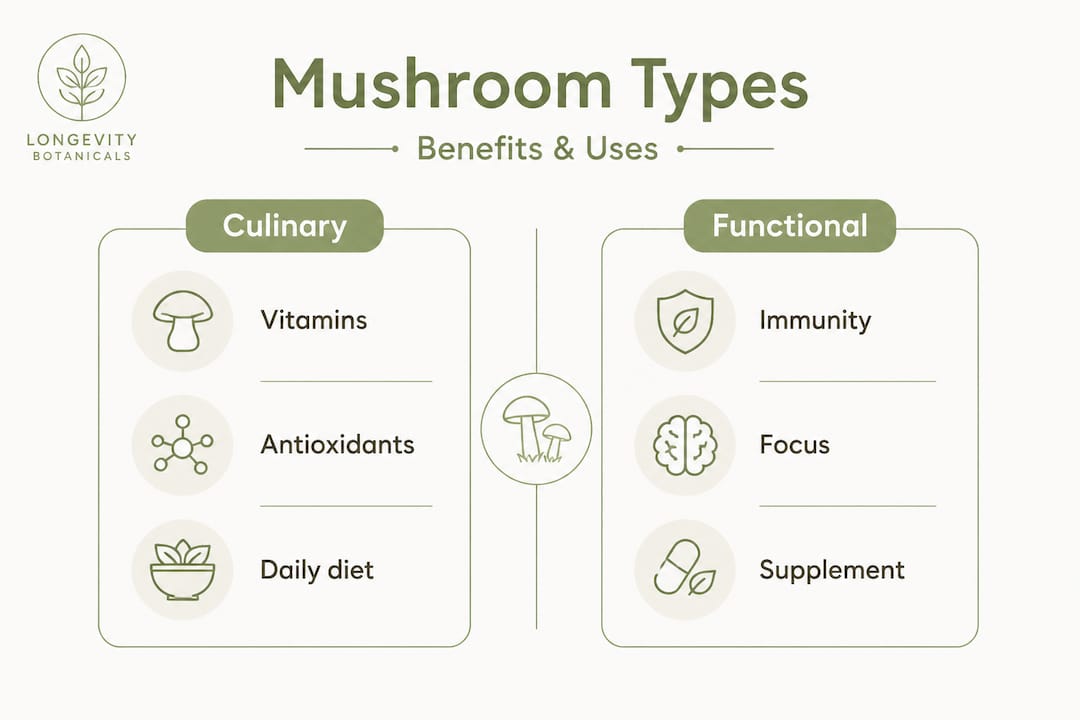
Culinary mushrooms like shiitake, cremini, and portobello supply vitamins, minerals, and antioxidants. They support general health when eaten regularly. Functional mushrooms like Reishi, Lion’s Mane, Turkey Tail, Chaga, and Cordyceps are most often taken as standardized extracts designed to deliver concentrated amounts of active compounds, particularly beta-glucans. Research consistently separates culinary mushrooms from functional supplements, noting that daily practices should match the product type and intended endpoint.
Matching the right mushroom to your wellness goal is step one. Here’s a quick reference:
| Mushroom | Primary benefit | Common form |
|---|---|---|
| Lion’s Mane | Cognitive support, nerve health | Powder, capsule |
| Reishi | Stress relief, immune modulation | Capsule, extract |
| Turkey Tail | Gut health, immune support | Powder, capsule |
| Chaga | Antioxidant, immune health | Powder, tea |
| Cordyceps | Energy, athletic performance | Capsule, powder |
Key benefits across functional mushrooms include:
- Immune regulation via beta-glucan compounds that stimulate natural killer cells
- Cognitive support linked to nerve growth factor stimulation (especially Lion’s Mane)
- Adaptogenic effects that support stress response (notably Reishi and Chaga)
- Antioxidant activity that reduces oxidative stress markers over time
- Gut microbiome support through prebiotic fiber compounds in Turkey Tail
For culinary mushrooms, general guidance points to two medium mushrooms daily or roughly one to two cups several times per week as a healthy baseline. Functional supplements follow different dosing rules entirely. Our functional mushrooms guide breaks down species-specific intake details, and for a broader overview of health applications, the medicinal mushrooms benefits resource covers both immune and cognitive outcomes in more detail.
What you need: Preparation and safety checklist
Most people skip the preparation phase. They pick a mushroom supplement, take two capsules, and expect results within a week. A structured checklist before starting prevents the most common errors, including choosing underdosed products, ignoring contraindications, and overlooking safety flags specific to certain species.
Pre-intake safety checklist:
- Confirm the species on the label (full Latin name, not just “mushroom blend”)
- Check beta-glucan percentage or active compound standardization
- Review serving size versus daily dose (not the same thing)
- Screen for current medications, especially immunosuppressants and blood thinners
- Flag any autoimmune conditions or upcoming surgery
- Note whether the product uses fruiting body, mycelium, or a blend
- Verify third-party testing or certification for heavy metals and contaminants
Exact daily dose depends heavily on the species and extract standardization, so following the manufacturer’s label and paying close attention to beta-glucan content is essential. A product listing 500 mg of mushroom powder without standardization data tells you very little about its actual potency.

The table below shows key screening factors before starting:
| Factor | Why it matters | Action |
|---|---|---|
| Medication interactions | Mushrooms can affect immune and blood pathways | Consult a healthcare provider |
| Autoimmune disease | Immune-modulating compounds can affect disease activity | Seek medical guidance |
| Liver conditions | Certain forms increase liver enzyme load | Avoid powdered Reishi long-term |
| Pregnancy or breastfeeding | Limited safety data exists | Avoid until cleared by a physician |
| Allergy to fungi | Cross-reactivity risk | Patch test, consult an allergist |
Important: Reishi in powdered form may cause liver damage when used for more than one month. People with liver disease, those on blood-thinning medications, and those with blood pressure conditions should avoid Reishi or get medical clearance before starting.
Pro Tip: Always look for supplements that list beta-glucan content separately from total mushroom weight. A product standardized to 30% beta-glucans at 500 mg delivers a meaningfully different dose than an unstandardized 500 mg capsule.
Our mushroom supplement safety tips resource outlines the most critical do’s and don’ts, while our guide to beta-glucans and mushroom extracts explains why standardization is the most reliable quality indicator. For a broader preparation walkthrough, the mushroom powders checklist covers everything from storage to mixing methods.
Step-by-step guide: How to take mushrooms daily
Once safety screening is complete, the actual intake process is straightforward. The key is building consistency rather than chasing the highest dose possible.
Step-by-step daily mushroom intake routine:
-
Start with culinary mushrooms if you are new. Aim for one to two cups of cooked edible mushrooms three to four times per week. This builds familiarity with mushroom compounds at low risk before adding concentrated supplements.
-
Choose one functional supplement to start. Adding multiple species at once makes it hard to identify what is working or causing a reaction. Begin with a single product, such as Lion’s Mane for cognition or Turkey Tail for immune support.
-
Follow the manufacturer’s recommended dose. Clinical trial protocols for specific species, such as the 500 mg capsule dose used in Pleurotus citrinopileatus studies at two capsules per day, provide a reliable reference point. Most standardized functional supplements fall between 500 mg and 1,500 mg per day.
-
Take supplements at a consistent time. Most powders and capsules are well-tolerated with food. Taking them at the same time each day, such as with breakfast, helps build a reliable habit and reduces the chance of gastrointestinal sensitivity on an empty stomach.
-
Mix powders strategically. Mushroom powders blend well into coffee, smoothies, soups, and oatmeal. Heat does not significantly degrade beta-glucans, so adding Lion’s Mane or Chaga powder to warm beverages is an effective and convenient method.
-
Commit to a minimum four-week trial. Human clinical evidence for cognition uses multi-week daily supplementation rather than single doses, which means expecting noticeable effects in the first few days is unrealistic. Plan for at least a month of consistent use before evaluating results.
-
Track your intake and any changes. A simple log noting dose, timing, and any physical or cognitive changes helps identify patterns and adjustments needed over time.
Pro Tip: If you experience any digestive sensitivity when starting functional supplements, cut the dose in half for the first two weeks. Gradually increasing to the full dose reduces early GI discomfort and supports better long-term tolerance.
For guidance on finding your optimal mushroom dosage, species-by-species breakdowns are available. Those focused on immune applications can also reference the extract dosage for immune support guide, and for cognitive-specific protocols, the cognitive boost from mushrooms resource covers the research on Lion’s Mane and related compounds in detail.
Troubleshooting and monitoring results
Knowing what to look for after starting a daily mushroom routine separates people who benefit from those who give up too early or push past safe thresholds.
Signs that mushrooms are working as expected:
- Improved energy and reduced fatigue (Cordyceps users often report this in weeks two to four)
- Fewer minor illnesses or faster recovery (Turkey Tail and Reishi immune support)
- Improved focus and mental clarity with fewer afternoon energy drops (Lion’s Mane)
- Better sleep quality and reduced perceived stress (Reishi)
- Improved digestion and gut comfort (Turkey Tail)
Common mistakes to avoid:
- Taking three or four times the recommended dose expecting faster results
- Stopping after one week because no effects are noticeable
- Using multiple unstandardized products simultaneously
- Ignoring label warnings about duration of use
- Switching products before completing a full trial period
“Regimens commonly use multi-week daily dosing; effects depend on study duration and the specific compound being studied.” Expecting rapid effects goes against how these compounds work physiologically.
From a safety standpoint, a 2025 toxicology assessment reported no acute toxicity and no subchronic oral toxicity up to commercial study limits for assessed mushroom extracts, which is reassuring. That said, variability between species and extract preparations still matters. A clean safety profile for one species does not automatically apply to all others.
| Symptom | Possible cause | Suggested action |
|---|---|---|
| Digestive upset | Starting dose too high | Reduce dose, take with food |
| Skin rash or itching | Allergic reaction | Stop use, consult a physician |
| Elevated fatigue | Immune adjustment period | Reduce dose, monitor for one week |
| No effect after four weeks | Underdosed product or wrong species | Check standardization, reassess product |
| Abnormal liver enzyme levels | Reishi long-term use | Discontinue, consult a physician immediately |
A common question is whether functional mushroom supplements appear on drug tests. For those in regulated environments, standard drug tests do not detect compounds from edible or functional mushrooms. Always verify product purity through third-party testing to rule out contamination. For updated information on functional mushroom research, the 2026 functional mushrooms update covers emerging findings on brain and immune health.
The real keys to daily mushroom success (what most guides miss)
Most wellness guides on mushrooms focus almost entirely on which species to take. Very few address the foundational habits that determine whether daily mushroom use actually delivers results.
The single biggest factor is consistency over intensity. Taking a high dose for three days and stopping is far less effective than taking a moderate standardized dose every day for eight weeks. The biology supports this. Beta-glucans and nootropic compounds like hericenones and erinacines accumulate benefit over time through repeated exposure, not through large one-time loads.
The second overlooked factor is standardization. Trendy products with creative branding often contain less active compound per serving than a straightforward, certified extract with documented beta-glucan percentages. Before choosing any product, look for supplement certification insights that explain what certifications actually mean for quality and potency.
Third, diversifying intake over time produces broader outcomes than relying on a single species indefinitely. Starting with one mushroom is the right move, but rotating in a second species after six to eight weeks, or switching to a blend after establishing baseline tolerance, gives the immune and nervous systems exposure to a wider range of bioactive compounds.
Finally, listening to physical cues matters more than any published protocol. Published clinical doses are averages based on study populations. Individual responses vary based on body weight, gut microbiome composition, baseline health status, and product quality. If a dose consistently causes discomfort, the right answer is to adjust rather than push through.
Explore trusted mushroom solutions with LongevityBotanicals
Longevity Botanicals carries a full range of organic mushroom capsule supplements and organic mushroom powders for anyone ready to put this guide into practice. Products are sourced with quality and standardization in mind, covering single-species options like Lion’s Mane and Reishi as well as targeted blends for immune and cognitive support. For those focused specifically on brain health, the brain health mushroom blends collection offers formulas built around clinical evidence. All product pages include dosing details, ingredient breakdowns, and format options to make selecting the right supplement straightforward.
Frequently asked questions
How much mushroom supplement is safe to take daily?
Safe daily intake depends on the species and extract standardization; supplements are not one-size-fits-all, so follow manufacturer guidelines and consult a healthcare provider before starting, especially with potent extracts.
Can I eat regular mushrooms every day?
Yes, eating up to two medium mushrooms daily or one to two cups several times per week is widely considered a healthy dietary habit with meaningful nutritional benefits.
What are the risks of daily mushroom supplements?
Risks depend on the supplement type; Reishi powdered form may damage the liver when used longer than one month, and people with liver conditions, blood pressure issues, or those on blood thinners should seek medical advice before use.
How long before I notice cognitive benefits from mushroom supplements?
Clinical evidence uses multi-week daily supplementation rather than single doses, so noticeable cognitive effects typically require four to eight weeks of consistent daily use.
Do mushroom supplements show up on drug tests?
Supplements made from edible and functional mushrooms do not trigger standard drug tests, but always verify product purity through third-party testing and consult a physician for specific workplace or medical circumstances.
Recommended
- How to Use Mushroom Supplements for Natural Wellness – LongevityBotanicals
- Unlock wellness benefits with mushroom supplements – LongevityBotanicals
- Comprehensive Guide to Mushroom Extract Usage for Wellness – LongevityBotanicals
- Mushroom supplement dos and don’ts: safe guide for wellness – LongevityBotanicals
- Holistic Health Improvement Guide for Lasting Wellness
- Natural ingredients that boost cognition and fight inflammation – SuperNatural
Related Posts

Why Water-Soluble Mushroom Compounds Drive Real Results

What Is Mushroom Sustainability? Benefits and Practices

The Role of Organic Farming in Mushrooms Explained

What Is a Fruiting Body? Mushroom Science Explained

Mushroom Allergenicity Explained: Symptoms and Safe Use

Top 5 naturesrise.com Mushroom Supplement Alternatives 2026

Top 6 Hemplucid.com Alternatives for 2026


