

Step-by-step immune support with mushrooms: your guide
TL;DR:
- Medicinal mushrooms support immunity through beta-glucans and polysaccharides that modulate immune pathways.
- Choosing high-quality, dual-extracted products with proper labeling ensures maximum immune benefits.
- Consistent use over 4-12 weeks, combined with healthy lifestyle habits, yields best immune support results.
Staying well through cold and flu season is a genuine challenge, and more people are turning to natural strategies backed by real research. Medicinal mushrooms have moved from niche health food stores to mainstream wellness routines, and for good reason. Their bioactive compounds interact directly with immune signaling pathways in ways that other supplements simply do not. This guide walks through exactly how mushrooms support immunity, what to look for in a quality product, how to build a daily routine, and what results you can realistically expect.
Table of Contents
- Understanding how mushrooms support your immune system
- What you need: Choosing quality mushrooms and preparation essentials
- Step-by-step: How to use mushrooms for immune support
- Safety, side effects, and troubleshooting
- What results to expect and how to adjust your routine
- Our take: The real world of mushroom immune support
- Ready to start your mushroom immune routine?
- Frequently asked questions
Key Takeaways
| Point | Details |
|---|---|
| Use proven mushrooms | Turkey Tail and Reishi are the most studied mushrooms for immune support. |
| Follow a daily routine | Consistent, daily use for 4-12 weeks is crucial for noticeable results. |
| Prioritize product quality | Choose fruiting body, dual-extract, and third-party tested supplements. |
| Beware safety caveats | Avoid use if you have autoimmunity, are pregnant, or take blood thinners. |
| Pair with wellness habits | Maximize immune support by combining mushrooms with holistic lifestyle practices. |
Understanding how mushrooms support your immune system
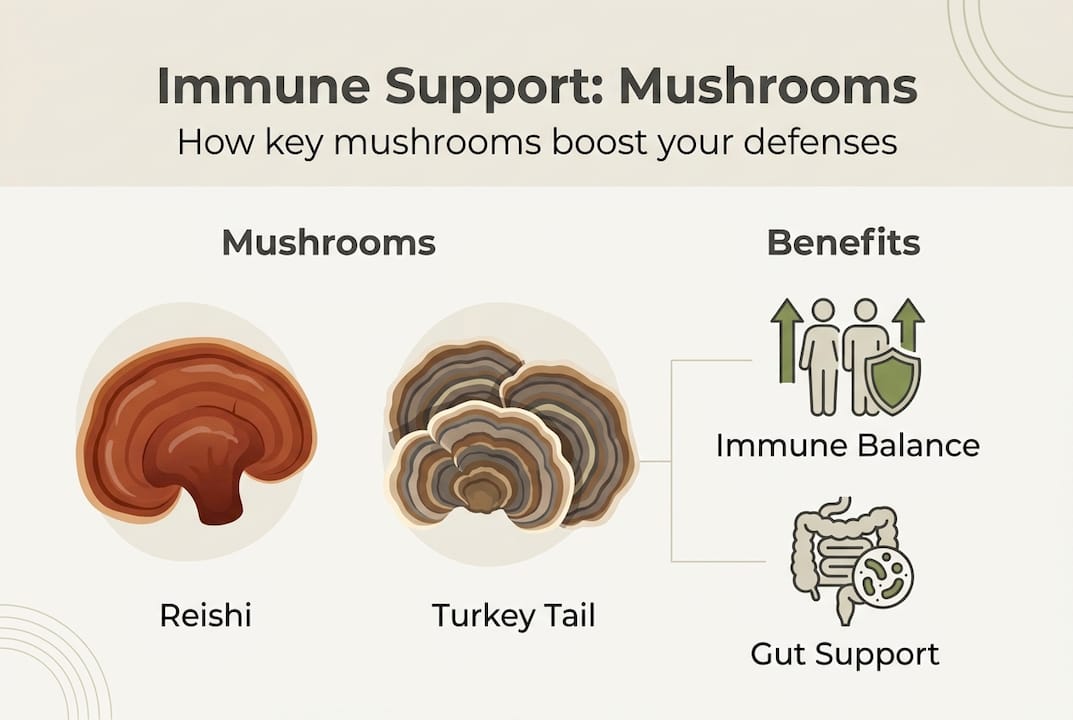
Medicinal mushrooms influence immunity through specific compounds, not vague “wellness” effects. The two most studied are beta-glucans and polysaccharides. Beta-glucans are complex sugars found in mushroom cell walls. They bind to receptors on immune cells, particularly macrophages and natural killer (NK) cells, and trigger a signaling response. Polysaccharides are broader chains of sugar molecules that also carry immunomodulatory activity. Together, these compounds modulate key immune pathways including NF-κB, MAPK, and NLRP3, which control inflammation and immune cell activation.
Mushrooms influence both the innate immune system (your first-line defense, including macrophages and NK cells) and the adaptive immune system (T cells and B cells that learn and remember pathogens). The key distinction is that mushrooms modulate immunity rather than simply boosting it. This matters because overstimulating the immune system can cause problems, especially for people with autoimmune conditions. Why mushrooms help comes down to this regulatory quality.
Key compounds in top immune mushrooms
| Mushroom | Primary compound | Immune effect |
|---|---|---|
| Turkey Tail | PSK/PSP polysaccharides | T cell activation, gut immune support |
| Reishi | Triterpenes, beta-glucans | NK cell activity, anti-inflammatory |
| Agarikon | Polysaccharides | Antiviral signaling, macrophage activation |
| Oyster | Pleuran (beta-glucan) | Respiratory immune defense |
For a deeper look at mushroom immune support, the research on these four is the most clinically relevant. Mushrooms best known for immune benefits include:
- Turkey Tail (PSK/PSP, well-studied in clinical settings)
- Reishi (triterpenes plus beta-glucans for broad modulation)
- Agarikon (rare, strong antiviral research profile)
- Oyster (Pleuran specifically linked to fewer respiratory infections)
What you need: Choosing quality mushrooms and preparation essentials
Not all mushroom supplements are equal. Product quality varies significantly, and choosing the wrong form or brand can mean getting little to no active compounds. Understanding what to look for saves money and actually produces results.
Forms comparison
| Form | Pros | Cons | Best use case | |—|—|—| | Capsules | Convenient, precise dose | Higher cost per gram | Daily routine, travel | | Dual-extract powder | High bioavailability, versatile | Requires measuring | Smoothies, hot drinks | | Tea/whole dried | Traditional, affordable | Lower potency, variable | Casual, low-dose use | | Tincture (liquid extract) | Fast absorption | Strong taste, costly | Targeted short-term use |
The top immune-boosting mushrooms are available in all these formats, but not all formats deliver the same potency. Fruiting body provides more beta-glucans than mycelium-on-grain products, and dual-extraction (using both hot water and alcohol) maximizes bioavailability of both water-soluble polysaccharides and alcohol-soluble triterpenes.
For a full breakdown of what to look for, the mushroom supplement guide covers labeling standards in detail. And if you’re curious about what mycelium-based products actually contain, mycelium extract explained is worth reading before purchasing.
Label checklist before buying:
- Fruiting body listed as primary ingredient
- Dual-extraction method stated
- Organic certification present
- Third-party testing for heavy metals and contaminants
- Beta-glucan percentage listed (aim for 20%+ per serving)
Preparation essentials:
- Measuring spoons (for powders)
- Airtight glass jars (for powder storage)
- Hot water kettle (for teas and hot extracts)
- Shaker bottle (for cold drinks with powder)
- Supplement tracker or simple notebook
Store powders in a cool, dry location away from direct sunlight. Capsules generally have longer shelf life but check expiration dates. The Turkey Tail benefits research also highlights that degraded products lose potency faster than manufacturers often indicate.
Pro Tip: On a supplement facts label, look specifically for the beta-glucan content listed as a percentage, not just total polysaccharides. Total polysaccharides can include starch from grain-based mycelium, which has no immune benefit.
Step-by-step: How to use mushrooms for immune support
With quality products in hand, a structured daily routine produces the best outcomes. Consistency matters more than any single dose.
- Choose your primary mushroom. Start with one well-researched option. Turkey Tail is a strong first choice for general immune support. Reishi works well if stress and sleep are also concerns.
- Measure your dose. Follow label guidance. For most extracts, 1-2 grams of fruiting body extract per day is a standard starting dose. Check the Turkey Tail dosage guide for evidence-based ranges.
- Set a consistent time. Morning with breakfast or evening before sleep are both practical. The key is the same time daily.
- Choose your delivery method. Capsules require no prep. Powders can go into coffee, tea, or smoothies. Tinctures go directly under the tongue or into water.
- Track your baseline. Before starting, note how often you get sick, your average energy level, and sleep quality. This gives you something to measure against.
- Evaluate at 4, 8, and 12 weeks. RCTs show Turkey Tail and Agarikon influenced immune antibody responses, and Pleuran (oyster beta-glucan) reduced respiratory infections in controlled studies. These effects take weeks to develop.
- Add lifestyle support. Mushrooms work better alongside adequate sleep (7-9 hours), reduced processed food intake, regular moderate movement, and stress management.
For more on Turkey Tail for immunity, the clinical data is detailed and practical. You can also stack mushrooms once you’ve established a baseline with one type. Turkey Tail plus Reishi is a common pairing. However, starting with a single type makes it easier to identify what’s working.
Pro Tip: Keep a simple symptom log in your phone’s notes app. Record any colds, energy dips, or digestive changes weekly. After 12 weeks, patterns become clear and help you decide whether to adjust dose or type.
Note: Mushrooms are a complementary wellness tool. They do not replace vaccines, antibiotics, or medical care for active infections.
Safety, side effects, and troubleshooting
Medicinal mushrooms have a strong safety record, but side effects do occur, especially when starting out or using low-quality products.
Important: People with autoimmune conditions (lupus, rheumatoid arthritis, MS), those taking blood thinners or immunosuppressants, and pregnant or breastfeeding individuals should consult a doctor before using any medicinal mushroom supplement.
Side effects include mild GI upset and rare allergies, and certain populations should avoid use without medical guidance. Common side effects and how to manage them:
- Digestive upset (bloating, loose stools): Most common in the first 1-2 weeks. Start with half the recommended dose and increase gradually.
- Skin rash or itching: Rare, but possible with Reishi. Stop use immediately if this occurs.
- Headaches: Occasionally reported, often linked to detox-like responses. Usually resolves within a week.
- Unusual taste or smell from product: This can signal contamination or degradation. Discard the product.
Distinguishing expected effects from red flags is straightforward. Mild GI changes that resolve within two weeks are normal. Persistent rashes, difficulty breathing, or significant worsening of any existing condition are red flags that require stopping use and contacting a healthcare provider.
Mushrooms modulate immunity rather than simply activating it. This is protective, but it also means that for people whose immune systems are already dysregulated (autoimmune conditions), the effect is less predictable. The potential side effects of various mushroom types are covered in more detail for those with specific health concerns. For general wellness benefits, most healthy adults tolerate medicinal mushrooms well with no significant adverse effects.
What results to expect and how to adjust your routine
Expectations matter. Medicinal mushrooms are not fast-acting supplements. Noticeable effects may take 4-12 weeks depending on baseline health and routine consistency.
Expected timeline
| Timeframe | What to expect |
|---|---|
| Weeks 1-4 | Adjustment period; possible mild GI changes; no major immune shifts yet |
| Weeks 5-8 | Reduced frequency of minor illness; improved energy in some users |
| Weeks 9-12+ | Measurable resilience improvements; fewer colds; better recovery speed |
Individual results depend on sleep quality, stress levels, diet, and baseline immune health. Someone already sleeping well and eating a whole food diet may notice effects sooner. Someone under chronic stress may need the full 12 weeks or longer.
Signs your routine is working:
- Fewer colds or shorter duration when sick
- More consistent energy levels
- Improved recovery after exercise or illness
- Better sleep quality (especially with Reishi)
- Less frequent digestive disruption
If results plateau after 12 weeks, consider adjusting the dose upward within label guidelines, switching mushroom types, or adding a complementary variety. The translation gaps in research between animal studies and human outcomes mean that individual variation is real and expected. What works well for one person may need adjustment for another.
For a broader look at immunity and wellness, integrating mushrooms into a larger wellness system consistently outperforms isolated supplement use in the available data. Consult a healthcare professional if you have underlying conditions, are not seeing any change after 12 weeks, or experience any concerning symptoms.
Our take: The real world of mushroom immune support
The most common mistake is treating mushroom supplements like a quick fix. Take a capsule, wait a week, expect results. That approach fails almost every time, and it leads people to dismiss genuinely useful tools.
Mushrooms work best as part of a system. Sleep, food quality, stress load, and movement all affect immune function more than any single supplement. Mushrooms add a meaningful layer on top of those foundations, not instead of them. Why immune support matters goes beyond just avoiding colds. It’s about building baseline resilience over time.
Product quality is the other major variable most people underestimate. Inconsistent use of a high-quality product still beats consistent use of a poor one. Checking for fruiting body sourcing, dual-extraction, and third-party testing is not optional if results matter to you. Small daily habits plus attention to product quality are what actually produce lasting outcomes.
Ready to start your mushroom immune routine?
For those ready to act, Longevity Botanicals offers a curated range of products built around the same quality standards covered in this guide. The organic mushroom capsules collection includes fruiting body formulas for daily immune support. For targeted seasonal use, the mushroom immune support blends offer multi-mushroom combinations. And for those who prefer powders or tinctures, the organic mushroom extracts range covers dual-extracted options across all major immune varieties. Every product should fit within a holistic routine, not replace one.
Frequently asked questions
What is the best mushroom for immune support?
Turkey Tail and Reishi are the top evidence-based choices for immune modulation, though individual needs and product quality both affect results.
How long does it take to see results from medicinal mushrooms?
Most users need 4-12 weeks of consistent daily use before noticing measurable immune support benefits.
Are medicinal mushrooms safe for everyone?
Generally safe for healthy adults, but those with autoimmunity, on blood thinners, or pregnant should avoid use without a doctor’s guidance.
Can I use mushrooms instead of vaccines or prescription medicine?
No. Mushrooms are complementary tools and should not replace vaccines or medical treatment for infectious diseases.
How do I pick a high-quality mushroom supplement?
Prioritize products with fruiting body sourcing, dual-extraction, and third-party testing for purity, since product quality varies widely across the market.
Recommended
Related Posts

Why Water-Soluble Mushroom Compounds Drive Real Results

What Is Mushroom Sustainability? Benefits and Practices

The Role of Organic Farming in Mushrooms Explained

What Is a Fruiting Body? Mushroom Science Explained

Mushroom Allergenicity Explained: Symptoms and Safe Use

Top 5 naturesrise.com Mushroom Supplement Alternatives 2026

Top 6 Hemplucid.com Alternatives for 2026


