

Vegan Mushroom Capsules: Benefits and Key Facts Explained
TL;DR:
- Vegan mushroom capsules use plant-based shells like HPMC or pullulan instead of gelatin.
- Evidence supports benefits like immune modulation and task-specific cognitive improvements from certain mushrooms.
- Choosing quality involves verifying capsule material, mushroom source, extraction ratio, and third-party certifications.
Not every mushroom supplement on the shelf is vegan. Many capsules are made with gelatin, an animal-derived ingredient most buyers never think to check. Vegan mushroom capsules are dietary supplements containing functional mushroom extracts or powders enclosed in plant-based shells, typically HPMC or pullulan, rather than gelatin. This distinction matters for anyone following a plant-based lifestyle or simply wanting to know exactly what they are taking. This guide covers what vegan mushroom capsules actually are, what the current research says about their health effects, how to identify a quality product, and how to use them effectively in a daily wellness routine.
Table of Contents
- What are vegan mushroom capsules?
- Evidence-based health benefits of vegan mushroom capsules
- How to identify and choose quality vegan mushroom capsules
- Best practices: Integrating vegan mushroom capsules into your wellness routine
- What most guides miss about vegan mushroom capsules
- Explore premium vegan mushroom supplements
- Frequently asked questions
Key Takeaways
| Point | Details |
|---|---|
| Vegan capsule definition | They contain mushroom extracts or powders in plant-based capsules, never animal gelatin. |
| Benefits are nuanced | Mushroom types like Lion’s Mane support specific wellness goals, but not all claims are fully proven. |
| Quality matters | Choosing certified, transparent products ensures safety and real benefits. |
| Integration tips | Start with evidence-based doses and monitor your response for optimal results. |
What are vegan mushroom capsules?
Vegan mushroom capsules are supplements that combine two key elements: a functional mushroom ingredient and a plant-based capsule shell. Both parts need to be free of animal-derived materials for the product to qualify as vegan. Understanding each component helps you make informed purchasing decisions.
The mushroom ingredient
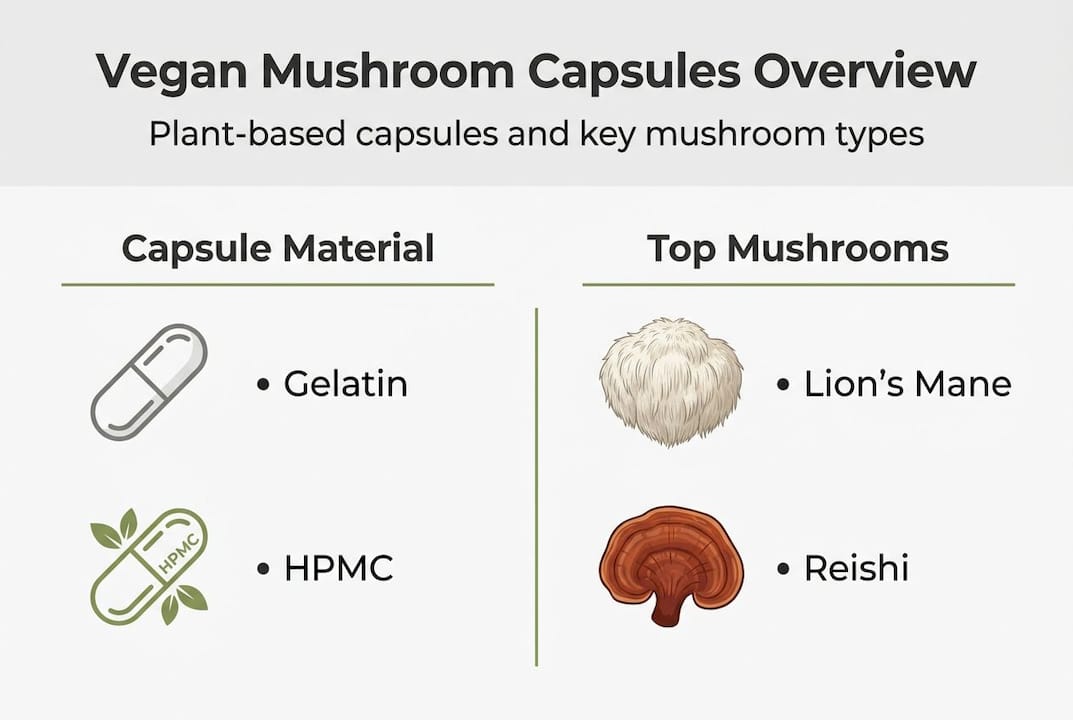
The most common mushrooms used in these capsules include Lion’s Mane (Hericium erinaceus), Reishi (Ganoderma lucidum), and Cordyceps (Cordyceps militaris). Each brings a distinct set of active compounds. Lion’s Mane contains hericenones and erinacines. Reishi is known for triterpenes and beta-glucans. Cordyceps offers cordycepin and adenosine. Products may feature a single mushroom or a blend of several species.
The capsule shell
This is where many shoppers get caught off guard. Standard capsules are often made from gelatin, which comes from animal collagen. Vegan alternatives use different materials entirely. HPMC and pullulan replace gelatin in certified vegan products. HPMC stands for hydroxypropyl methylcellulose and comes from plant fibers. Pullulan is derived from tapioca starch or fungi. Both dissolve reliably in the digestive tract and carry no animal-derived ingredients.

Capsule materials at a glance
| Capsule material | Source | Vegan? |
|---|---|---|
| Gelatin | Animal collagen | No |
| HPMC | Plant cellulose fibers | Yes |
| Pullulan | Tapioca or fungi | Yes |
How to read the label
Confirming a capsule is vegan requires checking the “other ingredients” section of the supplement facts panel, not just the front label. Look for HPMC or pullulan listed as the capsule material. Avoid products that list gelatin or do not specify the capsule type at all.
- Check “other ingredients” for capsule shell material
- Look for HPMC or pullulan explicitly named
- Avoid vague terms like “capsule” with no further detail
- Seek a certified vegan logo from a recognized third party
- Confirm no added fillers like magnesium stearate from animal sources
Typical dosage context: Many products on the market deliver around 1,200mg of mushroom blend per two-capsule serving, though research-grade doses for specific mushrooms like Lion’s Mane often reach 3,000mg or more per day.
Evidence-based health benefits of vegan mushroom capsules
Functional mushrooms have attracted real scientific interest, but the evidence is not uniform across all species or all health claims. Knowing which benefits have solid support and which are still being studied helps set realistic expectations.
Mushroom capsules are promoted for immune support, energy, and cognition through active compounds like beta-glucans, hericenones, and cordycepin. Here is how the evidence breaks down by wellness goal:
-
Cognitive support. Lion’s Mane is the most studied mushroom for brain health. A 2025 randomized controlled trial found that Lion’s Mane showed acute psychomotor improvement on specific tasks but did not produce broad cognitive or mood benefits in healthy adults. This is a meaningful distinction: task-specific improvement is real, but it is not the same as a general intelligence boost.
-
Immune modulation. Reishi and Turkey Tail are the most referenced mushrooms for immune support. Their beta-glucans from mushrooms interact with immune receptors and are among the better-studied compounds in functional mushroom research.
-
Energy and endurance. Cordyceps mushroom capsules have been studied for aerobic performance and ATP production. Results are mixed, with some trials showing modest improvements in oxygen utilization and others showing no significant effect.
Mushroom benefits comparison
| Mushroom | Primary benefit | Key active compound | Evidence level |
|---|---|---|---|
| Lion’s Mane | Cognitive support | Hericenones, erinacines | Moderate (task-specific) |
| Reishi | Immune modulation | Beta-glucans, triterpenes | Moderate |
| Cordyceps | Energy, endurance | Cordycepin, adenosine | Mixed |
| Turkey Tail | Immune support | PSK, beta-glucans | Moderate to strong |
Notable limitation: Most human trials use short durations and specific populations. Long-term effects in healthy adults remain understudied. Fruiting body extracts tend to show stronger results than mycelium-based products, partly due to higher concentrations of active compounds.
For those exploring Lion’s Mane capsule benefits, the current evidence supports cautious optimism for focused cognitive tasks, not sweeping mental enhancement.
How to identify and choose quality vegan mushroom capsules
With research-backed benefits in mind, your next step is to know how to confidently identify and select quality vegan mushroom capsules. The supplement market is largely self-regulated, which makes label literacy essential.
Spotting non-vegan ingredients
Gelatin is the most common non-vegan capsule ingredient, but it is not always labeled obviously. Some products list it as “bovine gelatin” or “porcine gelatin.” Others simply say “capsule” without specifying the source. When in doubt, contact the manufacturer directly or choose products with explicit vegan certification.
Certifications that matter
Third-party verification adds a layer of trust that self-reported labels cannot provide. Look for:
- Certified Vegan logo (Vegan Action)
- USDA Organic certification
- NSF Certified for Sport or similar third-party testing
- Non-GMO Project Verified
Sourcing: Fruiting body vs. mycelium
HPMC is derived from plant fibers, pullulan from fungi or tapioca, making both fully vegan. But capsule material is only one part of quality. The mushroom source matters equally. Fruiting body extracts contain higher concentrations of the active compounds studied in clinical research. Mycelium products, often grown on grain, may contain significant starch content with lower active compound levels.
Step-by-step quality checklist
- Confirm capsule shell is HPMC or pullulan
- Verify mushroom source is fruiting body, not mycelium on grain
- Check for beta-glucan content listed on the label (not just polysaccharides)
- Look for extraction ratio (e.g., 10:1) to confirm concentration
- Confirm third-party testing or certification
- Review the mushroom immune support guide for species-specific quality markers
Pro Tip: Products that disclose a specific extraction ratio, such as 10:1 fruiting body extract, are generally more transparent and more likely to deliver the compound levels used in clinical studies.
Best practices: Integrating vegan mushroom capsules into your wellness routine
Once you have chosen a quality supplement, knowing how to integrate it into your wellness routine makes all the difference. Consistency and context matter as much as the product itself.
Typical dosages from research
Common serving sizes include 1,200mg of organic mushroom blend per two capsules in multi-mushroom products. Research-grade doses for single mushrooms like Lion’s Mane often use 3,000mg of a 10:1 extract daily. Always compare the product dose to what was used in the relevant study before drawing conclusions about expected effects.
How to start safely
- Begin with a single mushroom product rather than a blend to isolate effects and tolerance.
- Start at the lowest labeled dose for the first one to two weeks.
- Take capsules with food to reduce the chance of digestive discomfort.
- Introduce a second mushroom or a blend only after establishing baseline tolerance.
- Track changes in energy, focus, or sleep over a 30-day period before evaluating results.
Stacking and timing
Cordyceps is often taken in the morning for energy support. You can read more about Cordyceps benefits and timing strategies to match your activity schedule. Lion’s Mane is commonly taken with breakfast or lunch. Reishi is frequently used in the evening given its association with relaxation and sleep quality.
Pro Tip: Keep a simple daily log noting energy levels, focus quality, and sleep for the first month. Subtle shifts in these areas are often the first signs that a mushroom supplement is working, and they are easy to miss without a reference point.
Who should exercise caution
People with autoimmune conditions, bleeding disorders, or those taking immunosuppressant medications should consult a healthcare provider before starting. Pregnant or breastfeeding individuals should also seek professional guidance. Research on Lion’s Mane for brain health notes that most adverse effects in trials were mild and transient, but individual responses vary.
What most guides miss about vegan mushroom capsules
Most articles focus on which mushroom does what. Fewer address the variables that actually determine whether a product delivers on its label claims.
The capsule material choice is often treated as a minor detail. It is not. HPMC and pullulan have different dissolution rates and moisture barriers, which can affect how consistently the mushroom extract is released in the gut. This is worth knowing if you are comparing products at similar price points.
The mycelium versus fruiting body debate is also underplayed. Cognitive enhancement claims have acute support for specific tasks, but mycelium adds unique compounds for brain health that fruiting body extracts may not fully replicate. The honest answer is that both have a role, and single-source specificity often outperforms broad blends when targeting a particular outcome.
Blends are popular, but they dilute individual mushroom doses. A product containing ten mushrooms at 1,200mg total delivers roughly 120mg per species, which is far below research-grade doses for any single mushroom. Reviewing top Lion’s Mane brands shows how single-source products compare to blends on active compound content.
Supplements support a wellness foundation. They do not replace sleep, nutrition, or exercise. Managing expectations around that reality leads to better outcomes and smarter purchasing decisions.
Explore premium vegan mushroom supplements
Selecting the right vegan mushroom capsule comes down to capsule material, mushroom source, extraction quality, and third-party verification. Longevity Botanicals offers a curated range of vegan mushroom capsule supplements with transparent ingredient sourcing and organic certification. For those interested in combining multiple mushroom types, the mushroom blend extracts collection provides multi-species options with clear labeling. If capsules are not your preferred format, mushroom powder supplements offer flexible dosing for smoothies, teas, or cooking. Each product category is organized by mushroom type and health benefit to make selection straightforward.
Frequently asked questions
Are all mushroom supplements vegan by default?
No. Many capsules use animal-derived gelatin as the shell material. Only products using HPMC or pullulan are considered vegan.
What are the most common mushrooms in vegan capsules?
Lion’s Mane, Reishi, and Cordyceps are the most widely used, each with distinct active compounds and wellness applications.
Do vegan mushroom capsules really improve brain function?
Lion’s Mane shows acute improvement on specific psychomotor tasks, but current evidence does not support broad cognitive or mood enhancement in healthy adults.
How can I verify if a mushroom capsule is truly vegan?
Check the “other ingredients” section for HPMC or pullulan, avoid any product listing gelatin, and look for a certified vegan logo from a recognized third party.
Are there any side effects with vegan mushroom capsules?
Most people tolerate them well, though high doses or sensitive individuals may experience digestive discomfort. Adverse effects in trials were generally mild, but starting at a low dose and consulting a healthcare provider is advisable for those with existing health conditions.
Recommended
- Plant-based wellness with mushrooms: 5 key benefits – LongevityBotanicals
- Mushrooms and protein: nutritional facts for plant-based wellness – LongevityBotanicals
- Dietary supplements explained: benefits, risks, and mushroom science – LongevityBotanicals
- Mushroom Extract Explained: Key Benefits and Uses – LongevityBotanicals
Related Posts

Why Water-Soluble Mushroom Compounds Drive Real Results

What Is Mushroom Sustainability? Benefits and Practices

The Role of Organic Farming in Mushrooms Explained

What Is a Fruiting Body? Mushroom Science Explained

Mushroom Allergenicity Explained: Symptoms and Safe Use

Top 5 naturesrise.com Mushroom Supplement Alternatives 2026

Top 6 Hemplucid.com Alternatives for 2026


