

Immune modulation: definition, benefits, and mushrooms
TL;DR:
- Immune modulation fine-tunes immune responses, promoting balance rather than just boosting activity.
- Mushroom compounds like beta-glucans and triterpenes support pathways that normalize cytokine signals and reduce inflammation.
- Choose high-quality, standardized extracts with verified beta-glucan content for effective immune regulatory benefits.
Most people reach for supplements hoping to “boost” their immune system. It sounds logical. But a stronger immune system is not always a safer one. Overactive immune responses drive conditions like allergies, inflammation, and autoimmune disease. The real goal is not more immune activity but better-regulated immune activity. This is what scientists call immune modulation, and it is one of the most important concepts in modern wellness research. Mushroom-based compounds are leading the conversation, with clinical studies showing measurable effects on immune balance, cytokine signaling, and long-term health outcomes. This article covers the definition, the science, the key compounds, and how to apply this knowledge to your supplement choices.
Table of Contents
- What is immune modulation? Core definition and why it matters
- How does immune modulation work? Key biological pathways
- Bioactive mushroom compounds and their effects on immune modulation
- Clinical studies: How mushroom-based immune modulators perform in real life
- Practical considerations: Safety, side effects, and smart supplement strategies
- What most people get wrong about immune modulation and mushrooms
- Explore trusted mushroom immune modulators for complete wellness
- Frequently asked questions
Key Takeaways
| Point | Details |
|---|---|
| Immune modulation defined | Immune modulation is the controlled adjustment of the immune system’s activity to maintain balance, not just boosting or suppressing. |
| Mushrooms modulate immunity | Medicinal mushrooms contain compounds like beta-glucans that help the immune system respond appropriately and support wellness. |
| Research-backed results | Clinical studies show mushroom immune modulators reduce vaccine side effects, improve immune markers, and support quality of life. |
| Safety and selection | Most people tolerate mushroom immune modulators well, but quality, dosage, and individual conditions matter for safe, effective use. |
What is immune modulation? Core definition and why it matters
Immunomodulation is the regulatory adjustment of the immune system, involving natural homeostasis or therapeutic interventions to induce, amplify, attenuate, or prevent immune responses. In plain terms, it means fine-tuning how your immune system reacts, not simply turning it up or down.
This distinction matters more than most people realize. Here is why:
- Immune boosting sounds appealing, but an overactivated immune system can trigger excessive inflammation, worsen autoimmune conditions, or cause tissue damage.
- Immune suppression reduces harmful responses but leaves the body vulnerable to infections and pathogens.
- Immune modulation aims for the middle ground, helping the immune system respond appropriately to real threats while avoiding overreaction.
For everyday wellness, this balance is critical. A well-modulated immune system recognizes genuine threats quickly, responds proportionately, and returns to a resting state without lingering inflammation. This process is called homeostasis, the body’s built-in drive to maintain stable internal conditions.
Both natural and therapeutic forms of immune modulation exist. Natural approaches include diet, sleep, stress management, and functional foods like medicinal mushrooms. Therapeutic approaches include clinical drugs used in transplant medicine or autoimmune treatment. Understanding why immune support matters in daily life helps clarify why modulation is a more useful goal than simple boosting.
“The future of immune health is not about stimulating the immune system indiscriminately. It is about helping it respond with precision, flexibility, and appropriate restraint.” — Functional immunology perspective, 2025
This framing shifts the entire conversation around supplements. Products that support regulation, not just activation, offer more sustainable and safer benefits.
How does immune modulation work? Key biological pathways
Now that you understand what immune modulation means, let’s explore how the body actually achieves this delicate balance.
The immune system uses a complex network of signaling molecules and cellular mechanisms to coordinate responses. Several key pathways are directly relevant to how mushroom compounds work:
| Pathway | Normal role | Modulation outcome |
|---|---|---|
| Cytokine signaling | Coordinates immune cell communication | Balanced pro/anti-inflammatory response |
| NF-κB inhibition | Regulates inflammation gene expression | Reduced chronic inflammation |
| MAPK pathway | Controls cell growth and stress response | Improved immune cell activation |
| NLRP3 inflammasome | Triggers inflammation in response to danger | Prevents excessive inflammatory cascades |
| Nrf2 activation | Manages oxidative stress | Supports antioxidant defense |
| Regulatory T cells (Tregs) | Prevent immune overreaction | Tolerance to self-tissue, reduced autoimmunity |
| Epigenetic regulation (miRNAs) | Controls gene expression patterns | Long-term immune memory and adaptation |
Key pathways include cytokine signaling, NF-κB inhibition, MAPK, NLRP3 inflammasome modulation, Nrf2 activation, regulatory T cells, and epigenetic regulation including miRNAs.
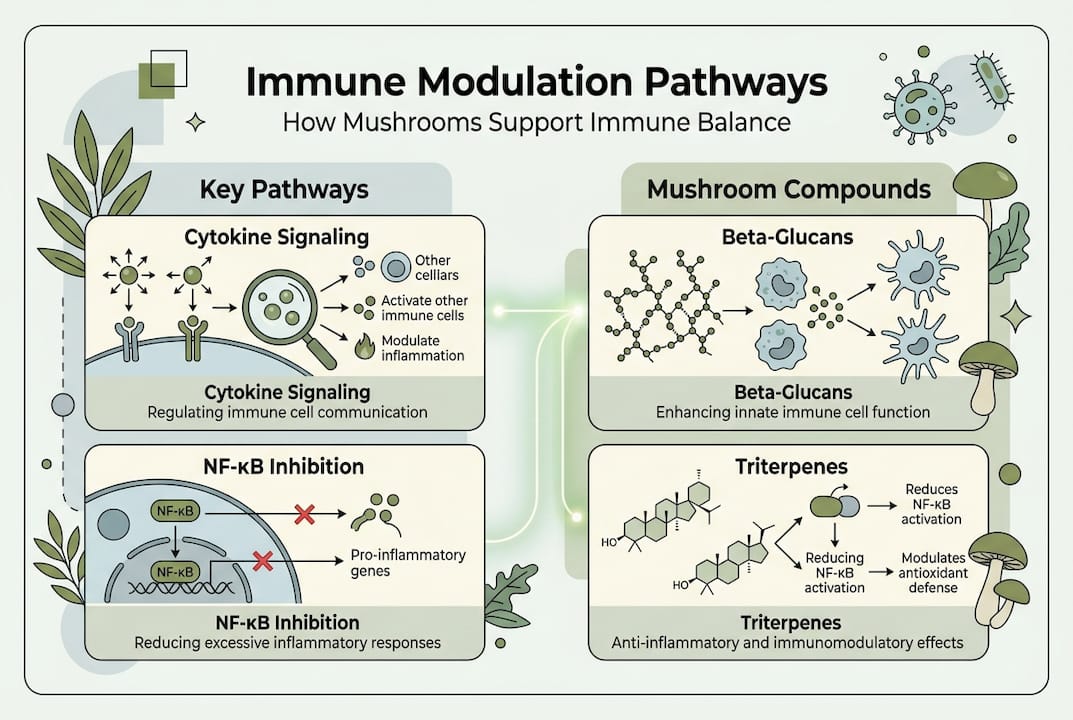
Cytokines are small proteins that act as messengers between immune cells. Too many pro-inflammatory cytokines cause a “cytokine storm,” which can damage organs. Too few leave the body unable to fight infection. Mushroom compounds interact directly with these pathways, helping to normalize cytokine output rather than simply increasing it.
Exploring antioxidants and immune pathways shows how Nrf2 activation, in particular, connects oxidative stress management with immune regulation.
- Tregs (regulatory T cells) act as immune referees, preventing the system from attacking the body’s own tissues.
- NF-κB is a protein complex that controls DNA transcription related to inflammation. Inhibiting it reduces chronic low-grade inflammation.
- NLRP3 inflammasome activation is linked to conditions like metabolic syndrome and cardiovascular disease when left unchecked.
Pro Tip: When evaluating a mushroom supplement, look for products that reference specific pathway effects or cite peer-reviewed mechanisms. Vague claims like “supports immunity” without mechanistic detail are a red flag.
Bioactive mushroom compounds and their effects on immune modulation
With a clearer picture of the body’s immune pathways, let’s drill into the specific mushroom compounds making headlines for their immune-modulating effects.

The most studied class of compounds in medicinal mushrooms is beta-glucans, polysaccharides found in the cell walls of fungi. Mushroom beta-glucans bind immune cell receptors, activating macrophages, NK cells, and dendritic cells, while modulating NF-κB and MAPK pathways, promoting cytokine balance, and supporting gut microbiota.
Top 3 ways beta-glucans support immune modulation:
- Receptor binding: Beta-glucans attach to pattern recognition receptors (like Dectin-1 and CR3) on immune cells, triggering a calibrated activation response.
- Cytokine regulation: They promote production of balanced cytokine profiles, reducing both excessive inflammation and immune underactivity.
- Gut microbiome support: Beta-glucans act as prebiotics, feeding beneficial gut bacteria that directly influence systemic immune function.
Beyond beta-glucans, triterpenes (found in reishi) and ergosterol (a precursor to vitamin D) also contribute to immune regulation. Triterpenes specifically inhibit NF-κB and reduce inflammatory cytokine output.
| Mushroom | Main compounds | Key immune effects |
|---|---|---|
| Reishi | Triterpenes, beta-glucans | Anti-inflammatory, Treg support, NF-κB inhibition |
| Shiitake | Lentinan, beta-glucans | Macrophage activation, cytokine balance |
| Maitake | D-fraction, beta-glucans | NK cell activation, dendritic cell stimulation |
| Turkey tail | PSK, PSP, beta-glucans | T-cell support, gut microbiome modulation |
For quality, look for extracts standardized to over 30% beta-glucans from verified sources. Understanding beta-glucan sources and reviewing top immune-supporting mushrooms helps narrow down the best options for your goals.
Clinical studies: How mushroom-based immune modulators perform in real life
You now know the science and compounds, so what does the research say about real-world results?
Clinical evidence for mushroom immune modulators has grown significantly over the past decade. Several well-designed human trials now support their use as functional supplements.
A randomized controlled trial of Fomitopsis officinalis and Trametes versicolor mycelia combined with a COVID vaccine showed reduced side effects and preserved or increased antibody levels. Maitake D-fraction improved immune markers in breast cancer patients. AHCC (Active Hexose Correlated Compound) improved survival rates after surgery. PSK and PSP, derived from turkey tail, are approved as adjunct cancer therapies in Japan.
Key findings from peer-reviewed research:
- Reduced chemotherapy-related immune suppression in cancer patients using PSK
- Improved natural killer cell activity in healthy adults taking AHCC
- Enhanced vaccine antibody response with turkey tail mycelia supplementation
- Measurable cytokine normalization in subjects using reishi and maitake extracts
- No significant toxicity reported at standard supplemental doses across multiple trials
These results matter for everyday supplement choices. They confirm that mushroom immune modulators are not just theoretical. They produce measurable outcomes in real populations under controlled conditions.
Pro Tip: When choosing a mushroom supplement for immune support, look for blends featuring clinically validated species like turkey tail (Trametes versicolor), maitake, or AHCC. Generic “mushroom blend” labels without species identification offer little assurance of efficacy.
Reviewing a solid mushroom supplement guide and understanding why mushroom extracts outperform raw powders in bioavailability helps make these choices clearer. For a broader view, mushrooms for natural immunity covers the full landscape.
Practical considerations: Safety, side effects, and smart supplement strategies
Finally, before adding mushroom immune modulators to your routine, consider these key safety and effectiveness points.
Mushroom supplements have a strong general safety record. Most reported side effects are mild and infrequent. Risks include overactivation in autoimmunity or transplant contexts, poor bioavailability, standardization issues, and mild side effects like GI upset or rare rash. Effects are dosage-dependent and context-specific.
Specific populations should exercise caution:
- People with autoimmune conditions (lupus, rheumatoid arthritis, MS) may experience worsened symptoms if immune activity is further stimulated.
- Organ transplant recipients on immunosuppressant drugs face potential interactions.
- Pregnant or breastfeeding individuals should consult a healthcare provider before use.
- Those on blood-thinning medications should note that some mushroom compounds have mild anticoagulant effects.
Bioavailability is a real challenge with mushroom supplements. Raw mushroom powder often delivers far fewer active compounds than standardized extracts. Nanoformulations and hot water or dual extraction methods significantly improve absorption. Checking natural stimulants safety provides additional context on how natural compounds interact with the body.
Smart supplement strategies:
- Start with a single species before trying blends, so you can identify effects clearly.
- Check that the product specifies beta-glucan percentage, ideally over 30%.
- Look for third-party testing or certification on the label.
- Follow the mushroom supplement dosage guidelines for your specific health goals.
- Cycle use if taking high doses long-term, and monitor for any changes in symptoms.
Pro Tip: Always consult with a healthcare provider before starting mushroom immune modulators, especially if you have an existing health condition or take prescription medications.
What most people get wrong about immune modulation and mushrooms
Bringing these threads together, here is what few people realize about mushrooms and true immune health.
The biggest mistake is chasing “immune boosting” as a goal. Marketing has made this phrase ubiquitous, but it is scientifically imprecise and sometimes counterproductive. A product that simply stimulates immune activity without regard for balance can worsen inflammation or trigger flare-ups in sensitive individuals.
Mushrooms do not work like stimulants. They do not push the immune system in one direction. Their value lies in adaptability, supporting upregulation when the body needs defense and downregulation when inflammation runs too high. This is what makes them genuinely useful rather than just trendy.
The hidden danger is not overuse of mushrooms themselves but choosing low-quality products that lack standardization or use ineffective extraction methods. A capsule filled with raw mushroom powder and no verified beta-glucan content is unlikely to produce the pathway-level effects that clinical studies document.
What matters most is evidence of modulation, not potency claims. Reputable brands publish their extraction methods, beta-glucan percentages, and species sourcing. Reviewing medicinal mushrooms and immune wellness helps identify what genuine quality looks like versus marketing language.
Clinical validation, transparent labeling, and standardized extracts are the real markers of a supplement worth taking.
Explore trusted mushroom immune modulators for complete wellness
Ready to experience the real benefits of immune modulation? Here is how to get started.
Longevity Botanicals offers a curated range of standardized mushroom supplements designed for genuine immune modulation support. Browse organic mushroom capsule supplements for convenient daily dosing, or explore organic mushroom powders for flexible use in smoothies, teas, and recipes. For targeted immune support, the mushroom extracts for immune function collection features clinically relevant species with verified beta-glucan content. All products emphasize quality sourcing, transparent labeling, and standardized extraction for reliable results.
Frequently asked questions
What exactly is immune modulation?
Immunomodulation is the regulatory adjustment of the immune system, balancing its activity rather than simply boosting or suppressing it. The goal is a proportionate, well-timed immune response.
How do mushroom supplements modulate immunity?
Mushroom beta-glucans bind immune cell receptors, activating macrophages, NK cells, and dendritic cells while modulating NF-κB and MAPK pathways to promote cytokine balance. This supports a regulated, not just activated, immune response.
Are there any risks to using mushroom immune modulators?
Risks include overactivation in autoimmunity or transplant contexts, with mild side effects like GI upset in some users. Consulting a healthcare provider is recommended for anyone with an existing immune condition.
Which mushrooms have the strongest evidence for immune modulation?
Fomitopsis officinalis, Trametes versicolor, Maitake, and AHCC have the strongest clinical evidence. Reishi and shiitake also show consistent results across multiple peer-reviewed studies.
What should I look for in a quality immune modulating supplement?
Prioritize standardized extracts over 30% beta-glucans from reputable sources with transparent labeling. Third-party testing and verified extraction methods are additional quality indicators.
Recommended
- Immune support: why it matters and how mushrooms help – LongevityBotanicals
- Antioxidants in mushrooms: 40% immunity boost potential – LongevityBotanicals
- Top immune boosting mushrooms for natural health support – LongevityBotanicals
- Medicinal Mushrooms: Boosting Immunity and Wellness – LongevityBotanicals
Related Posts

Why Water-Soluble Mushroom Compounds Drive Real Results

What Is Mushroom Sustainability? Benefits and Practices

The Role of Organic Farming in Mushrooms Explained

What Is a Fruiting Body? Mushroom Science Explained

Mushroom Allergenicity Explained: Symptoms and Safe Use

Top 5 naturesrise.com Mushroom Supplement Alternatives 2026

Top 6 Hemplucid.com Alternatives for 2026


