

Build a daily mushroom supplement workflow: 5 steps
TL;DR:
- Functional mushrooms target immune, cognitive, and stress pathways with solid scientific support.
- Building a simple, consistent routine around quality products enhances benefits over time.
- Long-term daily use is key, with noticeable results typically appearing after several weeks.
Sorting through supplement options is genuinely confusing. Dozens of mushroom species, multiple formats, conflicting dosing advice, and bold claims everywhere. Yet the science behind functional mushrooms is solid. Beta-glucans, erinacines, and triterpenes each target distinct pathways, from immune modulation and nerve growth factor production to cortisol regulation and cellular energy. The good news: you don’t need a complex protocol to benefit. What you need is a clear, repeatable daily workflow built around the right products, the right timing, and a realistic approach to tracking results. This guide covers exactly that.
Table of Contents
- What you need to start: mushroom supplement types and essentials
- Step-by-step: Building your daily mushroom supplement routine
- Fine-tuning your workflow: cycling, blends, and synergy
- Troubleshooting, safety, and making it sustainable
- How to measure and maximize your results
- The real secret to daily mushroom supplement routines
- Explore quality mushroom supplements for your daily workflow
- Frequently asked questions
Key Takeaways
| Point | Details |
|---|---|
| Start with quality | Choose fruiting body, dual-extract, and beta-glucan disclosed supplements for best results. |
| Consistency matters most | A reliable daily routine leads to the greatest benefits for immunity, cognition, and well-being. |
| Monitor and adjust | Track how you feel over several weeks and adapt your workflow for maximum personal impact. |
| Prioritize safety | Check for interactions or side effects, especially if managing chronic health concerns. |
What you need to start: mushroom supplement types and essentials
Before building any routine, it helps to know what’s actually available and what separates a quality product from a mediocre one.
Mushroom types and their primary benefits:
- Lion’s Mane — cognitive support, nerve growth factor stimulation
- Reishi — stress relief, sleep quality, immune balance
- Turkey Tail — immune modulation, gut microbiome support
- Cordyceps — energy, oxygen utilization, athletic performance
- Chaga — antioxidant support, immune defense
- Tremella — skin hydration, antioxidant activity
Each of these is available as a single-species product or as part of a blend. Single-species options let you target a specific benefit with a full therapeutic dose. Blends combine multiple mushrooms for broader support, though each individual mushroom is present at a lower dose per serving.
Format comparison:
| Format | Convenience | Dose control | Best for |
|---|---|---|---|
| Capsules | High | Fixed | Daily consistency |
| Powders | Medium | Flexible | Mixing into drinks |
| Tinctures | Medium | Flexible | Fast absorption |
Quality markers matter more than brand names. Look for products made from fruiting body dual-extracts, which deliver higher concentrations of beta-glucans and bioactive compounds compared to mycelium-only products. Always check that the label lists a standardized beta-glucan percentage. This is your clearest indicator of potency.
For daily workflow tools, keep it simple: a pillbox or weekly organizer, a phone reminder, a water bottle, and a small mixing jar if you use powders. Explore our immune support mushroom guide for a deeper look at how each species supports immunity.
Step-by-step: Building your daily mushroom supplement routine
With your essentials organized, you’re ready to put your daily routine into action.
Step-by-step daily workflow:
- Morning (with breakfast): Take Lion’s Mane (500mg to 1g) or a cognitive blend. Food reduces any chance of mild stomach discomfort.
- Mid-morning: Mix a Cordyceps or energy-focused powder into coffee or a smoothie if additional energy support is a goal.
- Afternoon: Skip additional doses unless a blend calls for split dosing. Consistency beats volume.
- Evening (with dinner or 1 hour before bed): Take Reishi (500mg to 1g) for sleep and stress support. Reishi’s triterpenes work best with a few hours to act before sleep.
- Nightly check-in: Note any changes in energy, focus, or sleep quality in a simple journal or app.
Dosing reference table:
| Mushroom | Daily dose range | Timing |
|---|---|---|
| Lion’s Mane | 500mg to 1g | Morning |
| Reishi | 500mg to 1g | Evening |
| Cordyceps | 500mg to 1g | Morning or midday |
| Turkey Tail | 1g to 2g | Morning or split |
| Blends | 1g to 2g total | Per label instructions |
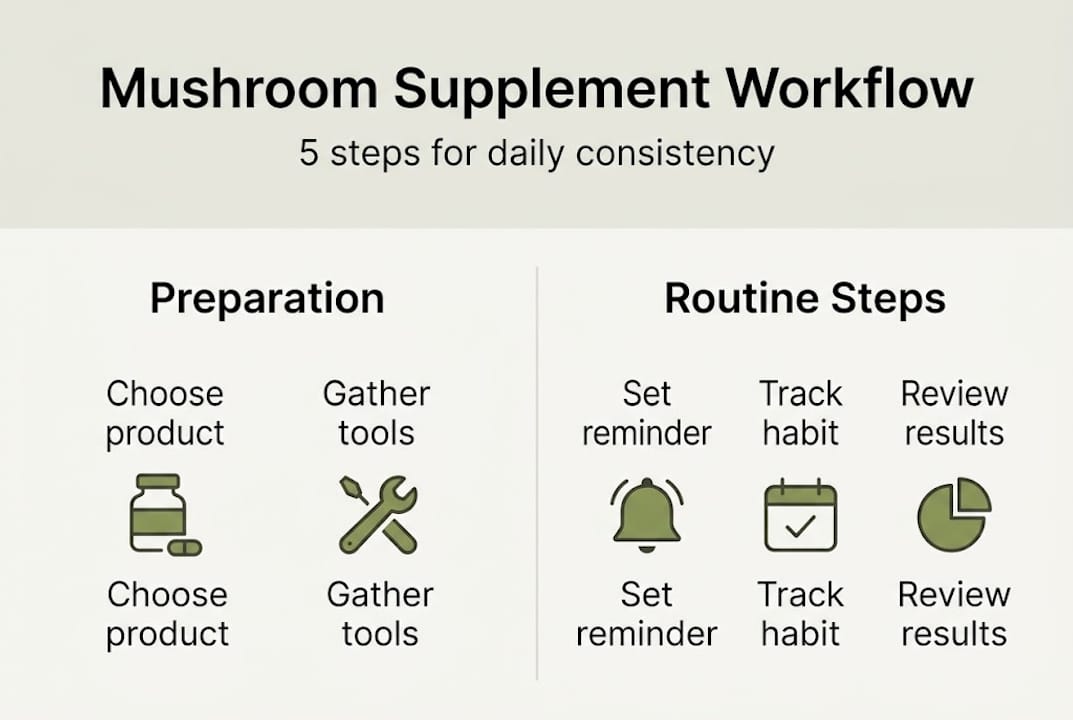
Lion’s Mane improved cognitive scores in adults with mild impairment at 1g per day over 16 weeks. The same study found mushroom blends reduced stress and sleep disturbance scores after just 25 days. These aren’t overnight results, but they are consistent with daily use.
Pro Tip: Set a phone reminder at the same time each morning and evening. Pairing your supplement with an existing habit, like morning coffee or brushing your teeth at night, dramatically improves consistency.
For more detail on how these compounds boost immunity and cognition, and practical guidance on how to use mushroom supplements in different formats, those resources are worth bookmarking.
Fine-tuning your workflow: cycling, blends, and synergy
Your basic daily flow is established, but optimizing takes your results to the next level.
Blends are useful when your goals span multiple areas, such as immune support plus cognitive function. However, blends offer synergistic effects at the cost of lower per-mushroom doses. If you’re targeting a specific outcome, a single-species product at a full therapeutic dose is often more direct.
When to use blends vs. single mushrooms:
- Use a blend for general wellness, stress, and broad immune support
- Use single-species for focused goals: Lion’s Mane for cognition, Cordyceps for energy, Reishi for sleep
- Combine both by using a blend as a base and adding one targeted single-species product
Cycling refers to taking breaks from a supplement on a scheduled pattern. Functional mushrooms are not psychedelics and don’t require cycling for safety. That said, some users follow a 4-days-on, 3-days-off schedule to prevent tolerance plateaus, particularly with Cordyceps or adaptogenic blends. It’s optional, not mandatory.
For travel or illness, simplify your routine. Drop to one product, typically a blend or Reishi, rather than skipping entirely. Consistency over perfection is the operating principle.
Pro Tip: Always check the beta-glucan percentage listed on the label. A product with 30% or higher beta-glucan content from the fruiting body is a reliable potency indicator.
Learn more about why blend different mushrooms for immune support, and explore the science behind the mushroom blending process for optimal wellness.
Troubleshooting, safety, and making it sustainable
Even a well-designed routine has its challenges. Here’s how to address common hurdles safely and sustainably.
Safety note: Mushroom supplements are generally well-tolerated, but mild digestive upset is common in the first week. Avoid or consult a doctor before use if you are pregnant, have an autoimmune condition, take blood thinners, or manage blood sugar with medication.
Common challenges and solutions:
- Digestive discomfort: Take capsules with food. Start at half the recommended dose for the first week.
- Forgetting doses: Use a weekly pillbox. Pair intake with a fixed daily habit.
- Plateau or no noticeable effect: Check product quality first (fruiting body, beta-glucan %). Consider cycling or switching from a blend to a single-species product.
- Mild allergic reaction: Discontinue use and consult a healthcare provider. Reactions are rare but possible, particularly with Chaga or Reishi.
- Medication interactions: Chaga contains oxalates (relevant for kidney stone risk) and Reishi may have mild blood-thinning properties. Always disclose supplement use to your doctor.
Habit stacking is the most reliable tool for long-term sustainability. Attach your mushroom supplement to something you already do without thinking: morning coffee, lunch prep, or an evening wind-down routine. The supplement becomes part of the habit, not an extra task.

For a full breakdown of what to avoid and what to prioritize, see our mushroom supplement dos and don’ts guide. If sleep support is a primary goal, the science behind mushrooms for better sleep is worth reviewing.
How to measure and maximize your results
To close the loop, let’s make sure you can actually see the results from your new workflow.
Expect a timeline of four to eight weeks before noticing consistent changes. No acute cognition boost occurs in healthy young adults from a single dose. Benefits build with chronic, consistent use, particularly for individuals dealing with cognitive impairment, elevated stress, or disrupted sleep.
Progress tracking table:
| Metric | What to track | When to expect change |
|---|---|---|
| Sleep quality | Hours, wake frequency | 2 to 4 weeks (Reishi) |
| Focus and alertness | Morning clarity, task duration | 4 to 8 weeks (Lion’s Mane) |
| Immune resilience | Frequency of illness | 6 to 12 weeks (Turkey Tail) |
| Stress response | Mood, irritability | 3 to 6 weeks (Reishi, blends) |
| Energy levels | Afternoon fatigue | 2 to 4 weeks (Cordyceps) |
How to track effectively:
- Pick two or three metrics that matter most to your goals.
- Rate each on a simple 1 to 5 scale every morning or evening.
- Review weekly. Look for directional trends, not dramatic shifts.
- Adjust your product, dose, or timing based on what you observe.
- Give any change at least three weeks before evaluating its impact.
Subtle improvements are easy to miss without a record. A short daily note, even three words, builds a useful picture over time. For context on what immune modulation benefits look like in practice, and how to blend mushroom extracts for both immune and brain health, those resources provide solid reference points.
The real secret to daily mushroom supplement routines
Here’s the part most wellness content skips: the biggest obstacle isn’t finding the right product. It’s expecting results too fast and quitting before the benefits arrive.
Functional mushrooms are not acute interventions. They work through consistent, cumulative exposure. Culinary mushroom doses from food provide a baseline, but supplement-level doses are for those seeking targeted, measurable outcomes beyond a general diet. That distinction matters.
The people who get the most from mushroom supplements aren’t chasing the newest superfood. They pick two or three products aligned with clear personal goals, build a simple routine around existing habits, and stick with it long enough to notice real changes. Then they adjust based on what they observe, not what a label promises.
Personalization is the actual differentiator. Your sleep patterns, stress load, and cognitive demands are specific to you. A blend that works well for one person may be less relevant for another. Start simple, track honestly, and let your own data guide the adjustments. The benefits of blends are real, but they show up for people who stay consistent, not for those who rotate products every two weeks looking for a faster result.
Explore quality mushroom supplements for your daily workflow
Ready to put your new workflow into practice? Product quality is the foundation of any effective routine. Longevity Botanicals offers a focused range of mushroom capsule supplements made from organic fruiting bodies with standardized beta-glucan content. For those who prefer flexible dosing, the mushroom powder supplements collection covers single-species and multi-use options. If broader support is the goal, the mushroom blend extracts range combines synergistic species in verified ratios. Each product includes full ingredient transparency so you can match what you’ve learned here directly to what you buy.
Frequently asked questions
Can I take mushroom supplements every day?
Yes, most mushroom supplements are formulated for daily use. If you have an autoimmune condition, are pregnant, or take prescription medications, consult your doctor first before starting.
Do mushroom blends work better than single-species supplements?
Blends offer synergistic effects but deliver a lower dose of each individual mushroom. Single-species products are better for targeted goals, while blends suit broader wellness support.
How soon can I expect results from a daily mushroom supplement workflow?
Most noticeable benefits, especially for cognition and mood, emerge after several weeks of consistent use. Acute single doses show minimal effect in healthy individuals.
Are there side effects from daily mushroom supplements?
Mild digestive discomfort is the most common initial reaction and typically resolves within the first week. Rare allergic reactions and specific medication interactions, particularly with Chaga and Reishi, are possible.
Recommended
- How to maximize mushroom powder benefits: a 2026 workflow – LongevityBotanicals
- Master the Mushroom Blending Process for Optimal Wellness – LongevityBotanicals
- How to Use Mushroom Supplements for Natural Wellness – LongevityBotanicals
- Comprehensive Guide to Mushroom Extract Usage for Wellness – LongevityBotanicals
Related Posts

Why Water-Soluble Mushroom Compounds Drive Real Results

What Is Mushroom Sustainability? Benefits and Practices

The Role of Organic Farming in Mushrooms Explained

What Is a Fruiting Body? Mushroom Science Explained

Mushroom Allergenicity Explained: Symptoms and Safe Use

Top 5 naturesrise.com Mushroom Supplement Alternatives 2026

Top 6 Hemplucid.com Alternatives for 2026


